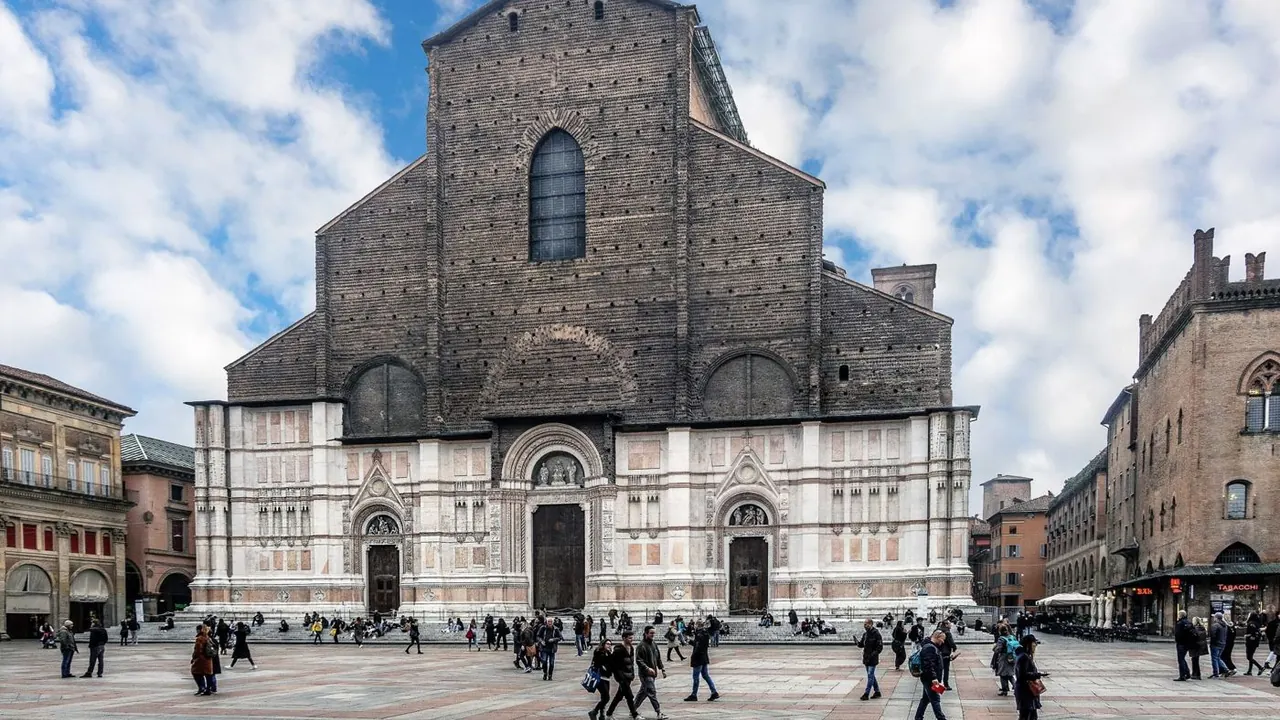
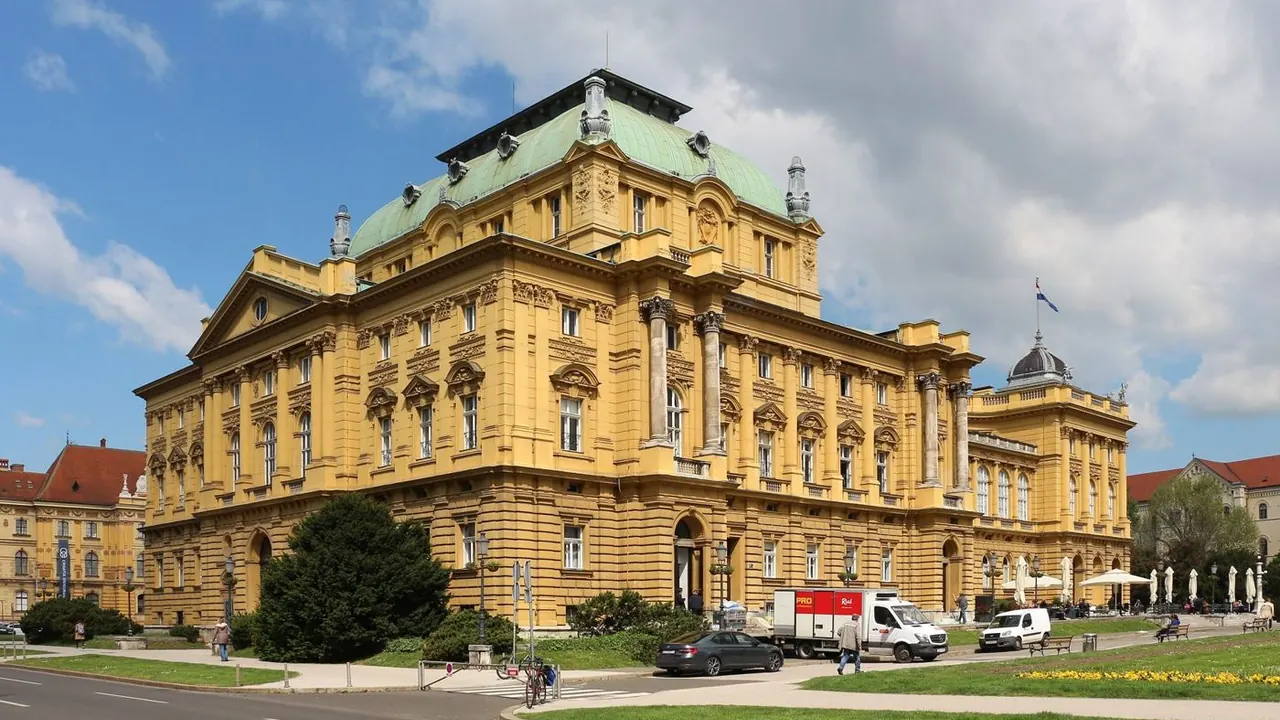
Photos: Bologna by Vanni Lazzari, CC BY-SA 4.0, cropped; Zagreb by Bernard Gagnon, CC BY-SA 4.0, cropped.
Bologna or Zagreb?
Our verdict in twelve categories, each scored against the same fixed benchmark cities, and the climate month by month, so you can choose for your trip.
Choose Bologna for
- day trips
- food and drink
- culture and sights
Bologna suits travellers who plan their days around the table and the train timetable. Its kitchens gave Italy many of its best-known dishes, its brick and portico centre is one of the most complete medieval cities in Europe, and Florence, Ravenna, Ferrara and Venice are all easy rail outings. A week here can take in half of northern Italy.
Choose Zagreb for
- prices
- nature and the outdoors
- families
Zagreb is the better pick for a calmer, cheaper stay. Here the pleasures are café terraces, the lanes of the Upper Town and forest walks on Medvednica just past the end of the tram lines. Rooms cost less, the green hills start at the city's edge, and it fits naturally into a wider road trip to the Zagorje castles, Plitvice or the Croatian coast.
Scoreboard
Twelve categories on one fixed scale from 0 to 100. The shaded stretch is the gap between the two.
Your match
Pick a travel style or drag the sliders, and both match scores follow your weighting.
Wins on day trips and food and drink with your weighting.
Wins on prices and nature and the outdoors with your weighting.
What matters to you?
Category by category
What the scores mean for a trip.
Beaches & swimming
Neither city is a beach destination, but Bologna is closer to a real sea. Rimini and the Romagna Riviera are about an hour away by train, with shallow, warm Adriatic water lined with organised lidos and sunbeds, so a seaside day fits easily into a hot week.
From Zagreb the coast is about two hours' drive over the hills, too far for a casual outing. In return it has swimming inside the city at Lake Jarun and Bundek, pebbly former gravel pits that are good for cooling off in the afternoon, which Bologna has nothing to match on its doorstep.
Food & drink
This is one of the widest gaps between the two. Bologna is worth the trip for the food alone: hand-rolled tagliatelle and tortellini, mortadella, and Parmigiano and Parma ham from towns down the road, eaten in old osterie and bought in the delicatessens of the Quadrilatero.
Zagreb eats well in a heartier, Central European way, with štrukli, turkey with mlinci and the farmers' stalls of Dolac market, but the range is narrower and serious kitchens are few. Its real ritual is coffee, above all the Saturday morning promenade around Flower Square. Bologna's equivalent comes in the evening, with aperitivo.
Culture & sights
Bologna has more to see. There are close to 40km of UNESCO-listed porticoes, Piazza Maggiore and San Petronio, the Two Towers, the seven churches of Santo Stefano and the anatomical theatre of Europe's oldest university, enough for two or three full days.
Zagreb rewards a slower look. The Upper Town has St Mark's tiled roof and the Stone Gate, the Austro-Hungarian Green Horseshoe lies below, and the museums are likeable rather than famous, from naive art to the Museum of Broken Relationships. Mirogoj cemetery is its finest single sight, and two days cover most of the city.
Nightlife
Both cities run on students and terraces rather than clubs, but Bologna's evenings are livelier. Crowds of young people fill Piazza Verdi and Via Petroni outside cheap bars, the taverns of Via del Pratello stay open late, and aperitivo gets the night off to a proper start. The catch is August, when the students leave and the city goes quiet.
Zagreb's nights grow out of its café-bars. The terraces of Tkalčićeva are the main strip, and there are smaller cocktail and craft beer bars around Flower Square. Summer is its stronger season, when the lakeside clubs at Jarun take over, just as Bologna empties.
Nature & outdoors
Zagreb has the greener surroundings. Medvednica's beech forests and mountain huts begin at the northern edge of the city, a tram and bus ride from the centre, Maksimir has old oak woods inside the city, and the lakes and waterfalls of Plitvice make a long day out.
Close to Bologna the outdoors are gentler: the walk up to San Luca and the Colli Bolognesi. Further out it has the Via degli Dei trail to Florence and higher Apennine country at Corno alle Scale. Its humid summers push outdoor plans into spring and autumn.
Day trips
Here Bologna is in a different league. Florence is barely half an hour away by fast train, Ravenna's mosaics and Ferrara's walls an hour or less, and Modena, Parma, Verona, Padua and Venice are all easy rail outings, so the city works as a base for much of northern Italy.
Zagreb's outings are pleasant and more rural: the Zagorje castle at Trakošćan, baroque Varaždin, cream cake in Samobor and the fortress town of Karlovac, with Ljubljana as a long day. Several are easier by car, and none compares with Florence or Venice.
Good for families
Both are easy cities to be in with children, and both are short on attractions made for them, but what they offer differs. Zagreb has more within the city: the zoo in Maksimir, the Nikola Tesla Technical Museum with its old trams and mock mine, the funicular ride and summer swimming at Jarun and Bundek.
Bologna's centre is flat, largely free of traffic and shaded by porticoes, and climbing the Asinelli tower suits older children. For bigger outings, families head out to the Mirabilandia theme park or the beach at Rimini. Its summer heat is harder on small children than Zagreb's milder summers.
Getting around
Both centres are compact, and neither city needs a car. Bologna is slightly easier on foot because it is flat and arcaded, so you can walk in shade or out of the rain. Its station at the edge of the old town is the big advantage for onward travel. There is no metro, and buses cover the rest.
Zagreb relies more on its blue trams, a dense network that, together with the short funicular, saves the climb to the Upper Town. The cobbles up there are steep, though, and trams slow down at rush hour. A car only becomes useful for the Zagorje castles and Plitvice.
Shopping & style
Most of what people carry home from Bologna is edible: mortadella, aged Parmigiano, fresh tortellini and balsamic vinegar from the Quadrilatero. It is also better for browsing beyond food. There is a small, refined cluster of Italian fashion houses on Via Farini and in the Galleria Cavour, the Montagnola market for clothes and bric-a-brac, and an antiques market in Piazza Santo Stefano on some weekends.
Zagreb's souvenirs are more distinctly local: red licitar honey-dough hearts, Croatian neckties, lace and truffle products. Ilica is a high street of chains and a few design shops, with little at the luxury end, so shopping fits in around the sightseeing and won't fill a day.
Affordability
Zagreb is the cheaper stay, mainly because rooms cost less. Central apartments and small hotels are reasonably priced, and trams, museums and market food are easy on the budget. Eating out in Bologna is good value for Italy and most of its sights are churches and squares that cost nothing to enter, but old-town hotels are priced like the rest of prosperous northern Italy, and trade fairs can make rooms scarce. At the top end, smart restaurants and cocktails cost much the same in both.
Live music & performing arts
Bologna has the richer musical life. It has the historic Teatro Comunale for opera, ballet and concerts, a long jazz tradition kept up in basement clubs, recognition from UNESCO as a City of Music, and summer concerts and films in Piazza Maggiore.
Zagreb has a solid season of its own: opera and ballet at the Croatian National Theatre, the Zagreb Philharmonic at the Lisinski hall, the Zagreb Soloists in churches and a large summer rock festival at Jarun. In both cities, spoken theatre is in the local language and of little use to most visitors.
Wellness & relaxation
Bologna has the edge, because thermal water is so close. Castel San Pietro Terme, with its spring-fed pools, is about twenty minutes away. Porretta Terme, an old spa town in a green Apennine valley, is an hour south by train. Either makes an easy half day away from the city. In town, wellness in both cities mostly means hotel spas.
Zagreb's spa resorts, such as Tuheljske and Stubičke Toplice, are in the Zagorje hills about an hour away, so getting there takes more planning than reaching Bologna's nearest springs. What Zagreb offers in return is a slower pace within the city, with long café mornings and quiet Upper Town lanes. In Bologna, the university quarter is noisy and the summers are heavy.
When should you go?
Pick your month. The climate figures are measured averages, not a forecast.
Bologna in July
Zagreb in July
Daytime high, °C
Rainfall in the month, mm
Where the figures come from
Bologna has no rain gauge within 25 km of the centre, so its rainfall comes from a gridded climate dataset read at the city rather than from a gauge further away.
Bologna's sunshine is measured 82 km from the centre, at Cervia.
Temperature and rainfall are climate normals, averaged over the years shown. Bologna: 1991-2020 normals, Bologna / Borgo Panigale (5.5 km from centre). Zagreb: 1991-2020 normals, Zagreb / Gric (0.6 km from centre).
Spring and early autumn are the best seasons in both cities. Bologna gets hot: July and August reach 32°C with long, sunny days, which makes walking at midday hard work even under the porticoes, and the rain sets in with September and October. May, June and late September are its best months. Zagreb stays a few degrees cooler and peaks at 29°C in July, so summer sightseeing is easier. It is wetter through all the warm months, though, with frequent summer showers and the heaviest rain in September, at 104mm.
Winters are cold and grey in both. December and January bring single-digit highs to each city, but Bologna warms up a little sooner, reaching 10°C in February while Zagreb is still in single figures. Zagreb is the colder and duller of the two all winter, with less sunshine. In summer, Bologna's dry, bright July suits anyone who enjoys heat, while Zagreb's milder June and July are better for long days on foot.
Which traveller are you?
For a food and nightlife trip, Bologna is the clear choice. Fresh pasta, mortadella and Parmigiano are made here with real care, aperitivo with a glass of Lambrusco starts every evening, and the student bars of Piazza Verdi and Via del Pratello stay open late.
On a trip on a tight budget, Zagreb makes the money go further. Central rooms cost less than in Bologna's old town, tram fares and museum tickets are modest, and market food, bakery snacks and coffee on a terrace keep daily spending low.
For an outdoors trip, Zagreb has forest at the end of the tram line, with marked trails and mountain huts on Medvednica, Maksimir's oak woods in town and Plitvice's waterfalls within a day. Bologna's nearby hills are gentler and its summers more humid.
Before you go
| Measure | Bologna | Zagreb |
|---|---|---|
| Official language | Italian | Croatian |
| Currency | Euro (EUR) | Euro (EUR) |
| Sockets | CFL230 V, 50 Hz | CF230 V, 50 Hz |
| Driving side | Right | Right |
| Time zone | UTC+1, UTC+2 in summer | UTC+1, UTC+2 in summer |
| Emergency number | 112 | 112 |
| Elevation | 54 m | 127 m |
| Main airport | Bologna Guglielmo Marconi Airport (BLQ)6 km from centre98 non-stop destinations | Zagreb Franjo Tuđman International Airport (ZAG)11 km from centre64 non-stop destinations |
| Public holidays this year | 13 days | 14 days |
By the numbers
| Measure | Bologna | Zagreb |
|---|---|---|
| City population | 387,971 | 767,131 |
| People per km² | 2,754 | - |
| Museums within 10 km | 68 | 27 |
| UNESCO World Heritage sites within 50 km | 3 | 0 |
Where else could you go?
Every comparison below shares a destination with this one, so you can follow Bologna or Zagreb somewhere new.