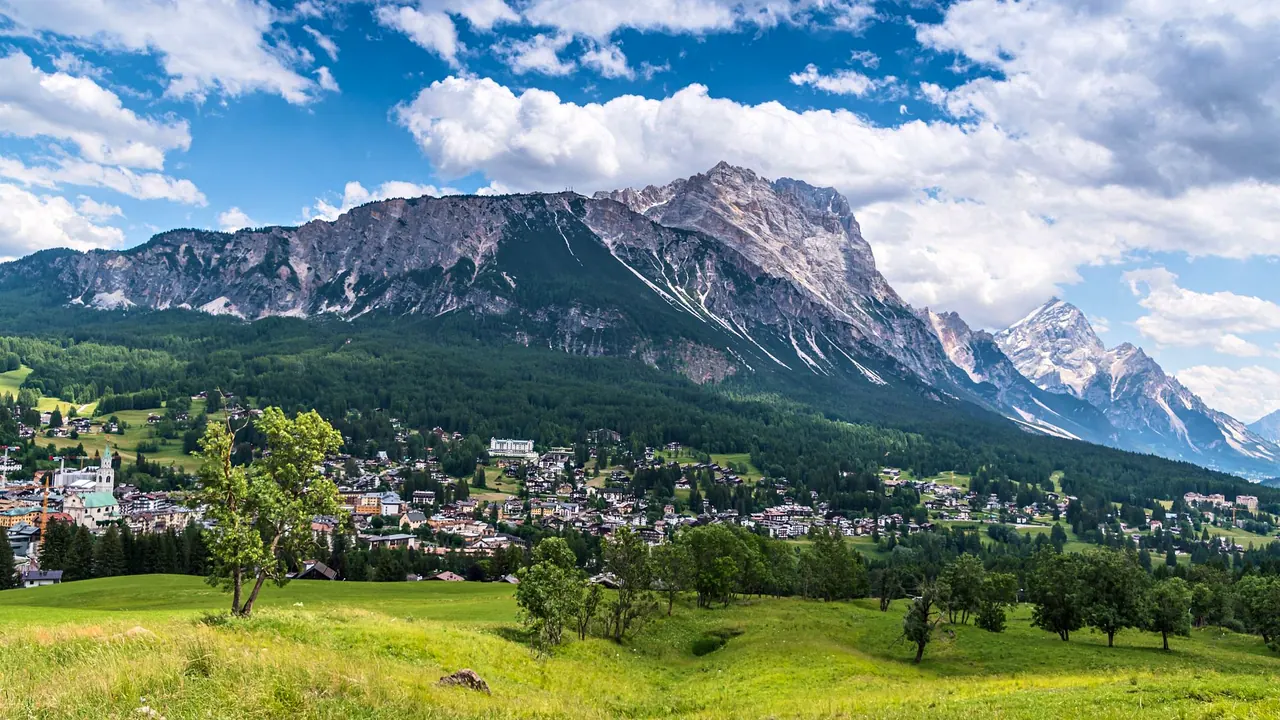
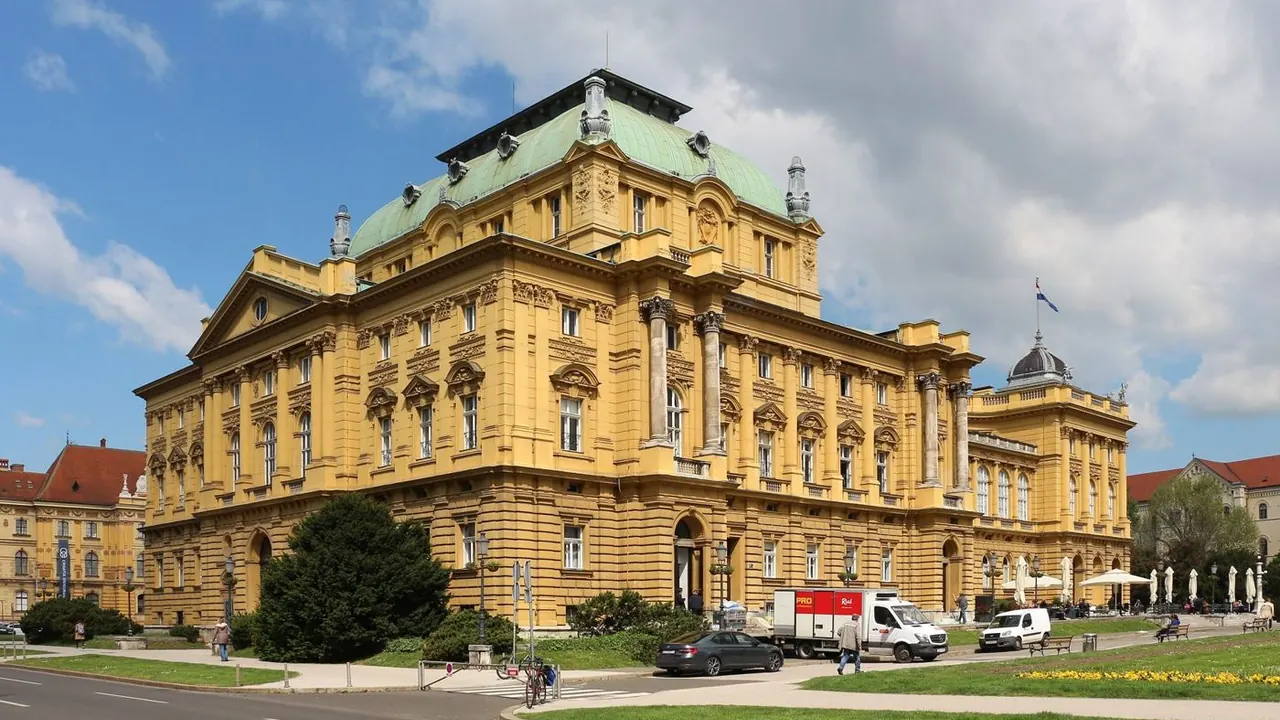
Photos: Cortina d'Ampezzo by Andreas Neubauer, Pexels License; Zagreb by Bernard Gagnon, CC BY-SA 4.0, cropped.
Cortina d'Ampezzo or Zagreb?
Our verdict in twelve categories, each scored against the same fixed benchmark cities, and the climate month by month, so you can choose for your trip.
Choose Cortina d'Ampezzo for
- nature and the outdoors
- wellness
- shopping
Cortina d'Ampezzo is the choice for a trip built around the mountains. The Dolomites rise straight from the valley, lifts climb from town onto the peaks, and the skiing, hut-to-hut hiking and via ferrata routes are among the finest in the Alps. It suits travellers with a generous budget who want an Alpine spa and a long dinner after an active day, and who don't need museums or late nights.
Choose Zagreb for
- prices
- live music and the arts
- culture and sights
Zagreb is for those who want a city. It has a medieval Upper Town, Austro-Hungarian squares, a real opera and concert season, café-bar evenings and trams that make it easy to get around. It costs far less than Cortina and offers much more on a rainy day, though its countryside is gentle forest and hills, not high peaks.
Scoreboard
Twelve categories on one fixed scale from 0 to 100. The shaded stretch is the gap between the two.
Your match
Pick a travel style or drag the sliders, and both match scores follow your weighting.
Wins on nature and the outdoors and wellness with your weighting.
Wins on prices and live music and the arts with your weighting.
What matters to you?
Category by category
What the scores mean for a trip.
Beaches & swimming
Neither city works for a beach vacation, and from both the Adriatic is about two hours away by road. The difference is in the water closer to home. Cortina's alpine lakes, such as Ghedina and Pianozes, are fed by snowmelt and stay too cold for more than a brave dip, so swimming usually means a hotel pool. Zagreb's Lake Jarun and Bundek warm up enough in summer for a proper afternoon swim, with lifeguarded areas and pebbly shores.
Food & drink
Cortina eats better than its size suggests. There are Ampezzan dishes such as casunziei filled with beetroot, and polenta with game, and the best meals are on rifugio terraces high among the peaks. The range is narrow, though, with little street food and almost nothing cheap.
Zagreb has more variety from day to day. Dolac market sets the tone each morning, the hearty Central European cooking runs from štrukli to turkey with mlinci, and café terraces and Plešivica wines fill the hours between meals, all at much easier prices.
Culture & sights
Zagreb is clearly the stronger city for sightseeing. Cortina has a pleasant centre with its basilica bell tower and painted houses, the 1956 Olympic ice stadium and three small museums, of which the Rimoldi collection of Italian art is the best. Its most striking history, the First World War tunnels on Lagazuoi and the Cinque Torri, takes a day in the mountains to reach.
Zagreb has two full days of proper sightseeing. There is the medieval Upper Town with St Mark's tiled roof and the Stone Gate, and the Lower Town's Green Horseshoe of parks and galleries. Its museums run from the Strossmayer old masters to the Museum of Broken Relationships, and the arcaded Mirogoj cemetery is one of the city's finest sights.
Nightlife
Evenings in Cortina mean après-ski drinks, a stroll along the Corso Italia and a long dinner. Only in the peak winter weeks do a few smart bars and clubs stay open late, and most summer nights are over early.
Zagreb has more to go out for all year round. The terraces on Tkalčićeva fill up on warm nights, and smaller cocktail and craft beer bars sit around Flower Square. In summer the lakeside clubs at Jarun take over, and the students keep alternative venues going. The mood is relaxed and friendly rather than wild.
Nature & outdoors
This is Cortina's great strength and the biggest gap between the two. The Dolomites ring the Ampezzo valley, lifts rise straight from town, and the Tre Cime and Lago di Misurina are under an hour away. Winter brings the Dolomiti Superski area, and summer brings the Alta Via 1, via ferrata routes and climbing.
Zagreb's outdoors is gentler and close at hand. There are beech woods and marked trails on Medvednica, reached by tram and bus, the oak woods and lakes of Maksimir, and the Plitvice waterfalls as a long day trip south. It is pleasant green country with no high mountains.
Day trips
From Cortina, most outings head up into the mountains rather than out to other towns. The towns are in South Tyrol: San Candido, Brunico with the Messner Mountain Museum, and Bolzano with the Iceman. They are charming rather than essential, and Venice is a long day by coach.
Zagreb has more within easy reach. To the north are the Zagorje castles such as Trakošćan, the pilgrimage church at Marija Bistrica and the baroque town of Varaždin. Samobor's old square is half an hour away, and Ljubljana makes a long day by train.
Good for families
Both cities suit families on a calm few days rather than a trip built around attractions, and neither has a theme park or an aquarium. In Cortina the days are filled by the outdoors: ski schools at Socrepes, public skating at the Olympic stadium, and easy walks to huts with meadows to play in. Rainy days drag, though, and the costs climb quickly.
Zagreb is the city version. It has the zoo in Maksimir, the old trams and planes of the Technical Museum, the funicular ride and summer swims at Jarun. The streets are flat, and the trams take pushchairs.
Getting around
Zagreb is far easier without a car. The centre is compact and mostly flat, blue trams cover the whole city, the short funicular takes you up to the Upper Town, and buses run on to Medvednica and the airport.
Cortina's centre takes only a few minutes to cross on foot, and ski buses serve the slopes in winter. Beyond that it is harder. There has been no railway since 1964, so getting there means a coach from Venice or a long drive, and buses up to the passes are limited. Most visitors who want to see the wider Dolomites hire a car.
Shopping & style
Neither city is a reason to go shopping, but the style is very different. Cortina has one polished street, the Corso Italia, with luxury fashion, jewellers, furriers and upmarket mountain wear. It is anchored by the Cooperativa di Cortina, a multi-storey store founded in 1893.
Zagreb's shopping is everyday and cheaper: chains and local fashion along Ilica and malls on the outskirts. To take home there are licitar hearts, Croatian neckties and lace, food from Dolac and finds from the Sunday flea market at Britanski trg. There is very little luxury.
Affordability
A ski week in Cortina at the peak of winter, or a stay in August, is an expensive trip. Hotel rooms and dinners in town are priced for a wealthy resort crowd, and lift passes and equipment hire come on top. Lunch at a rifugio is fair value for the setting, and the quieter weeks in June and late September take some of the edge off the bill.
A few days of sightseeing in Zagreb cost far less, and less than the Croatian coast in summer. A coffee on a terrace is an everyday habit there rather than a treat, and simple local dishes keep daily spending low. If you want to spend more, cocktails, the smarter restaurants and the best hotels cost about what they would in Western Europe.
Live music & performing arts
Cortina has no theatre season and no regular music venue. Live performance mostly means the summer chamber and classical festivals, held in churches and halls and sometimes out in the mountains, plus the odd concert around Christmas.
Zagreb has a full season of its own. There is opera, ballet and drama at the ochre Croatian National Theatre, the Zagreb Philharmonic at the Lisinski hall and the Zagreb Soloists in churches, along with jazz and rock clubs and summer concerts in Upper Town courtyards. Much of the spoken theatre is in Croatian, but the music needs no translation.
Wellness & relaxation
Cortina is the more restful choice, as long as you avoid the peak weeks. Many hotels have Alpine spas with saunas, hay baths and indoor pools. In June, September and quiet winter weeks, an afternoon on a hut terrace in clear mountain air is restful in itself.
In Zagreb itself, wellness mostly means hotel spa floors, though the thermal pools at Tuheljske, Krapinske and Stubičke Toplice are about an hour north. The city's calm comes from long café mornings and quiet Upper Town lanes rather than from any spa tradition.
When should you go?
Pick your month. The climate figures are measured averages, not a forecast.
Cortina d'Ampezzo in July
Zagreb in July
Daytime high, °C
Rainfall in the month, mm
Temperature and rainfall are climate normals, averaged over the years shown. Cortina d'Ampezzo: 1991-2020 normals, Dobbiaco (22.5 km from centre). Zagreb: 1991-2020 (sunshine 1981-2010, rainfall 1981-2010) normals, Zagreb / Gric (0.6 km from centre).
Cortina has two clear seasons. From December to February daytime highs hover around freezing, with 0°C in January, and the valley is given over to skiing. March is milder, a softer end to the ski season. From June to August highs reach about 22°C, which suits hiking and climbing, but these are also the wettest months, with July the peak at 130mm. September is cooler, at around 17°C, and drier than high summer, so it is good for walking. April, May, October and November fall in between: too mild for good snow and too chilly for the high trails. The valley is never warm enough for a beach day.
Zagreb is warmer all year. July is the hottest and sunniest month, with highs of 29°C. That is good for a swim at Jarun but tiring for long walks on the Upper Town cobbles. May, June and September are the most comfortable months for sightseeing, although summer brings more rain than autumn, and June is the wettest month of the year. Winters are cold, grey and short on sunshine, but still clearly milder than in the Ampezzo valley.
Which traveller are you?
For an outdoors trip, Cortina is hard to beat. Lifts climb from town onto the Dolomite peaks, and the Alta Via 1 and the old via ferrata routes start nearby. Winter brings the Dolomiti Superski area. Zagreb's Medvednica is pleasant woodland, not mountain country.
On a culture and arts trip, Zagreb offers far more. Its Upper Town churches, the Mimara and Strossmayer collections, Mirogoj cemetery and the opera season at the Croatian National Theatre fill several days. Cortina's three small museums fill an afternoon.
For a trip on a tight budget, Zagreb is the obvious choice. Central apartments, tram fares, museum entry and market food are all reasonably priced. Cortina charges luxury-resort rates in its peak months, and many budget visitors there stay in cheaper valleys and drive in.
Before you go
| Measure | Cortina d'Ampezzo | Zagreb |
|---|---|---|
| Official language | Italian | Croatian |
| Currency | Euro (EUR) | Euro (EUR) |
| Sockets | CFL230 V, 50 Hz | CF230 V, 50 Hz |
| Driving side | Right | Right |
| Time zone | UTC+1, UTC+2 in summer | UTC+1, UTC+2 in summer |
| Emergency number | 112 | 112 |
| Elevation | 1,224 m | 127 m |
| Main airport | Venice Marco Polo Airport (VCE)116 km from centre103 non-stop destinations | Zagreb Franjo Tuđman International Airport (ZAG)11 km from centre65 non-stop destinations |
| Public holidays this year | 13 days | 14 days |
By the numbers
| Measure | Cortina d'Ampezzo | Zagreb |
|---|---|---|
| City population | 5,546 | 767,131 |
| People per km² | 22 | - |
| Museums within 10 km | 3 | 27 |
| UNESCO World Heritage sites within 50 km | 1 | 0 |
Where else could you go?
Every comparison below shares a destination with this one, so you can follow Cortina d'Ampezzo or Zagreb somewhere new.
- Innsbruckvs Cortina d'Ampezzo
- Ljubljanavs Zagreb
- Venicevs Cortina d'Ampezzo
- Grazvs Zagreb
- Veronavs Cortina d'Ampezzo
- Bledvs Cortina d'Ampezzo