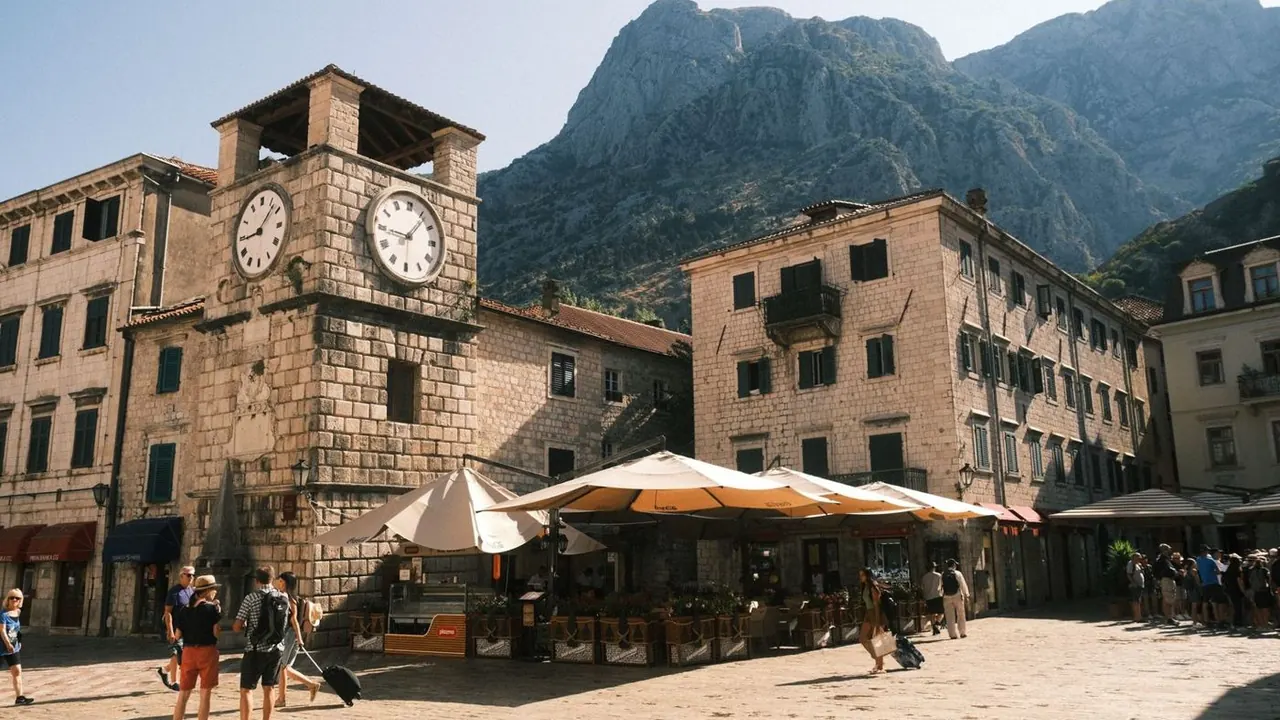
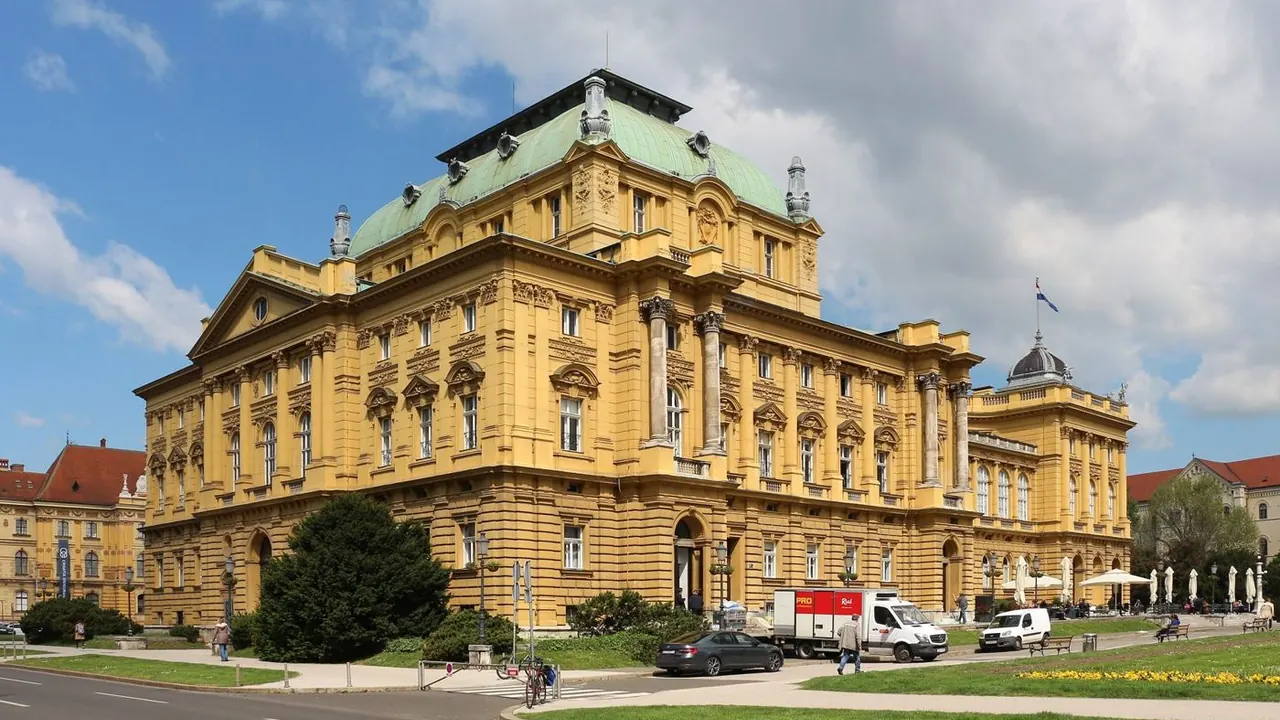
Photos: Kotor by Muhammed Fatih Beki, Pexels License; Zagreb by Bernard Gagnon, CC BY-SA 4.0, cropped.
Kotor or Zagreb?
Our verdict in twelve categories, each scored against the same fixed benchmark cities, and the climate month by month, so you can choose for your trip.
Choose Kotor for
- beaches
- nature and the outdoors
- day trips
Kotor is the choice for scenery and the sea. The walled town sits at the inner end of a fjord-like bay under limestone cliffs, with stone villages along the shore, kayaking on calm water, hikes that start at the town gates and the Budva beaches half an hour away. It suits couples and walkers who want views and a quiet evening more than a full programme of things to do.
Choose Zagreb for
- live music and the arts
- getting around
- shopping
Zagreb is the better pick for a city vacation in the full sense. Its trams, flat Lower Town and cluster of sights make it easy to get around, and it has opera and concerts, café-bar evenings, a hearty market food culture and more to keep children busy. The trade-off is that there is no sea, and the green hills around the city are gentle rather than dramatic.
Scoreboard
Twelve categories on one fixed scale from 0 to 100. The shaded stretch is the gap between the two.
Your match
Pick a travel style or drag the sliders, and both match scores follow your weighting.
Wins on beaches and nature and the outdoors with your weighting.
Wins on live music and the arts and getting around with your weighting.
What matters to you?
Category by category
What the scores mean for a trip.
Beaches & swimming
Kotor has no beach of its own, but it does have the sea. You swim from platforms and pebble strips towards Dobrota and Muo in calm, warm bay water, and the sand at Jaz and the coves around Budva and Sveti Stefan are a short bus ride over the hill.
Zagreb is far from all of that. The coast is two hours away, so summer swimming means Lake Jarun or Bundek, which are good for cooling off and nothing more. Anyone who wants the sea on a Zagreb trip needs to add a separate coastal stay.
Food & drink
Zagreb eats better, and with more variety. Its cooking is continental and filling: štrukli, turkey with mlinci and Zagorje sausages, with Dolac market at the centre every morning and a coffee culture that shapes the whole day.
Kotor's strength is the bay itself, with mussels, black risotto and grilled fish alongside Njegusi ham and Vranac wine. But the old town squares repeat the same menus, and the good meals are in the konobas out along the shore in Dobrota, Prcanj and Perast.
Culture & sights
The two are level in depth but very different in kind. Kotor is one compact, UNESCO-listed townscape: the Cathedral of St Tryphon, merchant palazzi, the Maritime Museum and the walls climbing to St John's fortress, all seen in a few hours.
Zagreb spreads its heritage across two layers, the medieval Upper Town with St Mark's Church and the Austro-Hungarian Lower Town around the Green Horseshoe. It also has a proper roster of galleries, from the Mimara and Naive Art museums to the Museum of Broken Relationships, plus the arcades of Mirogoj.
Nightlife
Zagreb gives you a fuller evening. The café-bars along Tkalčićeva and around Flower Square switch from coffee to drinks, the Lower Town courtyards hide cocktail and craft beer bars, and the student crowd keeps alternative venues open all year. It is sociable rather than wild.
In Kotor, the night mostly means a drink on a square under the floodlit walls, and outside summer it goes quiet early. The clubs that run until dawn are down the coast in Budva.
Nature & outdoors
Kotor's landscape is in another league. Limestone walls rise more than 1,000m above a winding bay, the old mule track and the fortress path climb straight from the town, and Lovcen National Park, kayaking and Lake Skadar are all within reach.
Zagreb's outdoors is green and easy to reach. Medvednica's beech woods start at the edge of the city, with Maksimir park and the Sava embankments for running and cycling. There is nothing dramatic, though, and Plitvice is a long day's drive.
Day trips
Kotor has the stronger set of outings, and many are close. Perast and the island church of Our Lady of the Rocks are twenty minutes away, with Herceg Novi, Budva and Sveti Stefan along the coast, Cetinje and the Njegos mausoleum over Lovcen, and Dubrovnik and Ostrog for longer days.
Zagreb's trips are quieter and mostly lead north into the Zagorje hills, to Trakošćan castle, Marija Bistrica and baroque Varaždin. Samobor, Karlovac and the Plešivica wine roads add variety, but nothing on the list matches the Bay of Kotor.
Good for families
Zagreb is easier with children. It has the zoo in Maksimir, the Tesla technical museum with its trams and mock mine, the short funicular ride, flat streets for pushchairs and lakes for summer afternoons.
Kotor's old town is safe and car-free, and the street cats win children over, but there is little made for them. The fortress climb is steep and hot. Families do best with bay swimming from the shore and a boat out to Perast's island church.
Getting around
Inside the walls, Kotor is a few minutes' stroll. Going further is the problem: there is a single road round the bay that jams in summer, the buses are not always frequent, and seeing Lovcen or Lustica in one day usually means hiring a car or a driver.
In Zagreb, the dense tram network and the funicular cover nearly everything you will want to see, and the centre is easy to walk. A car only becomes useful for the Zagorje castles and Plitvice.
Shopping & style
Neither city is a shopping destination, but Zagreb at least has a high street. Ilica has chains, local fashion and small design shops, and you can take home licitar hearts, Croatian neckties and truffle products, or browse the Sunday flea market.
Kotor's lanes sell souvenirs, filigree and lace. The best things to bring home are Vranac and Njegusi ham from the green market, and brands mean a trip to the Tivat marina.
Affordability
Both cost about the same over a stay, but they are cheap in different ways. In Kotor, value depends on timing and location: inside the walls in high summer you pay resort rates, while an apartment in Dobrota and a visit in May or September cost much less.
Zagreb stays steady through the year, with low tram fares, museum entry and market food. Upmarket dining and cocktails, though, cost what they would in Western Europe.
Live music & performing arts
Zagreb has a real cultural calendar. The Croatian National Theatre puts on opera and ballet, the Lisinski hall is home to the Zagreb Philharmonic, and you can add the Zagreb Soloists, jazz clubs and summer courtyard concerts.
Kotor has no year-round stage. What it has is a summer festival in its squares and churches, the occasional cathedral concert, and the masked carnival and Boka Night, when decorated boats fill the bay.
Wellness & relaxation
Zagreb has the edge because of the thermal springs in Zagorje, about an hour away, where Tuheljske, Krapinske and Stubičke Toplice have warm mineral pools. Back in the city, long café mornings and shaded parks keep the pace slow.
Kotor's version of rest is the bay itself: early mornings on the water and long lunches in the shore villages. Spa treatments mean a resort hotel or the Tivat marina.
When should you go?
Pick your month. The climate figures are measured averages, not a forecast.
Kotor in July
Zagreb in July
Daytime high, °C
Rainfall in the month, mm
Where the figures come from
Kotor has no rain gauge within 25 km of the centre, so its rainfall comes from a gridded climate dataset read at the city rather than from a gauge further away.
Kotor's sunshine is measured 42 km from the centre, at Podgorica-Grad.
Temperature and rainfall are climate normals, averaged over the years shown. Kotor: 1991-2020 normals, Tivat (4.2 km from centre). Zagreb: 1991-2020 normals, Zagreb / Gric (0.6 km from centre).
Kotor's summer is hot and dry. July and August reach about 33°C, which is pleasant on the water but hard work on the fortress steps and the bare mountain paths. June is the clear pick: the sea is already warm enough for swimming, the days are long and sunny, and there is little rain. May is a milder choice for hiking before the heat. The sea is warmest in August at about 26°C and stays warm through September, but that is when the autumn rains arrive. They build to the wettest months of the year in November and December, and until spring the bay stays wet and gets far less sun.
Zagreb's climate is continental. Winters are cold, with January highs around 5°C, and summers peak at a more bearable 29°C, so July and August are still fine for walking the streets. Rain is spread more evenly through the year, with no dry summer like Kotor's and no winter downpours on the same scale. September is Zagreb's wettest month, though it is far drier than the bay's late autumn. Late spring and early autumn are the most comfortable times for sightseeing, and in winter Zagreb's museums and theatres make it the better of the two.
Which traveller are you?
For a beach and sun trip, Kotor wins easily. It has swimming off jetties in the warm bay and sandy beaches near Budva a short drive away, while Zagreb only has city lakes and the Adriatic two hours off.
On an outdoors trip, Kotor's setting is the bigger draw: the Ladder of Kotor up the cliff, Lovcen National Park above it and kayaking under mountains that rise straight from the water. Zagreb's Medvednica forests are pleasant but gentler.
For a food and nightlife trip, Zagreb gives you more. Dolac market, štrukli and Zagorje cooking come first, then evenings along Tkalčićeva and summer clubs at Jarun. Kotor offers a terrace drink and sends anyone who wants a real night out to Budva.
Before you go
| Measure | Kotor | Zagreb |
|---|---|---|
| Official language | Montenegrin | Croatian |
| Currency | Euro (EUR) | Euro (EUR) |
| Sockets | CF230 V, 50 Hz | CF230 V, 50 Hz |
| Driving side | Right | Right |
| Time zone | UTC+1, UTC+2 in summer | UTC+1, UTC+2 in summer |
| Emergency number | 112 | 112 |
| Elevation | 10 m | 127 m |
| Main airport | Tivat Airport (TIV)5 km from centre42 non-stop destinations | Zagreb Franjo Tuđman International Airport (ZAG)11 km from centre64 non-stop destinations |
| Public holidays this year | - | 14 days |
By the numbers
| Measure | Kotor | Zagreb |
|---|---|---|
| City population | 562 | 767,131 |
| Museums within 10 km | 3 | 27 |
| UNESCO World Heritage sites within 50 km | 3 | 0 |
| Swim season, months above 21 °C | 5 months | - |
Where else could you go?
Every comparison below shares a destination with this one, so you can follow Kotor or Zagreb somewhere new.