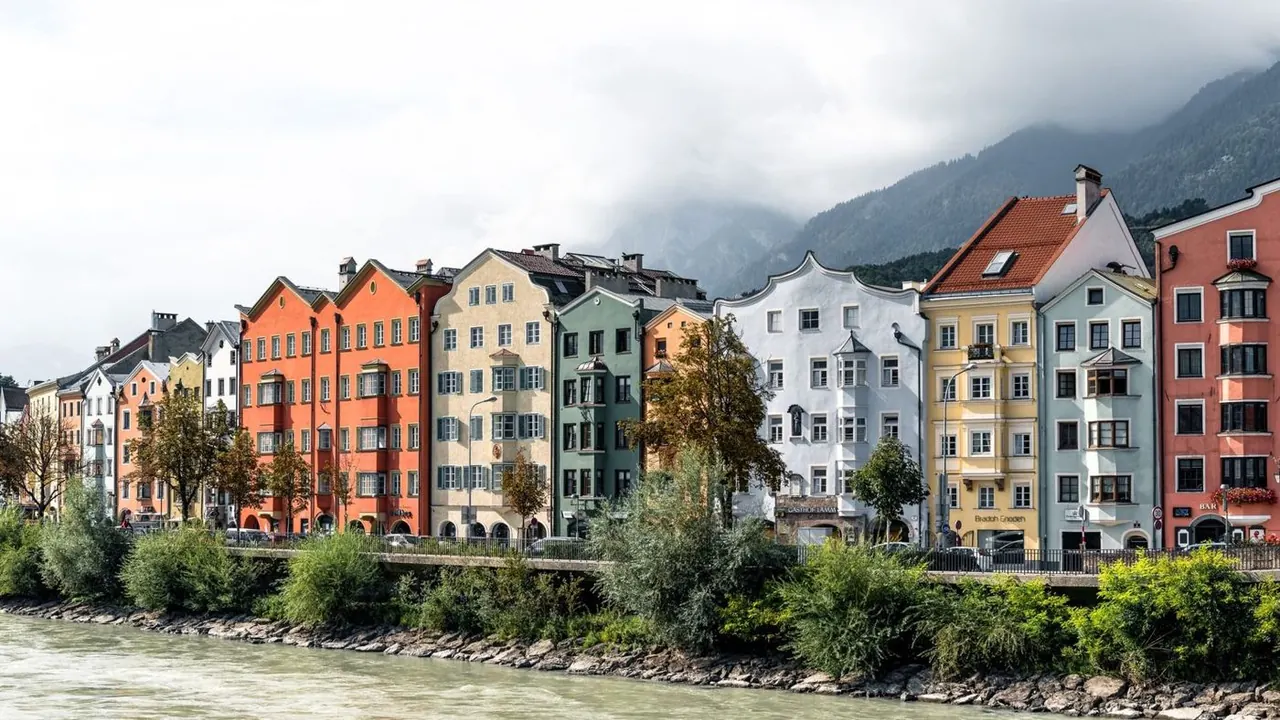
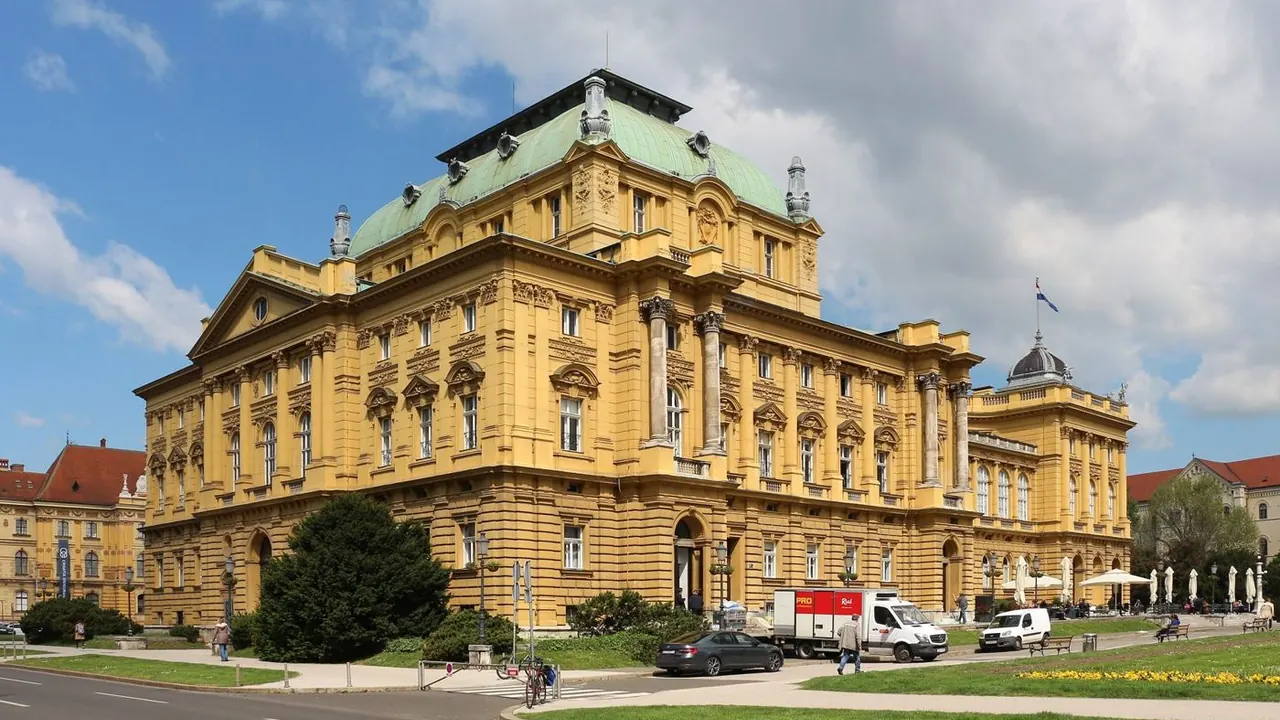
Photos: Innsbruck by Wolfgang Weiser, Pexels License; Zagreb by Bernard Gagnon, CC BY-SA 4.0, cropped.
Innsbruck or Zagreb?
Our verdict in twelve categories, each scored against the same fixed benchmark cities, and the climate month by month, so you can choose for your trip.
Choose Innsbruck for
- nature and the outdoors
- day trips
- wellness
Innsbruck is the pick if the mountains are the point of the trip. The Nordkette rises straight out of the old town, the Karwendel starts behind it, and skiing, hut-to-hut hiking and paragliding are all a funicular or a bus ride away. It also makes the better base for day trips by rail to Munich, Salzburg and South Tyrol, and children get to the Alpenzoo and the slopes with little effort. You pay Alpine prices for all of that.
Choose Zagreb for
- prices
- food and drink
- nightlife
Zagreb gives more for less to travellers who would rather spend their days on café terraces and in markets than on ridges. Dolac market, the Saturday promenade around Flower Square and the bars along Tkalčićeva make eating and evenings out more of an occasion than in Innsbruck, the opera and concert season is fuller, and a comfortable stay costs clearly less. The countryside around it is gentle and green rather than high, so come here for the city itself.
Scoreboard
Twelve categories on one fixed scale from 0 to 100. The shaded stretch is the gap between the two.
Your match
Pick a travel style or drag the sliders, and both match scores follow your weighting.
Wins on nature and the outdoors and day trips with your weighting.
Wins on prices and food and drink with your weighting.
What matters to you?
Category by category
What the scores mean for a trip.
Beaches & swimming
Neither city is near a sea, so swimming means lakes in both, and only in high summer. Innsbruck has the edge in setting. The Lanser See and Natterer See are small, warm lakes on the plateaus with mountains all around, and the clear Achensee is beautiful even if it stays chilly.
Zagreb's Jarun and Bundek are city lakes, with pebbly shores, lifeguards and rowing lanes. They are fine for cooling off but have little scenery. The Adriatic is two hours away, so anyone who really wants a beach should plan a separate coastal stop.
Food & drink
Zagreb has the livelier food scene, built around Dolac market under its red umbrellas, štrukli and turkey with mlinci, wines from its own hills and a coffee culture that shapes the whole day. Innsbruck has no market culture to compare.
In Innsbruck, the best meals come with a view. Think Gröstl or Kaspressknödel at a mountain hut after a hike, or strudel in a coffee house in the old town. Down in town the choice is narrower, and the restaurants around the Golden Roof mostly serve tour groups.
Culture & sights
The two are well matched, and both offer about two or three days of sights. The difference is in kind. Innsbruck's heritage is imperial and compact. The Hofkirche, with Maximilian's tomb ringed by bronze giants, is its finest sight, and the Hofburg, the Golden Roof and the curiosity cabinet at Ambras Castle round it out.
Zagreb spreads across two quite different quarters, the medieval lanes of Gradec and Kaptol and the Austro-Hungarian grid of the Green Horseshoe. Its museums are more varied, from the Naive Art collection to the Museum of Broken Relationships, and the arcaded cemetery at Mirogoj is a memorable sight in its own right.
Nightlife
Zagreb has more to do after dark. Café-bars turn into drinking spots as the evening goes on, Tkalčićeva's terraces fill on warm nights, and the courtyards of the Lower Town hide cocktail and craft beer bars. In summer the clubs move out to the lakeside at Jarun.
Innsbruck's nightlife mostly happens in the brick arches under the railway viaduct, with a few pubs in the old town besides. In winter many visitors skip the town altogether and go to après-ski in the resorts.
Nature & outdoors
This is where the two cities differ most. From Innsbruck, a funicular and cable cars climb to a ridge at about 2,300m in under half an hour, with the Karwendel behind it and the Stubai Glacier across the valley. That means skiing for most of the year, plus hut-to-hut hiking, via ferratas, paragliding and rafting.
Zagreb's outdoors are pleasant but modest. You get beech woods and huts on Medvednica, which tops out around 1,030m, the oak woods of Maksimir and cycling along the Sava. Plitvice's lakes and waterfalls are the big outing, a long day's drive away.
Day trips
Innsbruck sits on the main Alpine rail lines, so you can reach three countries in a day. Munich and Salzburg are each under two hours by train, Bolzano, Merano and Ötzi the Iceman lie over the Brenner, and Neuschwanstein is a drive away. Hall in Tirol and Rattenberg are much closer.
Zagreb's outings are gentler and mostly local. You can visit the castles and pilgrim churches of Zagorje, baroque Varaždin, Samobor for its cream cake, or Karlovac's star-shaped fortress. Ljubljana works as a long day out, but nothing on the list matches Innsbruck's best.
Good for families
Innsbruck is the better bet with children, mostly because the mountains are so easy to reach. The funicular stops at the Alpenzoo with its ibex, bears and wolves, and then carries on up to adventure trails and hut playgrounds. In winter there are gentle ski slopes nearby.
Zagreb is easy and safe for a few relaxed days. It has the zoo in Maksimir, old trams and a mock mine at the Tesla technical museum, and a short funicular ride. Neither city has big attractions built for children, so wet days take some planning in both.
Getting around
Both have compact centres you can walk. Innsbruck is a little easier, because its centre is flat throughout and the funicular from the old town links straight to the mountain cable cars. Trams, ski buses and valley trains take care of the rest.
Zagreb's blue trams form a dense network, but they slow down in rush hour, and the cobbles of the Upper Town are steep in places, though the tiny funicular saves the climb. In both cities a car only matters for trips out: remote valleys from Innsbruck, Zagorje and Plitvice from Zagreb.
Shopping & style
Neither is a shopping destination, and an afternoon is enough in either. In Innsbruck, look for loden jackets, dirndls, Speck and schnapps, and its outdoor and ski shops are excellent. In Zagreb, the things to take home are licitar hearts, Croatian neckties, lace and truffle products, and there is a Sunday flea market at Britanski trg to browse.
Affordability
Zagreb is clearly the cheaper stay. Central apartments, trams, museum tickets and market snacks are all easy on the budget, although cocktails and top hotels cost much what they would further west.
In Innsbruck, Western European prices come with an Alpine premium, hotels are most expensive in ski season and at Christmas, and cable car tickets eat into an active trip. Spring, autumn and the guest card help bring the cost down.
Live music & performing arts
Zagreb, a capital city, puts on a somewhat fuller season. There is opera and ballet at the ochre Croatian National Theatre, the Philharmonic at the Lisinski hall, the Zagreb Soloists in churches, and open-air courtyard concerts in summer.
Innsbruck's programme is smaller but has one standout, the summer Festival of Early Music, held in settings such as the Spanish Hall at Ambras. The Landestheater and evenings of yodelling and brass fill the rest of the year.
Wellness & relaxation
Innsbruck is more restful. Hotel spas in Igls and the plateau villages pair saunas with mountain views, an evening at a hut slows everything down, and the large thermal complexes of the Ötztal and Zillertal are about an hour away.
Zagreb's spas in town are mostly hotel floors. The real soaking is at the Zagorje spa towns, such as Tuheljske and Krapinske Toplice, about an hour out. In the city itself, relaxing mostly means a long morning in a café.
When should you go?
Pick your month. The climate figures are measured averages, not a forecast.
Innsbruck in July
Zagreb in July
Daytime high, °C
Rainfall in the month, mm
Temperature and rainfall are climate normals, averaged over the years shown. Innsbruck: 1991-2020 normals, Innsbruck-Flughafen (3.3 km from centre). Zagreb: 1991-2020 normals, Zagreb / Gric (0.6 km from centre).
Innsbruck's summer is mild, peaking around 26°C in July, which is comfortable for hiking. It is also the wettest stretch of the year, with about 144mm in August, mostly as mountain showers, so leave room in your plans. Only July and August are really warm enough for a swim in the plateau lakes. Zagreb is hotter and sunnier from May to August. Highs reach around 29°C in July, good for evenings on a terrace but heavy for walking about at midday. Its lakes are already pleasant for swimming in June, when days reach about 27°C.
Late spring suits sightseeing in both cities, and so does September in Innsbruck, which is still warm and fairly dry. In Zagreb, September is the wettest month at around 104mm, and October and November are nearly as wet, so early autumn there means carrying an umbrella. Late May and early June are the more reliable time for walking the city. Autumn in Innsbruck stays drier and sunnier. Winter days are cold in both, with highs only a few degrees above freezing. Innsbruck gets more sun then and has its ski season, while for Zagreb winter is the greyest time of year.
Which traveller are you?
For an outdoors trip, Innsbruck is the clear choice. Cable cars lift you from the old town to a high ridge in under half an hour, and glaciers, via ferratas, ski areas and rafting rivers lie close by. Zagreb's Medvednica is a pleasant forest, but it is nothing like that.
On a trip with a tight budget, Zagreb stretches your money much further. Central apartments, tram fares, museum tickets and market food are all reasonably priced. Innsbruck adds an Alpine resort premium to Western European prices, and cable car tickets soon add up.
For a food and nightlife trip, Zagreb has more going on. There is the morning bustle of Dolac market, regional wines from Plešivica and Zagorje, then terrace bars on Tkalčićeva and lakeside clubs at Jarun in summer. Innsbruck has hearty hut food and a handful of bars under the viaduct.
Before you go
| Measure | Innsbruck | Zagreb |
|---|---|---|
| Official language | German, Austrian Sign Language | Croatian |
| Currency | Euro (EUR) | Euro (EUR) |
| Sockets | CF230 V, 50 Hz | CF230 V, 50 Hz |
| Driving side | Right | Right |
| Time zone | UTC+1, UTC+2 in summer | UTC+1, UTC+2 in summer |
| Emergency number | 112 | 112 |
| Elevation | 574 m | 127 m |
| Main airport | Innsbruck Airport (INN)4 km from centre40 non-stop destinations | Zagreb Franjo Tuđman International Airport (ZAG)11 km from centre64 non-stop destinations |
| Public holidays this year | 16 days | 14 days |
By the numbers
| Measure | Innsbruck | Zagreb |
|---|---|---|
| City population | 132,499 | 767,131 |
| People per km² | 1,263 | - |
| Museums within 10 km | 28 | 27 |
| UNESCO World Heritage sites within 50 km | 1 | 0 |
Where else could you go?
Every comparison below shares a destination with this one, so you can follow Innsbruck or Zagreb somewhere new.