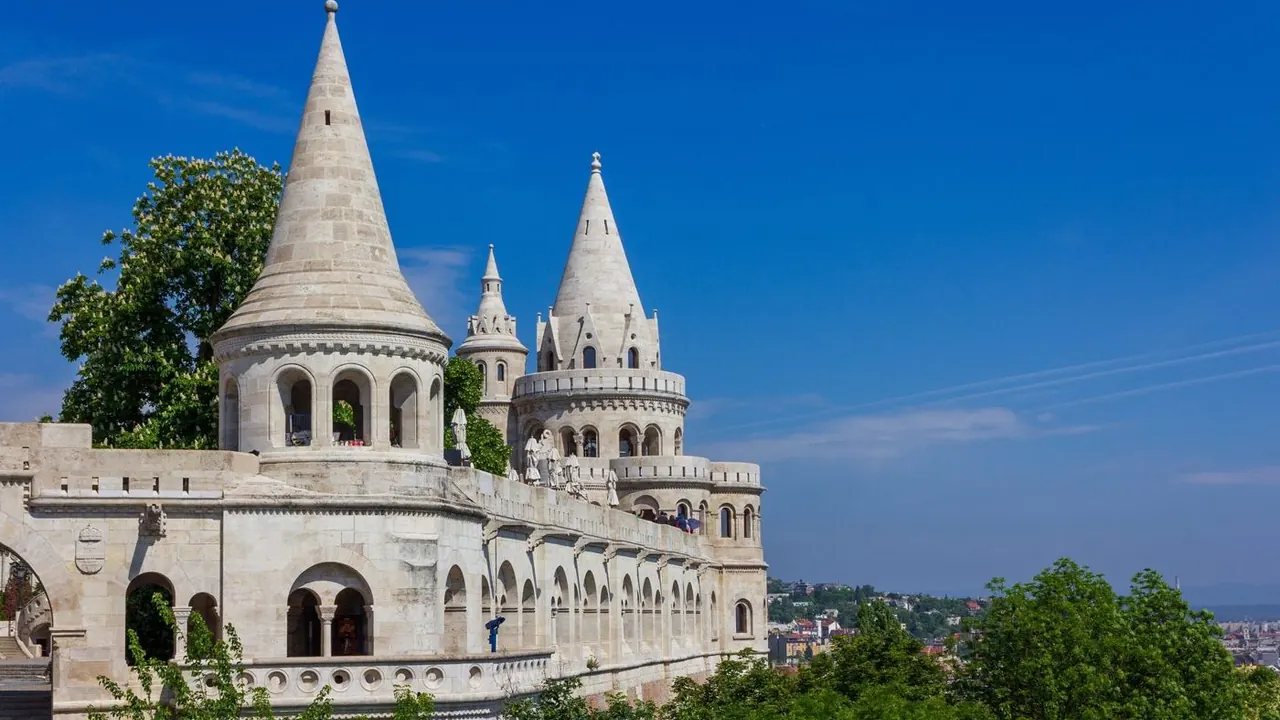
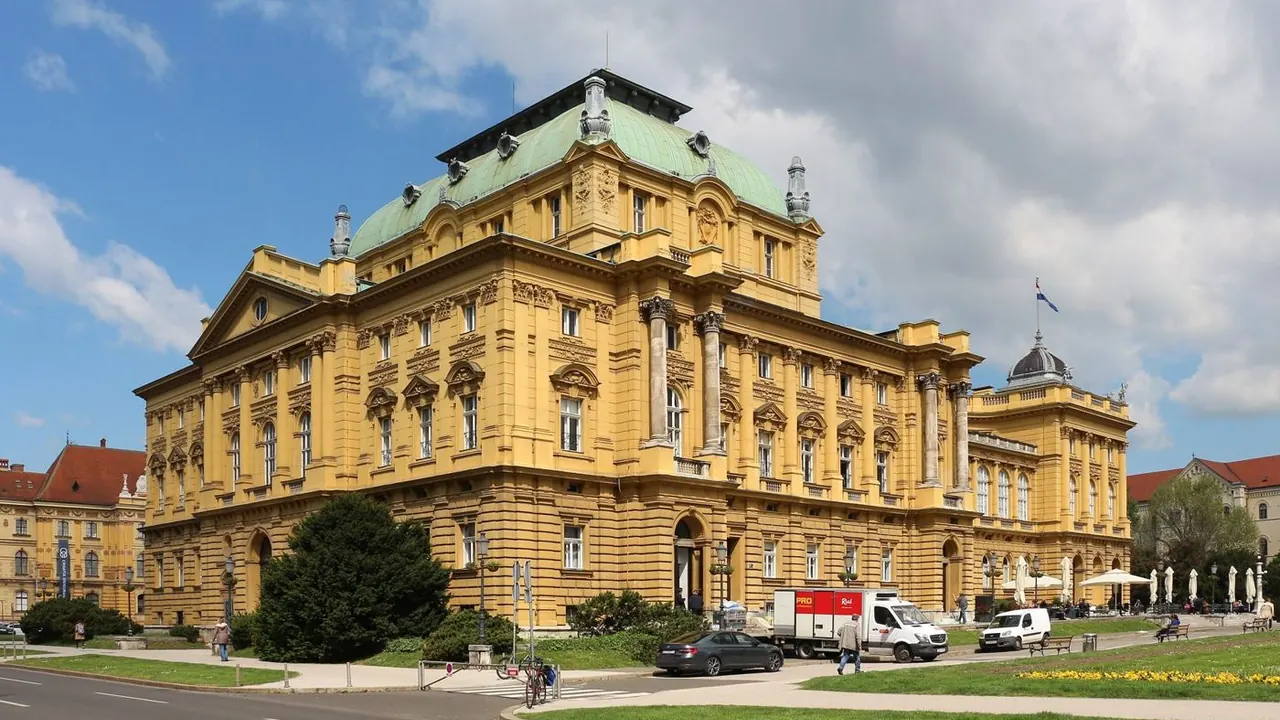
Photos: Budapest by Perituss, CC0; Zagreb by Bernard Gagnon, CC BY-SA 4.0, cropped.
Budapest or Zagreb?
Our verdict in twelve categories, each scored against the same fixed benchmark cities, and the climate month by month, so you can choose for your trip.
Choose Budapest for
- wellness
- nightlife
- culture and sights
Budapest is the city for travellers who want a capital with real depth. The Danube panorama, grand museums and opera house fill several days. Evenings run from the Liszt Academy to the ruin bars of District VII, and the thermal baths have no equal anywhere in Europe. Choose it for a first big Central European trip, for music and nightlife, or for slow afternoons moving between hot pools. Be ready for crowds and weekend noise in the centre.
Choose Zagreb for
- nature and the outdoors
Zagreb suits a smaller, quieter trip. Its Upper Town, Lower Town parks and museums can be seen properly in a couple of unhurried days, and the rest of the time goes on café terraces, Dolac market and walks on Medvednica, the forested mountain at the city's edge. It is a good stop on the way to the Croatian coast, or a calm city break for people who would rather sit and watch a city than chase its sights.
Scoreboard
Twelve categories on one fixed scale from 0 to 100. The shaded stretch is the gap between the two.
Your match
Pick a travel style or drag the sliders, and both match scores follow your weighting.
Wins on wellness and nightlife with your weighting.
Wins on nature and the outdoors with your weighting.
What matters to you?
Category by category
What the scores mean for a trip.
Beaches & swimming
Neither city is anywhere near the sea, but Budapest makes summer bathing more of an event. Its strand lidos, such as Palatinus on Margaret Island, have lawns, wave pools and slides and are easily a day out. Lake Velence's warm, shallow water is under an hour away by train, and Balaton can be reached in about two hours.
In Zagreb, bathing means the pebbly former gravel pit at Lake Jarun or the smaller Bundek lake. Both are fine for cooling off on a hot afternoon, and that is about all. The Adriatic is roughly two hours' drive away, so beach time in Zagreb usually means adding a separate stay on the coast.
Food & drink
Both cities cook hearty Central European food, but Budapest has more range and more occasions to eat out. Its grand coffee houses serve Dobos and Esterházy cakes, the Great Market Hall is a sight in its own right, and wine bars in Districts V and VII pour Tokaji and Balaton whites. There is also a proper modern restaurant tier on top of the goulash and lángos.
In Zagreb, the pleasure lies more in the daily routine than in big dinners. Mornings at Dolac market, štrukli and Zagorje sausages, and long coffees on Lower Town terraces are the heart of it. Fine dining comes down to a handful of serious kitchens.
Culture & sights
Budapest is in a different league here. The UNESCO-listed Danube front links Parliament, the Royal Palace and the Fishermen's Bastion, and Andrássy Avenue runs out to Heroes' Square. On top of that come the Museum of Fine Arts, the Dohány Street Synagogue and layers that stretch from Ottoman tombs to Memento Park. Seeing it properly takes several days.
Zagreb's heritage is more intimate. St Mark's tiled roof and the Stone Gate sit in the medieval Upper Town, and the Green Horseshoe of parks and galleries lies below. Its museums are good rather than famous, from the Naive Art collection to the Museum of Broken Relationships, and the arcaded cemetery at Mirogoj is the standout.
Nightlife
Budapest's nights are far bigger. The ruin bars fill crumbling courtyard tenements in the old Jewish Quarter, Kazinczy and Király streets stay loud past 2am at weekends, and summer moves the party onto Danube boats and garden bars. Cheap drinks also bring stag groups, so the centre can get rowdy.
Zagreb goes out at a gentler pace. Café terraces along Tkalčićeva turn into bars as the evening goes on, small cocktail and craft beer spots hide around Flower Square, and summer clubs open by Lake Jarun. It is sociable rather than wild.
Nature & outdoors
The two are broadly level for the outdoors, but the terrain is different. Zagreb has an actual mountain on its doorstep. Medvednica climbs to about 1,030m at Sljeme, with beech-wood trails, mountain huts and even a small ski slope in snowy winters, and the lakes and waterfalls of Plitvice are a long day's drive south.
Budapest's green space is lower and more varied in kind. The Buda Hills have a cogwheel railway and caves carved by thermal water, and Margaret Island makes a car-free running loop. The Danube Bend adds riverside hiking, a long cycle path and kayaking on the river.
Day trips
Budapest has the better spread of outings, and many of them are easy without a car. Suburban trains reach Szentendre's painters' lanes and Gödöllő's Sisi palace, and Visegrád and Esztergom continue up the Danube Bend. At around two hours, Eger's castle and wine cellars, the village of Hollókő and Pannonhalma Abbey widen the choice.
Zagreb's options are pleasant but quieter. They include the Zagorje castles such as Trakošćan, baroque Varaždin, cream cake in Samobor and the fortress at Karlovac. Several of them are much easier with a car, and Ljubljana makes a long day out.
Good for families
Budapest gives children more to do. There is the old City Park zoo with its Art Nouveau animal houses, the Children's Railway run by uniformed schoolchildren, and the hands-on Palace of Wonders. In summer, a whole day at a lido with wave pools and slides is easy. The catch is metro stairs and loud weekend nights in District VII.
Zagreb is the calmer place to walk with a pushchair. Its Lower Town is flat and safe, the Tesla technical museum has trams and a mock mine, and the tiny funicular is a hit with small children. With no big attractions, it suits a few easy days more than a trip planned around children.
Getting around
Both cities have tram-based centres you can walk, but Budapest's network does more. The riverside tram along the Pest embankment doubles as a sightseeing ride past Parliament, the boulevard trams run through the night, and the little yellow metro under Andrássy Avenue, the oldest on the continent, takes minutes to learn. Public ferries add the river, and the funicular and buses climb to Buda's Castle District.
Zagreb's centre is smaller, so the main square, Dolac market and the Upper Town are simply a short walk apart. Blue trams fill the gaps, and one of the world's shortest funiculars saves the climb up the hill. Trams slow down in rush-hour traffic, though, and you really need a car for the Zagorje castles and Plitvice.
Shopping & style
Budapest is a stronger place to shop, though still not a shopping destination. Herend and Zsolnay porcelain, a short luxury stretch on Andrássy Avenue, Hungarian design boutiques in Districts V and VII and the Ecseri flea market for communist-era objects give it more worth seeking out than Váci utca's souvenirs.
Zagreb's shopping is everyday. Ilica is lined with chains and a few design shops, and the best things to take home are red licitar hearts, a Croatian necktie, lace or truffle products, with Sunday mornings at the Britanski trg flea market.
Affordability
Costs are much the same in both, comfortably below Western European capitals but not budget level. The difference is where the money goes. In Budapest, transport, wine and ordinary coffee houses are cheap, but the restaurants around Váci utca and the Basilica and the grand historic cafés add up fast.
In Zagreb, market food, bakery snacks and terrace coffee keep daily costs low, and the city is much cheaper than the Croatian coast in summer. Cocktails and upmarket restaurants are priced much as they would be further west.
Live music & performing arts
Budapest is one of Europe's great music cities, and that is where the gap lies. The State Opera House on Andrássy Avenue, the Art Nouveau hall of the Liszt Academy, Müpa's concert hall and a dense run of church concerts mean there is good music most nights. Operetta and folk dance add to it.
Zagreb has a respectable season of its own: opera and ballet at the ochre Croatian National Theatre, the Philharmonic at Lisinski Hall and the Zagreb Soloists in churches. Summer adds open-air courtyard concerts and a rock festival at Jarun, but little of it is known abroad.
Wellness & relaxation
This is where the two differ most. Budapest is built on its springs. You can soak in the steaming outdoor pools of the Széchenyi, the mosaic halls of the Gellért, or under the sixteenth-century Ottoman domes of Rudas and Király, and a bath afternoon becomes part of every stay.
Zagreb has no bathing tradition in town beyond hotel spas. For warm mineral pools, you need to go about an hour north to Zagorje resorts such as Tuheljske Toplice. Its own way of relaxing is quieter: long café mornings and shaded Upper Town lanes.
When should you go?
Pick your month. The climate figures are measured averages, not a forecast.
Budapest in July
Zagreb in July
Daytime high, °C
Rainfall in the month, mm
Temperature and rainfall are climate normals, averaged over the years shown. Budapest: 1991-2020 normals, Budapest Met Center (2.1 km from centre). Zagreb: 1991-2020 normals, Zagreb / Gric (0.6 km from centre).
Through the year the two cities have almost the same temperatures. December and January are cold and grey in both, with highs of only 4°C to 6°C, and February is barely milder. Both reach the high 20s in July and August. That is warm enough for the lidos and lakes but tiring for long days on foot. For walking the streets, May, June and September are the most comfortable months in either city.
Rain and sunshine are what set them apart. Budapest is the drier and sunnier city. Its wettest weather comes in early summer, about 75mm in July, and the days are long and sunny from May to August. September and October are drier again and still mild, so early autumn is a good time to go. Zagreb is wetter in every month. Its rain builds through the summer, peaks at about 104mm in September and stays heavy into November. Its best window is late April and May, when it is warm enough to walk and the rain is lighter than it will be from June onwards. September there is pleasant for walking but often wet.
Which traveller are you?
On a relaxing and wellness trip, Budapest wins easily. Its Ottoman and Art Nouveau thermal baths, fed by more than a hundred springs, are part of daily life. Zagreb has only hotel spas, and its spa resorts are out in the Zagorje hills.
For a food and nightlife trip, Budapest is the livelier choice. It has ruin bars and late clubs in District VII, wine bars pouring Tokaji and Eger reds, and a stronger restaurant tier. Zagreb's evenings are friendly café-bar terraces on Tkalčićeva that mostly wind down early.
For a short city break, Zagreb fits the time better. Its medieval Upper Town, Lower Town galleries and Mirogoj cemetery are all close together and can be covered in two relaxed days. Budapest needs several days, so a weekend there leaves much of the city unseen.
Before you go
| Measure | Budapest | Zagreb |
|---|---|---|
| Official language | Hungarian | Croatian |
| Currency | Forint (HUF) | Euro (EUR) |
| Sockets | CF230 V, 50 Hz | CF230 V, 50 Hz |
| Driving side | Right | Right |
| Time zone | UTC+1, UTC+2 in summer | UTC+1, UTC+2 in summer |
| Emergency number | 112 | 112 |
| Elevation | 117 m | 127 m |
| Main airport | Budapest Liszt Ferenc International Airport (BUD)18 km from centre157 non-stop destinations | Zagreb Franjo Tuđman International Airport (ZAG)11 km from centre64 non-stop destinations |
| Public holidays this year | 13 days | 14 days |
By the numbers
| Measure | Budapest | Zagreb |
|---|---|---|
| City population | 1,675,777 | 767,131 |
| People per km² | 3,191 | - |
| Museums within 10 km | 81 | 27 |
| UNESCO World Heritage sites within 50 km | 1 | 0 |
Where else could you go?
Every comparison below shares a destination with this one, so you can follow Budapest or Zagreb somewhere new.