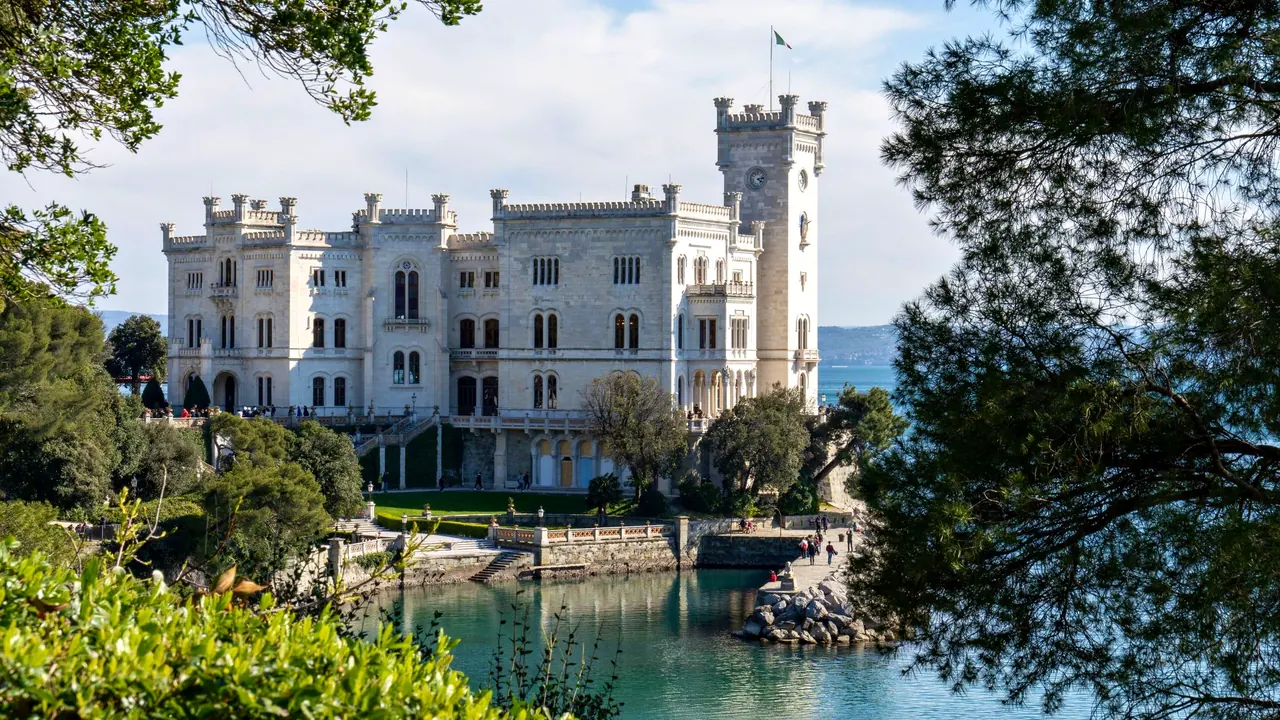
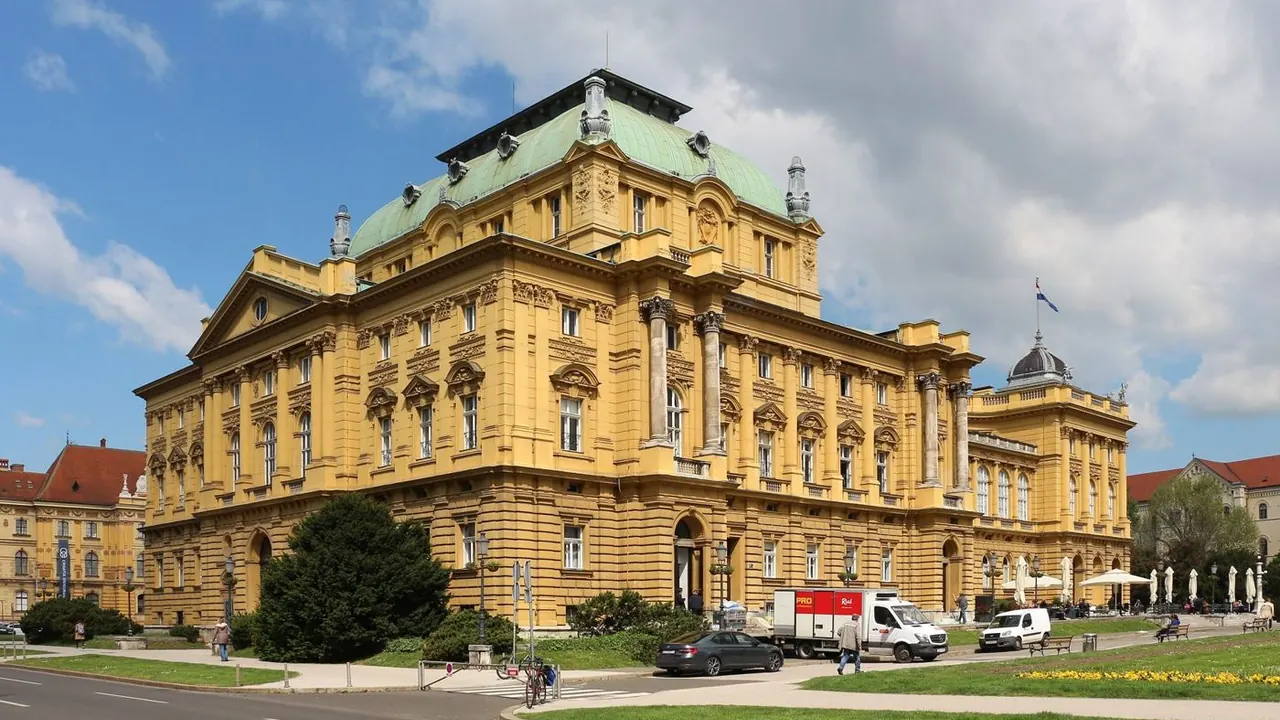
Photos: Trieste by Tibor Szabo, Pexels License; Zagreb by Bernard Gagnon, CC BY-SA 4.0, cropped.
Trieste or Zagreb?
Our verdict in twelve categories, each scored against the same fixed benchmark cities, and the climate month by month, so you can choose for your trip.
Choose Trieste for
- beaches
- day trips
- food and drink
Trieste is the pick for a traveller who wants the sea built into every day. You can swim off the Barcola promenade before lunch, walk the Karst edge high above the gulf in the afternoon and finish with an aperitivo on Piazza Unità. Its Habsburg seafront, Miramare Castle and a ring of day trips into Friuli, Slovenia and Istria give a week here plenty of variety. It suits couples and older children happy with rocks rather than sand, and anyone who would rather have a long dinner than a late night.
Choose Zagreb for
- nightlife
- prices
- shopping
Zagreb is for those who would rather explore a capital on foot and by tram than spend days by the water. The Upper Town lanes, the Lower Town galleries and Mirogoj fill a couple of unhurried days, and the evenings go on longer, with terraces on Tkalčićeva and lakeside clubs at Jarun in summer. Costs run a little lower too. It makes a good inland stop on a wider Croatian trip, with the hills of Zagorje and Plitvice within reach.
Scoreboard
Twelve categories on one fixed scale from 0 to 100. The shaded stretch is the gap between the two.
Your match
Pick a travel style or drag the sliders, and both match scores follow your weighting.
Wins on beaches and day trips with your weighting.
Wins on nightlife and prices with your weighting.
What matters to you?
Category by category
What the scores mean for a trip.
Beaches & swimming
This is the widest gap between the two. Trieste has no sandy beaches, but the sea is part of daily life. People lay their towels on the Barcola platforms and lawns, climb down ladders into clear water, use the old bathing establishments in town, or head for the coves under the cliffs at Sistiana and Duino.
Zagreb is inland, about two hours from the Adriatic. Lake Jarun and Bundek are fine for cooling off on a hot afternoon. If swimming matters to the trip, it means choosing Trieste or adding a stay on the Croatian coast.
Food & drink
Trieste has the more distinctive table. Its buffets carve boiled pork and ham with horseradish and sauerkraut, there are Adriatic sardoni and bowls of jota, and up on the Karst the osmize open for a few weeks at a time to sell farm wine and cured meats.
Zagreb eats more like Central Europe, with štrukli, turkey with mlinci and Zagorje sausages, and its best food moment is the morning at Dolac market. Neither city has much fine dining, but both take coffee seriously in different ways. In Trieste, the old imperial coffee port, coffee has a vocabulary of its own. In Zagreb it is a social ritual, at its fullest on the Saturday promenade around Flower Square.
Culture & sights
Trieste has the grander set pieces. Piazza Unità opens straight onto the sea, Miramare Castle stands white on its headland, and San Giusto hill has a cathedral with Byzantine-style mosaics as well as a Roman theatre below it. The great synagogue and the Risiera di San Sabba add a heavier layer of twentieth-century history.
Zagreb's appeal is quieter and splits in two. There is the medieval Upper Town with St Mark's tiled roof, and the Austro-Hungarian Lower Town around the Green Horseshoe. Its museums are good rather than famous, though Naive Art, Broken Relationships and the arcades of Mirogoj are unusual enough to remember.
Nightlife
Zagreb is the better place for a night out. Café-bars along Tkalčićeva turn from coffee to drinks as the evening goes on, cocktail and craft beer bars fill the Lower Town courtyards, students keep alternative venues going, and in summer there are lakeside clubs at Jarun.
Trieste's evenings are built around the aperitivo: a spritz on Piazza Unità or by the Canal Grande, then kiosks on the Barcola seafront in summer. Clubs are few, and on winter weeknights the streets go quiet early.
Nature & outdoors
Trieste has the more dramatic setting. The Karst rises right behind the city, with the Strada Napoleonica, the Rilke Path along the Duino cliffs, the Val Rosandra gorge and the Grotta Gigante. Then there is the gulf itself, for sailing, snorkelling and kayaking, and the Julian Alps for longer days.
Zagreb's outdoors is greener and softer. Medvednica's beech woods and mountain huts begin at the city edge, Maksimir and the Sava embankments suit a run or a ride, and Plitvice's lakes make a long day out. There is no water to match Trieste's.
Day trips
Trieste sits where three countries meet, and it shows. Aquileia's mosaic floor, star-shaped Palmanova, Cividale, Grado's lagoon and the Collio vineyards are all near in Italy. Piran, Lipica and Postojna are in Slovenia, Istria is reachable by car, and Venice works by train.
Zagreb's range is real but smaller in stature. It covers the Zagorje castles such as Trakošćan, baroque Varaždin, cake-famous Samobor and Karlovac's fortress. Ljubljana appears on both lists, but it is a closer and easier day from Trieste.
Good for families
Neither city is built around children, but both are safe and calm, and they suit different ages. Trieste rewards older children with Miramare's gardens, the vast Grotta Gigante, boats and an aquarium, though the rocky swimming and steep streets are harder with toddlers. Zagreb is easier with a pushchair, with its flat Lower Town, trams, the zoo in Maksimir, the funicular ride and the Tesla technical museum, plus lakes for summer play.
Getting around
Both centres are compact and easy to walk, and each has a steep quarter on a hill. In Trieste the sights sit on flat ground by the water, but the climb to San Giusto means long flights of steps. There is no metro. A dense bus network runs along the coast to Barcola and Miramare and up onto the Karst, and passenger boats crossing the bay to Muggia make a pleasant change from the road.
Zagreb runs on its web of blue trams, and the tiny funicular saves you the climb to the Upper Town, though the trams slow down in rush hour. In both cities a car is only worth having for the countryside.
Shopping & style
Neither is a shopping destination, and in both the best things to bring home are local. Trieste is better for antiques and second-hand finds in the old-town lanes, and for coffee, Karst wine and presnitz. Zagreb's Ilica has more chains and a few design shops, and the souvenirs are distinctly Croatian: licitar hearts, lace and neckties. There is also a Sunday flea market at Britanski trg.
Affordability
Costs are broadly similar, with Zagreb a little easier on the wallet. Its trams, museum entry, bakeries and market food are kind to a budget, and it is cheaper than the Croatian coast in summer. Trieste is moderate for northern Italy, with buffet meals, cheap buses and free pleasures like Barcola and the Karst paths. Rooms there tighten around the regatta and in midsummer. In both cities, smart restaurants and hotels cost what they would in any Western European city.
Live music & performing arts
The two are evenly matched, each with a proper opera and ballet season in a nineteenth-century house: the Teatro Verdi on Trieste's waterfront and the ochre Croatian National Theatre in Zagreb. Trieste's particular strength is its Habsburg love of operetta. Zagreb adds a concert hall for its Philharmonic, chamber music in churches and a slightly livelier circuit of jazz and rock clubs, though much of its theatre is in Croatian.
Wellness & relaxation
Trieste is the more restful place to unwind in. Its calm comes from the water, with a morning swim at Barcola, a slow sitting in a historic coffee house and sunset on the Molo Audace pier. Spas, though, are limited to hotels.
Zagreb's in-town offer is thinner, mostly hotel wellness floors plus café mornings and shaded parks. Its real asset lies outside the city: the thermal pools of Tuheljske, Krapinske and Stubičke Toplice in Zagorje are about an hour away, which suits anyone set on a warm mineral soak.
When should you go?
Pick your month. The climate figures are measured averages, not a forecast.
Trieste in July
Zagreb in July
Daytime high, °C
Rainfall in the month, mm
Temperature and rainfall are climate normals, averaged over the years shown. Trieste: 1991-2020 normals, Trieste (1.6 km from centre). Zagreb: 1991-2020 (sunshine 1981-2010, rainfall 1981-2010) normals, Zagreb / Gric (0.6 km from centre).
Trieste has the long beach season. Highs reach 29°C in July and August, and the sea is warm enough for swimming from June to September, peaking at 25°C. July is the sunniest month. For walking the streets, May and early October are more comfortable than midsummer. Rain builds through autumn and is heaviest in November, at about 125mm. Winter is mild but grey.
Zagreb gets as hot as Trieste in high summer but has a much colder winter, with January highs near 5°C and very little sun. It is a poor time for lingering outdoors. Rain is spread through summer and autumn rather than in one season, and September is the wettest month, at about 104mm. September is still warm, so it works if you pack for showers, but late April to early June is the most reliable time for exploring on foot.
Which traveller are you?
For a beach and sun trip, Trieste is the clear choice. The Adriatic is right there at Barcola, with clear water, pebble coves at Sistiana and Duino, and Piran close by. Zagreb only has its city lakes, and the coast is a long drive away.
On an outdoors trip, Trieste gives you two landscapes in one: limestone gorges, caves and cliff paths on the Karst, plus sailing, kayaking and snorkelling in the Miramare reserve. Zagreb has pleasant beech woods on Medvednica, but the country around it is gentler.
For a short city break, Zagreb works neatly. The Upper and Lower Towns, Dolac market and the main museums sit within a short tram ride, two days cover them, and the bars along Tkalčićeva keep the evenings going longer than Trieste's quiet streets.
Before you go
| Measure | Trieste | Zagreb |
|---|---|---|
| Official language | Italian | Croatian |
| Currency | Euro (EUR) | Euro (EUR) |
| Sockets | CFL230 V, 50 Hz | CF230 V, 50 Hz |
| Driving side | Right | Right |
| Time zone | UTC+1, UTC+2 in summer | UTC+1, UTC+2 in summer |
| Emergency number | 112 | 112 |
| Elevation | 2 m | 127 m |
| Main airport | Trieste Airport (TRS)31 km from centre32 non-stop destinations | Zagreb Franjo Tuđman International Airport (ZAG)11 km from centre65 non-stop destinations |
| Public holidays this year | 13 days | 14 days |
By the numbers
| Measure | Trieste | Zagreb |
|---|---|---|
| City population | 198,417 | 767,131 |
| People per km² | 2,332 | - |
| Museums within 10 km | 33 | 27 |
| UNESCO World Heritage sites within 50 km | 5 | 0 |
| Swim season, months above 21 °C | 4 months | - |
Where else could you go?
Every comparison below shares a destination with this one, so you can follow Trieste or Zagreb somewhere new.