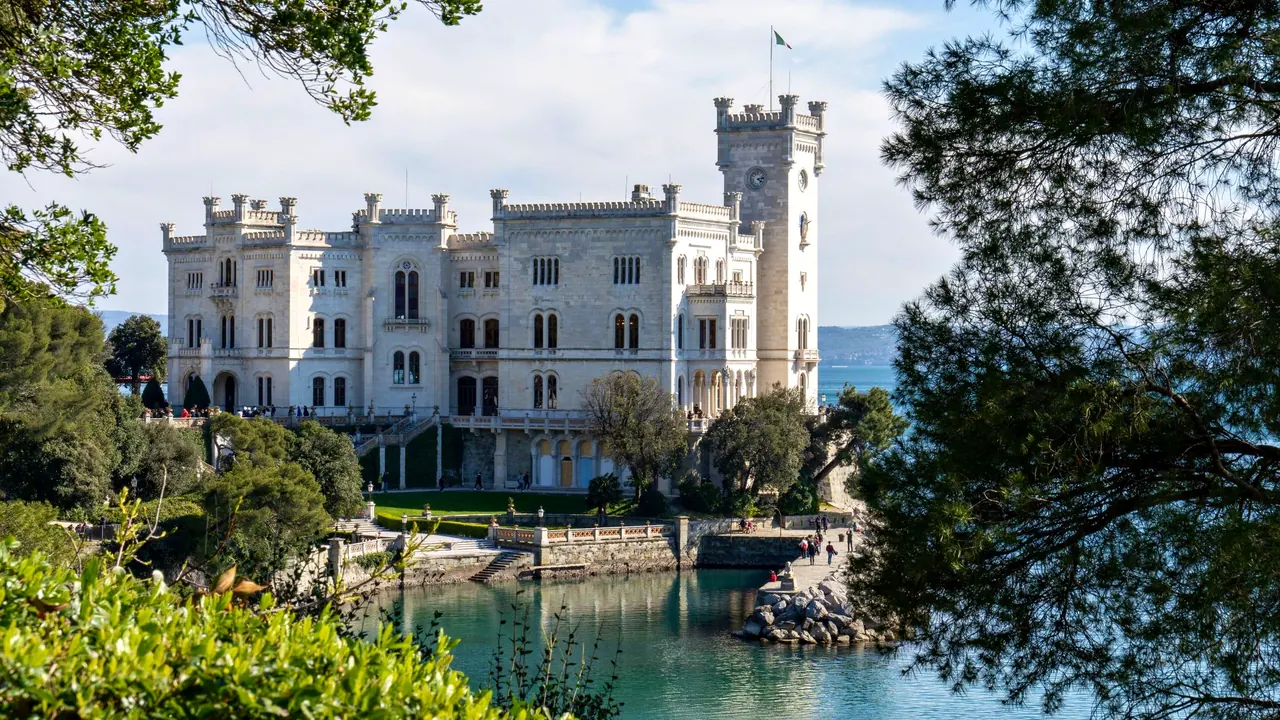
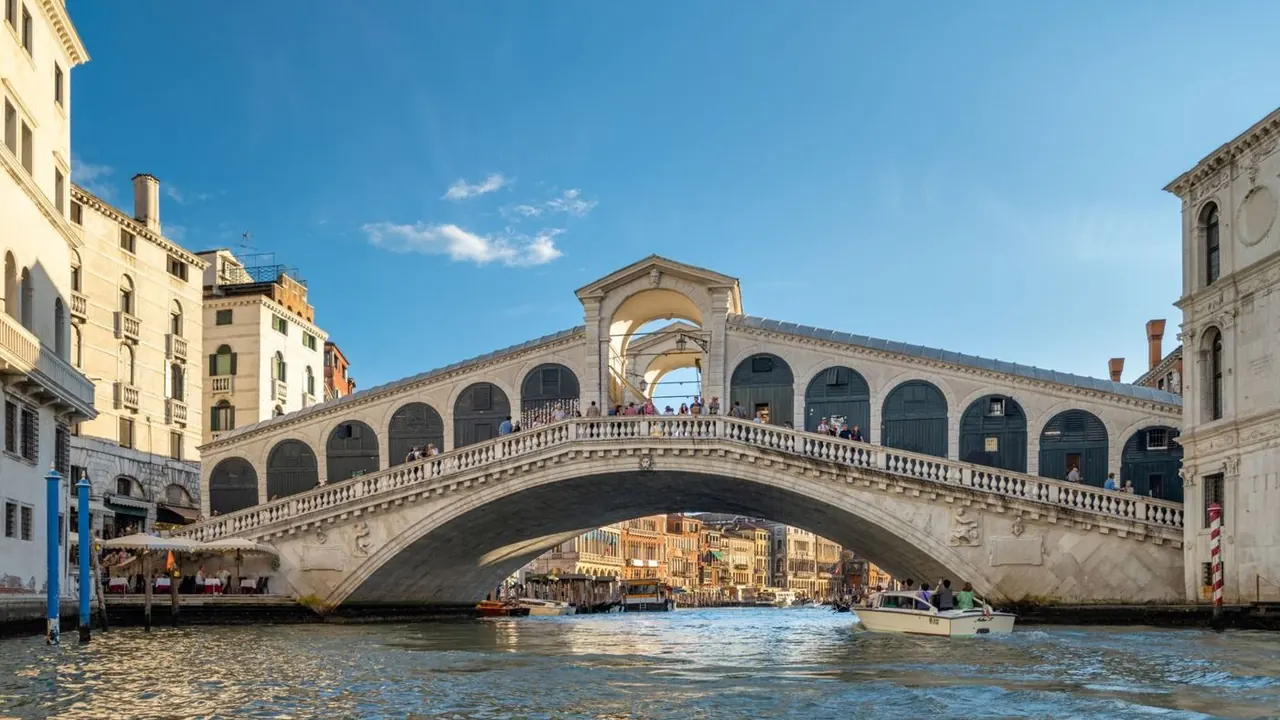
Photos: Trieste by Tibor Szabo, Pexels License; Venice by David Vives, Pexels License.
Trieste or Venice?
Our verdict in twelve categories, each scored against the same fixed benchmark cities, and the climate month by month, so you can choose for your trip.
Choose Trieste for
- prices
- nature and the outdoors
- families
Trieste suits travellers who want a calm, affordable Adriatic city where daily life still belongs to residents. You can swim off the Barcola promenade before lunch, walk the Karst cliffs in the afternoon and finish with a spritz on Piazza Unità. Its strengths are the sea, the limestone country behind it and its lower cost, and Slovenia and Friuli are close enough for day trips.
Choose Venice for
- culture and sights
- shopping
- live music and the arts
Venice is the choice when art and architecture are the reason for the journey. Nowhere else has a whole historic city standing on water without cars, and its churches and galleries hold the great Venetian painters. You pay for that with steep prices, crowds on the main routes and an evening that ends early. For a first visit to one of the world's great sights, that is a fair trade.
Scoreboard
Twelve categories on one fixed scale from 0 to 100. The shaded stretch is the gap between the two.
Your match
Pick a travel style or drag the sliders, and both match scores follow your weighting.
Too close to call, 2 points apart
Wins on prices and nature and the outdoors with your weighting.
Wins on culture and sights and shopping with your weighting.
What matters to you?
Category by category
What the scores mean for a trip.
Beaches & swimming
For people who want to swim, Trieste is the better bet, even without sand. The sea at Barcola is clear and close to the centre, and swimming is part of everyday life there all summer. You climb down ladders from concrete platforms, and the pebble coves at Sistiana, Duino and Grignano are prettier still.
Venice has the softer beach: the Lido's long sandy shore is shallow and gentle, which suits small children. The water is greenish, though, and most visitors manage only one afternoon there between sights.
Food & drink
Both cities eat well at the counter rather than the tablecloth, but the flavours are different. Trieste leans towards Central Europe, with boiled pork and horseradish at the buffets, jota soup, strudel and serious coffee. Venice is all lagoon seafood: cicchetti in the bacari, cuttlefish-ink risotto and produce from the Rialto market.
In both cities the range is narrow. Venice adds the problem of tourist menus along the main routes, so it takes more care to eat well there. Trieste offers the osmize, Karst farmhouses selling their own wine and cured meats.
Culture & sights
Venice is in another league here. The whole city is the monument, with San Marco, the Doge's Palace and the Grand Canal palazzi. The Accademia, the Frari and San Rocco hold masterpieces, and even the small churches have them, so a week barely covers it.
Trieste offers a handsome Habsburg port instead. It has the sea-facing Piazza Unità, the canal-side Borgo Teresiano, San Giusto's mosaics and castle, and the white Miramare Castle on the coast. The Risiera di San Sabba memorial is sobering, and it all comfortably fills a day or two.
Nightlife
Neither city does big nights out. Both revolve around the aperitivo, and both are quiet by midnight. Trieste keeps going a little longer: students fill wine bars in the old town, and in summer the kiosks and bars along the Barcola seafront stay open late on warm nights. In Venice, Campo Santa Margherita stays busy for a while after the bacari close, and then the canals go silent. Anyone who wants clubs has to head to Jesolo or the mainland.
Nature & outdoors
Trieste has real landscape on its doorstep. The Karst rises right behind the streets, with the Strada Napoleonica high above the gulf, the Rilke Path along the Duino cliffs, and climbing in Val Rosandra. Below ground are the Grotta Gigante and the Škocjan Caves, and the gulf itself is good for sailing and snorkelling.
Venice's nature is the lagoon. The marshes around Torcello and Sant'Erasmo hold egrets and flamingos, and you can explore them by kayak or learn Venetian rowing. The land is otherwise flat and the city has little green space.
Day trips
Both are excellent bases, and Venice has the slight edge thanks to speed and choice. Fast trains reach Padua in half an hour and Verona and Vicenza soon after. The lagoon islands of Murano, Burano and Torcello make a day out without leaving the water.
Trieste's range is wider across borders: Aquileia's mosaics and star-shaped Palmanova in Friuli, Piran and Ljubljana in Slovenia, and Istria in Croatia. More of these trips work best by car. Each city can also reach the other in about two hours.
Good for families
Trieste is the easier city with children. It is calm and safe, and it has outings that work: the Grotta Gigante, the gardens at Miramare, a small aquarium, a hands-on science centre and summer days on the promenade. Its weak points are the rocky swimming and the steep upper town.
Venice delights children with boats and car-free alleys, and the Lido gives them sand. Hundreds of stepped bridges, summer crowds and few playgrounds make longer stays tiring, especially with a pushchair.
Getting around
Both centres are best on foot, but they test you in different ways. In Trieste the waterfront core is flat and compact, the climb to San Giusto is steep, and ordinary buses and coastal boats cover everything else. Venice has no wheels at all. You walk a maze of dead-end alleys and stepped bridges and use slow, busy vaporetti for longer hops, which is charming but hard work with luggage.
Shopping & style
Venice has much more worth buying. Its workshops still make Murano glass, Burano lace, papier-mâché masks and marbled paper, and the big fashion labels line Calle Larga XXII Marzo. The catch is the fake imported glass on the main routes.
In Trieste shopping is an afterthought. You might browse the antique shops of the old town and fill a bag with local coffee, Karst wine and presnitz.
Affordability
Trieste costs far less. Rooms are reasonable for most of the year, buses are cheap, lunch at a buffet counter costs little, and the seafront and Karst walks are free.
Venice is among the most expensive stays in Italy. Central hotels, water transport and entry to most churches and sights all add up, and a table on the main piazza is famously steep. Eating cicchetti at the bar and sleeping in Mestre bring the cost down.
Live music & performing arts
Opera is the strength of both, and Venice comes out ahead on range. La Fenice is one of Italy's great houses, the Biennale stages contemporary music and dance, and church concerts of Vivaldi run most evenings.
Trieste's Teatro Verdi offers a proper opera and ballet season. The city has a rare taste for operetta, a Slovenian-language theatre and summer performances in the castle courtyard on San Giusto. Away from the stage it has little live music, though so does Venice.
Wellness & relaxation
Neither city has its own bathing culture, so rest here comes from the pace of the place. In Trieste that means long sittings in old coffee houses and sunset walks along the Molo Audace, with the whole city running slowly.
In Venice, calm depends on timing and district. Early mornings and the quiet lanes of Castello or Giudecca are restful, while San Marco at midday is anything but. Venice also has thermal pools at Abano Terme, about an hour away, which Trieste cannot match.
When should you go?
Pick your month. The climate figures are measured averages, not a forecast.
Trieste in July
Venice in July
Daytime high, °C
Rainfall in the month, mm
Temperature and rainfall are climate normals, averaged over the years shown. Trieste: 1991-2020 normals, Trieste (1.6 km from centre). Venice: 1991-2020 (sunshine 1971-2000, rainfall 1981-2010) normals, Venezia / Tessera (6.7 km from centre).
Through the year the two cities follow almost the same temperature curve. Summer highs reach about 29°C in July and August, and the sea is warm enough for swimming from June to September in both, peaking around 25°C. Those hot, humid weeks are hard work in Venice's crowded alleys. Trieste's breezy seafront takes the heat a little better, and it gets slightly more summer sunshine. For walking the streets, the most comfortable months in either city are May, June and September.
The two part ways in autumn. From September Trieste turns clearly wet, with more than 110mm a month into November, while Venice stays noticeably drier. Winter is cold in both. Venice is a touch chillier at around 7°C in January, and in Trieste the Bora can make the waterfront raw. October is still pleasant for sightseeing in Venice, but it is a gamble in Trieste.
Which traveller are you?
On a culture and arts trip, Trieste gives a day or two of Habsburg grandeur and the literary ghosts of Joyce and Svevo, which is pleasant but soon covered. Venice is the reason art lovers travel at all, and a week of galleries, churches and opera still leaves plenty unseen.
For a trip on a tight budget, Trieste lets you sleep in the centre, close to the water, and stay a week without counting every coffee. In Venice a small budget usually means sleeping on the mainland, skipping some paid sights and eating standing up.
On an outdoors trip, Trieste lets you spend the morning on a trail or in the sea without a car and still be back in town for dinner, and the Julian Alps are close enough for a bigger day. In Venice, active days mostly mean paddling the lagoon or cycling Pellestrina's sea walls.
Before you go
| Measure | Trieste | Venice |
|---|---|---|
| Official language | Italian | Italian |
| Currency | Euro (EUR) | Euro (EUR) |
| Sockets | CFL230 V, 50 Hz | CFL230 V, 50 Hz |
| Driving side | Right | Right |
| Time zone | UTC+1, UTC+2 in summer | UTC+1, UTC+2 in summer |
| Emergency number | 112 | 112 |
| Elevation | 2 m | 2 m |
| Main airport | Trieste Airport (TRS)31 km from centre32 non-stop destinations | Venice Marco Polo Airport (VCE)7 km from centre103 non-stop destinations |
| Public holidays this year | 13 days | 13 days |
By the numbers
| Measure | Trieste | Venice |
|---|---|---|
| City population | 198,417 | 250,369 |
| People per km² | 2,332 | 602 |
| Museums within 10 km | 33 | 52 |
| UNESCO World Heritage sites within 50 km | 5 | 5 |
| Swim season, months above 21 °C | 4 months | 4 months |
Where else could you go?
Every comparison below shares a destination with this one, so you can follow Trieste or Venice somewhere new.
- Rovinjvs Trieste
- Ljubljanavs Trieste
- Bledvs Trieste
- Veronavs Venice
- Rovinjvs Venice
- Cortina d'Ampezzovs Venice