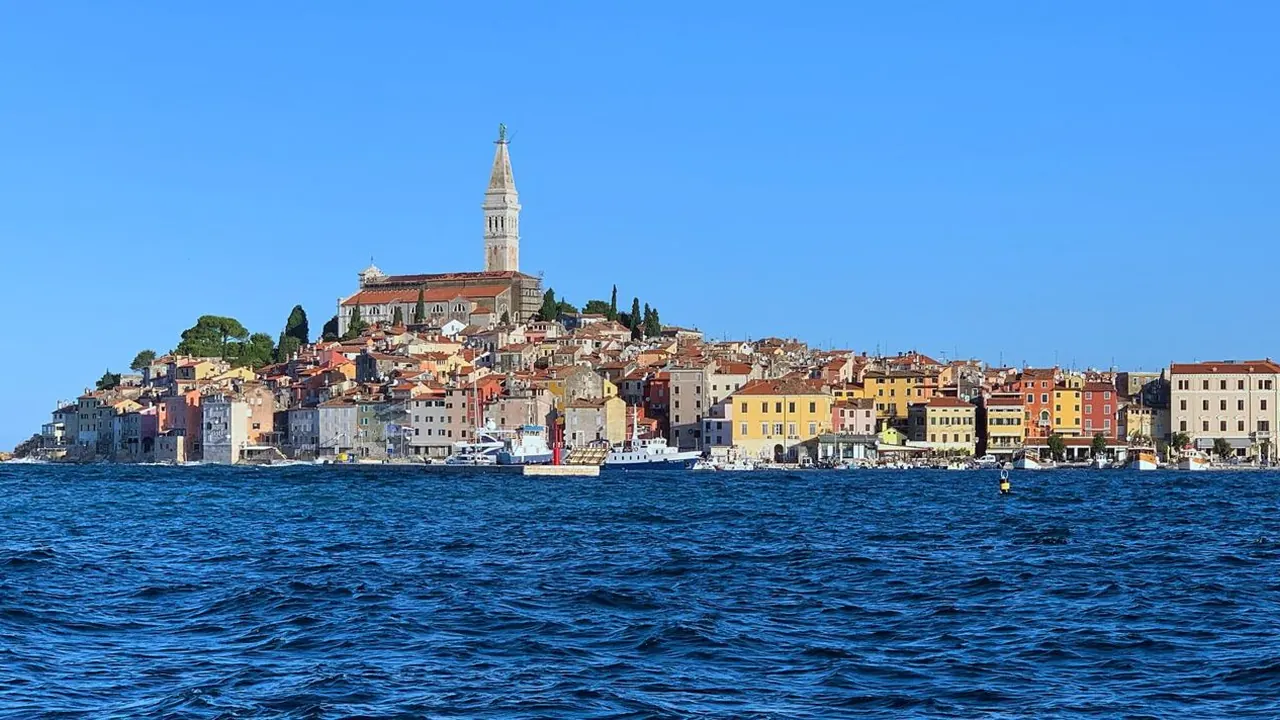
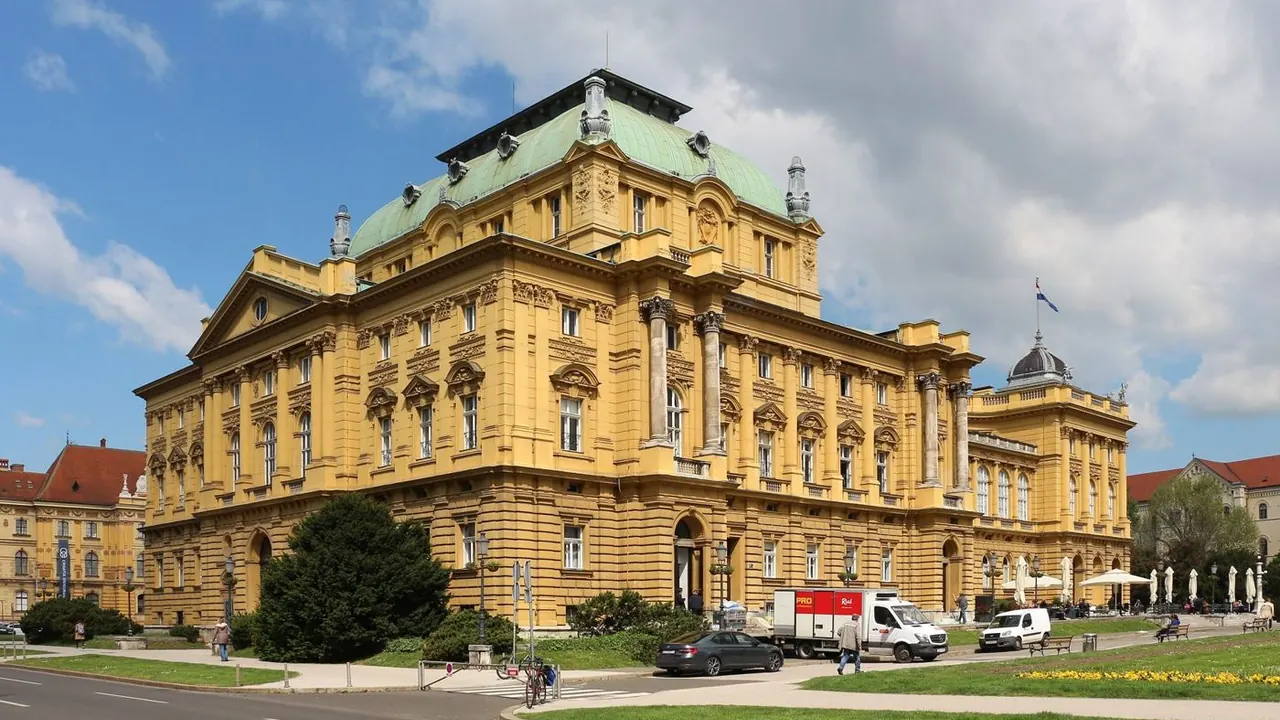
Photos: Rovinj by Vyacheslav Bukharov, CC BY-SA 4.0, cropped; Zagreb by Bernard Gagnon, CC BY-SA 4.0, cropped.
Rovinj or Zagreb?
Our verdict in twelve categories, each scored against the same fixed benchmark cities, and the climate month by month, so you can choose for your trip.
Choose Rovinj for
- beaches
- wellness
- day trips
Rovinj is the choice for a slow summer week by the sea. You swim off limestone ledges in clear Adriatic water, eat long fish dinners on the harbour, and drive out to Pula's amphitheatre, Poreč's mosaics and the hill towns of inland Istria. It suits couples and families who want a pretty old town with the sea at its foot, and who don't mind coastal prices or needing a car.
Choose Zagreb for
- live music and the arts
- prices
- nightlife
If you want a city to explore for a few days rather than a shore to lie on, pick Zagreb. The Upper Town and the Lower Town's Green Horseshoe give it more to see. The Croatian National Theatre and Lisinski Hall offer evenings Rovinj can't match, and Tkalčićeva is still going after the coast has gone to bed. Zagreb is also cheaper, easy to get around by tram and works in any season, though the nearest sea is a long day away.
Scoreboard
Twelve categories on one fixed scale from 0 to 100. The shaded stretch is the gap between the two.
Your match
Pick a travel style or drag the sliders, and both match scores follow your weighting.
Wins on beaches and wellness with your weighting.
Wins on live music and the arts and prices with your weighting.
What matters to you?
Category by category
What the scores mean for a trip.
Beaches & swimming
This is where the two differ most. Rovinj has several kilometres of rocky shore running south into the Golden Cape, with limestone ledges, small pebble coves and bathing platforms in very clear water. You can swim right below the old town walls. It is rock rather than sand, so bring water shoes.
Zagreb has no sea at all. Lake Jarun and Bundek are fine on a hot afternoon, but the Adriatic is about two hours' drive away, so in practice it means adding a stop on the coast.
Food & drink
Neither city eats better than the other. The cooking is just very different. Rovinj is coastal Istria: grilled fish, scampi buzara, fuži and pljukanci with truffle, Malvazija and Teran. Its best meals are often in the family konobas out in the countryside, while the harbour is lined with menus aimed at passing visitors.
Zagreb looks to Central Europe, with štrukli, turkey with mlinci and Zagorje sausages, and Dolac market at the centre of it all. Its real pleasure is the café terrace and the Saturday promenade around Flower Square, which Rovinj's small morning market doesn't offer.
Culture & sights
Rovinj's main sight is the town itself. It is a single intact Venetian quarter on a former island, with lanes climbing past the Balbi Arch and Grisia up to St Euphemia, whose bell tower you can climb for the view over the roofs and islands. Add the Batana House and its fishing boats, and a slow afternoon covers it.
Zagreb has far more to see. The medieval Upper Town alone, with St Mark's tiled roof, the Stone Gate and the twin-spired cathedral, is a match for Rovinj's old town. Below it, the Lower Town's Green Horseshoe is lined with theatres, galleries and the Art Pavilion. Beyond these come the Mimara, the Museum of Naive Art and the Museum of Broken Relationships, as well as Mirogoj cemetery with its arcades and ivy-covered domes. All of that fills two unhurried days.
Nightlife
Zagreb is the place to stay out. Tkalčićeva's terraces, the cocktail and craft beer bars around Flower Square, the summer clubs at Jarun and the student venues keep it going all year, though it is friendly rather than wild.
In Rovinj the evening is a long dinner and a drink on the rocks at sunset, with a few waterfront bars in summer. The old town is quiet by midnight, and out of season there is very little at all.
Nature & outdoors
Both have gentle, green country close by, but one is on the sea and the other in the hills. In Rovinj it is all about the water: the pine and cedar paths of the Golden Cape, kayaking and diving around the archipelago's reefs and wrecks, and boat trips into the Lim Fjord to the mussel farms.
In Zagreb it is woodland and mountain. Medvednica rises to about 1,030m at the edge of the city, with beech forest trails and mountain huts a tram and bus ride away. Maksimir park is in town, and the lakes of Plitvice make a long day out.
Day trips
Rovinj has the better surroundings, and the sights are closer together. Pula's amphitheatre and Poreč's Euphrasian Basilica are each about forty minutes away. Motovun, Grožnjan, the Brijuni islands and even Piran and Trieste are within reach, though almost all of it needs a car.
Zagreb's outings are pleasant rather than outstanding: Trakošćan castle and the Zagorje hills, baroque Varaždin, Samobor and its cream cake, and Karlovac's star-shaped fortress. It does have Ljubljana within a long day by train, with no driving needed.
Good for families
Both work equally well with children, in different ways. Rovinj is a seaside vacation, with island boat trips, gelato, and family resorts and campsites with pools. Its rocky shore and steep, polished cobbles are hard going with toddlers and pushchairs.
Zagreb suits a family city break: flat Lower Town streets, trams that take pushchairs, the zoo in Maksimir, the Tesla Technical Museum and the funicular, with lake swimming at Jarun in summer. Neither has a theme park in town.
Getting around
Zagreb is easier. Its compact centre is mostly flat and walkable, the blue trams go almost everywhere, and the funicular saves you the climb to the Upper Town. You only need a car for Plitvice or the Zagorje castles.
Rovinj is easy on foot within town, with a car-free old town and a promenade out to the swimming rocks. Beyond the town there is no railway, so the hill towns, wineries and much of the coast really need a car, and summer parking near the old town is tight.
Shopping & style
Neither city is a shopping destination. Rovinj's buys are small and regional: Istrian truffles, olive oil and wine, plus the galleries and studios along Grisia, which have real character but thin out after summer.
Zagreb has more choice. Ilica has chains and local fashion, there are malls on the edge of town, and the things to take home are distinctive: licitar hearts, neckties, lace, and finds from the Sunday flea market at Britanski trg.
Affordability
Zagreb is clearly easier on the budget. Central rooms, trams and museums are reasonably priced, and market food and a terrace coffee cost little, even if upmarket dinners cost what they would in Western Europe.
Rovinj in July and August charges what a sought-after Mediterranean resort charges, and harbour fish sold by weight adds up fast. Private apartments, campsites and a stay in late spring or September narrow the gap.
Live music & performing arts
Zagreb's stage life is far richer. The Croatian National Theatre puts on opera, ballet and drama, and the Lisinski Concert Hall is home to the Zagreb Philharmonic. The Zagreb Soloists, the Komedija and the jazz clubs round out a season that runs all year, though much of the spoken theatre is in Croatian.
Rovinj has summer concerts in St Euphemia, music on the squares and the occasional bitinada, the local unaccompanied singing tied to the batana boats. Out of season there is little to attend, and for a big concert people drive to Pula's arena.
Wellness & relaxation
Rovinj is the better place to unwind. Its resort hotels along the Golden Cape have well-equipped spas open to outside guests. In May, June and September, long lunches, late swims and evening walks in the pines do the rest, though high summer crowds the centre.
In Zagreb, relaxing means a long café morning or a quiet Upper Town lane. Unlike Rovinj, which has no thermal bathing of its own, Zagreb has warm mineral pools about an hour north at Tuheljske and Krapinske Toplice, where locals go for a weekend soak.
When should you go?
Pick your month. The climate figures are measured averages, not a forecast.
Rovinj in July
Zagreb in July
Daytime high, °C
Rainfall in the month, mm
Where the figures come from
Rovinj's temperatures are measured 64 km from the centre, at Trieste.
Rovinj has no rain gauge within 25 km of the centre, so its rainfall comes from a gridded climate dataset read at the city rather than from a gauge further away.
Temperature and rainfall are climate normals, averaged over the years shown. Rovinj: 1991-2020 normals, Trieste (63.7 km from centre). Zagreb: 1991-2020 normals, Zagreb / Gric (0.6 km from centre).
Rovinj is at its best from June to September. The sea is warm enough for swimming from June and reaches about 26°C in August, and July is the sunniest month of the year. Late spring and late September are good for walking the Golden Cape without the heat. Autumn brings the rain: from September the coast is wetter than Zagreb, November is the wettest month at 125mm, and winter is mild but quiet.
Zagreb has the colder winter, with January highs near 5°C. Its rain is spread through summer and autumn instead of building up late in the year as on the coast. Both cities reach about 29°C in July, which is warm work on the Upper Town slopes. May and September, with highs in the low twenties, are the most comfortable months for walking the city.
Which traveller are you?
On a beach and sun trip, Rovinj wins easily. It has clear water off the rocks below the old town, pine-shaded coves along the Golden Cape and taxi boats out to St Catherine and Red Island. Zagreb's lakes at Jarun and Bundek are only good for cooling off.
For a culture and arts trip, Zagreb fills both the days and the evenings: medieval Gradec and Kaptol, the Mimara and Strossmayer collections and Mirogoj by day, then opera or ballet at the Croatian National Theatre. Rovinj's old town takes an afternoon.
On a tight budget, Zagreb makes the money go further. Central apartments, tram fares, museum entry and food from Dolac market are all reasonably priced. Rovinj in July and August charges resort prices, especially for harbour fish sold by weight.
Before you go
| Measure | Rovinj | Zagreb |
|---|---|---|
| Official language | Croatian | Croatian |
| Currency | Euro (EUR) | Euro (EUR) |
| Sockets | CF230 V, 50 Hz | CF230 V, 50 Hz |
| Driving side | Right | Right |
| Time zone | UTC+1, UTC+2 in summer | UTC+1, UTC+2 in summer |
| Emergency number | 112 | 112 |
| Elevation | 0 m | 127 m |
| Main airport | Pula Airport (PUY)31 km from centre34 non-stop destinations | Zagreb Franjo Tuđman International Airport (ZAG)11 km from centre64 non-stop destinations |
| Public holidays this year | 14 days | 14 days |
By the numbers
| Measure | Rovinj | Zagreb |
|---|---|---|
| City population | 12,968 | 767,131 |
| Museums within 10 km | 1 | 27 |
| UNESCO World Heritage sites within 50 km | 1 | 0 |
| Swim season, months above 21 °C | 4 months | - |
Where else could you go?
Every comparison below shares a destination with this one, so you can follow Rovinj or Zagreb somewhere new.