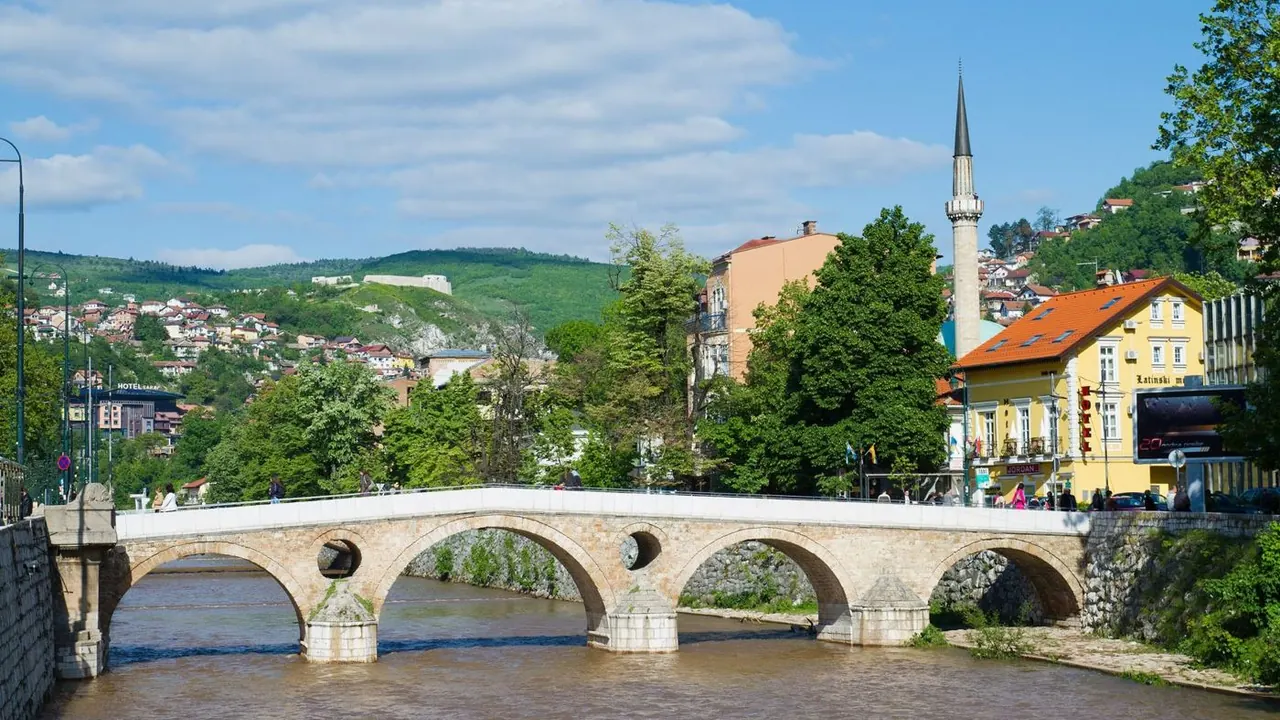
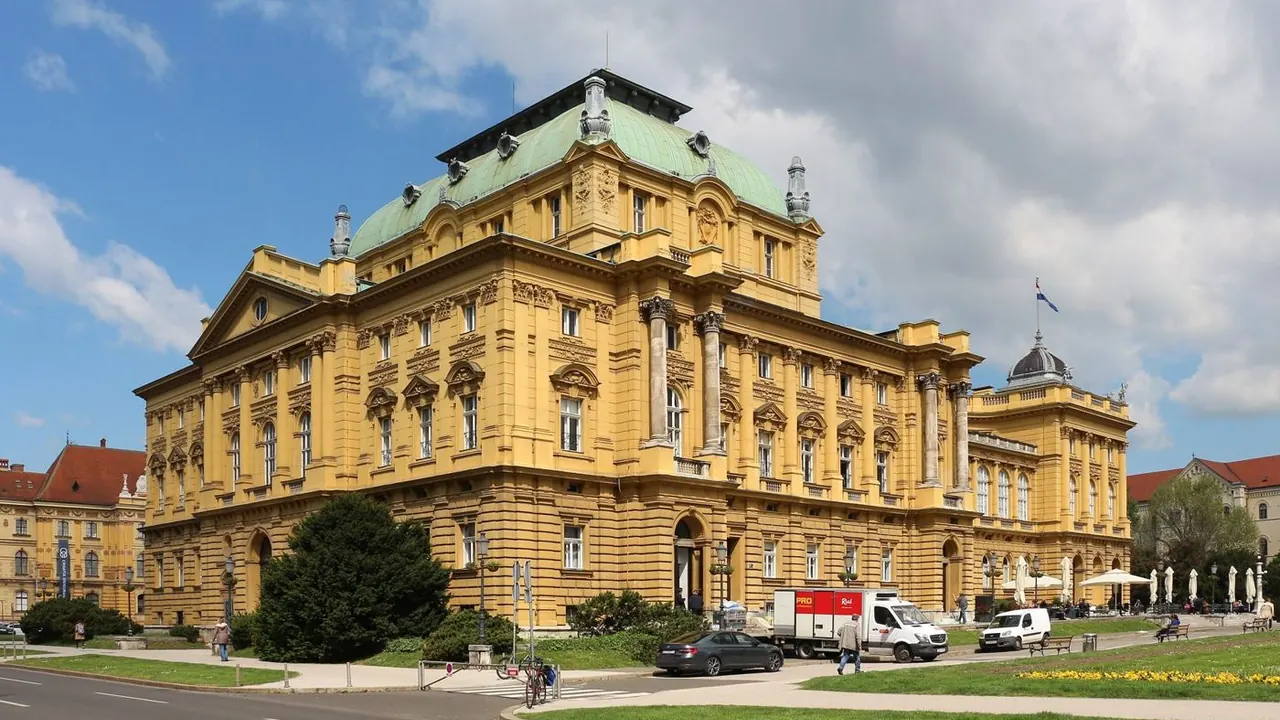
Photos: Sarajevo by Tumi-1983, CC0; Zagreb by Bernard Gagnon, CC BY-SA 4.0, cropped.
Sarajevo or Zagreb?
Our verdict in twelve categories, each scored against the same fixed benchmark cities, and the climate month by month, so you can choose for your trip.
Choose Sarajevo for
- prices
- nature and the outdoors
- wellness
Sarajevo is the pick if you want history you can feel and mountains right outside the city. The Ottoman bazaar, the Austro-Hungarian avenues and the memory of the siege are all within a short walk of each other. The Trebević cable car and the Olympic ski mountains are close by, and your money goes further than in almost any other European capital. It suits curious adults who are happy with a menu of grills, pastries and coffee, and with a city that asks something of you.
Choose Zagreb for
- families
- live music and the arts
- getting around
Zagreb makes more sense for an easy, comfortable stay, especially with children or with evenings at the opera in mind. Its trams cover the city more fully, its parks, zoo and Tesla technical museum give families more to do, and its concert hall and national theatre keep a fuller season. It costs more and its sights are gentler, but it takes less effort to enjoy.
Scoreboard
Twelve categories on one fixed scale from 0 to 100. The shaded stretch is the gap between the two.
Your match
Pick a travel style or drag the sliders, and both match scores follow your weighting.
Too close to call, 1 point apart
Wins on prices and nature and the outdoors with your weighting.
Wins on families and live music and the arts with your weighting.
What matters to you?
Category by category
What the scores mean for a trip.
Beaches & swimming
Neither city is a beach destination, and both send swimmers to fresh water instead. Around Sarajevo the options are scattered: cold mountain rivers, the Jablanica lake on the road south, and hotel or public pools. The coast is about three hours away.
Zagreb has its swimming inside the city, at the pebbly, lifeguarded shores of Lake Jarun and at Bundek across the Sava, both handy on a hot afternoon. It is also an hour closer to the Adriatic, though still too far for a casual day by the sea.
Food & drink
Both cities serve hearty food, but from different traditions. Sarajevo cooks Ottoman-Balkan dishes: ćevapi in somun bread from the grills of Baščaršija, burek sold by weight, lamb slow-cooked under a metal lid, and Bosnian coffee from a copper džezva with a piece of rahat lokum.
Zagreb looks north to Central Europe, with štrukli, turkey with mlinci and Zagorje sausages, and its best produce arrives each morning at Dolac market. It also has the better wine, from Plešivica and Slavonia. Neither city has much international or fine dining, so in both you come for the local cooking.
Culture & sights
Sarajevo has the more powerful set of sights, because so much history is packed into a few streets. Within minutes of each other you find the Ottoman bazaar of Baščaršija, mosques, both cathedrals, the Old Synagogue and the Latin Bridge of 1914. The siege is remembered at the Tunnel of Hope and the War Childhood Museum, and a visit here stays with you.
Zagreb is calmer and more conventional, with a medieval Upper Town above an Austro-Hungarian grid. St Mark's tiled roof, the twin-spired cathedral and the arcades of Mirogoj are lovely, and the Mimara and Naive Art museums are good. Together they make a pleasant two days, but they do not carry the weight that Sarajevo's sights do.
Nightlife
Evenings go much the same way in both cities. Café-bars move from coffee to drinks, students keep a few later venues going, and the mood is sociable rather than wild. In Sarajevo the nights centre on Ferhadija and the Old Town, often end in a cellar bar or over rakija, and cost very little.
Zagreb has a clearer main strip in Tkalčićeva, with more cocktail and craft beer bars tucked into Lower Town courtyards. In summer it has the lakeside clubs at Jarun, which Sarajevo has nothing to match.
Nature & outdoors
Sarajevo is ringed by real mountains. The Trebević cable car leaves from the edge of the Old Town, and the Olympic peaks of Jahorina and Bjelašnica offer skiing in winter and ridge hiking in summer. Beyond them are the shepherds' village of Lukomir above the Rakitnica canyon, with rafting on the Neretva to the south. Trails are lightly marked, so it suits walkers who can find their own way.
Zagreb's outdoors is gentler and better organised: marked paths through beech woods and mountain huts on Medvednica, the lakes of Maksimir park, and cycling along the Sava. Plitvice makes a fine long day, but the country around Zagreb lacks the height and wildness of Sarajevo's hills.
Day trips
Both cities have a good spread of day trips, but they work in different ways. Sarajevo has one outstanding destination in Mostar and its rebuilt Ottoman bridge, about two hours away on a scenic train through the Neretva gorge, with Konjic and Tito's Cold War bunker on the way. Blagaj's dervish house and the fortress village of Počitelj pair well with a Mostar visit, and the UNESCO-listed bridge at Višegrad lies to the east. Roads are slow and winding, so a car or a tour helps.
Zagreb has nothing on Mostar's level, but it has more variety closer to the city. Samobor and its cream cake are half an hour away, and Trakošćan castle, the Zagorje hills and baroque Varaždin make easy outings. Ljubljana works as a long day by train.
Good for families
Zagreb is the easier city with children. Its flat Lower Town, the zoo in Maksimir park and the Tesla technical museum with its old trams and planes fill several relaxed days. The short funicular is fun for younger children, and in summer there are lakes to splash in.
Sarajevo welcomes children warmly, and the cable car, the carriage rides to Vrelo Bosne and the small zoo at Pionirska dolina are good outings. Beyond these, its main sights deal with war, the hillside lanes are steep, and grill smoke and winter smog are hard on small lungs.
Getting around
Zagreb is the simpler city to get around. Its blue trams form a dense network, the tiny funicular saves the climb to the Upper Town, and buses run on to Medvednica and the airport. You only need a car for trips out of the city.
Sarajevo's flat centre is just as easy on foot, but its historic tram is essentially one line along the valley floor. The buses and minibuses climbing the steep slopes are harder for a visitor to follow. Taxis are cheap and plentiful, and they are the usual way to reach the Tunnel of Hope and the airport.
Shopping & style
Neither city is a place to go shopping, but each has its own strength. In Sarajevo it is craft. Coppersmiths on Kazandžiluk still hammer coffee sets by hand, and the lanes around the Bezistan sell kilims, leather slippers and filigree jewellery, though much of it is souvenir stock and needs a careful look.
Zagreb is more practical, with chains and a little local design along Ilica. The things to take home are licitar hearts, neckties, lace, truffle products and food from Dolac, and the flea market at Britanski trg is a pleasant browse.
Affordability
Sarajevo is clearly the cheaper of the two and among the least expensive capitals in Europe. Meals from the grills and pita bakeries, coffee in the bazaar, trams and central guesthouses all leave your budget largely untouched. Prices rise only a little in the Old Town and during the summer film festival.
Zagreb is affordable for an EU capital, with reasonably priced apartments, tram fares and market food. But upmarket restaurants, cocktails and the best hotels cost what they would in Western Europe, so it is good value rather than cheap.
Live music & performing arts
Zagreb has the fuller stage calendar. The Croatian National Theatre puts on opera, ballet and drama, and the Lisinski Concert Hall is home to the Zagreb Philharmonic and visiting orchestras. In summer there are open-air concerts in Upper Town courtyards and a large rock festival at Jarun.
Sarajevo's National Theatre and Philharmonic are smaller, and the city's stage life is at its best during its festivals: MESS for international theatre in autumn and a long-running jazz festival in November. What Sarajevo has that Zagreb lacks is sevdah, the melancholy Bosnian love song, which you may hear in traditional restaurants.
Wellness & relaxation
Sarajevo has a thermal spa inside the city. The sulphurous springs at Ilidža, used since Roman times, are at the end of the tram line, with the shaded streams of Vrelo Bosne nearby. The Bosnian habit of lingering over one coffee adds to the slow pace, though winter smog makes the city less restful.
Zagreb has no bathing tradition of its own and relies on hotel wellness floors. Its thermal resorts, such as Tuheljske and Stubičke Toplice, are about an hour away in Zagorje. Within the city, the calm comes from long café mornings and quiet Upper Town lanes.
When should you go?
Pick your month. The climate figures are measured averages, not a forecast.
Sarajevo in July
Zagreb in July
Daytime high, °C
Rainfall in the month, mm
Temperature and rainfall are climate normals, averaged over the years shown. Sarajevo: 1991-2020 normals, Sarajevo-Bejelave (2 km from centre). Zagreb: 1991-2020 normals, Zagreb / Gric (0.6 km from centre).
Both cities follow the same inland pattern. Winters are cold, with daytime highs around 5°C in December and January. Summers are warm without being punishing. July and August reach about 28°C in both, which is comfortable for walking and warm enough for a swim in one of Zagreb's lakes or a cold dip in the rivers around Sarajevo. May, June and September are the most pleasant months for sightseeing in either city.
The differences are in the rain and the sun. Sarajevo's rain is spread fairly evenly through the year, with autumn and early winter a little wetter. Zagreb has drier winters and saves its heaviest rain for late summer and autumn, reaching 104mm in September. From late spring Zagreb is the sunnier city, with noticeably more bright hours in May. In winter Sarajevo has more to offer, because the snow on Jahorina and Bjelašnica turns December to February into a ski season.
Which traveller are you?
For an outdoors trip, Sarajevo is the better base. You can take the cable car from the Old Town into the Trebević forests, the Olympic ridges are under an hour away, and Lukomir and rafting on the Neretva are wilder than Zagreb's gentle Medvednica woods.
On a family trip with young children, Zagreb is easier. Its streets are flat, the trams take pushchairs, and there is the Maksimir zoo, a hands-on technical museum and summer lake swimming. In Sarajevo the main sights are about war and the slopes are steep.
On a tight budget, Sarajevo makes your money go further. Grilled meals, bakery snacks, taxis and central guesthouses all cost very little. Zagreb is fair value, but its better restaurants and bars charge about what you would pay in Western Europe.
Before you go
| Measure | Sarajevo | Zagreb |
|---|---|---|
| Official language | Croatian, Serbian, Bosnian | Croatian |
| Currency | Convertible Mark (BAM) | Euro (EUR) |
| Sockets | CF230 V, 50 Hz | CF230 V, 50 Hz |
| Driving side | Right | Right |
| Time zone | UTC+1, UTC+2 in summer | UTC+1, UTC+2 in summer |
| Emergency number | 112 | 112 |
| Elevation | 518 m | 127 m |
| Main airport | Sarajevo International Airport (SJJ)7 km from centre38 non-stop destinations | Zagreb Franjo Tuđman International Airport (ZAG)11 km from centre64 non-stop destinations |
| Public holidays this year | 8 days | 14 days |
By the numbers
| Measure | Sarajevo | Zagreb |
|---|---|---|
| City population | 275,524 | 767,131 |
| People per km² | 1,947 | - |
| Museums within 10 km | 25 | 27 |
| UNESCO World Heritage sites within 50 km | 1 | 0 |
Where else could you go?
Every comparison below shares a destination with this one, so you can follow Sarajevo or Zagreb somewhere new.