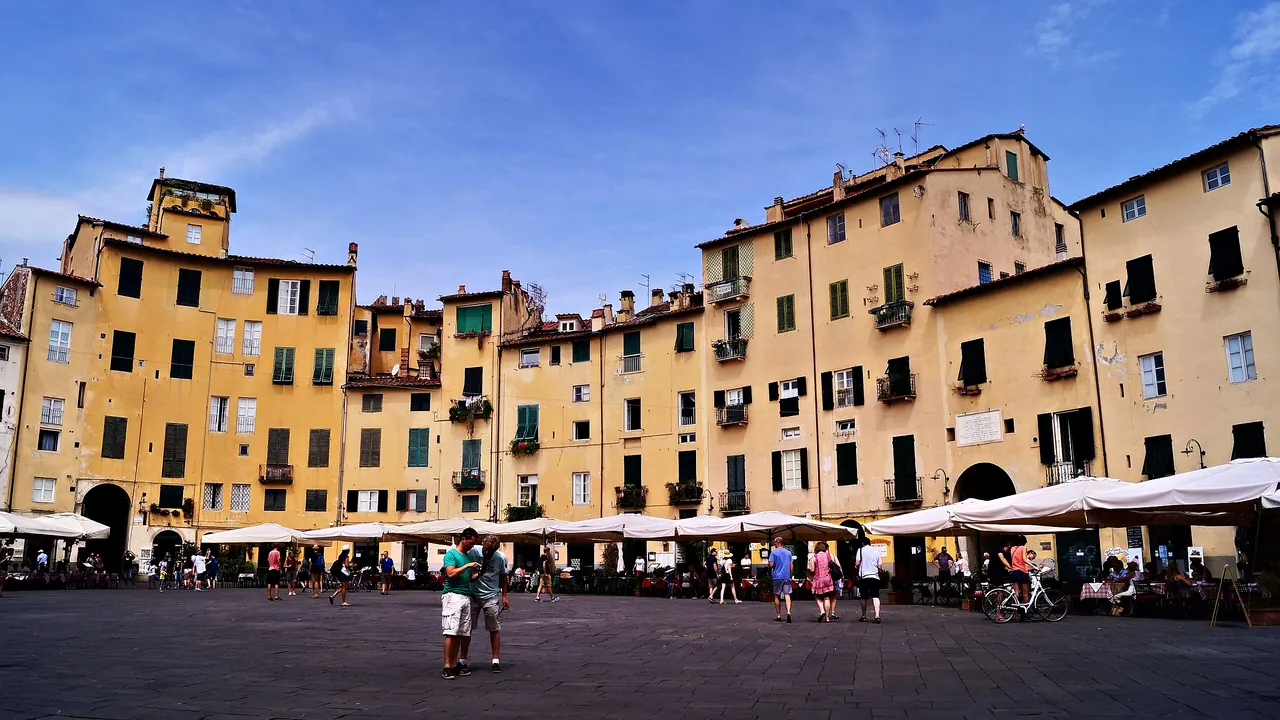
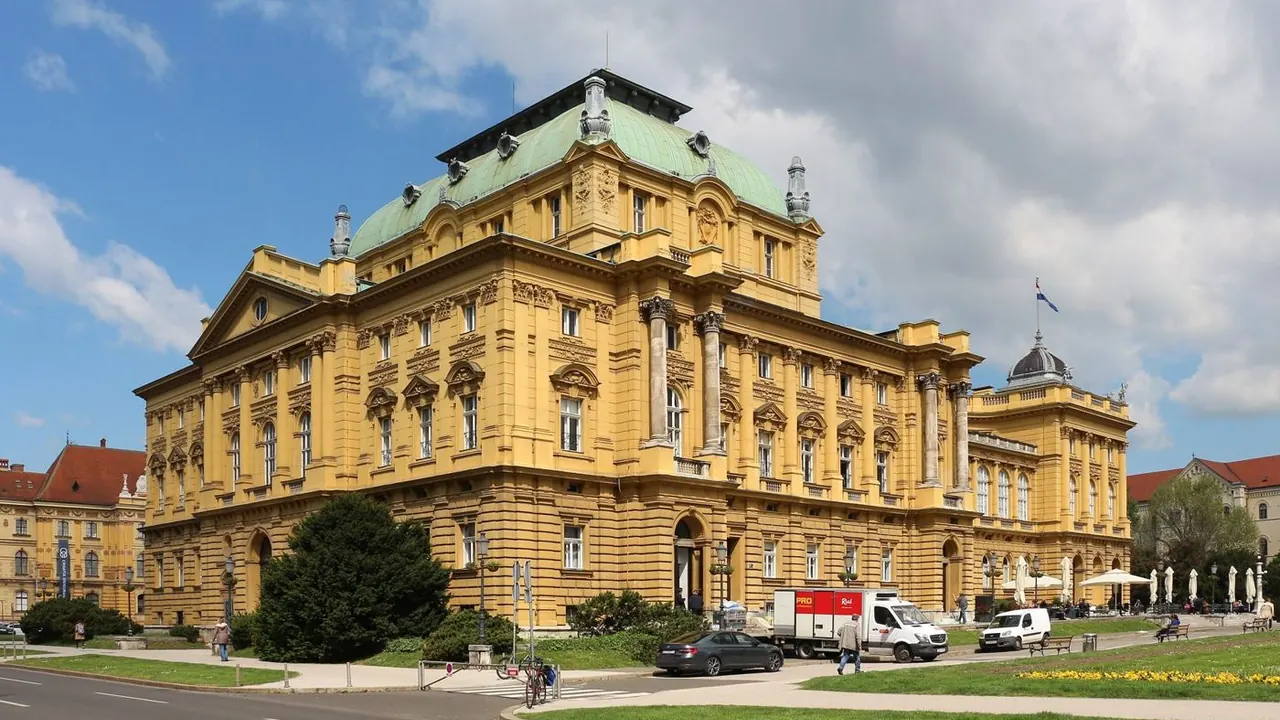
Photos: Lucca by Stefano Sansavini, CC BY-SA 4.0, cropped; Zagreb by Bernard Gagnon, CC BY-SA 4.0, cropped.
Lucca or Zagreb?
Our verdict in twelve categories, each scored against the same fixed benchmark cities, and the climate month by month, so you can choose for your trip.
Choose Lucca for
- beaches
- day trips
- wellness
Lucca suits travellers who want an old Tuscan town to live in for a few days and use as a base. Inside its intact walls you can walk or cycle everywhere, the Romanesque churches and the oval piazza are the sights, and Pisa, Florence, the villa gardens and the Versilia beaches are all short train or car rides away. It is the better choice if your trip mixes art, countryside and an afternoon swim, and you don't mind quiet evenings.
Choose Zagreb for
- nightlife
- prices
Zagreb is the better pick for a lively, good-value city break with a Central European feel. Café terraces and bar streets fill up at night, a dense tram network links the Upper Town, the Lower Town parks and Medvednica's forests, and your money goes further. It has no sea and its excursions are gentler, so it works best as a self-contained city stay or as one stop on a longer Croatian route.
Scoreboard
Twelve categories on one fixed scale from 0 to 100. The shaded stretch is the gap between the two.
Your match
Pick a travel style or drag the sliders, and both match scores follow your weighting.
Wins on beaches and day trips with your weighting.
Wins on nightlife and prices with your weighting.
What matters to you?
Category by category
What the scores mean for a trip.
Beaches & swimming
Lucca has a real beach within easy reach. The Versilia coast starts at Viareggio, a short train ride away, with wide sandy beaches that shelve gently. You can choose between rows of umbrellas at the beach clubs or the free dunes and pine woods of the Lecciona.
Zagreb's options are Lake Jarun and the smaller Bundek, with pebbly shores and lifeguards. They are pleasant on a hot afternoon, but the sea is a two-hour drive away. Anyone who wants the Adriatic will need to plan a separate stay on the coast.
Food & drink
The two cities are about level on food, and both are plain and filling rather than refined. Lucca serves rustic Tuscan dishes in trattorias inside the walls: spelt soup, meat-filled tordelli, cecina from bakery counters and mild local olive oil, with Colline Lucchesi wines to drink.
Zagreb's cooking faces Central Europe: baked štrukli, turkey with mlinci, Zagorje sausages. Its centre of gravity is Dolac market and the café terraces rather than the dinner table. Neither city offers much international range, but Zagreb's coffee culture gives the day a more social rhythm.
Culture & sights
Lucca has the stronger set of sights, and the town itself is the main one. You get complete Renaissance walls, the tiered marble arcades of San Michele in Foro, San Frediano's gold mosaic, and Ilaria del Carretto's tomb in the cathedral, all in a medieval street grid that is easy to read.
Zagreb's heritage is more spread out and more recent. The hilltop Upper Town has St Mark's tiled roof and the Stone Gate, and below it the Austro-Hungarian Lower Town is set around a chain of parks. Its museums cover more ground than Lucca's, from naive art to the Museum of Broken Relationships, and Mirogoj cemetery is a highlight. Still, it has nothing as striking as Lucca's churches.
Nightlife
Zagreb is the place for a night out. Tkalčićeva's terraces stay full on warm evenings, smaller cocktail and craft beer bars fill the courtyards around Flower Square, and in summer the lakeside clubs at Jarun take over. Students keep alternative venues going all year.
Lucca's evenings are an aperitivo in a piazza, a long dinner and a walk along Via Fillungo, and the centre is quiet by midnight. To dance in summer you have to drive or take a taxi to the Versilia coast.
Nature & outdoors
Both cities have green country close by, but Lucca's is more varied. The marble peaks of the Apuan Alps rise within about an hour and offer serious hiking. Add the chestnut woods of the Garfagnana and the reed beds of Lake Massaciuccoli, which are good for birdwatching, and Lucca covers more kinds of landscape.
Zagreb's strength is access. A tram and a short bus ride take you to the beech forests and mountain huts of Medvednica, and Maksimir park is in the city. The countryside beyond is gentle hills, and Plitvice's lakes are a long day's drive away.
Day trips
This is where Lucca pulls furthest ahead. Pisa is half an hour away by train and Florence just over an hour, and the same line serves Pistoia and Montecatini. Closer to town are the villa gardens at Marlia and Collodi, and up the coast are Pietrasanta's sculpture studios and the Carrara quarries.
Zagreb's excursions are pleasant but quieter: Trakošćan castle and the Zagorje hills, Varaždin's baroque centre, and Samobor's cream cake. Ljubljana is just possible as a long day out. None of these matches the pull of Pisa or Florence.
Good for families
For families the two are about level, but in different ways. Lucca's appeal is its small, flat, mostly car-free centre: riding a family quadricycle around the walls is the classic outing, and Pinocchio Park and the beach are both close.
Zagreb has more for children to visit inside the city. There is the zoo in Maksimir, the Nikola Tesla Technical Museum with its trams and mock mine, the funicular, and the lakes to swim in during summer. Big trams that take pushchairs make moving between them easy.
Getting around
Both are easy, in different ways. Lucca is a town for walking and cycling: inside the walls it is flat and mostly closed to traffic, with bike rental at every gate and the station just outside. The villas and hill villages, though, are much easier to reach by car.
Zagreb is a proper city with a dense blue tram network, a funicular up to the Upper Town and buses to Medvednica. You need to allow for steep cobbles at the top and slower trams at rush hour.
Shopping & style
Neither city is a shopping destination, and the two are about level. Lucca has more character: the old Liberty shopfronts along Via Fillungo, delicatessens selling farro and olive oil, and a monthly antiques market around the cathedral, one of the oldest in Italy.
Zagreb offers more ordinary shopping, with chain stores on Ilica and malls on the edge of town. Its best souvenirs are painted licitar hearts, neckties and lace, and there is a Sunday flea market at Britanski trg.
Affordability
Zagreb is clearly easier on the wallet. Central apartments, tram fares, museum entry and market food are all reasonably priced, and a coffee on a terrace counts as an everyday habit, not a treat.
Lucca is cheaper than Florence but still costs what you would expect in central Italy. There are few hotels inside the walls and they fill up in summer, so staying outside the walls often saves money.
Live music & performing arts
Lucca's music belongs to one composer, while Zagreb's is the season of a capital. Puccini was born in Lucca, and for most of the year short recitals of his arias are held in a church in the centre. The Teatro del Giglio has its own season, and in summer there is open-air opera by the lake at Torre del Lago, plus big outdoor concerts in Piazza Napoleone.
Zagreb's calendar is wider but less focused. The Croatian National Theatre stages opera and ballet, the Lisinski hall is home to the Philharmonic, and there are jazz and rock clubs. Much of the spoken theatre, though, is in Croatian.
Wellness & relaxation
Lucca makes the better base for a spa day. By train, Montecatini's grand belle époque spa buildings are about half an hour away, as is the warm cave at Monsummano. Bagni di Lucca's steam grottoes in the Serchio valley take under an hour by road. In town, the car-free streets and shaded walls make the pace slow enough to relax.
Zagreb's spa options in town are mostly hotel wellness floors. The thermal resorts of Zagorje, such as Tuheljske and Stubičke Toplice, are about an hour away. Here, relaxing mostly means long café mornings and quiet lanes in the Upper Town.
When should you go?
Pick your month. The climate figures are measured averages, not a forecast.
Lucca in July
Zagreb in July
Daytime high, °C
Rainfall in the month, mm
Temperature and rainfall are climate normals, averaged over the years shown. Lucca: 1991-2020 normals, Pisa / S. Giusto (21.4 km from centre). Zagreb: 1991-2020 (sunshine 1981-2010, rainfall 1981-2010) normals, Zagreb / Gric (0.6 km from centre).
Lucca's beach season on the Versilia coast runs from June to September, when the sea warms to about 25°C. July and August are hot in the plain, with daytime highs near 30°C, so sightseeing works best early or late in the day. May and early June are the most comfortable months for walking the walls and the hills, and they are dry and sunny. From September the rain arrives, and by November it reaches about 132mm a month, so late autumn needs an umbrella.
Zagreb has proper continental seasons. Winters are colder, with January highs around 5°C, and summers are slightly milder than Lucca's. Its rain falls the other way round. Summer is fairly wet, with June bringing about 90mm in thundery bursts, while winter is drier. Late spring and early autumn are the best times to explore on foot. Zagreb has no sea, so summer there means cooling off at the lakes.
Which traveller are you?
On a beach and sun trip, choose Lucca. The long sandy beaches of Versilia are less than half an hour away by train, and you can go back to the old town for dinner. From Zagreb, the Adriatic is a two-hour drive and the city lakes are only for cooling off.
For a food and nightlife trip, Zagreb comes out ahead. The hearty regional cooking is equally good in both. In Lucca, though, the evening ends with a stroll on the walls, while Zagreb carries on along Tkalčićeva's terraces, in courtyard cocktail bars and at Jarun's summer clubs.
On a trip on a tight budget, Zagreb gives you more to do for less. Lucca's walls and churches cost nothing, but a room near them does. In Zagreb, bakery snacks, a walk through Mirogoj's arcades and a tram out to Medvednica's trails easily fill a whole day.
Before you go
| Measure | Lucca | Zagreb |
|---|---|---|
| Official language | Italian | Croatian |
| Currency | Euro (EUR) | Euro (EUR) |
| Sockets | CFL230 V, 50 Hz | CF230 V, 50 Hz |
| Driving side | Right | Right |
| Time zone | UTC+1, UTC+2 in summer | UTC+1, UTC+2 in summer |
| Emergency number | 112 | 112 |
| Elevation | 19 m | 127 m |
| Main airport | Pisa International Airport (PSA)21 km from centre82 non-stop destinations | Zagreb Franjo Tuđman International Airport (ZAG)11 km from centre65 non-stop destinations |
| Public holidays this year | 13 days | 14 days |
By the numbers
| Measure | Lucca | Zagreb |
|---|---|---|
| City population | 88,798 | 767,131 |
| People per km² | 478 | - |
| Museums within 10 km | 20 | 27 |
| UNESCO World Heritage sites within 50 km | 4 | 0 |
| Swim season, months above 21 °C | 4 months | - |
Where else could you go?
Every comparison below shares a destination with this one, so you can follow Lucca or Zagreb somewhere new.