Bulgaria
Plovdiv
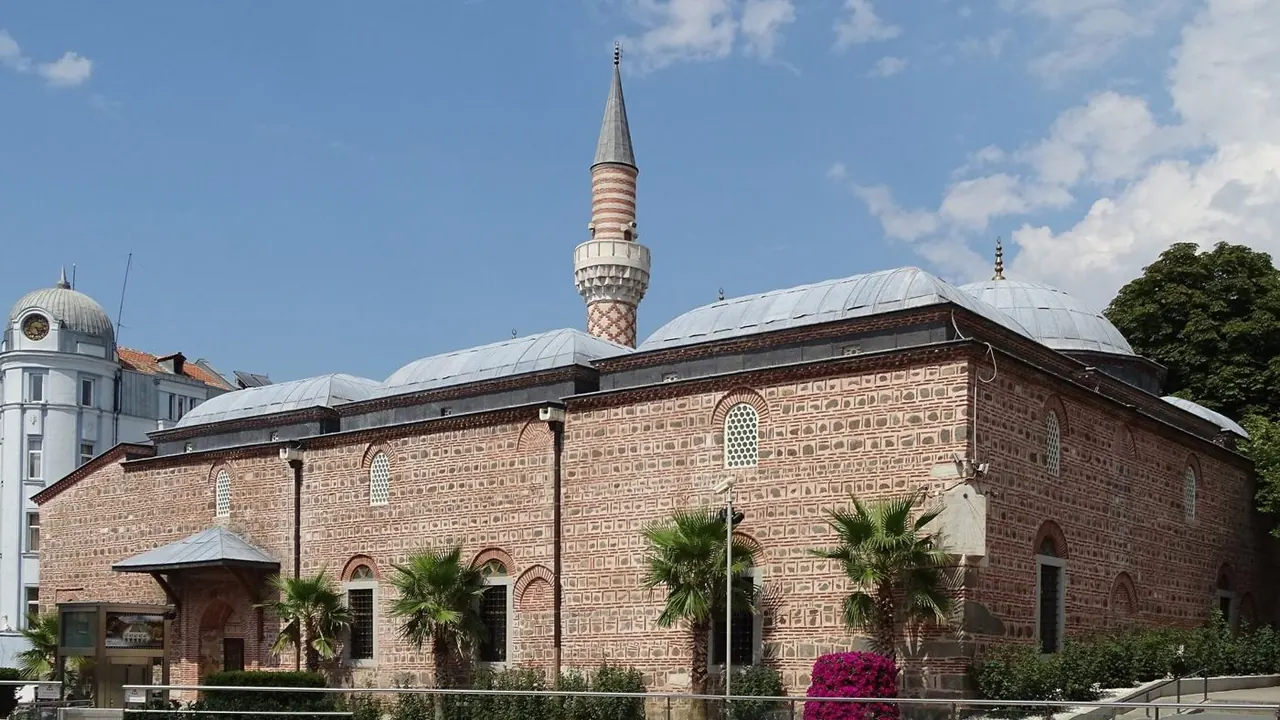
The Dzhumaya Mosque
- Affordable cities78
- Day trips70
- Nature & outdoors68
Photo: Ad Meskens, CC BY-SA 4.0, cropped
Match
50
Every category weighted equally
- Beach & sun47
- Culture & arts55
- Food & nightlife50
- Family trip51
- Outdoors55
- Relax & unwind48
- Shopping & style50
- On a budget53
Plovdiv in twelve categories
Our verdict on each, scored 0 to 100 against the same fixed benchmark cities, so a score means the same thing on every page.
Beaches & swimming. Scores 7 out of 100.
Food & drink. Scores 50 out of 100.
Culture & sights. Scores 66 out of 100.
Nightlife. Scores 42 out of 100.
Nature & outdoors. Scores 68 out of 100.
Day trips. Scores 70 out of 100.
Good for families. Scores 40 out of 100.
Getting around. Scores 65 out of 100.
Shopping & style. Scores 33 out of 100.
Affordability. Scores 78 out of 100.
Live music & performing arts. Scores 42 out of 100.
Wellness & relaxation. Scores 44 out of 100.
Plovdiv category by category
Beaches & swimming
7Plovdiv sits inland on the Thracian plain, around 250km from the Black Sea, so a beach means a separate trip of several hours to the coast. In the hot summers locals cool off in outdoor pools, at the rowing canal on the western edge of town or at mountain reservoirs in the Rhodopes. Anyone who wants sea and sand should add a few days on the coast instead.
Food & drink
50Eating in Plovdiv means Bulgarian home cooking: shopska salad, grilled kebapche and kyufte, clay-pot kavarma, banitsa pastry for breakfast and thick yoghurt with everything. Traditional mehanas in the Old Town serve it in wooden-beamed rooms, while the small streets of Kapana are full of modern bistros, craft beer bars and coffee places with tables outside.
The real strength is wine. The city sits in the Thracian Valley, and local Mavrud and Rubin reds turn up on every list, with wineries out towards Asenovgrad and Brestovitsa. Range is narrow beyond Bulgarian and Balkan cooking, and there is little in the way of fine dining.
Culture & sights
66Plovdiv is one of the oldest continuously inhabited cities in Europe, and it shows in layers. The Roman theatre, cut into the hillside with views over the city, is the great sight, and parts of the Roman stadium lie open beneath the main pedestrian street. Nearby are the remains of the forum, and the Small Basilica and Great Basilica, which hold fine early Christian floor mosaics.
Above them, the Old Town on its three hills is a quarter of cobbled lanes and richly painted 19th-century National Revival merchant houses, several open as museums, including the Ethnographic Museum. The Ottoman Dzhumaya Mosque, the Archaeological Museum with its Thracian finds and the old hilltop fortifications round it out. All of it can be seen on foot in two or three days.
Nightlife
42Evenings centre on Kapana, a grid of small streets just off the main square where craft beer bars, wine bars and cocktail places spill onto the pavements on warm nights. Students keep it lively through term, and summer weekends run late. There are a handful of clubs and some bars along the river, but the scene is small, and most visitors end the night over a glass of local wine rather than on a dance floor.
Nature & outdoors
68Inside the city, the rocky hills known as the tepeta give short climbs and views over the rooftops, with the Rhodope Mountains visible to the south. Those mountains begin barely 20km away, beyond Asenovgrad, with forested valleys, gorges and walking trails, and the ski area of Pamporovo is around an hour and a half away. To the north, the Central Balkan range is about an hour's drive, with higher hiking country. Summers on the plain are hot and winters fairly mild, so spring and autumn are best for walking, and a car makes all of it much easier.
Day trips
70Plovdiv makes a good base for central Bulgaria. Bachkovo Monastery, one of the country's most important, is about half an hour south, past the cliff-top Asenovgrad fortress. The Roman spa town of Hisarya, with its massive walls, and the Thracian temple complex at Starosel lie within an hour. Kazanlak, with its UNESCO-listed Thracian tomb, the Valley of Roses and the Shipka memorial, is about an hour and a half away. So is Koprivshtitsa, a village of painted Revival houses.
Sofia is roughly an hour and a half by car, and there are wine estates all around the plain. Buses and trains are slow and infrequent on some routes, so a hire car opens up far more.
Good for families
40Plovdiv is relaxed, easy-going and welcoming to children, and the long pedestrian main street makes strolling with a pushchair simple. The Tsar Simeon Garden, with its evening singing fountains, the big Lauta park and the rowing canal area with its paths and playgrounds are the main family outings. Climbing the hills and running around the Roman theatre usually goes down well. Beyond that there is little made specifically for children, the Old Town's cobbles are steep and uneven, and midsummer heat can be tiring.
Getting around
65The centre is compact and made for walking. A long car-free main street runs from the station side of town to the Old Town, and the Roman ruins, Kapana and most museums lie within a short stroll of it. The Old Town hills are steep, with polished cobbles that are hard on ankles and wheels. Buses cover the rest of the city but are of limited use to a visitor, and taxis are plentiful. Trips into the countryside are easiest by car.
Shopping & style
33The main pedestrian street is lined with high-street chains and everyday shops, and large malls sit on the edges of town. More interesting are the small design studios, galleries and craft shops tucked into Kapana, and the antique and souvenir stalls on the way up into the Old Town. Rose oil cosmetics, embroidered textiles, pottery and local wine are the usual things to take home. There is no luxury shopping to speak of.
Affordability
78Plovdiv is one of the cheapest cities in the European Union to visit. Guesthouses and mid-range hotels in and around the Old Town cost little, a full meal with local wine in a mehana is modest, and taxis are cheap. Most of the sights charge small entrance fees, and much of what makes the city enjoyable, from the ruins along the main street to evenings in Kapana, costs nothing at all.
Live music & performing arts
42The unforgettable setting is the Roman theatre, which comes back to life on summer evenings for opera, concerts and festival performances under the stars. During the rest of the year the city has its own opera company, a philharmonic orchestra and a drama theatre, mostly performing in Bulgarian. There are occasional festivals, including an established jazz festival. The scene is modest and local, and for a visitor, getting a summer night at the ancient theatre is the real prize.
Wellness & relaxation
44Plovdiv has no thermal baths of its own, and spa options in town are mostly in hotels. Its restorative side is its pace: locals take pride in aylyak, an untranslatable art of taking things slowly, and long hours over coffee under the plane trees are part of the city's character. For proper bathing, the mineral spring town of Hisarya is about 45 minutes away, and the spa resort of Velingrad in the western Rhodopes is around an hour and a half, both with warm mineral pools and treatments.
When should you go?
Pick a month to see what it is like. The climate figures are measured averages, not a forecast.
Plovdiv in July
Daytime high, °C
Rainfall in the month, mm
The whole year
Shaded against this city’s own year: the deepest cell is its best month for that figure and the palest its weakest.
Where the figures come from
Plovdiv has no rain gauge within 25 km of the centre, so its rainfall comes from a gridded climate dataset read at the city rather than from a gauge further away.
Plovdiv's sunshine is measured 75 km from the centre, at Kurdjali.
Temperature and rainfall are climate normals, averaged over the years shown. Plovdiv: 1997-2020 (sunshine 1991-2020, rainfall 1991-2020) normals, Plovdiv (1.2 km from centre).
Before you go
| Measure | Plovdiv |
|---|---|
| Official language | Bulgarian |
| Currency | Euro (EUR) |
| Sockets | CF230 V, 50 Hz |
| Driving side | Right |
| Time zone | UTC+2, UTC+3 in summer |
| Emergency number | 112 |
| Elevation | 172 m |
| Main airport | Plovdiv International Airport (PDV)12 km from centre8 non-stop destinations |
| Public holidays this year | 15 days |
By the numbers
| Measure | Plovdiv |
|---|---|
| City population | 333,994 |
| People per km² | 3,274 |
| Museums within 10 km | 18 |
| UNESCO World Heritage sites within 50 km | 0 |
Compare Plovdiv with
Every comparison with a written verdict behind it.