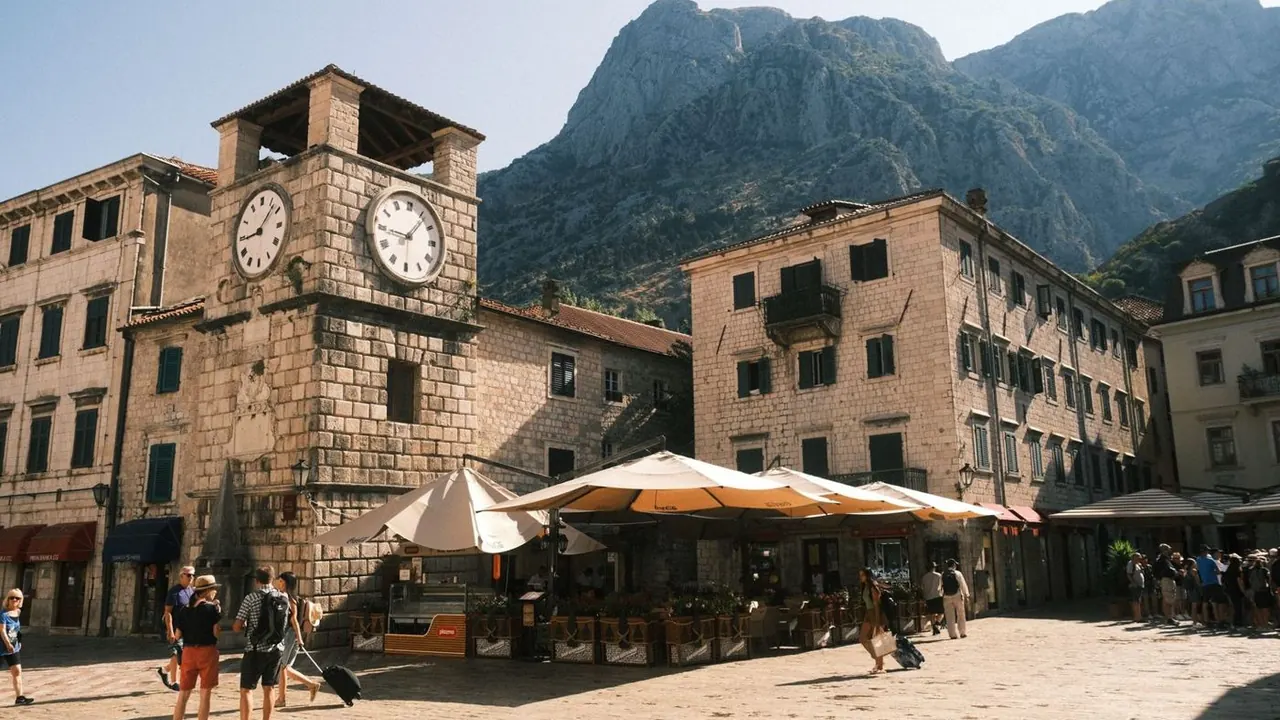
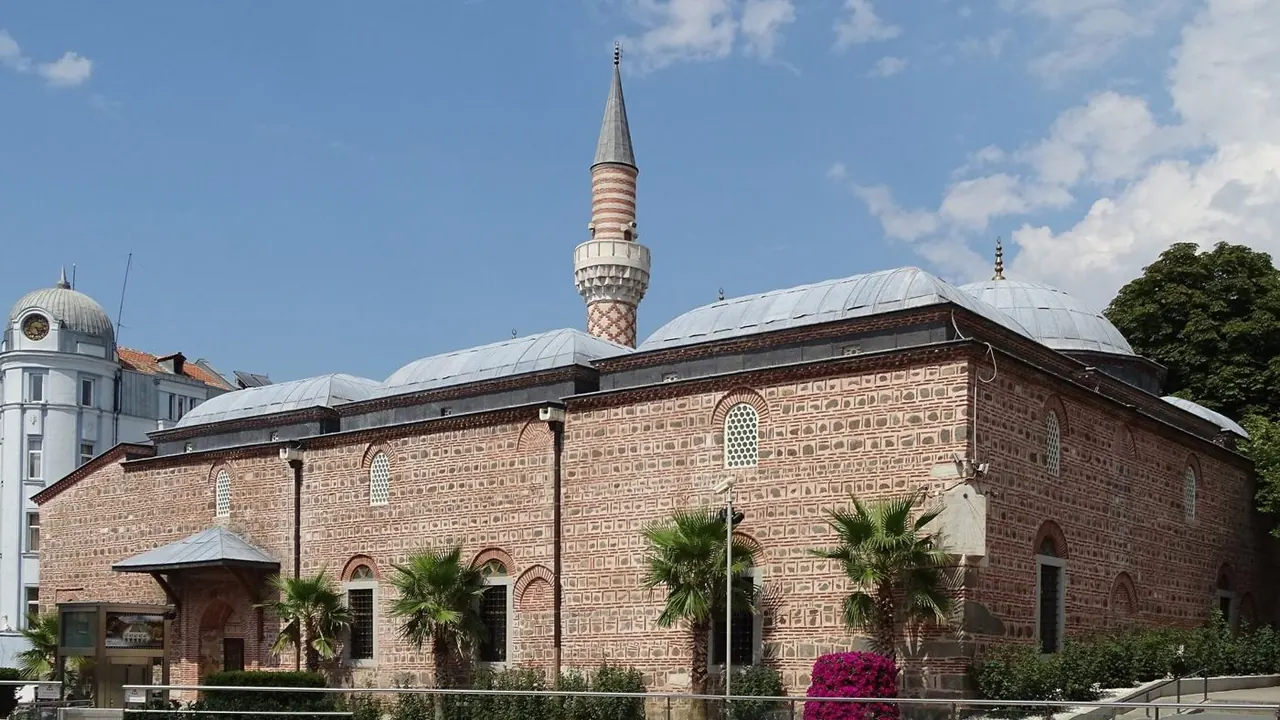
Photos: Kotor by Muhammed Fatih Beki, Pexels License; Plovdiv by Ad Meskens, CC BY-SA 4.0, cropped.
Kotor or Plovdiv?
Our verdict in twelve categories, each scored against the same fixed benchmark cities, and the climate month by month, so you can choose for your trip.
Choose Kotor for
- beaches
- nature and the outdoors
- day trips
Kotor is for travellers who come for the setting. A walled Venetian town at the head of a fjord-like bay, cliffs climbing straight from the water, kayaks along the shore and paths that start at the town gates: it suits a few days of walking, swimming and boat trips, with quiet evenings and Budva's beaches and bars within easy reach.
Choose Plovdiv for
- live music and the arts
- prices
- wellness
Choose Plovdiv if you would rather have more city for less money. A Roman theatre still in use, a stadium under the main street, painted Revival houses and the wine bars of Kapana give it more to see and do after dark, and it costs noticeably less. There is no sea, but it is easier to get around on foot and makes a good base for Bulgaria's monasteries and Thracian sites.
Scoreboard
Twelve categories on one fixed scale from 0 to 100. The shaded stretch is the gap between the two.
Your match
Pick a travel style or drag the sliders, and both match scores follow your weighting.
Wins on beaches and nature and the outdoors with your weighting.
Wins on live music and the arts and prices with your weighting.
What matters to you?
Category by category
What the scores mean for a trip.
Beaches & swimming
This is where Kotor leads clearly. It has no proper beach of its own, but you can swim from concrete platforms and pebble strips towards Dobrota and Muo in calm, warm water. The beaches of the Budva riviera, from sandy Jaz to the pink pebbles near Sveti Stefan, are an easy half-day outing.
Plovdiv is about 250km inland on the Thracian plain, so swimming means pools, the rowing canal or reservoirs in the Rhodopes. If sea and sand matter to you, it needs a separate stay on the Black Sea coast.
Food & drink
Plovdiv eats better overall. Wooden-beamed mehanas in the Old Town serve kavarma, kebapche and banitsa, while Kapana's small streets add modern bistros and craft beer. Above all, the city sits in wine country, so Mavrud and Rubin are on every list and the wineries are close by.
Kotor's strength is the bay: mussels, octopus, black risotto and grilled fish, with Njegusi ham and Vranac from the hills. The terraces on the old town squares are uneven, though, and the better cooking is in the waterside konobas of Dobrota, Prcanj and Perast.
Culture & sights
Plovdiv has more to explore. A Roman theatre, stadium, forum and basilicas with early Christian mosaics sit below a hill quarter of painted 19th-century merchant houses, and there is an Ottoman mosque and an Archaeological Museum of Thracian finds. Two or three days pass easily.
Kotor is a single, unified sight rather than a list. The appeal is the UNESCO-listed walled town itself, with St Tryphon's Cathedral, the palazzi and the Maritime Museum, and the walls climbing to St John's fortress. It is memorable, but there are few museums, so you will have seen it in a couple of days.
Nightlife
Neither city is a party destination, but Plovdiv has more going on. Kapana's grid of craft beer bars, wine bars and cocktail places fills on warm nights, and students keep it lively during term.
In Kotor the evening is usually a drink on a square under the floodlit walls, with a few late bars in summer and quiet nights the rest of the year. If you want a late night, you go down the coast to Budva's seafront.
Nature & outdoors
Kotor wins on landscape. Limestone walls rise more than 1,000m almost from the water, and you can walk straight from the gates up the Ladder of Kotor or the fortress path. Above is Lovcen National Park, and kayaking along the bay shows how close the mountains come.
Plovdiv's outdoors is gentler and further out. The rocky tepeta give short climbs inside the city, and the Rhodope gorges and forests begin about 20km away, with the Central Balkan range an hour north. For most of it you need a car.
Day trips
Both make good bases, and the difference is in what you go out to see. From Kotor the trips follow the water and the coast: Perast and its island church, Herceg Novi, Budva and Sveti Stefan, then inland over Lovcen to the old royal capital of Cetinje, or further to Dubrovnik or the cliff monastery of Ostrog.
Plovdiv's trips go into history and the countryside: Bachkovo Monastery, Hisarya's Roman walls, the Thracian tombs and Valley of Roses around Kazanlak, and the Revival village of Koprivshtitsa. In both places a car makes it far easier.
Good for families
Neither city does much specifically for children, and the appeal differs in kind. In Kotor the fun is outdoors on the water: calm bay swimming from jetties, a boat to Perast's island church and the old town's street cats. The steep fortress climb is hard work in summer heat.
Plovdiv is a park-and-stroll city. Its long car-free main street suits pushchairs, and the singing fountains of the Tsar Simeon Garden, Lauta park and the playgrounds by the rowing canal fill an afternoon. The steep Old Town cobbles are hard going with small children.
Getting around
Plovdiv is easier to get around. A long pedestrian street links the station side of town with the Old Town, and the ruins, Kapana and the museums are all a short walk from it. Taxis are plentiful when your legs give out.
Kotor's car-free old town takes only minutes to cross, but leaving it is the difficulty. Buses around the bay are irregular, the one coastal road jams in summer, and most visitors hire a car or driver to reach Lovcen or the beaches.
Shopping & style
Most of what you carry home from Kotor is edible. The old town's lanes sell souvenirs, silver filigree, lace and coral, but the better buys are a bottle of Vranac, Njegusi ham and olive oil from the delicatessens and the green market outside the walls. For brands, people go to the marina at Tivat.
Plovdiv gives a shopper more to do. High-street chains line the main pedestrian street and malls sit on the edge of town, while Kapana's small design studios, galleries and craft shops are worth an afternoon of browsing. Typical things to take home are rose oil cosmetics, embroidered textiles and pottery.
Affordability
Plovdiv costs noticeably less. Guesthouses near the Old Town, mehana meals with wine and taxis are all cheap, entry fees are small, and much of the city can be enjoyed for free.
Kotor is moderately priced and cheaper than the better-known resorts along the coast, but inside the walls in July and August rooms and terrace meals reach resort levels. An apartment in Dobrota or Muo and a visit in June or September make the gap smaller.
Live music & performing arts
Plovdiv has far more to offer here. On summer evenings the Roman theatre hosts opera and concerts under the open sky, and the city keeps its own opera company, philharmonic orchestra and drama theatre through the year, along with an established jazz festival.
Kotor's performances are seasonal: classical recitals and choirs in its churches during the summer festival, plus the masked carnival and the lit boats of Boka Night. Outside those, live music is mostly a musician on a restaurant terrace.
Wellness & relaxation
Plovdiv is the better place to slow down. Locals pride themselves on aylyak, the art of taking things slowly over long coffees under the plane trees, and the mineral pools of Hisarya and Velingrad make easy outings for proper bathing.
Kotor has no bathing tradition, so spa treatments mean a resort hotel along the bay or at Tivat. Its calm is in early mornings on the water and long lunches in the shore villages, away from the crowded old town at midday.
When should you go?
Pick your month. The climate figures are measured averages, not a forecast.
Kotor in July
Plovdiv in July
Daytime high, °C
Rainfall in the month, mm
Where the figures come from
Kotor has no rain gauge within 25 km of the centre, so its rainfall comes from a gridded climate dataset read at the city rather than from a gauge further away.
Kotor's sunshine is measured 42 km from the centre, at Podgorica-Grad.
Plovdiv has no rain gauge within 25 km of the centre, so its rainfall comes from a gridded climate dataset read at the city rather than from a gauge further away.
Plovdiv's sunshine is measured 75 km from the centre, at Kurdjali.
Temperature and rainfall are climate normals, averaged over the years shown. Kotor: 1991-2020 normals, Tivat (4.2 km from centre). Plovdiv: 1997-2020 (sunshine 1991-2020, rainfall 1991-2020) normals, Plovdiv (1.2 km from centre).
Kotor's beach season runs from June to September, when the bay is warm enough for a swim and the sea reaches 26°C in August. July and August are the sunniest and driest months, but highs of 32°C make midday walking and the fortress climb hard going, so late May, June and late September suit sightseeing better. The rain returns in September and builds through the autumn. From October to April the town is cool, wet and much less sunny.
Plovdiv has no sea and no real wet season. Its rain is light and spread across the year, and the two cities differ most in late autumn: in November Kotor gets 202mm of rain and Plovdiv only 42mm. Winters on the plain are colder, around 5°C by day in January, and summers are hot. April, May, September and early October are the best months for walking the ruins and the Old Town hills. In midsummer, do your walking in the mornings and evenings, which are also the time for an open-air night at the Roman theatre.
Which traveller are you?
On a beach and sun trip, Kotor is the clear pick. You can swim in warm, calm water from jetties along the bay, and the sandy beach at Jaz and the coves around Budva are half an hour away. Plovdiv is several hours from the sea.
For a culture and arts trip, Plovdiv gives you more. It has Roman, Ottoman and National Revival layers, several house museums and an archaeological collection, plus summer opera in the ancient theatre. Kotor's walled town is beautiful but takes only a day or two to see.
On a tight budget, Plovdiv stretches your money further. Guesthouses and mehana meals with local wine cost little, and the ruins along the main street and evenings in Kapana are free. Kotor is moderately priced, but rooms and terraces inside the walls charge resort rates in high summer.
Before you go
| Measure | Kotor | Plovdiv |
|---|---|---|
| Official language | Montenegrin | Bulgarian |
| Currency | Euro (EUR) | Euro (EUR) |
| Sockets | CF230 V, 50 Hz | CF230 V, 50 Hz |
| Driving side | Right | Right |
| Time zone | UTC+1, UTC+2 in summer | UTC+2, UTC+3 in summer |
| Emergency number | 112 | 112 |
| Elevation | 10 m | 172 m |
| Main airport | Tivat Airport (TIV)5 km from centre42 non-stop destinations | Plovdiv International Airport (PDV)12 km from centre8 non-stop destinations |
| Public holidays this year | - | 15 days |
By the numbers
| Measure | Kotor | Plovdiv |
|---|---|---|
| City population | 562 | 333,994 |
| People per km² | - | 3,274 |
| Museums within 10 km | 3 | 18 |
| UNESCO World Heritage sites within 50 km | 3 | 0 |
| Swim season, months above 21 °C | 5 months | - |
Where else could you go?
Every comparison below shares a destination with this one, so you can follow Kotor or Plovdiv somewhere new.