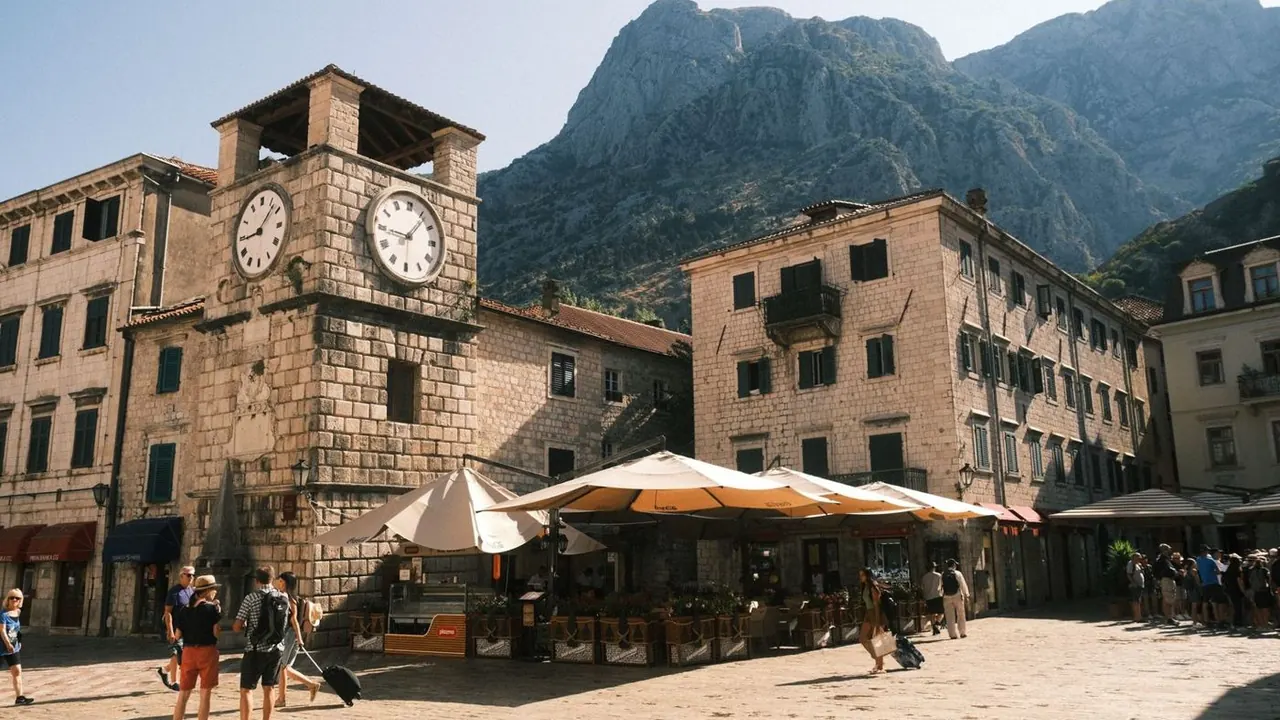
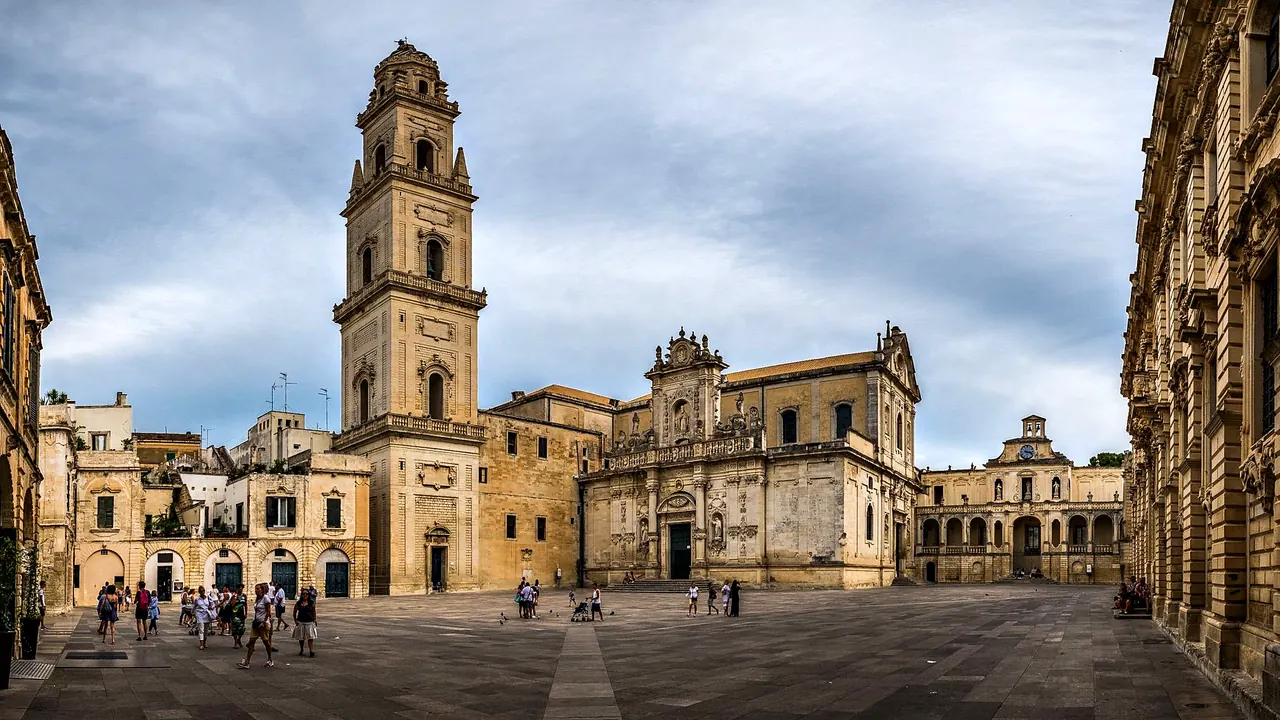
Photos: Kotor by Muhammed Fatih Beki, Pexels License; Lecce by Giuseppe Milo, CC BY 3.0, cropped.
Kotor or Lecce?
Our verdict in twelve categories, each scored against the same fixed benchmark cities, and the climate month by month, so you can choose for your trip.
Choose Kotor for
- nature and the outdoors
- getting around
- day trips
Kotor is for travellers who come for the landscape. Mountain walls drop straight into a fjord-like bay, and you can start walking at the town gate and kayak past stone villages in the afternoon. The walled town is small and handsome, but the food is narrow, evenings are quiet and the sandy beaches are over the hill near Budva. It suits active couples and walkers who are happy to trade comfort and variety for scenery.
Choose Lecce for
- food and drink
- wellness
- live music and the arts
Lecce gives you more to do once the sightseeing is over. Its Baroque centre is grander, eating there follows a local rhythm from morning pastry to dark Salento wine, and the clear, shallow beaches of two seas are within easy driving distance. Sulphur springs and farmhouse spas, summer pizzica nights and sociable piazzas make it the better choice for food lovers, families and anyone who wants a slower, warmer stay without the steep climbs.
Scoreboard
Twelve categories on one fixed scale from 0 to 100. The shaded stretch is the gap between the two.
Your match
Pick a travel style or drag the sliders, and both match scores follow your weighting.
Wins on nature and the outdoors and getting around with your weighting.
Wins on food and drink and wellness with your weighting.
What matters to you?
Category by category
What the scores mean for a trip.
Beaches & swimming
Neither town is a beach town, but Lecce's coast is a far better reason to come. Half an hour away are the pale coves and sea stacks of Torre dell'Orso, and on the Ionian side Porto Cesareo has long, shallow sand and very clear water. In summer the beach sets the rhythm of the whole day.
At Kotor you swim off concrete platforms and jetties in the calm but enclosed inner bay. For real sand you have to drive over the hill to Jaz or the coves around Budva, so a beach day is an outing rather than part of the stay.
Food & drink
Lecce has the stronger and more distinctive food culture. The day runs from warm pasticciotto and iced almond coffee to rustico at mid-morning, then orecchiette with turnip tops and fava purée with chicory, all served simply and cheaply in the old town.
Kotor's best food comes from the bay and the mountains: mussels, black cuttlefish risotto, Njegusi ham and Vranac wine. But the terrace restaurants inside the walls are uneven, and the better konobas are out in Dobrota, Prcanj and Perast. Neither city offers much beyond its regional cooking.
Culture & sights
Both are townscapes to wander rather than museum cities, but Lecce has more of everything. Its honey-coloured Baroque spreads across dozens of churches, with Santa Croce's carved facade and the enclosed Piazza del Duomo as highlights, plus a half-excavated Roman amphitheatre and the Castle of Charles V.
Kotor is smaller and more dramatic. A UNESCO-listed triangle of marble lanes surrounds the twelfth-century Cathedral of St Tryphon, and the Venetian walls climb the cliff behind it. You can see it all in a few hours, while Lecce rewards several days.
Nightlife
Lecce makes for the better evening. After the passeggiata and an aperitivo on the piazzas, the wine bars and small cocktail bars in the lanes stay busy, and students keep weekends going for most of the year. Kotor is a drink on a square under the floodlit walls, with a few late bars in summer and very little after the season ends. For dancing, both send you to the coast: Budva for Kotor and the Gallipoli discos for Lecce.
Nature & outdoors
This is Kotor's strongest card. Limestone walls rise more than 1,000m from the water, the old mule track zigzags up towards Krstac, and Lovcen's beech woods and karst meadows look out over the bay to the open Adriatic. Kayaking along the shore and the wetlands of Lake Skadar add to it.
Around Lecce the land is a flat plain of olive groves and red earth, good only for easy cycling. Its outdoors is the coast: the cliffs and sea caves between Otranto and Santa Maria di Leuca, the Alimini lakes for birds, and good snorkelling and diving.
Day trips
Both make excellent bases, with similar travel times, so the difference is in the kind of outing. Kotor's best trips are on the bay itself. Perast and the island church of Our Lady of the Rocks are twenty minutes away, and Herceg Novi stands at the bay's mouth. Cetinje, the old royal capital, is about an hour away over Lovcen. Dubrovnik and the cliff monastery of Ostrog each take a longer day, and Dubrovnik means crossing a border.
Lecce's trips spread across a flat peninsula of old stone towns. Otranto and its cathedral mosaic are within the hour, along with Gallipoli on its island and the frescoes of Galatina. Further north are white Ostuni and the trulli of Alberobello, which take up to two hours. Taranto adds Greek antiquities. Most of these trips need a car, whereas some of Kotor's bay villages can also be reached by boat.
Good for families
Lecce is the easier place for children. The shallow, sandy beaches around Porto Cesareo suit small swimmers, and evenings on the traffic-free piazzas are full of local families eating gelato. Kotor's car-free lanes and street cats delight young children, and a boat to Perast works well. But its main sight is a steep, hot climb, the old town is packed at midday, and the sandy beaches are a drive away. Neither has a zoo or theme park.
Getting around
The two are much alike. Each has a compact, flat centre you can cover on foot, and each makes you hire a car to explore further. Kotor's old town is entirely car-free, though the marble is slippery when wet. Outside it, the single road round the bay jams in summer, while water taxis link some of the villages.
Lecce has a railway station at the edge of the old town with fast trains to Brindisi and Bari, but the local Salento lines are slow and the beach buses run only in summer.
Shopping & style
Lecce gives you more to browse, though neither is a shopping destination. Its papier-mâché saints from old-town workshops, small carvings in local limestone and Grottaglie ceramics are real local crafts, and there are a few fashion shops on the main streets. Kotor's lanes mostly sell souvenirs, cat trinkets and silver filigree, so the best things to take home are Vranac and Njegusi ham. For brands, people head to the Tivat marina.
Affordability
Costs are much the same in both, and the pattern is the same too: simple local meals and wine are cheap, and August is expensive. In Kotor the premium falls inside the walls, so a private apartment in Dobrota or Muo saves money. In Lecce the whole Salento fills with Italian vacationers, and a hire car and beach-club loungers add to the bill. Visit either in May, June or September for the best balance.
Live music & performing arts
Lecce offers more live performance. The Politeama Greco and Paisiello theatres run a modest season of opera and drama, and in summer the pizzica tambourine dance fills village festivals, ending in the huge Notte della Taranta at Melpignano. Kotor has no regular season. Its live culture is the summer festival of recitals in churches and squares, plus the carnival and the decorated boats of Boka Night.
Wellness & relaxation
Lecce is the more restful place. The town slows down for the long afternoon closing, the sulphur pools of Santa Cesarea Terme sit in grottoes above the sea, and converted masserie on the plain offer quiet spa retreats. In Kotor, rest comes from early mornings on the water and long lunches in the shore villages, away from the crowds at midday. Its only spas are in resort hotels.
When should you go?
Pick your month. The climate figures are measured averages, not a forecast.
Kotor in July
Lecce in July
Daytime high, °C
Rainfall in the month, mm
Where the figures come from
Kotor has no rain gauge within 25 km of the centre, so its rainfall comes from a gridded climate dataset read at the city rather than from a gauge further away.
Kotor's sunshine is measured 42 km from the centre, at Podgorica-Grad.
Lecce's temperatures are measured 38 km from the centre, at Brindisi.
Lecce has no rain gauge within 25 km of the centre, so its rainfall comes from a gridded climate dataset read at the city rather than from a gauge further away.
Temperature and rainfall are climate normals, averaged over the years shown. Kotor: 1991-2020 normals, Tivat (4.2 km from centre). Lecce: 1991-2020 (sunshine 1981-2010) normals, Brindisi (38 km from centre).
Kotor gets hotter in midsummer. The heat builds against the bare limestone of the bay and reaches about 32°C in August, which makes the fortress steps and mountain paths hard going at midday. Lecce peaks a little lower, at around 30°C, and has more sunshine than Kotor in every month except August. The sea warms at the same pace off both coasts and reaches about 26°C in August. In either place, swimming is comfortable from June through September, and the water still holds at around 21°C in October.
Rain is where the two differ most. Kotor's mountains catch heavy rain from September onwards, with about 202mm in November, so late autumn and winter there are wet and grey. Lecce stays drier and brighter through the cooler months, which makes October to April easier for walking its streets. In Kotor, May, June and early September give the most reliable weather for hiking and sightseeing.
Which traveller are you?
On an outdoors trip, Kotor is the clear choice. The Ladder of Kotor and the fortress path start at the town gates, Lovcen National Park lies above the hairpin road, and kayaking along the bay shows how the mountains close in. The countryside around Lecce is flat olive groves.
For a food and nightlife trip, Lecce suits better. Pasticciotto at breakfast, ciceri e tria in cheap osterie and Negroamaro at dinner beat Kotor's uneven terrace restaurants, and student wine bars keep the old town lively long after Kotor goes quiet.
On a relaxing and wellness trip, choose Lecce. The long afternoon rest is built into daily life, the sulphur grottoes of Santa Cesarea Terme are less than an hour away, and old masserie have become quiet spa retreats. In Kotor, wellness mostly means a resort hotel spa.
Before you go
| Measure | Kotor | Lecce |
|---|---|---|
| Official language | Montenegrin | Italian |
| Currency | Euro (EUR) | Euro (EUR) |
| Sockets | CF230 V, 50 Hz | CFL230 V, 50 Hz |
| Driving side | Right | Right |
| Time zone | UTC+1, UTC+2 in summer | UTC+1, UTC+2 in summer |
| Emergency number | 112 | 112 |
| Elevation | 10 m | 49 m |
| Main airport | Tivat Airport (TIV)5 km from centre42 non-stop destinations | Brindisi Airport (BDS)39 km from centre49 non-stop destinations |
| Public holidays this year | - | 13 days |
By the numbers
| Measure | Kotor | Lecce |
|---|---|---|
| City population | 562 | 94,783 |
| People per km² | - | 393 |
| Museums within 10 km | 3 | 11 |
| UNESCO World Heritage sites within 50 km | 3 | 0 |
| Swim season, months above 21 °C | 5 months | 4 months |
Where else could you go?
Every comparison below shares a destination with this one, so you can follow Kotor or Lecce somewhere new.