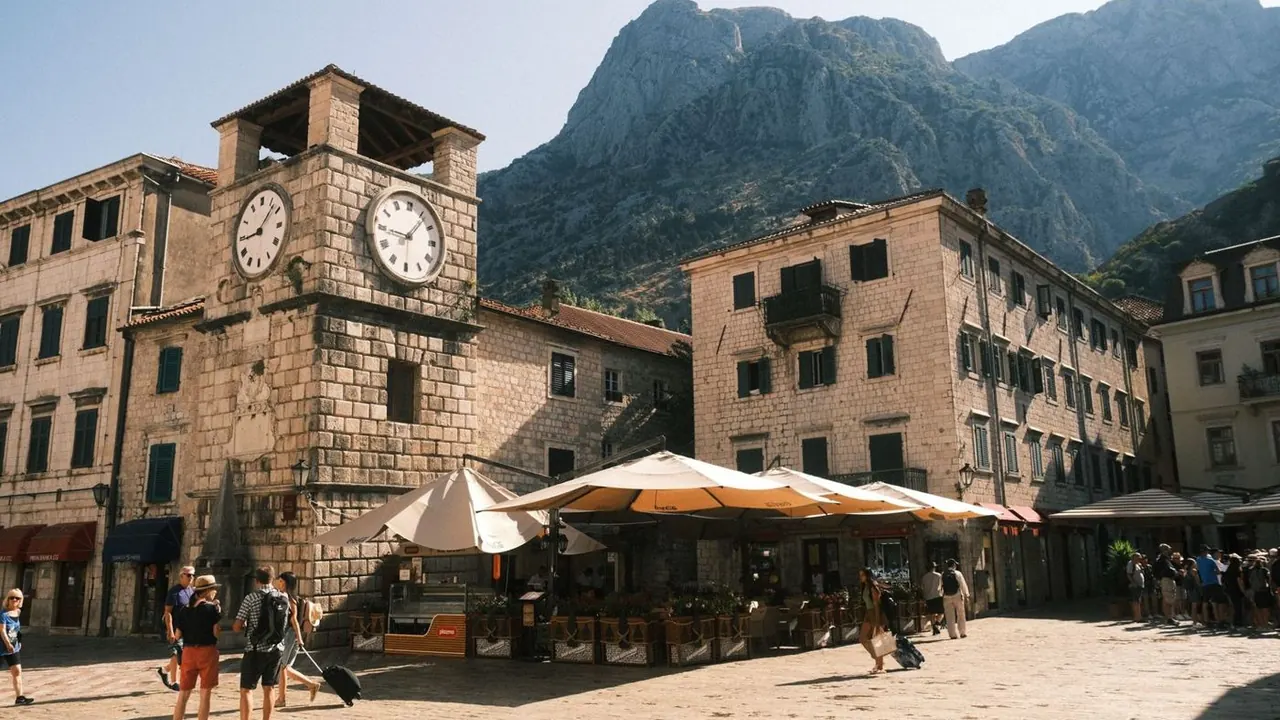
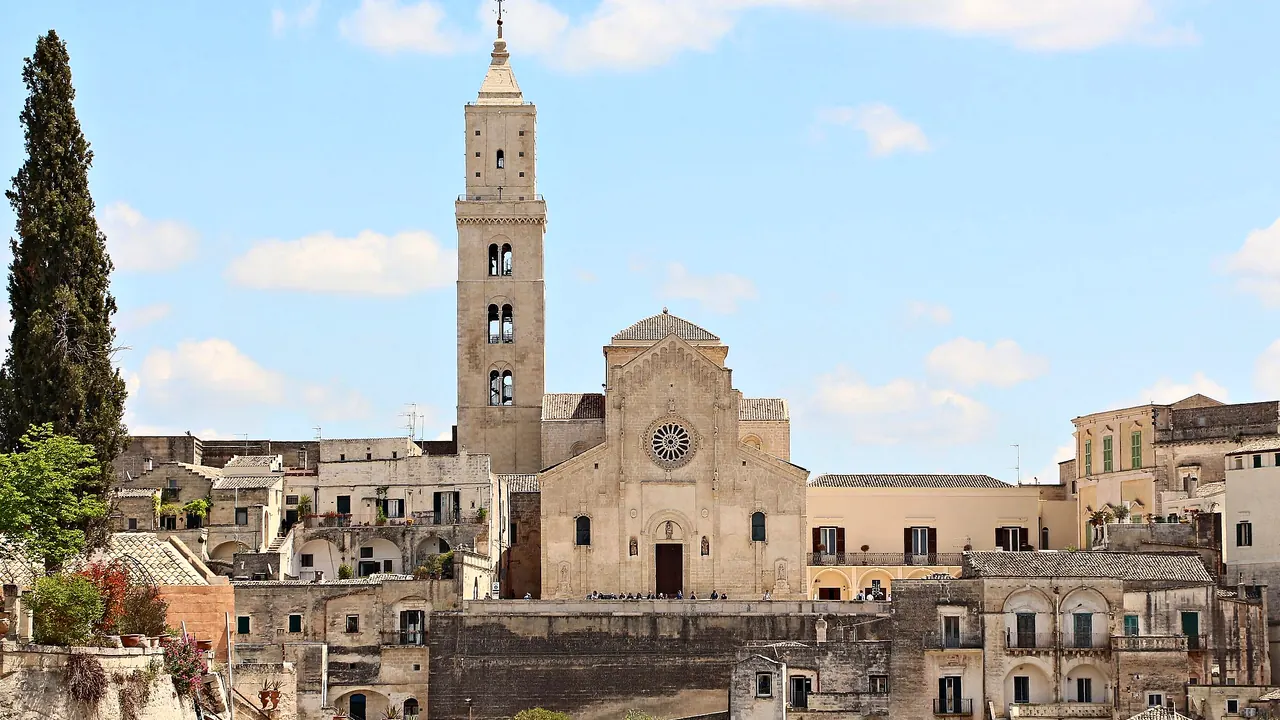
Photos: Kotor by Muhammed Fatih Beki, Pexels License; Matera by Bernard Gagnon, CC BY 4.0, cropped.
Kotor or Matera?
Our verdict in twelve categories, each scored against the same fixed benchmark cities, and the climate month by month, so you can choose for your trip.
Choose Kotor for
- nature and the outdoors
- beaches
- nightlife
Kotor is the pick for travellers who want landscape first: a fjord-like bay, mountain walls you can climb from the town gates, and warm water right beside the shore road, with the sandy Budva riviera half an hour over the hill. It suits an active stay of hikes, kayaking and village-hopping by boat, with the option of a livelier night down the coast.
Choose Matera for
- culture and sights
- food and drink
- wellness
Choose Matera if the place itself is the point of the trip. The cave districts of the Sassi, with their frescoed rock churches, are stranger and older than Kotor's compact walled town, and the cooking of Basilicata is more distinctive than the bay's repeated terrace menus. It rewards a slower, curious traveller with a car, happy to spend evenings over a glass of Aglianico watching the gorge go dark.
Scoreboard
Twelve categories on one fixed scale from 0 to 100. The shaded stretch is the gap between the two.
Your match
Pick a travel style or drag the sliders, and both match scores follow your weighting.
Too close to call, 1 point apart
Wins on nature and the outdoors and beaches with your weighting.
Wins on culture and sights and food and drink with your weighting.
What matters to you?
Category by category
What the scores mean for a trip.
Beaches & swimming
Neither town has a beach of its own, but Kotor at least sits on the water. You can swim from the jetties and pebble strips towards Dobrota and Muo any afternoon, and the sand at Jaz and the coves around Budva and Sveti Stefan are half an hour away.
Matera is inland, so swimming means a car and a 45-minute drive to the wide sandy shores at Metaponto and Policoro. Those pine-backed beaches are shallow and gentle, kinder to small children than Kotor's inner bay, but most visitors to Matera simply skip the sea.
Food & drink
Kotor eats from the bay: mussels, black cuttlefish risotto and grilled fish, with Njegusi ham and Vranac from the mountains. The catch is that the old-town squares serve the same menus to the same crowds, and the good konobas are out along the shore in Dobrota, Prcanj and Perast.
Matera's table is more distinctive and more dependable: crusty pane di Matera, crapiata, hand-made cavatelli, crackling peperoni cruschi and Aglianico, with the better meals in the upper town around Via Ridola. Neither has much range beyond regional cooking, and Matera has nothing like Kotor's small green market outside the walls.
Culture & sights
Kotor's old town is a beautiful UNESCO-listed whole: marble lanes, the Cathedral of St Tryphon, the palazzi of seafaring families and the walls zigzagging up to St John's fortress. It is compact, though, and its pleasure is the townscape rather than a list of sights.
Matera offers something stranger and older. The Sassi are cave dwellings lived in since prehistoric times, with rock churches holding Byzantine frescoes, and the upper town adds the Palombaro Lungo cistern, the Museo Ridola, Carlo Levi's panorama at Palazzo Lanfranchi and MUSMA's sculpture in carved rooms. There is more to see, and more of it you will not find anywhere else.
Nightlife
Both are towns for an evening drink rather than a night out, but Kotor has a little more going on. A few bars inside the walls stay open late in summer, there is a small club scene, and Budva's seafront clubs are half an hour away for anyone who wants to stay up until dawn.
Matera has no clubs at all. Its evenings are the passeggiata along Via del Corso, a long dinner and a glass in a cave wine bar above the lit Sassi, which suits couples far better than groups.
Nature & outdoors
Kotor's setting is on another scale. Limestone walls rise more than 1,000m almost straight from a fjord-like bay, the Ladder of Kotor starts at the town gates, Lovcen National Park's beech woods and karst meadows lie above, and kayaks take you along the shore villages.
Matera's landscape is quieter and more intimate: the Gravina gorge directly below the Sassi and the stony Murgia plateau opposite, with abandoned rock churches and Neolithic village sites along the trails. Its bigger scenery, the Lucanian Dolomites and the Pollino forests, is an hour or more away by car.
Day trips
Both make strong bases, though Matera's reach is wider. Kotor's outings circle its bay: Perast and the island church of Our Lady of the Rocks, then Herceg Novi, Budva and Sveti Stefan, with boats serving several of them. Inland, Cetinje and the cliff monastery of Ostrog make longer days, and Dubrovnik, across the Croatian border, is about two hours away.
Matera, on the border with Puglia, puts two regions within about an hour. Altamura and Gravina are next door, with the trulli of Alberobello, the white towns of the Valle d'Itria, Castel del Monte and Polignano a Mare further out, plus Craco and the peak villages of Basilicata. You need a car for almost all of them.
Good for families
Kotor's old town is flat, car-free and small enough that children cannot get lost, which gives it a slight edge for families. Its street cats win over young visitors, the jetties along the bay make calm swimming easy, and the boat to Perast's island church is a simple outing. The one hard part is the fortress climb, which is too steep and hot for small legs in summer.
Matera's Sassi are a maze of uneven stone stairways where a pushchair is useless, with little shade on summer afternoons. Older children enjoy the caves, the cistern and scrambling into the gorge, but families with toddlers need a carrier and a car to reach the Ionian sand.
Getting around
The two work much the same way: a car-free centre on foot and a patchy network beyond it. Kotor's old town is flat and crossed in minutes, on marble that turns slippery in rain, and buses and water taxis reach the bay towns, though not often enough, while the single road round the bay jams in summer.
Matera's upper town is flat but the Sassi are reached by leg-sapping stairways, and the town is off the national rail network, with only a slow narrow-gauge line to Bari. In both places a hire car makes the region far easier, and Kotor has the advantage of Tivat airport a short drive away.
Shopping & style
Neither is a shopping destination, and in both the best things to take home are edible. In Kotor that means Vranac, Njegusi ham, honey and olive oil from the green market and delicatessens, with silver filigree and coral jewellery in the lanes and brand shopping out at the Tivat marina.
Matera's crafts are more particular to the place, the painted cuccù whistle, tufa-stone carvings and papier-mâché, and its upper town has the ordinary Italian high-street shops along Via del Corso that Kotor lacks.
Affordability
Costs come out much the same, and in both the trick is to sleep just outside the famous quarter. In Kotor, rooms and terrace restaurants inside the walls charge resort rates in July and August, while private apartments in Dobrota or Muo and the months of May, June and September are noticeably cheaper.
In Matera the premium is for the cave hotels of the Sassi, while guesthouses in the upper town and its simple trattorias cost much less. Its main pleasures, walking the Sassi and the Murgia, are free.
Live music & performing arts
Neither has a year-round stage, so evenings depend on the summer calendar and a few set-piece occasions. Kotor's summer festival brings recitals and choirs into its squares and churches, and its carnival and Boka Night fill the bay with masked parades and decorated boats. Matera has conservatory concerts, a summer jazz festival staged against the Sassi, and the Festa della Bruna, when the papier-mâché float is ritually torn apart.
Wellness & relaxation
The real difference is where the spas are. Kotor's are ordinary resort-hotel spas along the bay or at the Tivat marina, while some of Matera's are in candlelit cave rooms with pools cut into the rock, which makes unwinding there more memorable.
In Kotor, calm means leaving the walls: early mornings on the water and long lunches in the shore villages, since the old town at a summer midday is anything but restful. In Matera it comes from quiet mornings in the Sassi and dusk over the gorge, especially from autumn to spring.
When should you go?
Pick your month. The climate figures are measured averages, not a forecast.
Kotor in July
Matera in July
Daytime high, °C
Rainfall in the month, mm
Where the figures come from
Kotor has no rain gauge within 25 km of the centre, so its rainfall comes from a gridded climate dataset read at the city rather than from a gauge further away.
Kotor's sunshine is measured 42 km from the centre, at Podgorica-Grad.
Matera has no rain gauge within 25 km of the centre, so its rainfall comes from a gridded climate dataset read at the city rather than from a gauge further away.
Temperature and rainfall are climate normals, averaged over the years shown. Kotor: 1991-2020 normals, Tivat (4.2 km from centre). Matera: 2005-2025, 10 years observed (rainfall 1991-2020) normals, Matera / Martella (4.8 km from centre).
Kotor's swimming season runs from June to September, when the bay warms to about 26°C at its peak and long, very sunny days make the water the obvious place to be. July and August are hard work on the fortress steps and the bare limestone trails, with highs above 30°C, so May and late September are better for walking. The rain arrives in earnest in October and peaks in November at around 202mm, making late autumn and winter wet and grey.
Matera reaches the same summer heat, about 32°C in July, but on an exposed plateau with little shade, so the Sassi are best explored in the mornings and evenings, while the Ionian sea is warm enough for swimming from June to September. It is far drier than Kotor all year round, though its winters are colder, with January highs near 10°C. May, June, September and October are its best months on foot.
Which traveller are you?
On a beach and sun trip, Kotor is the better base. You can swim from jetties and pebble strips beside the town, and the sand at Jaz is half an hour away, whereas Matera's Ionian beaches need a car and most visitors never swim.
For a culture and arts trip, Matera goes deeper. Its cave houses, frescoed rock churches, the walk-through Palombaro Lungo cistern and the sculpture in MUSMA give more to explore than Kotor's handsome but compact walled town, which a couple of days covers.
On an outdoors trip, Kotor has the grander terrain. You walk out of the town gates up the Ladder of Kotor, drive the hairpins into Lovcen National Park or kayak the bay, while Matera offers gentler gorge walks and its mountains need a drive.
Before you go
| Measure | Kotor | Matera |
|---|---|---|
| Official language | Montenegrin | Italian |
| Currency | Euro (EUR) | Euro (EUR) |
| Sockets | CF230 V, 50 Hz | CFL230 V, 50 Hz |
| Driving side | Right | Right |
| Time zone | UTC+1, UTC+2 in summer | UTC+1, UTC+2 in summer |
| Emergency number | 112 | 112 |
| Elevation | 10 m | 401 m |
| Main airport | Tivat Airport (TIV)5 km from centre42 non-stop destinations | Bari Karol Wojtyła International Airport (BRI)54 km from centre104 non-stop destinations |
| Public holidays this year | - | 13 days |
By the numbers
| Measure | Kotor | Matera |
|---|---|---|
| City population | 562 | 59,685 |
| People per km² | - | 152 |
| Museums within 10 km | 3 | 8 |
| UNESCO World Heritage sites within 50 km | 3 | 1 |
| Swim season, months above 21 °C | 5 months | 5 months |
Where else could you go?
Every comparison below shares a destination with this one, so you can follow Kotor or Matera somewhere new.