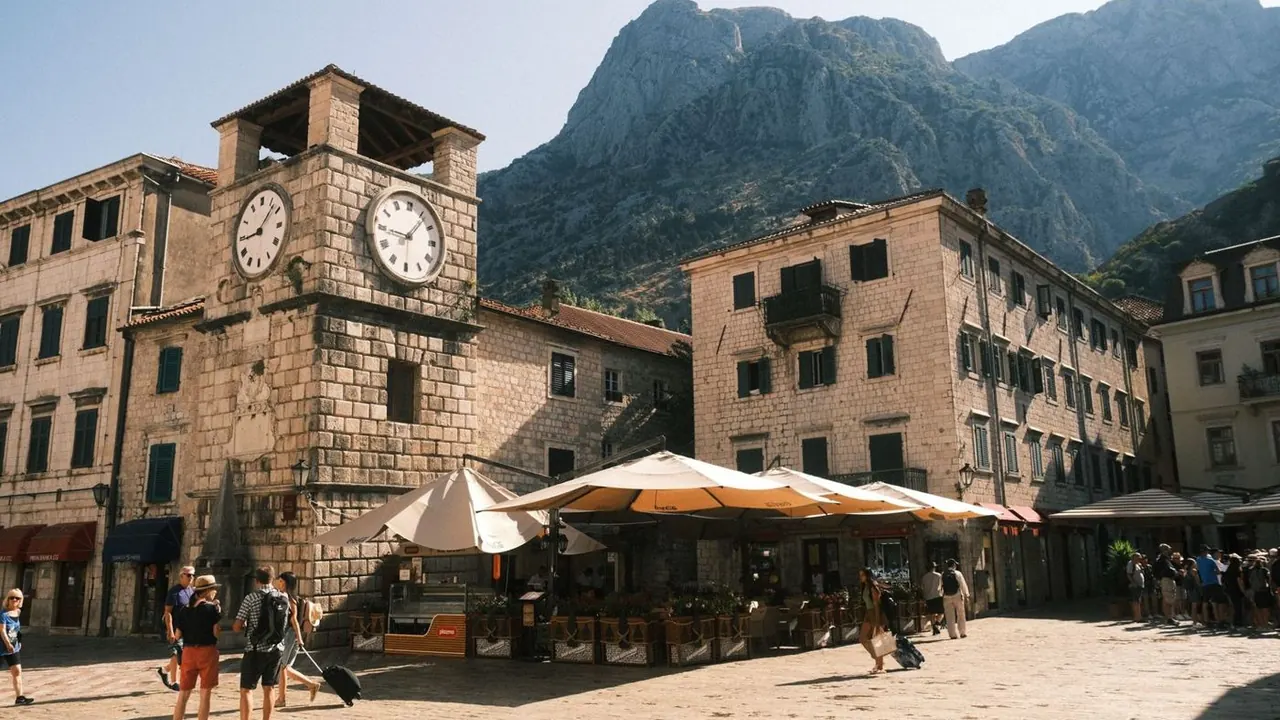
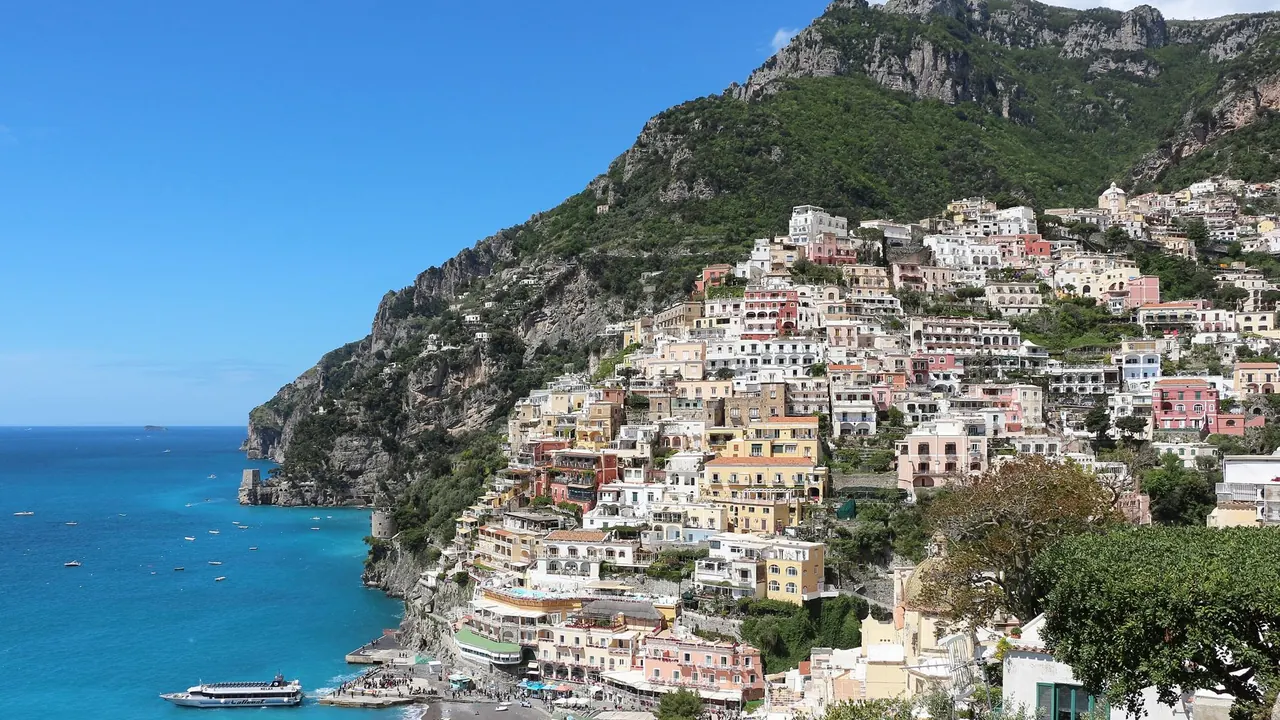
Photos: Kotor by Muhammed Fatih Beki, Pexels License; Positano by Bernard Gagnon, CC BY 4.0, cropped.
Kotor or Positano?
Our verdict in twelve categories, each scored against the same fixed benchmark cities, and the climate month by month, so you can choose for your trip.
Choose Kotor for
- prices
- culture and sights
- getting around
Kotor is the better pick for travellers who want a real old town to explore, mountains at the door and a stay that doesn't drain the budget. The walled UNESCO town, its Romanesque cathedral and the climb to the fortress of St John give it far more to see than Positano. Costs are much lower, and the flat, car-free lanes are easier on legs and pushchairs. Beaches and late nights are half an hour away in Budva rather than at the bottom of the street.
Choose Positano for
- shopping
- wellness
- beaches
Positano suits a vacation built around the sea and the view, for those willing to pay for it. Swimming from Spiaggia Grande is right below your room, and boats leave for Capri and the coves. Ferries run to Amalfi and Ravello, and Pompeii is within reach. Add long terrace lunches and linen boutiques, and you get a more polished seaside stay than Kotor offers. The price is steep, and so are the stairs.
Scoreboard
Twelve categories on one fixed scale from 0 to 100. The shaded stretch is the gap between the two.
Your match
Pick a travel style or drag the sliders, and both match scores follow your weighting.
Wins on prices and culture and sights with your weighting.
Wins on shopping and wellness with your weighting.
What matters to you?
Category by category
What the scores mean for a trip.
Beaches & swimming
Positano is the beach town of the two. Spiaggia Grande sits right under the houses, with Fornillo a short cliff walk away and Arienzo and Laurito reached by stairs or boat. The water is clear and deep blue, though the shore is coarse grey sand and pebble that drops steeply.
Kotor has no beach of its own. You swim from concrete platforms and jetties along the shore towards Dobrota and Muo, in calm but less clear water at the enclosed end of the bay. For sand you head over the hill to Jaz or the coves around Budva and Sveti Stefan, so beach days are outings rather than part of daily life.
Food & drink
The two are much alike: small towns with narrow menus built on the sea, and the busiest terraces are the weakest places to eat. Kotor mixes the bay and the mountains. Expect mussels, black cuttlefish risotto, Njegusi ham with sharp cheese and a dark Vranac, and the best meals come from the konobas in Dobrota, Prcanj and Perast. Its green market also gives you somewhere to shop for food.
Positano is more about the view. Think spaghetti with clams, scialatielli, mozzarella and lemon desserts on a terrace over the sea, and a few hotel dining rooms aim at fine dining. There is no market, and many kitchens close between November and Easter.
Culture & sights
Kotor offers far more for the sightseer. The UNESCO-listed walled town is a dense web of marble lanes, small churches and the palazzi of old seafaring families. The 12th-century Cathedral of St Tryphon stands at its centre, and the Maritime Museum tells the story of the Boka.
Positano's culture is mostly its looks: houses stacked up the ravine, the majolica dome of Santa Maria Assunta and the painted Roman villa preserved beneath it. A morning covers all of it, while Kotor keeps you busy for a couple of days.
Nightlife
Neither town has much going on after dark, but Kotor has a little more. In summer a few bars inside the walls stay open late, there is a small club scene, and Budva's seafront clubs, open until dawn, are half an hour away for a proper night out.
Positano's evenings are aperitivo with a view, a long dinner and, for a dressed-up crowd, the cave club at the end of Spiaggia Grande. It suits couples, but there is nowhere nearby to move on to, and it all winds down when the season ends.
Nature & outdoors
Both have mountains plunging straight into the water, and they are evenly matched. The difference is the kind of landscape. Kotor sits deep inside a fjord-like bay hemmed in by limestone walls. The Ladder of Kotor climbs out of town, Lovcen National Park opens up beyond the hairpins, and Lake Skadar's wetlands make a longer outing.
Positano faces the open sea. The Path of the Gods runs high above terraced lemon groves with Capri on the horizon, and from the water you can kayak to grottoes and the Li Galli islets. Kotor's paddling is calmer and goes past villages.
Day trips
Positano has the stronger list. Capri is half an hour by boat, ferries run to Amalfi and Ravello, and Pompeii, Herculaneum and the temples of Paestum are all within a day. The catch is that most ferries run only from spring to autumn.
Kotor's outings are smaller in scale but varied. Perast and the islet church of Our Lady of the Rocks are close, Cetinje and the Njegos mausoleum lie over Lovcen, and Dubrovnik or the cliff monastery of Ostrog fill longer days. Most of these work better by car than by boat.
Good for families
Neither is built for children, but Kotor is easier. The old town is flat and car-free, children love the street cats, and the calm jetties along the bay make swimming simple. A boat to Perast's island church is a reliable outing.
Positano is almost all stairs, so a pushchair is useless, and the pebble beaches shelve quickly. It works better with older children who like boats and swimming than with toddlers.
Getting around
Kotor's old town takes a few level minutes to cross, which makes daily life easy compared with Positano's endless steps. Leaving town is the weak point: buses round the bay are infrequent and the single road jams in summer, so many visitors hire a car.
In Positano a car is more trouble than it is worth. Parking is scarce, the coast road crawls and buses fill up, so you rely on your legs and on ferries, most of which run only in season.
Shopping & style
Positano gives you a real reason to shop. Its lanes are full of the white linen and printed resort wear known as moda Positano, sandal makers fit a pair while you wait, and there are hand-painted ceramics too.
Kotor's shops are mostly souvenirs, silver filigree and lace. The buys worth carrying home are edible: Vranac, Njegusi ham, honey and olive oil from the green market. For brands, people go to the Tivat marina.
Affordability
Kotor costs far less. Konoba meals, local wine, buses and the fortress walk stay moderately priced, and only the hotels and main squares inside the walls charge resort rates in July and August.
Positano is among the most expensive places to stay in Italy. Sea-view rooms, beach loungers, terrace meals and boat transfers all cost a lot. Staying in Praiano or Sorrento and going in May or October are the main ways to save.
Live music & performing arts
Neither is a place for a season of concerts, but what each offers is different. Kotor's highlights are local traditions: carnival, and Boka Night with its decorated boats on the bay. A summer festival of recitals and choirs fills the churches and squares.
Positano's best evening of music is up the coast, at Ravello's classical festival on a terrace above the sea. For opera and theatre, Naples is within reach.
Wellness & relaxation
Positano is the more restful choice if you want pampering. Several of its upscale hotels have spas and pools cut into the cliff, and an afternoon on a terrace above the sea does the rest, at least outside the crowds of July and August.
In Kotor, spas mean a resort hotel along the bay or at Tivat. The calm here comes from quiet early mornings on the water and long lunches in the shore villages, away from the old town at midday.
When should you go?
Pick your month. The climate figures are measured averages, not a forecast.
Kotor in July
Positano in July
Daytime high, °C
Rainfall in the month, mm
Where the figures come from
Kotor has no rain gauge within 25 km of the centre, so its rainfall comes from a gridded climate dataset read at the city rather than from a gauge further away.
Kotor's sunshine is measured 42 km from the centre, at Podgorica-Grad.
Positano's temperatures are measured 25 km from the centre, at Capri.
Positano has no rain gauge within 25 km of the centre, so its rainfall comes from a gridded climate dataset read at the city rather than from a gauge further away.
Positano's sunshine is measured 59 km from the centre, at Grazzanise.
Temperature and rainfall are climate normals, averaged over the years shown. Kotor: 1991-2020 normals, Tivat (4.2 km from centre). Positano: 2005-2025 (sunshine 1991-2020, rainfall 1991-2020) normals, Capri (25.3 km from centre).
In both places the sea is warm enough for swimming from June to September and reaches about 26°C in August, so the beach season is much the same. Kotor runs a little hotter at its peak, around 32°C in August, against about 30°C in Positano. In both towns, climbing the fortress steps or walking the cliff paths at midday in July and August is hard work. Both get plenty of sunshine through the summer months.
The bigger difference is the rain. Kotor turns wet from September, and by November it gets about 202mm, while Positano's wettest month is nearer 127mm. Positano's late spring and early autumn are also slightly milder and drier. For walking either town in comfort, May, early June and late September are the sweet spot. Positano keeps decent weather a little further into October.
Which traveller are you?
On a culture and arts trip, Kotor wins. Walk its lanes early, before the midday crowds arrive, climb the walls in the evening light and give a day to Cetinje, the old royal capital. Positano's sights fill a morning, and after that culture means a ferry.
On a beach and sun trip, Kotor leaves you swimming in a sheltered bay and travelling for sand. Choose Positano and go between June and early October. Claim a spot early, bring water shoes for the steep shore and take a boat out to a cove.
Travelling on a tight budget, make Kotor your base. Rent an apartment in Dobrota or Muo in June or September, swim from the bay jetties, picnic from the green market and take the bus to Budva for sand. In Positano, loungers, boats and transfers soon eat a modest budget.
Before you go
| Measure | Kotor | Positano |
|---|---|---|
| Official language | Montenegrin | Italian |
| Currency | Euro (EUR) | Euro (EUR) |
| Sockets | CF230 V, 50 Hz | CFL230 V, 50 Hz |
| Driving side | Right | Right |
| Time zone | UTC+1, UTC+2 in summer | UTC+1, UTC+2 in summer |
| Emergency number | 112 | 112 |
| Elevation | 10 m | 142 m |
| Main airport | Tivat Airport (TIV)5 km from centre42 non-stop destinations | Naples International Airport (NAP)33 km from centre131 non-stop destinations |
| Public holidays this year | - | 13 days |
By the numbers
| Measure | Kotor | Positano |
|---|---|---|
| City population | 562 | 3,729 |
| People per km² | - | 429 |
| Museums within 10 km | 3 | 10 |
| UNESCO World Heritage sites within 50 km | 3 | 5 |
| Swim season, months above 21 °C | 5 months | 5 months |
Where else could you go?
Every comparison below shares a destination with this one, so you can follow Kotor or Positano somewhere new.