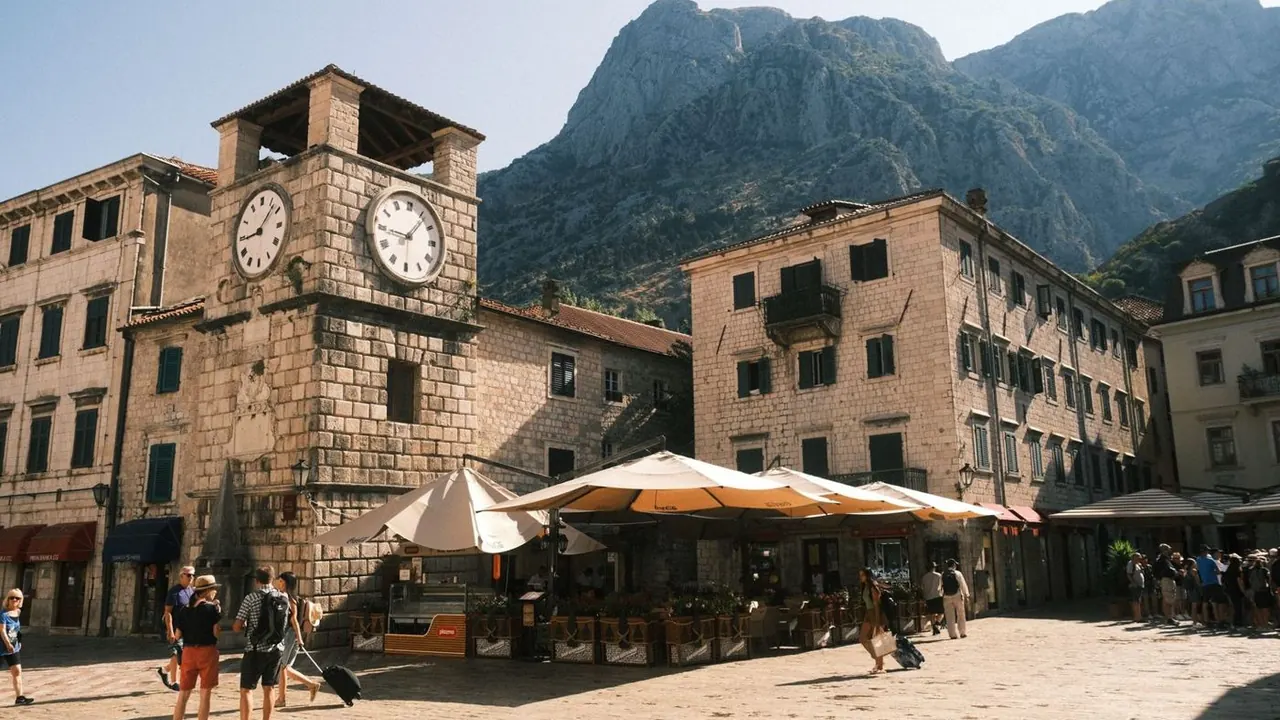
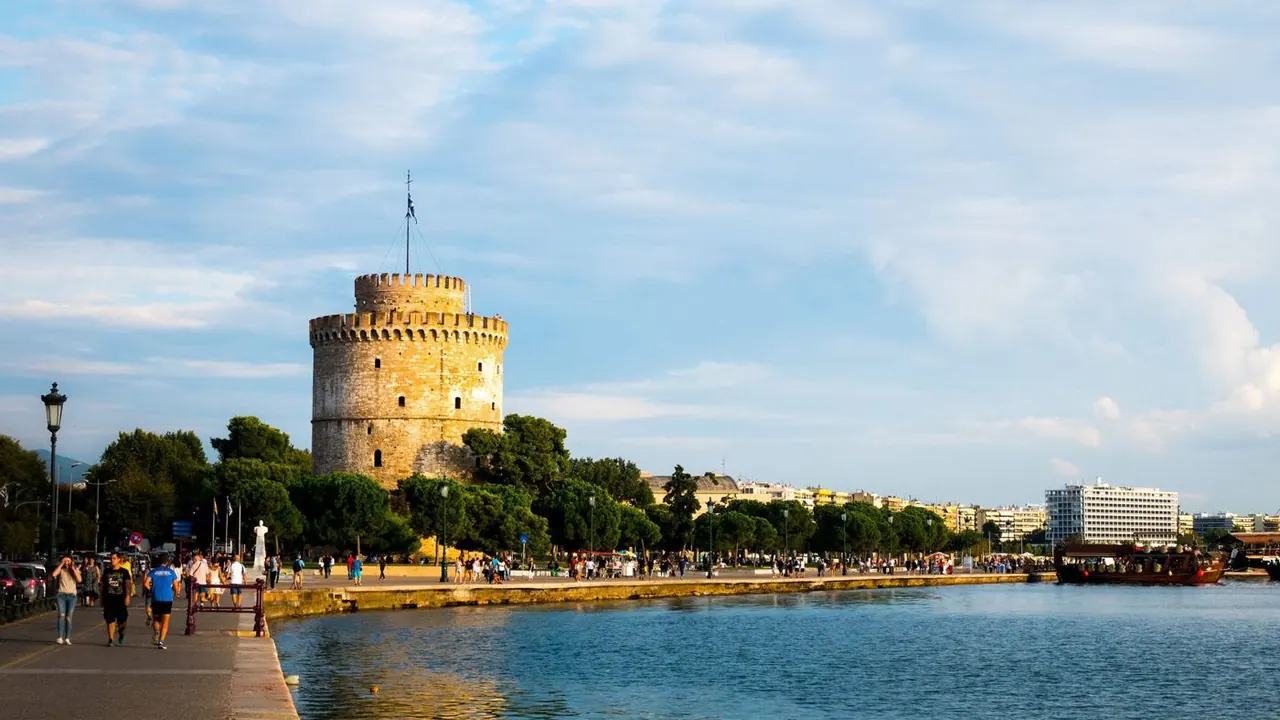
Photos: Kotor by Muhammed Fatih Beki, Pexels License; Thessaloniki by Destinygreece, CC BY-SA 4.0, cropped.
Kotor or Thessaloniki?
Our verdict in twelve categories, each scored against the same fixed benchmark cities, and the climate month by month, so you can choose for your trip.
Choose Kotor for
- nature and the outdoors
- beaches
Kotor is for travellers who want scenery first: a small walled town at the end of a fjord-like bay, mountain paths that start at the gates, and boat trips to stone villages such as Perast. It suits a slower stay with an outdoor bent, where evenings are quiet and the sandier beaches and livelier nights are a short drive away in Budva.
Choose Thessaloniki for
- nightlife
- food and drink
- live music and the arts
Choose Thessaloniki if you travel to eat, go out and see great monuments. Its tavernas, ouzeri and markets, its Byzantine churches and serious museums, and a night scene that runs past three make for a much fuller city break at gentler prices. The trade-off is that the sea and the mountains are a drive away rather than outside the door.
Scoreboard
Twelve categories on one fixed scale from 0 to 100. The shaded stretch is the gap between the two.
Your match
Pick a travel style or drag the sliders, and both match scores follow your weighting.
Wins on nature and the outdoors and beaches with your weighting.
Wins on nightlife and food and drink with your weighting.
What matters to you?
Category by category
What the scores mean for a trip.
Beaches & swimming
Neither city is a place to swim in town, and both send you out for a proper beach day. Kotor at least lets you slip into the calm, warm bay from jetties and pebble strips towards Dobrota and Muo, and the sand at Jaz on the Budva riviera is about half an hour over the hill.
Thessaloniki's waterfront is for strolling, not bathing, and the suburban beaches have only shallow, ordinary water. Its prize is Halkidiki, about an hour away, where Kassandra's clear coves beat anything in Kotor's enclosed inner bay, though they are more a day out or a separate leg of the trip.
Food & drink
Thessaloniki is the far stronger place to eat. Ottoman, Sephardic and Anatolian influences show in its long meze tables, spiced kebabs and morning bougatsa, and the Kapani and Modiano markets keep everyday cooking good and close to its ingredients.
Kotor's table is narrower: grilled fish, bay mussels, cuttlefish risotto, Njegusi ham and a glass of Vranac. The squares inside the walls repeat the same menus, so the better meals are at konobas along the shore in Dobrota, Prcanj and Perast.
Culture & sights
Kotor is one intact UNESCO townscape: marble lanes, the cathedral of St Tryphon and walls zigzagging up to the fortress of St John, all properly seen in a day or two. The pleasure is the whole town rather than a list of sights.
Thessaloniki gives a culture trip much more to work through, though it is scattered across a modern city. The Rotunda, Agios Dimitrios and the other Byzantine monuments, the Arch of Galerius and the Roman Forum, and the Archaeological and Byzantine museums fill several days, while Ano Poli supplies the old-town lanes.
Nightlife
This is the widest gap between the two. Thessaloniki's students and late Greek hours fill Ladadika, the louder bars around Valaoritou and the outdoor tables of the Bit Bazaar until well past three, weeknights included, with open-air clubs on the city's edge in summer.
Kotor offers a drink on a square under the lit walls and a few late bars in summer, then goes quiet. Anyone wanting a real night out ends up taking the road to Budva's seafront.
Nature & outdoors
Kotor wins on landscape. Limestone cliffs rise more than 1,000m almost straight from the water, the Ladder of Kotor and the fortress path begin at the town gates, and Lovcen National Park and kayaking along the shore are close at hand.
Thessaloniki's wilder country needs a car: Mount Olympus with the Enipeas gorge, the Halkidiki coast and winter skiing at Kaimaktsalan. In the city itself you have the Seich Sou pine forest and the long, flat promenade.
Day trips
Both make fine bases, but for different outings. From Kotor the days are short and scenic: Perast and its island church, Herceg Novi at the bay's mouth, Budva and Sveti Stefan along the coast, Cetinje over Lovcen, and Dubrovnik across the border.
Thessaloniki's excursions are about ancient Macedonia. The royal tombs at Vergina, Alexander's Pella and Dion beneath Olympus are among Greece's great sites, with Edessa's waterfalls and Naoussa's vineyards beyond, and a hire car makes the circuit much easier.
Good for families
Thessaloniki has more for children, if not a great deal: the seafront promenade with its playgrounds, the Noesis science centre and planetarium, and a small zoo in Seich Sou. Heavy traffic, narrow pavements and summer heat are the drawbacks.
Kotor's car-free lanes and street cats charm young children, but little is made for them and the fortress climb is hard going in the heat. Family days there mean swimming off jetties in the calm bay and the boat out to Perast's island church.
Getting around
Thessaloniki is easier to move about. Its main sights lie in a flat strip along the water within about half an hour's walk of each other, a metro line runs under the centre, and taxis are plentiful for the steep climb to Ano Poli.
Kotor's old town takes minutes to cross on foot, but leaving it is the problem. Buses are infrequent, the single road round the bay jams in summer, and Lovcen or the Lustica coves really need a car or a driver.
Shopping & style
Neither is a shopping destination, but Thessaloniki at least has a proper high street on Tsimiski, malls on the city's edge, a few independents around Valaoritou and markets for spices, loukoumi and tsipouro. Kotor has souvenirs, filigree and lace in its lanes and ham, honey and Vranac from the green market, and sends anyone after brands to the Tivat marina.
Affordability
Thessaloniki goes further on a budget because it is priced for students and locals: generous taverna plates, cheap street snacks, inexpensive transport and museum entry, and nights out that stay modest. Kotor is moderate overall, but the old town charges resort rates in July and August, so savings there depend on an apartment in Dobrota or Muo and a visit in May, June or September.
Live music & performing arts
Thessaloniki has a real cultural calendar: the State Orchestra at the waterfront Concert Hall, seasons from the National Theatre of Northern Greece, summer concerts at open-air theatres, and rebetiko played late in tavernas. Kotor has no year-round scene, only summer recitals in its churches and squares and the masked parades and decorated boats of carnival and Boka Night.
Wellness & relaxation
Neither city has a living bathing culture, so rest in either comes from the pace of the place more than from treatments. In Kotor, pampering means a resort hotel spa somewhere on the bay or at the Tivat marina. Calm is something you plan for: see the walled town early or late, and give the middle of the day to the water and the shore villages.
Thessaloniki has a slight edge because it offers something Kotor lacks. Its Ottoman hammams, the Bey Hamam among them, survive only as monuments, but a short drive inland takes you to plain spring-fed pools at Lagadas. Its calm is also part of ordinary city life. Locals spend whole afternoons over cold coffee by the gulf and stroll the promenade as the light fades. In Kotor you find that ease by getting away from the midday crowds in the old town.
When should you go?
Pick your month. The climate figures are measured averages, not a forecast.
Kotor in July
Thessaloniki in July
Daytime high, °C
Rainfall in the month, mm
Where the figures come from
Kotor has no rain gauge within 25 km of the centre, so its rainfall comes from a gridded climate dataset read at the city rather than from a gauge further away.
Kotor's sunshine is measured 42 km from the centre, at Podgorica-Grad.
Temperature and rainfall are climate normals, averaged over the years shown. Kotor: 1991-2020 normals, Tivat (4.2 km from centre). Thessaloniki: 1991-2020 normals, Thessaloniki Airport (14 km from centre).
Both cities get hot in July and August, with Kotor's highs around 32°C, so streets are best walked and Kotor's fortress climbed in the early morning or evening. The sea is warm enough to swim in both from June to September and is at its warmest in August, around 26°C. Late May, June and September are the most comfortable months in either place, warm without the worst of the heat.
The real difference is rain. Kotor's mountains catch heavy downpours from September through winter, and November brings around 202mm, so the cooler half of the year there is often wet and grey. Thessaloniki stays dry all year and never gets much above 50mm in any month, so its mild winters still suit museums, markets and long taverna lunches.
Which traveller are you?
For an outdoors trip, Kotor is the clear pick. Trails climb the cliffs straight from the town gates, Lovcen National Park is a drive up the hairpins, and kayaking the bay brings the villages and mountains close, while Thessaloniki's peaks need a car.
On a food and nightlife trip, Thessaloniki wins easily. Meze at ouzeri, bougatsa breakfasts and market tavernas fill the days, and Ladadika and Valaoritou keep going past three. Kotor's menus are narrow and its evenings quiet unless you head to Budva.
For a culture and arts trip, choose Thessaloniki. Its UNESCO Byzantine churches, Roman remains and two major museums go deeper than Kotor's single walled town, and the State Orchestra and late rebetiko sessions fill evenings that Kotor rarely offers outside summer.
Before you go
| Measure | Kotor | Thessaloniki |
|---|---|---|
| Official language | Montenegrin | Greek |
| Currency | Euro (EUR) | Euro (EUR) |
| Sockets | CF230 V, 50 Hz | CF230 V, 50 Hz |
| Driving side | Right | Right |
| Time zone | UTC+1, UTC+2 in summer | UTC+2, UTC+3 in summer |
| Emergency number | 112 | 112 |
| Elevation | 10 m | 6 m |
| Main airport | Tivat Airport (TIV)5 km from centre42 non-stop destinations | Thessaloniki Macedonia International Airport (SKG)14 km from centre90 non-stop destinations |
| Public holidays this year | - | 15 days |
By the numbers
| Measure | Kotor | Thessaloniki |
|---|---|---|
| City population | 562 | 309,617 |
| People per km² | - | 16,042 |
| Museums within 10 km | 3 | 32 |
| UNESCO World Heritage sites within 50 km | 3 | 1 |
| Swim season, months above 21 °C | 5 months | 5 months |
Where else could you go?
Every comparison below shares a destination with this one, so you can follow Kotor or Thessaloniki somewhere new.