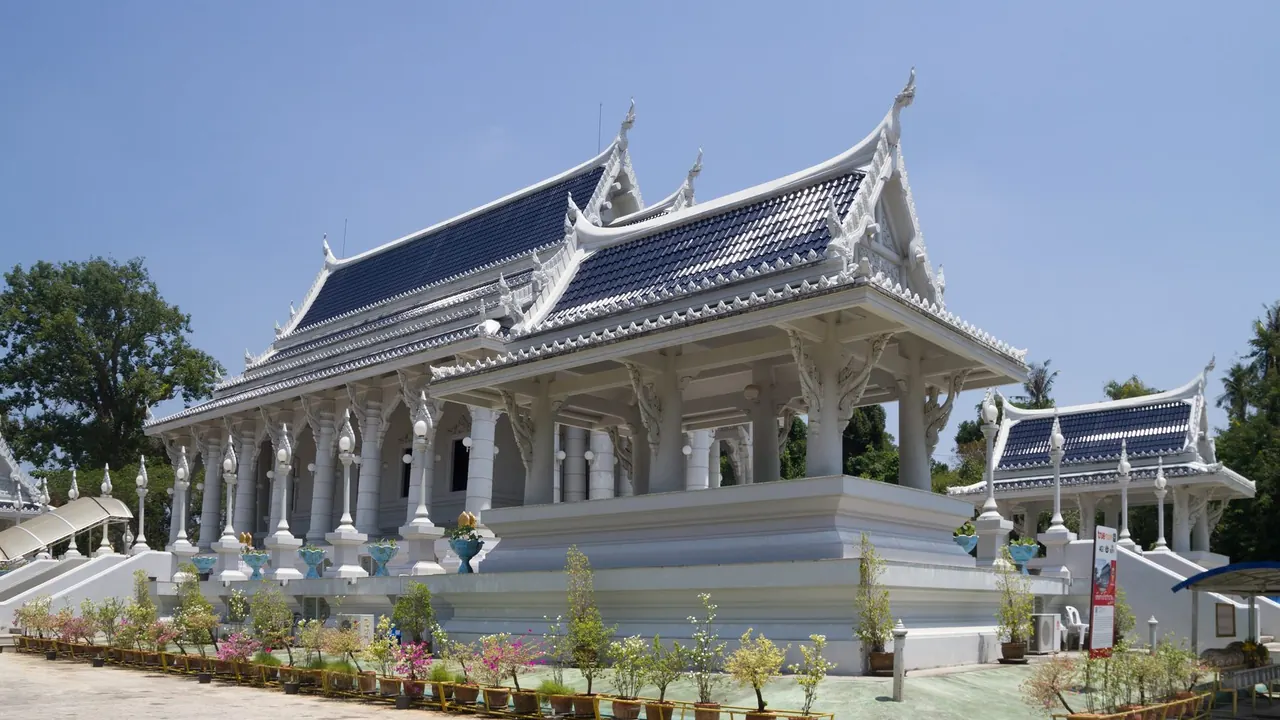
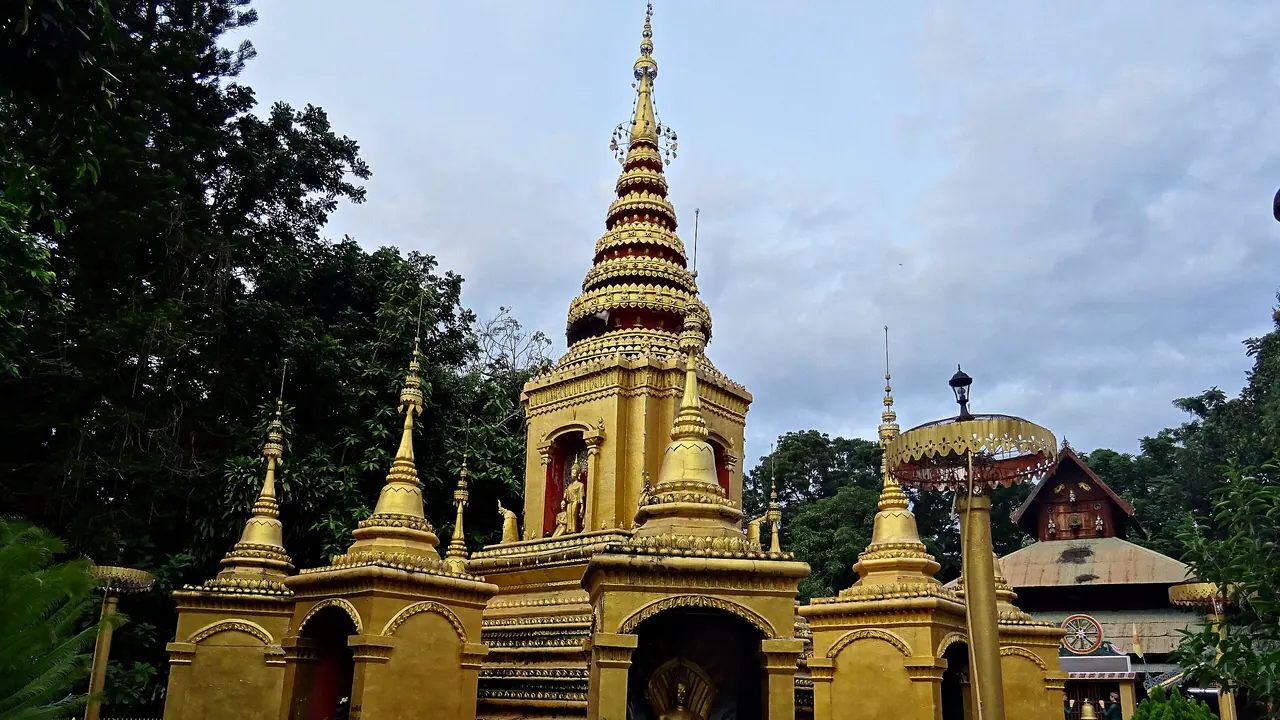
Photos: Krabi by Maksym Kozlenko, CC BY-SA 4.0, cropped; Pai by Christophe95, CC BY-SA 4.0, cropped.
Krabi or Pai?
Our verdict in twelve categories, each scored against the same fixed benchmark cities, and the climate month by month, so you can choose for your trip.
Choose Krabi for
- beaches
- day trips
- families
Krabi is for travellers who want the sea at the centre of the trip. The limestone cliffs drop straight onto good sand at Railay and Phra Nang, the islands are a short longtail ride away, and climbing, kayaking and snorkelling fill the days. It also suits families better, with shallow coves and resort pools, and it has more to do on a day out, from Phi Phi to Koh Lanta.
Choose Pai for
- live music and the arts
- prices
- nightlife
Pai makes more sense for a slower, cheaper stay in the hills. Nobody goes there for a beach. The draws are a green valley of rice fields, hot springs, yoga retreats and bars where someone is usually playing live music. Your money lasts longer than on the coast, and plenty of travellers stay for weeks. Pai works best for independent travellers who are happy on a scooter.
Scoreboard
Twelve categories on one fixed scale from 0 to 100. The shaded stretch is the gap between the two.
Your match
Pick a travel style or drag the sliders, and both match scores follow your weighting.
Wins on beaches and day trips with your weighting.
Wins on live music and the arts and prices with your weighting.
What matters to you?
Category by category
What the scores mean for a trip.
Beaches & swimming
This is where the two differ most. Krabi has some of the most photographed sand in Asia: Railay West and Phra Nang under their limestone cliffs, quieter stretches at Klong Muang and Tubkaek, and island coves a longtail ride from Ao Nang. Phi Phi is about an hour and a half away by ferry.
Pai has no coast. Swimming there means a dip in the Pai River, a pool under Mo Paeng waterfall or an afternoon floating downriver on an inner tube. That is pleasant in the heat, but it does not replace a beach.
Food & drink
Krabi's cooking has more depth. It is southern Thai food shaped by the region's Muslim communities: fiery curries, turmeric fish soups, khao mok gai and roti, best eaten at the evening market and riverside stalls in Krabi Town. Fresh grilled seafood is the highlight on the coast.
Pai eats more casually. The walking street has khao soi, skewers and Shan dishes, and Santichon village adds Yunnanese noodles and tea. Much of the rest is café food for long-stay travellers, such as vegan plates, smoothie bowls and good espresso. It is easy and cheap, but it says less about the region.
Culture & sights
Neither place is a sightseeing trip, but Krabi has a little more. The climb of more than 1,200 steps to the Tiger Cave Temple's hilltop Buddha is a proper outing, and Krabi Town adds Chinese shophouses and the caves of Khao Khanab Nam.
Pai's equivalent is the stairway to the white Buddha at Wat Phra That Mae Yen at sunset. Add the old iron bridge from the Second World War era and the mud-brick houses of Santichon, and you have about half a day of sights.
Nightlife
The two are about even, and both close early, with no proper clubs. Krabi's evenings are beach evenings: cocktails and sports screens on Ao Nang's beach road, and hammocks and fire-spinning at Railay. Anyone who wants a real party takes the ferry to Phi Phi.
Pai's scene is more social and more of a backpacker crowd. Fairy-lit garden bars and reggae spots fill up after the night market, and it is easy to fall into conversation with other travellers.
Nature & outdoors
Krabi's landscape is the more dramatic, and you can explore it on the water as well as on land. Railay and Tonsai are among the best-known sport-climbing spots in the world. You can kayak through the mangroves at Ao Thalane, dive and snorkel around the outer islands, and reach the karst islands of Phang Nga Bay by boat.
Pai's scenery is gentler: rice fields, misty viewpoints such as Yun Lai, the eroded ridges of Pai Canyon and the great river cave of Tham Lod. Exploring there means a scooter and hiking boots rather than a boat. Spring haze from field burning can hide the hills for weeks.
Day trips
Krabi has far more choice. Ferries reach Phi Phi Don, Koh Lanta's stilted Old Town and the fishing villages of Koh Yao Noi, and a long day takes in Phuket's Sino-Portuguese quarter.
Pai is remote. Soppong and the Lahu and Lisu villages around it are about an hour west on the mountain road. Mae Hong Son and Chiang Mai, each around three winding hours away, are better treated as the next stop on a northern loop than as a day out.
Good for families
Krabi is the easier choice with children. In the dry season the water at Phra Nang and Klong Muang is warm and shallow, and the large resorts have kids' clubs. Strong sun and open longtail boats still need some planning.
Pai is harder going. The mountain road in is notorious for carsickness, most sights need a scooter or a hired driver, and the town's evenings are geared to young backpackers. Waterfalls, river tubing and the night market suit older, outdoorsy children best.
Getting around
Krabi is a little easier to get around. White songthaews link Ao Nang, the northern beaches and Krabi Town, and longtails run to Railay, which has no road, though the boats stop in heavy seas.
Pai's centre takes minutes to walk, but there is no public transport out to the canyon, waterfalls or hot springs. Most visitors hire a scooter, which is risky for beginners on the hill roads. The alternatives are hired songthaews and tours.
Shopping & style
Neither is a shopping destination, and what differs is the kind of stall. Ao Nang's main road sells beachwear, souvenirs and copies, with tailors among them, and Krabi Town has a weekend market and plain malls for essentials.
Pai's walking street is more crafty. It sells hill-tribe textiles, cotton trousers, woven bags and small art prints, much of it made locally, though the same goods repeat from stall to stall.
Affordability
Both are good value, but Pai is cheaper. Simple bungalows, night-market dinners and scooter hire cost very little, and most sights are free, which is why so many travellers stay on for weeks.
In Krabi, costs depend on where you stay. Krabi Town is cheap, Ao Nang costs more, and Railay is the most expensive base because everything arrives by boat. Island tours and park fees push up the cost of a beach-based stay.
Live music & performing arts
Neither has a theatre or a concert hall, but Pai has the better evenings for live music. Most nights several bars host acoustic sets and blues or jazz jams by local and travelling musicians. The quality varies, but the music is easy to find.
In Krabi, live entertainment means fire-spinning on the beaches, cover bands and Muay Thai fights staged for visitors near Ao Nang.
Wellness & relaxation
Both are easy places to unwind, but in different ways. Krabi's version is a resort spa with open-air pavilions facing the sea, plus a trip to the Hot Springs Waterfall at Khlong Thom, about an hour south. Ao Nang's main road can be noisy in high season.
Pai is simpler and closer to a retreat. You can soak at the Tha Pai springs in the cool morning air, join yoga and meditation courses that run for days or weeks, and spend afternoons in a hammock looking over the rice fields, though the spring haze takes the edge off.
When should you go?
Pick your month. The climate figures are measured averages, not a forecast.
Krabi in July
Pai in July
Daytime high, °C
Rainfall in the month, mm
Where the figures come from
Krabi's temperatures are measured 67 km from the centre, at Phuket Airport.
Krabi has no rain gauge within 25 km of the centre, so its rainfall comes from a gridded climate dataset read at the city rather than from a gauge further away.
Pai's temperatures are measured 64 km from the centre, at Mae Hong Son.
Pai's station stands 242 m below the city centre, so the centre is likely a little cooler than the figures say.
Pai has no rain gauge within 25 km of the centre, so its rainfall comes from a gridded climate dataset read at the city rather than from a gauge further away.
Pai's sunshine is measured 86 km from the centre, at Chiang Mai.
Temperature and rainfall are climate normals, averaged over the years shown. Krabi: 1991-2020 (sunshine 1961-1990) normals, Phuket Airport (66.6 km from centre). Pai: 1971-2000 (sunshine 1991-2020, rainfall 1991-2020) normals, Mae Hong Son (63.7 km from centre).
Krabi is hot all year, and the sea stays around 29°C in every month, so the question is rain rather than warmth. December to March are the dry, sunny months, with calm water for boat trips. From May the southwest monsoon brings heavier rain and rougher seas, peaking in October at about 321mm. Swimming and island hopping then depend on the day.
Pai has more distinct seasons. December and January are the pleasant months, with highs near 29°C and almost no rain, which makes them ideal for walking the valley and soaking in the hot springs in the cool morning air. March and April are the worst time to go, with highs reaching 38°C and haze from field burning hiding the hills. July and August are the wettest months, and the tracks turn muddy. Both places are at their best from December to February, which makes it easy to combine them on one trip.
Which traveller are you?
On a beach and sun trip, Krabi is the only real choice. The whole stay can revolve around the sea, with a different beach or island most days. In Pai, any time by the sea would have to be a separate leg of the trip.
On a tight budget, Pai makes the money go furthest and suits a long stay where there is little to pay for once you arrive. You can do Krabi cheaply from Krabi Town, but the boat trips that make the coast worth visiting cost extra.
On a family trip with young children, Krabi is the easier choice. Calm coves, resort pools and short boat trips fill the days, though strong sun, open longtails and monsoon seas need planning. Pai suits older, outdoorsy children who cope with winding roads.
Before you go
| Measure | Krabi | Pai |
|---|---|---|
| Official language | Thai | Thai |
| Currency | Baht (THB) | Baht (THB) |
| Sockets | ABCF220 V, 50 Hz | ABCF220 V, 50 Hz |
| Driving side | Left | Left |
| Time zone | UTC+7 | UTC+7 |
| Emergency number | Police 191, ambulance 1669, fire 199 | Police 191, ambulance 1669, fire 199 |
| Elevation | 16 m | 509 m |
| Main airport | Krabi International Airport (KBV)9 km from centre14 non-stop destinations | Chiang Mai International Airport (CNX)86 km from centre28 non-stop destinations |
By the numbers
| Measure | Krabi | Pai |
|---|---|---|
| City population | 30,499 | 3,598 |
| Museums within 10 km | 0 | 0 |
| UNESCO World Heritage sites within 50 km | 0 | 0 |
| Swim season, months above 21 °C | 12 months | - |
Where else could you go?
Every comparison below shares a destination with this one, so you can follow Krabi or Pai somewhere new.