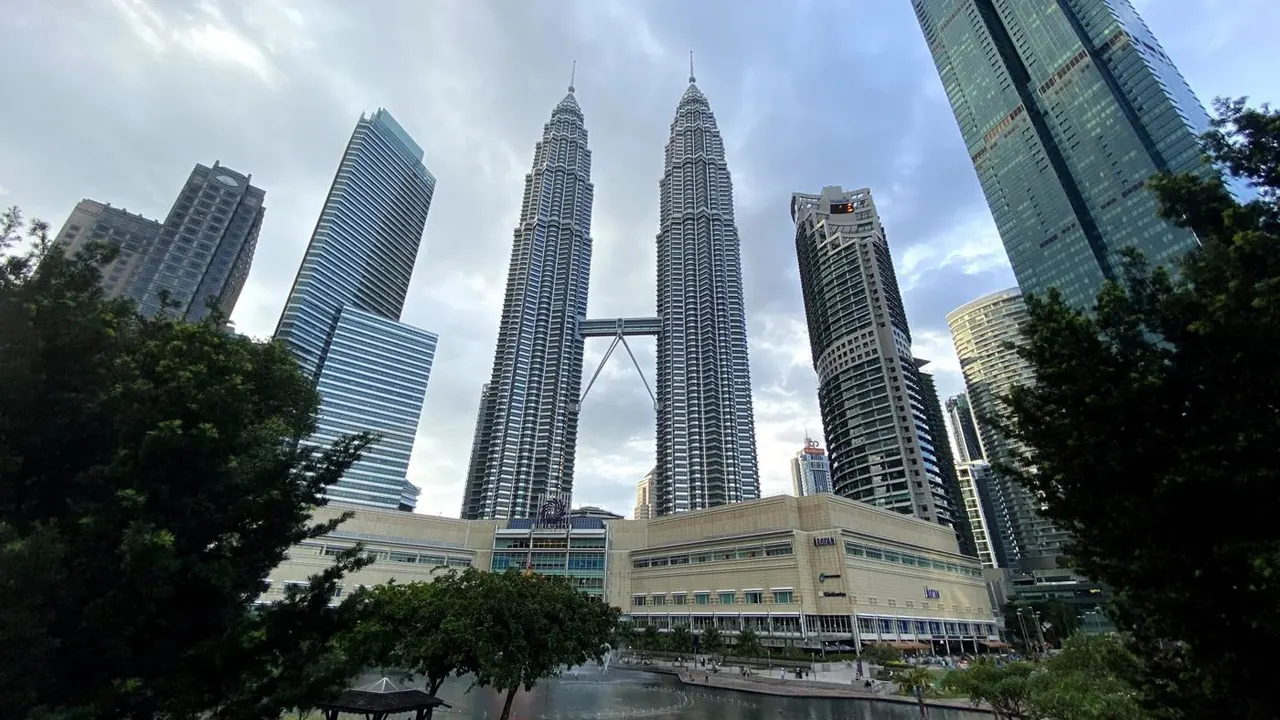
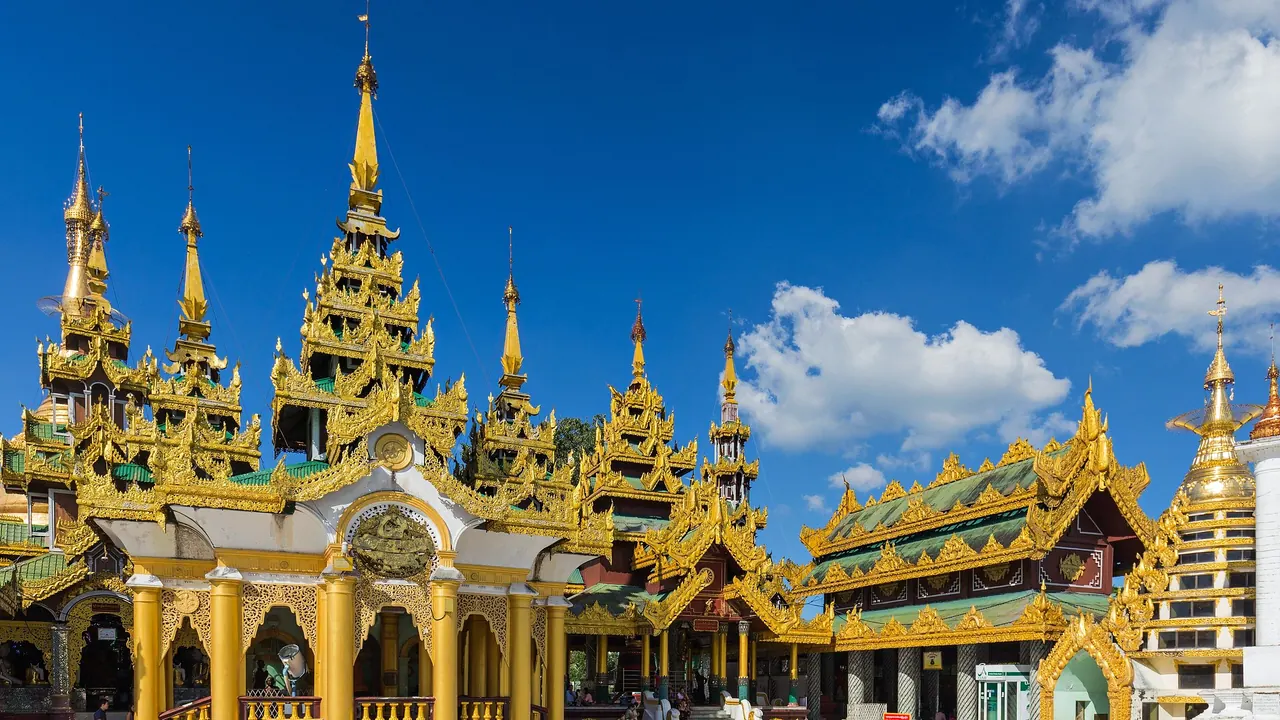
Photos: Kuala Lumpur by Brownc, CC BY-SA 4.0, cropped; Yangon by Marcin Konsek, CC BY-SA 4.0, cropped.
Kuala Lumpur or Yangon?
Our verdict in twelve categories, each scored against the same fixed benchmark cities, and the climate month by month, so you can choose for your trip.
Choose Kuala Lumpur for
- families
- nightlife
- nature and the outdoors
Kuala Lumpur suits travellers who want an Asian capital that is easy to handle. Malay, Chinese and Indian kitchens sit side by side, trains and ride-hailing get you about, and air-conditioned malls give you somewhere to go when it rains. In the evening there are bars and rooftops, and rainforest is close enough for a morning out. It is much the better choice with children and for anyone who wants evenings out.
Choose Yangon for
- culture and sights
- prices
Choose Yangon if the sights matter more than the comforts. The Shwedagon at dusk and a downtown of weathered colonial buildings give it a strong character that Kuala Lumpur's younger skyline lacks, and everyday costs are lower still. Expect slow traffic, quiet nights and little laid on for children. It rewards curious adults who don't need much looking after.
Scoreboard
Twelve categories on one fixed scale from 0 to 100. The shaded stretch is the gap between the two.
Your match
Pick a travel style or drag the sliders, and both match scores follow your weighting.
Wins on families and nightlife with your weighting.
Wins on culture and sights and prices with your weighting.
What matters to you?
Category by category
What the scores mean for a trip.
Beaches & swimming
Neither city is a beach destination, and in both a swim usually means the hotel pool. Kuala Lumpur at least has Port Dickson about an hour and a half away for a warm if unremarkable sea, and Langkawi and Penang are easy to add as a separate leg. Yangon's nearest proper sand, at Chaung Tha and Ngwe Saung, is a long day's drive and needs several nights of its own.
Food & drink
Kuala Lumpur is the stronger city for eating. Malay, Cantonese and South Indian cooking sit side by side, mamak canteens serve roti canai through the night, and Jalan Alor and Brickfields' Little India are good places to wander and graze. There is also a polished restaurant and cocktail tier when you want one.
Yangon is more a discovery than a feast. Tea shops serve mohinga for breakfast, there is laphet thoke and there are slow-cooked Burmese curries with their spread of side dishes, and in the evening you can have skewers with draught beer on 19th Street. It rewards curious eaters, but there is little at the top end, and wine and cocktails barely feature.
Culture & sights
Yangon has the more memorable sights. The Shwedagon Pagoda, gilded and nearly 100m tall, is one of the great religious monuments of Asia. The downtown grid around the Sule Pagoda keeps one of the region's largest sets of colonial buildings, weathered and full of atmosphere.
Kuala Lumpur's sights are younger and more mixed: the Petronas Towers, the Moorish Sultan Abdul Samad Building on Merdeka Square, Thean Hou Temple and the stairway at Batu Caves. Its clear advantage is the Islamic Arts Museum, far stronger than Yangon's modest collections. Each city is well covered in two or three days.
Nightlife
Kuala Lumpur has proper nights out. There are the shophouse bars of Changkat Bukit Bintang, rooftop bars facing the Petronas Towers and clubs that run into the small hours, with Bangsar for a more local evening. Drinks are heavily taxed, but there is plenty of choice.
Yangon goes to bed early. An evening means a beer station with football on the screens or a table on 19th Street, plus a few hotel and rooftop bars, and the streets are quiet well before midnight.
Nature & outdoors
Kuala Lumpur has real rainforest close at hand: the jungle patch and canopy walkway by the KL Tower, the trails of the Forest Research Institute, hiking on Bukit Kiara and the cooler hill stations of Fraser's Hill and Genting. Yangon sits on flat delta land with no hills or trails nearby. The outdoors there means strolling around Kandawgyi and Inya lakes or taking a river ferry to watch delta life.
Day trips
Kuala Lumpur has the stronger day out in Malacca, a UNESCO-listed port two hours south with Dutch and Portuguese buildings, Chinese shophouses and Peranakan cooking, though it makes a long day and many people stay the night. Closer in, Putrajaya's grand mosques around its lake are half an hour away, and the royal town of Klang and the hilltop fort at Kuala Selangor make shorter outings.
Yangon's main trip is Bago, two hours north by road or train, a former royal capital with the towering Shwemawdaw Pagoda and a long reclining Buddha. Getting to Twante's kilns and canals takes a ferry across the river and then a ride inland, and Kyauktan has a pagoda on an island in the river. From both cities the famous trips further out, the Cameron Highlands and the Golden Rock at Kyaiktiyo, need a night away.
Good for families
Kuala Lumpur is far easier with children. The food is easy to adjust for young eaters, and there is a free splash area in the park beside the twin towers, a butterfly park in the Lake Gardens, the national zoo on the city's edge and a theme park up in the cool air of Genting Highlands. The weak points are the heat, afternoon storms and missing pavements, so most families get about by taxi.
Yangon has an old-fashioned zoo, a small amusement park and the lawns of People's Park and the lakesides, and not much more built for children. Burmese people are as warm towards children as Malaysians are, but broken pavements, disorderly traffic and relentless heat make the city a better fit for older children who enjoy temples and markets.
Getting around
Kuala Lumpur has a working rail network of LRT, MRT and monorail lines plus an airport express. The trains are clean and cool, though changing lines can be awkward, and cheap ride-hailing fills the gaps. Walking is hard going beyond the centre, but the covered walkway from the Petronas Towers to Bukit Bintang helps.
Yangon has no metro, so once you leave the walkable colonial grid you are in taxis stuck in heavy traffic. Motorbikes are kept out of the centre, which makes the streets calmer than you might expect. The slow Circular Railway is worth riding for the views, not as a way to get anywhere.
Shopping & style
Kuala Lumpur is a mall city, and a very good one. Bukit Bintang's huge centres run from luxury flagships to electronics floors, Mid Valley and Bangsar add more, and Central Market sells batik and pewter.
Yangon's shopping centres on Bogyoke Aung San Market, a colonial hall of jade, rubies, Bagan lacquerware, puppets and longyi, where bargaining is expected. It makes a good afternoon among the crafts, but for range and brands Kuala Lumpur is well ahead.
Affordability
Both cities are cheap for a visitor, and Yangon is the cheaper day to day. Tea-shop breakfasts, street noodles and taxis cost very little, and most pagodas charge little or nothing. The catch is hotels, where international-standard rooms cost more than the rest of the trip would suggest.
Kuala Lumpur works the other way round. Its hotels are unusually good for the money, rooftop pools included, but meals and drinks add up faster, and heavy taxes make alcohol expensive.
Live music & performing arts
Neither city is one to plan evenings around, but Kuala Lumpur has a dependable option in the Malaysian Philharmonic, which plays in its fine hall inside the Petronas Towers. It also has large productions at Istana Budaya and a small jazz circuit. Yangon offers marionette shows, classical dance with dinner at the barge-shaped Karaweik on Kandawgyi Lake and, with luck, an all-night zat pwe at a pagoda festival, but there are no concerts or theatre in the Western sense.
Wellness & relaxation
Kuala Lumpur is a little better for comfort. There are reflexology parlours along Bukit Bintang, Malay herbal treatments in good hotel spas, a few hammams, and the cool air of the hill stations when the city wears you down.
Yangon's massage is firmer and based on stretching. It also has something Kuala Lumpur lacks in its Buddhist meditation centres, such as Mahasi, where foreigners can practise vipassana for days or weeks. Neither city is restful in itself, so in both the calm comes from early mornings by the lakes.
When should you go?
Pick your month. The climate figures are measured averages, not a forecast.
Kuala Lumpur in July
Yangon in July
Daytime high, °C
Rainfall in the month, mm
Where the figures come from
Kuala Lumpur's temperatures are measured 46 km from the centre, at Sepang/KL International Airport.
Kuala Lumpur has no rain gauge within 25 km of the centre, so its rainfall comes from a gridded climate dataset read at the city rather than from a gauge further away.
Temperature and rainfall are climate normals, averaged over the years shown. Kuala Lumpur: 1991-2020 (sunshine 1981-2010) normals, Sepang/KL International Airport (46.1 km from centre). Yangon: 1991-2020 normals, Yangon (3.2 km from centre).
Kuala Lumpur barely changes through the year. Daytime highs stay around 33°C in every month, and rain falls all year, mostly as afternoon storms. June and July are the least wet and among the sunniest months. October to December brings the heaviest rain, peaking near 385mm in November, and also the fewest hours of sun.
Yangon has two clear seasons. November to February is dry and the best time to walk the pagodas and the downtown grid. March and April stay dry, but the heat climbs to 38°C, too hot for long walks in the middle of the day. The monsoon arrives in May, and from June to August close to 590mm falls each month, which floods streets and cuts sightseeing short. So in the northern winter Yangon is the drier city, while in the middle of the year Kuala Lumpur is far easier.
Which traveller are you?
On a family trip with children, Kuala Lumpur is the clear pick. The aquarium and science centre under the Petronas Towers, the Lake Gardens bird park and a big water park keep children busy, and malls take over in the rain. Yangon has little built for them.
For a food and nightlife trip, Kuala Lumpur again. Hawker stalls, mamak canteens open all night and Jalan Alor give it the deeper food scene. Changkat's bars and the rooftops facing the twin towers keep going long after Yangon's beer stations have emptied.
On a culture and arts trip built around great sights, Yangon gives you more. The Shwedagon at dusk, the Sule and Botataung pagodas and the weathered colonial downtown are more striking than Kuala Lumpur's landmarks. Kuala Lumpur still has the better museum and an orchestra.
Before you go
| Measure | Kuala Lumpur | Yangon |
|---|---|---|
| Official language | Malay | Burmese |
| Currency | Malaysian Ringgit (MYR) | Kyat (MMK) |
| Sockets | G240 V, 50 Hz | CFG230 V, 50 Hz |
| Driving side | Left | Right |
| Time zone | UTC+8 | UTC+6:30 |
| Emergency number | 999 | Police 199, ambulance 192, fire 191 |
| Elevation | 50 m | 15 m |
| Main airport | Kuala Lumpur International Airport (KUL)45 km from centre145 non-stop destinations | Yangon International Airport (RGN)13 km from centre27 non-stop destinations |
By the numbers
| Measure | Kuala Lumpur | Yangon |
|---|---|---|
| City population | 9,000,280 | 6,874,000 |
| People per km² | 36,932 | 11,934 |
| Museums within 10 km | 25 | 5 |
| UNESCO World Heritage sites within 50 km | 1 | 0 |
| Swim season, months above 21 °C | 12 months | 12 months |
Where else could you go?
Every comparison below shares a destination with this one, so you can follow Kuala Lumpur or Yangon somewhere new.
- Malaccavs Kuala Lumpur
- Penangvs Kuala Lumpur
- Singaporevs Kuala Lumpur
- Chiang Maivs Yangon
- Paivs Yangon
- Kanchanaburivs Yangon