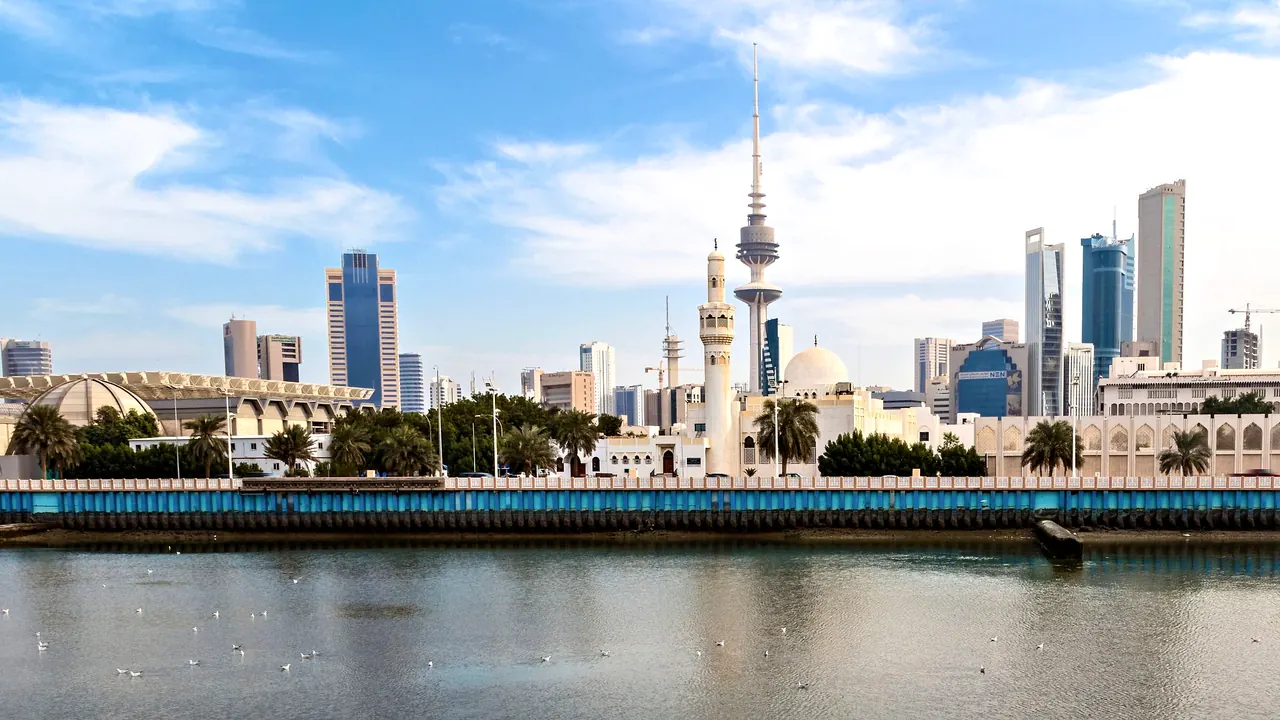
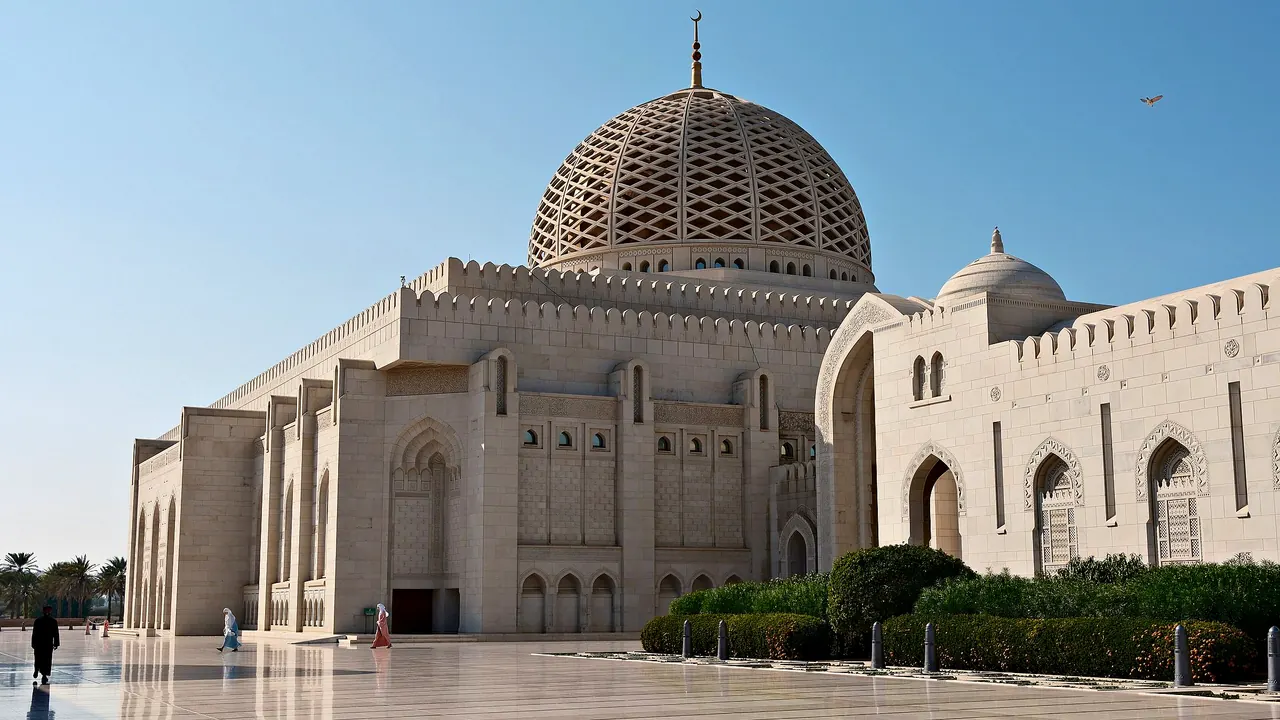
Photos: Kuwait City by Tayssir Kadamany, Pexels License; Muscat by Alli Khalil, CC BY 4.0, cropped.
Kuwait City or Muscat?
Our verdict in twelve categories, each scored against the same fixed benchmark cities, and the climate month by month, so you can choose for your trip.
Choose Kuwait City for
- shopping
- food and drink
Kuwait City is for a short winter stay built around indoor pleasures: some of the Gulf's largest malls, a serious collection of Islamic art, the old covered market at Mubarakiya and a coffee-shop culture that runs late into the night. It suits shoppers, museum-goers and anyone stopping over on business who wants a few good sights without needing scenery. It doesn't suit anyone looking for landscape, beaches or a drink.
Choose Muscat for
- nature and the outdoors
- day trips
- wellness
Muscat is the better choice for almost any leisure trip. Mountains rise straight behind the coves, the sea is clear and warm through the winter, and the forts and villages of the interior are within a day's drive. Travellers who want walking in wadis, snorkelling, a calm resort with a good spa, or evenings at the opera will find much more here, as long as they come between autumn and spring and hire a car.
Scoreboard
Twelve categories on one fixed scale from 0 to 100. The shaded stretch is the gap between the two.
Your match
Pick a travel style or drag the sliders, and both match scores follow your weighting.
Wins on shopping and food and drink with your weighting.
Wins on nature and the outdoors and day trips with your weighting.
What matters to you?
Category by category
What the scores mean for a trip.
Beaches & swimming
Kuwait City's beaches are small public strips along the Arabian Gulf Street corniche, from Shuwaikh to Messila. The water is shallow and hazy and the sand is coarse. Much of the real beach life happens in private chalets and hotel beach clubs.
Muscat has much more to offer. Qurum gives you a long sandy beach inside the city, the rocky coves towards Al Bustan and Yiti have clear water, and boats run out to secluded bays and the reefs of the Daymaniyat Islands. In both cities the summer heat confines the beach to early morning and evening.
Food & drink
Kuwait City has the edge for eating out. Its own cooking is easy to find: machboos, fish mutabbaq and saffron balaleet at breakfast, best met at the grill houses of Souq Al-Mubarakiya. Its speciality coffee and cardamom gahwa culture fills the evenings.
Omani food is gentler, and oddly hard to find in restaurants. Shuwa is mostly festival food, so visitors rely on a few floor-seated traditional places. Day to day, you eat cheaply in the Keralan and Pakistani canteens of Ruwi and Mutrah. Muscat's hotels do serve wine, which Kuwait's total ban rules out.
Culture & sights
Muscat has more atmosphere to explore. You can visit the marble courtyards of the Sultan Qaboos Grand Mosque, the walled cove of Old Muscat between the Jalali and Mirani forts, and the merchants' houses and watchtowers along the Mutrah corniche. The National Museum and Bait al Zubair tell the country's story well.
Kuwait City lost most of its old townscape to rebuilding, so its strength lies in collections. These include the Islamic art of Dar al-Athar al-Islamiyyah, the calligraphy at the Tareq Rajab Museum and Bedouin weaving at Sadu House, plus Kuwait Towers and Utzon's National Assembly building. Either city takes about two or three days.
Nightlife
Neither city is for a night out. Muscat at least has hotel lounges, poolside bars and a few hotel nightclubs, busy with expatriates at the weekend. Kuwait has no bars or clubs at all, not even in hotels. In both, the evenings that locals enjoy are sober ones: shisha cafés and late dinners, the Mutrah corniche in Muscat, and the waterfront and malls in Kuwait City, which stay lively towards midnight.
Nature & outdoors
Nature is where the two cities differ most. Kuwait is flat gravel desert and shoreline. Its outdoor pleasures are winter desert camping, migrating birds at the Jahra Pools and Sabah Al-Ahmad reserve, and boating from the marinas.
The Hajar mountains drop straight into the sea at Muscat, giving it cliffs and fjord-like inlets right on the doorstep. You can wade the emerald pools of Wadi Shab, swim at the Bimmah sinkhole, walk the terraced gardens of Jebel Akhdar, dive with turtles at the Daymaniyat Islands and watch spinner dolphins on morning boat trips.
Day trips
From Kuwait City there is really one excursion: the ferry to Failaka Island, with its Bronze Age Dilmun remains, Hellenistic settlement and a village scarred by war. After that come the small Red Fort at Al Jahra and the resort canals of Al Khiran.
Muscat is a base for Oman's historic interior. Nizwa's round fort and Friday livestock market, the mud-brick fort at Bahla, painted Jabrin Castle and the village of Misfat al Abriyeen are all within reach. So are the forts at Nakhal and Rustaq, and the dhow builders of Sur down the coast. You will need a car or a driver.
Good for families
Both are easy, welcoming places for children, so the choice comes down to the kind of days you want. Kuwait City's are indoor and late-running: the aquarium at the Scientific Center in Salmiya, the dinosaurs and hands-on galleries of the Sheikh Abdullah Al-Salem Cultural Centre, and mall ice rinks, with families out until late.
Muscat's days revolve around the sea, with calm hotel beaches, dolphin trips and snorkelling in shallow coves. Qurum's park, the walk-through aquarium and the snow park at Seeb fill the rest. In both cities you face long car journeys and summers too hot for outdoor play.
Getting around
Neither city works without wheels. Neither has a metro, buses mostly serve residents, and most visitors use taxis, ride-hailing apps or a hire car. Driving in Kuwait City is fast and aggressive along wide motorways, and the sights are strung out between the old centre, Sharq and Salmiya.
Muscat spreads even further, about 50km of separate districts. Its roads are calmer and well signed, though, and a car is needed anyway for the interior. Each city has a pleasant walk on cool evenings: the Mutrah corniche and Old Muscat, or Kuwait's corniche.
Shopping & style
Kuwait City is the better shopping destination. Its giant malls along the ring roads hold luxury fashion and jewellery houses as well as every international chain. Souq Al-Mubarakiya adds gold, oud, dates and bisht cloaks, and Sadu House sells Bedouin weaving.
Muscat's highlight is Mutrah Souq, an unhurried maze scented with frankincense, where silver, khanjar daggers, perfume oils and halwa make better souvenirs than anything in a mall. Beyond the souq and the Friday market at Nizwa, though, Muscat offers only suburban malls of chain stores.
Affordability
The two cost much the same overall, but in different places. Kuwait City's hotels are priced like any international business city and its good restaurants like a Western European capital. Market grills and most museums cost little or nothing.
In Muscat, the beach resorts are the big expense, priced like a fashionable Mediterranean coast. On the other hand, canteen meals and fort entry are cheap, and room rates drop in the summer heat. In both cities, a hire car or daily taxis are a steady extra cost.
Live music & performing arts
Muscat gives the better evening out. The Royal Opera House runs a season from autumn to spring of touring opera, ballet, symphony orchestras, jazz and Arab music stars, in a grand hall with a strict dress code.
The Sheikh Jaber Al-Ahmad Cultural Centre in Kuwait City is an impressive modern counterpart with Arab stars and touring productions. However, its programme is sparser, and Kuwait's long theatre tradition plays in Arabic dialect for a local audience. Outside these two halls, neither city has much live music.
Wellness & relaxation
For unwinding, Muscat is far ahead. The city itself is low-rise and slow. The resort spas in the coves south of the centre offer frankincense treatments, hammam rituals and long quiet days by the pool, and the warm springs at Nakhal and Rustaq make a simple local outing.
Kuwait City's spas are confined to the big hotels. There are hammam treatments and plenty of massage centres, but the traffic, the heat and the dependence on a car make it hard to slow down. The calmest moments are winter evenings on the corniche.
When should you go?
Pick your month. The climate figures are measured averages, not a forecast.
Kuwait City in July
Muscat in July
Daytime high, °C
Rainfall in the month, mm
Where the figures come from
Muscat's sunshine is measured 32 km from the centre, at Seeb, International Airport.
Temperature and rainfall are climate normals, averaged over the years shown. Kuwait City: 1991-2020 normals, Kuwait International Airport (17.6 km from centre). Muscat: 1991-2020 normals, Qaboos Port (3.4 km from centre).
Both cities are winter destinations, but Kuwait City's good season is shorter and sharper. From November to March its days are mild and comfortable for walking, though January can feel cool and the sea drops to about 16°C, too chilly for most swimmers. April and late October suit a swim. From May to September the heat is extreme, peaking around 47°C in July, and daytime outdoor life stops. The little rain it gets falls in winter, and none falls in summer.
Muscat stays warmer through the winter, with highs in the mid-20s and a sea of about 24°C, so a beach day works even in January. That makes October to April a long, reliable season with plenty of sunshine and hardly any rain. Its hottest months are May and June, at around 37°C. That is fierce, but it is well short of Kuwait's summer extremes. Even so, from May to September you should keep hiking and sightseeing to the early morning.
Which traveller are you?
On a beach and sun trip, Muscat is the clear choice. The long sand at Qurum, the clear coves around Qantab and Yiti, and the coral at the Daymaniyat Islands beat Kuwait's narrow, hazy city beaches. The sea in Muscat also stays swimmable all winter.
For an outdoors trip, go to Muscat. You can wade through Wadi Shab, walk the rim of Jebel Akhdar, kayak the coves and go out to watch dolphins. Kuwait City has flat desert, winter camping and birdwatching at Jahra, which is a much thinner list.
On a shopping trip, Kuwait City comes out ahead. It has some of the Gulf's biggest malls, with luxury fashion and jewellery houses, plus gold, oud and bisht cloaks at Mubarakiya. Mutrah Souq in Muscat is lovely for frankincense and silver, but it offers far less range.
Before you go
| Measure | Kuwait City | Muscat |
|---|---|---|
| Official language | Arabic | Arabic |
| Currency | Kuwaiti Dinar (KWD) | Rial Omani (OMR) |
| Sockets | CG240 V, 50 Hz | CG240 V, 50 Hz |
| Driving side | Right | Right |
| Time zone | UTC+3 | UTC+4 |
| Emergency number | 112 | 968 |
| Elevation | 16 m | 69 m |
| Main airport | Kuwait International Airport (KWI)17 km from centre106 non-stop destinations | Muscat International Airport (MCT)31 km from centre85 non-stop destinations |
By the numbers
| Measure | Kuwait City | Muscat |
|---|---|---|
| Population | 2,989,000 | 1,421,409 |
| People per km² | - | 406 |
| Museums within 10 km | 6 | 10 |
| UNESCO World Heritage sites within 50 km | 0 | 0 |
| Swim season, months above 21 °C | 8 months | 12 months |
Where else could you go?
Every comparison below shares a destination with this one, so you can follow Kuwait City or Muscat somewhere new.
- Dubaivs Muscat
- Manamavs Kuwait City
- Abu Dhabivs Muscat
- Riyadhvs Kuwait City
- Dohavs Kuwait City
- Dohavs Muscat