Kuwait City
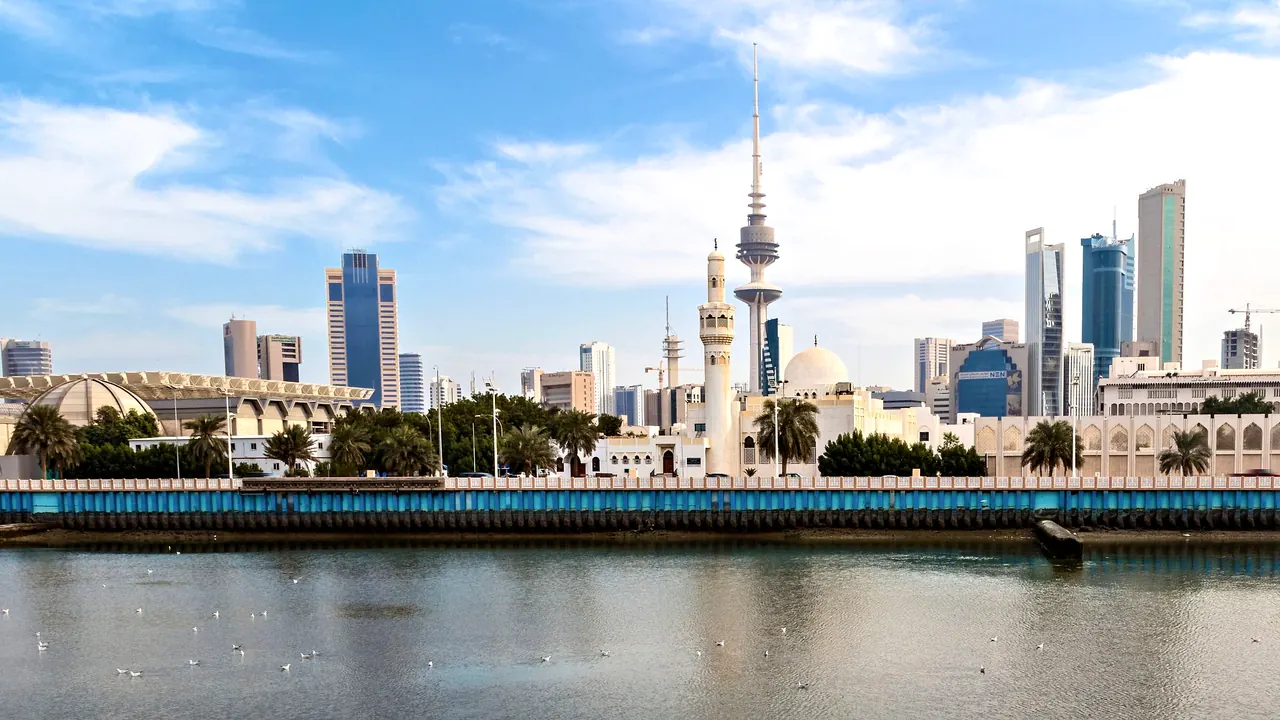
Kuwait City's skyline with the Liberation Tower and a mosque across the water
- Shopping55
- Food & drink50
- Families50
Photo: Tayssir Kadamany, Pexels License
Match
32
Every category weighted equally
- Beach & sun32
- Culture & arts31
- Food & nightlife31
- Family trip35
- Outdoors29
- Relax & unwind31
- Shopping & style34
- On a budget33
Kuwait City in twelve categories
Our verdict on each, scored 0 to 100 against the same fixed benchmark cities, so a score means the same thing on every page.
Beaches & swimming. Scores 38 out of 100.
Food & drink. Scores 50 out of 100.
Culture & sights. Scores 40 out of 100.
Nightlife. Scores 8 out of 100.
Nature & outdoors. Scores 13 out of 100.
Day trips. Scores 15 out of 100.
Good for families. Scores 50 out of 100.
Getting around. Scores 15 out of 100.
Shopping & style. Scores 55 out of 100.
Affordability. Scores 45 out of 100.
Live music & performing arts. Scores 30 out of 100.
Wellness & relaxation. Scores 20 out of 100.
Kuwait City category by category
Beaches & swimming
38The Gulf runs along the whole city, and the Arabian Gulf Street corniche passes a string of small public beaches, from Shuwaikh round to Salmiya and Messila. The water is warm enough to swim from April to November and reaches about 32°C in late summer. It is shallow, often hazy rather than clear, and the sand is narrow and coarse.
The catch is the heat. From June to September the air is often above 45°C, so local beach life happens in the early morning and after dark, and much of it is in private chalets and hotel beach clubs rather than on public sand. Dress on public beaches is conservative. Spring and autumn are the pleasant months for a swim, and beaches are never the reason to come.
Food & drink
50Kuwaiti cooking is Gulf food with strong Indian and Persian threads: machboos, spiced rice with chicken, lamb or fish, mutabbaq samak with local pomfret-like zubaidi, and sweet saffron dishes such as balaleet at breakfast. The best place to meet it is Souq Al-Mubarakiya, the old covered market, where grill houses and tea stalls sit among the date and spice sellers. Large South Asian, Levantine, Egyptian and Iranian communities make the everyday food scene broader than the local menu alone.
Eating out is a social pastime, and coffee shops are where the city spends its evenings, with a serious taste for specialty coffee alongside traditional cardamom-scented gahwa. Much dining happens in malls and along the waterfront. Alcohol is banned outright, so there is no wine or beer culture to speak of.
Culture & sights
40Kuwait City was largely rebuilt after the oil boom and again after 1991, so it has little old townscape. What it has are a handful of strong sights. Kuwait Towers, with their blue-green mosaic spheres, are the city's emblem, and the Grand Mosque is a vast, calm building that welcomes visitors on guided tours. Dar al-Athar al-Islamiyyah shows parts of a remarkable collection of Islamic art, and the Tareq Rajab Museum holds fine calligraphy, textiles and jewellery.
Sadu House preserves Bedouin weaving, and the Sheikh Abdullah Al-Salem Cultural Centre is a large modern museum complex covering natural history, science and Islamic civilisation. The National Assembly building by Jørn Utzon and the Liberation Tower are worth a look. Two or three days cover it.
Nightlife
8There is no nightlife in the usual sense. Alcohol is illegal throughout Kuwait, including in hotels, and there are no bars or clubs. Evenings are still long: people eat late, coffee shops and shisha cafés stay busy towards midnight and beyond, and the waterfront and malls fill up after dark, especially in summer and during Ramadan nights. A visitor looking for a drink or a dance floor will find nothing.
Nature & outdoors
13The country is flat gravel desert and Gulf shoreline, with no hills to speak of. The best of the outdoors comes in winter: desert camping in the open land north and west of the city is a much-loved local tradition, and the Jahra Pools and Sabah Al-Ahmad Nature Reserve draw birdwatchers for the spring and autumn migration. Jet skis, boating and fishing trips run from the marinas. From May to October the heat rules out almost everything outdoors in the middle of the day.
Day trips
15Failaka Island is the one real day out. A ferry takes about an hour and a half, and the island holds Bronze Age Dilmun sites, the remains of a Hellenistic settlement founded in Alexander's time, and a village left scarred by the 1990 invasion. Beyond that the choices are thin: the small Red Fort in Al Jahra, and the canal-side resort town of Al Khiran to the south. The neighbouring countries are too far for a comfortable day.
Good for families
50Kuwaiti social life revolves around families, so children are welcome in restaurants, malls and parks late into the evening. The Scientific Center in Salmiya has a good aquarium and discovery space, and the museums of the Sheikh Abdullah Al-Salem Cultural Centre, with their dinosaur skeletons and hands-on science galleries, are among the best of their kind in the region. Al Shaheed Park gives a green space with playgrounds, and the big malls have indoor play centres and ice rinks.
The difficulties are the climate and the distances. For much of the year children cannot play outside during the day, and everything needs a car. The cooler months from November to March work far better.
Getting around
15Kuwait City is built for the car. There is no metro or tram, and the bus network serves commuters rather than visitors. Sights are spread along the long coastal road between the old centre, Sharq and Salmiya, with wide motorways and few comfortable pavements in between. The corniche is pleasant to walk in the cool months, but from May to September walking any distance in daylight is out of the question. Most visitors use taxis or ride-hailing apps, which are plentiful, or hire a car; driving is fast but aggressive.
Shopping & style
55Shopping here means malls. Several of the Gulf's largest sit along the ring roads, with luxury fashion and jewellery houses, department stores and every international chain, all air-conditioned and open late. For something with more character, Souq Al-Mubarakiya sells dates, spices, oud, bisht cloaks, gold and traditional Gulf clothing in old lanes near the centre, and Sadu House sells woven Bedouin textiles. There are no shopping streets to stroll and little independent design.
Affordability
45Kuwait City is a mid-priced destination. Hotels are generally at international business-city levels, and good restaurants cost about what they would in a Western European capital, though everyday food at market grills and South Asian eateries is cheap. Most museums are free or nearly so. Fuel is inexpensive, but the lack of public transport means taxis or a hire car add a steady daily cost.
Live music & performing arts
30The main stage is the Sheikh Jaber Al-Ahmad Cultural Centre, a striking modern complex with a large opera theatre and concert halls that hosts Arab music stars, orchestral concerts and touring international productions. Kuwait has one of the Gulf's older theatre traditions, but local plays are in Arabic dialect and aimed at a home audience. Live music outside formal concerts is rare, and programmes are sparse in the summer months.
Wellness & relaxation
20Wellness here is a hotel affair. The large international hotels have spas, some with Moroccan-style hammam treatments, and women's salons and massage centres are common, but there is no public bathing tradition to seek out. The pace is not frantic, yet traffic, heat and a car-bound city make it a poor choice for slowing down. Winter evenings along the corniche are the calmest moments.
When should you go?
Pick a month to see what it is like. The climate figures are measured averages, not a forecast.
Kuwait City in July
Daytime high, °C
Rainfall in the month, mm
The whole year
Shaded against this destination’s own year: the deepest cell is its best month for that figure and the palest its weakest.
Temperature and rainfall are climate normals, averaged over the years shown. Kuwait City: 1991-2020 normals, Kuwait International Airport (17.6 km from centre).
Before you go
| Measure | Kuwait City |
|---|---|
| Official language | Arabic |
| Currency | Kuwaiti Dinar (KWD) |
| Sockets | CG240 V, 50 Hz |
| Driving side | Right |
| Time zone | UTC+3 |
| Emergency number | 112 |
| Elevation | 16 m |
| Main airport | Kuwait International Airport (KWI)17 km from centre106 non-stop destinations |
By the numbers
| Measure | Kuwait City |
|---|---|
| Population | 2,989,000 |
| Museums within 10 km | 6 |
| UNESCO World Heritage sites within 50 km | 0 |
| Swim season, months above 21 °C | 8 months |
Compare Kuwait City with
Every comparison with a written verdict behind it.