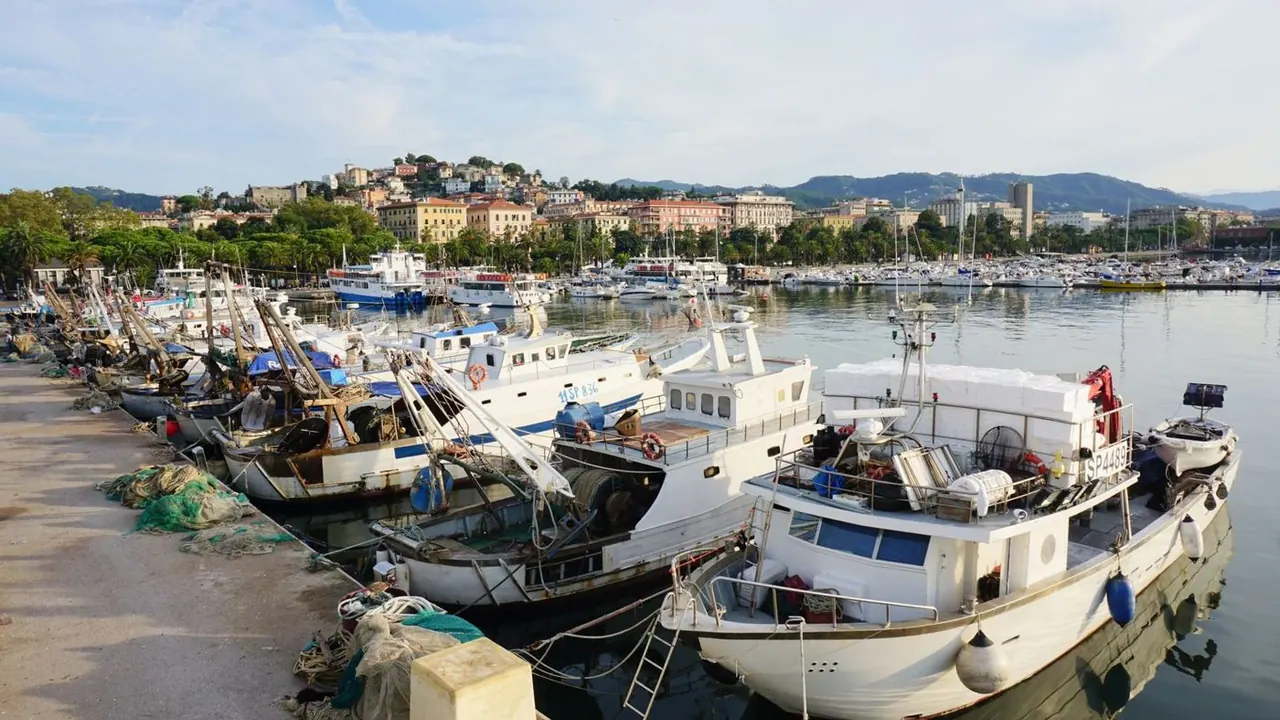
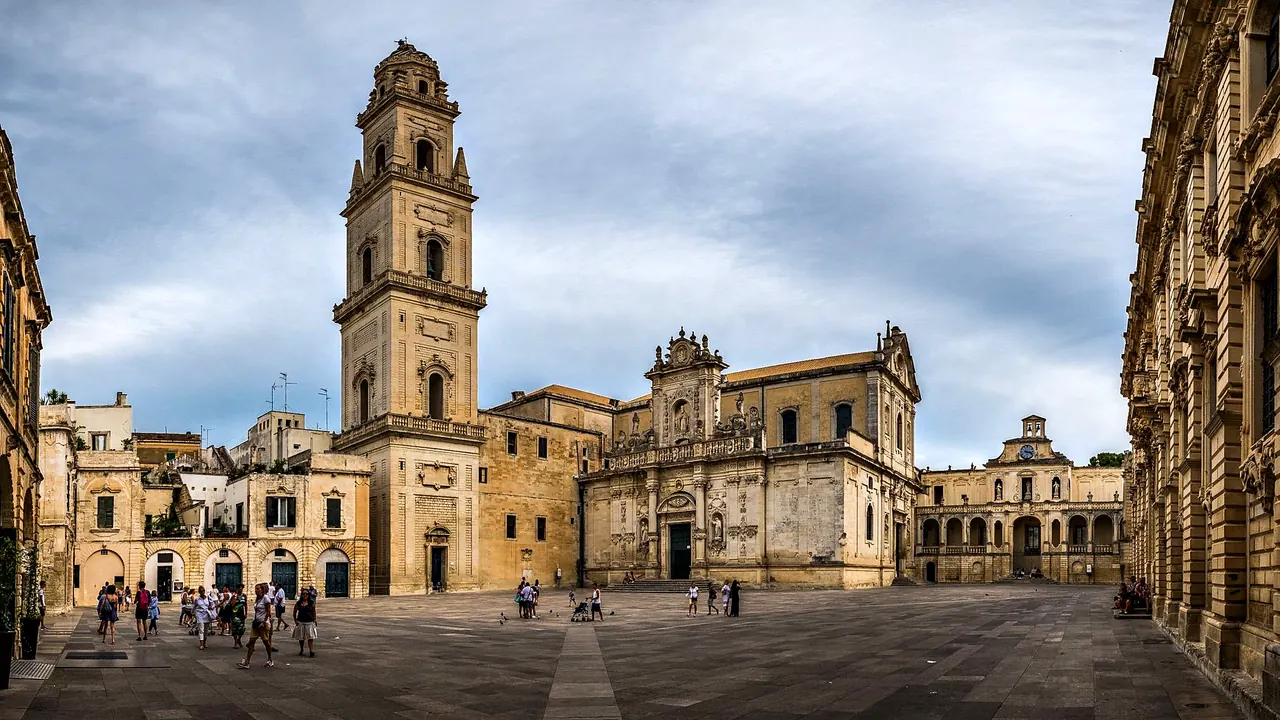
Photos: La Spezia by Irina Balashova, Pexels License; Lecce by Giuseppe Milo, CC BY 3.0, cropped.
La Spezia or Lecce?
Our verdict in twelve categories, each scored against the same fixed benchmark cities, and the climate month by month, so you can choose for your trip.
Choose La Spezia for
- getting around
- nature and the outdoors
- day trips
La Spezia suits travellers who come for the coast more than for the town. It is a practical, unshowy base, with the Cinque Terre villages minutes away by train, Portovenere a short boat ride off and the Apuan Alps within reach. Walkers and anyone who wants to cover a lot of ground without a car will get the most from it. The city itself has a day or two of sights and goes quiet early in the evening.
Choose Lecce for
- culture and sights
- wellness
- beaches
Lecce is the choice when you want the place you sleep to be the attraction. Its honey-coloured Baroque old town rewards slow wandering, the Salento's sandy beaches can fill whole summer days, and evenings on the piazzas stay lively. Food, rooms and wine cost less too. The catch is distance: the coast and the hill towns are much easier with a hire car.
Scoreboard
Twelve categories on one fixed scale from 0 to 100. The shaded stretch is the gap between the two.
Your match
Pick a travel style or drag the sliders, and both match scores follow your weighting.
Wins on getting around and nature and the outdoors with your weighting.
Wins on culture and sights and wellness with your weighting.
What matters to you?
Category by category
What the scores mean for a trip.
Beaches & swimming
At La Spezia a beach day is a trip out. You take the bus round the gulf to the sheltered strips at Lerici and San Terenzo, swim off the rocks at Portovenere and Palmaria, or catch the train to Monterosso for the longest sand in the Cinque Terre. The water is very clear, but the beaches are small, often pebbly and largely taken up by paid bathing establishments.
The Salento coast around Lecce has more and better beaches. There are long, shallow beaches of fine sand on the Ionian at Porto Cesareo and Punta Prosciutto, and pale coves and sea stacks at Torre dell'Orso, enough to build a whole summer around. The cost is getting there, which means a car or the seasonal buses.
Food & drink
Both cities cook firmly in their regional tradition and offer little beyond it, so the difference is mostly in kind. La Spezia's table is Ligurian and faces the sea: farinata from wood ovens, mussels farmed off Portovenere, trofie with pesto and crisp Cinque Terre whites.
Lecce has a slight edge for a food-led stay. It has a stronger daily ritual, from a warm pasticciotto with iced almond coffee at breakfast to ciceri e tria and orecchiette with turnip tops at dinner, with dark Negroamaro and Primitivo to drink. Eating well also costs less in its old-town osterie.
Culture & sights
Here Lecce is well ahead. Its whole old town is carved Baroque limestone, with the facade of Santa Croce, the enclosed Piazza del Duomo at dusk, a half-excavated Roman amphitheatre and layers of Messapian ruins underground, so simply walking about is the sightseeing.
La Spezia is a nineteenth-century naval town of arcaded streets and Liberty facades. Its best rewards are indoors: the early Italian paintings of the Museo Amedeo Lia and the Lunigiana stele statues in Castello San Giorgio. The region's real heritage, such as San Pietro at Portovenere, lies out along the coast.
Nightlife
Neither city is somewhere you go for a night out, but Lecce keeps going longer. A spritz on Via del Prione or the seafront is pleasant enough, yet La Spezia empties early, and many of its visitors want to be on the trails in the morning.
In Lecce the evening starts with the passeggiata and moves into the wine and cocktail bars of the old-town lanes. Students keep weekends going late for much of the year, and in summer there are open-air clubs on the coast near Gallipoli, though you need to drive.
Nature & outdoors
La Spezia has much the stronger landscape on its doorstep. It has the vine-terraced cliffs of the Cinque Terre national park, with the coastal path and quieter high ridge routes, plus the forts and sea caves of Palmaria and the pine woods of Montemarcello. Serious mountain hiking is an hour inland in the jagged Apuan Alps.
Around Lecce the land is flat olive country, better for easy cycling than walking. Its outdoors is the coast: clifftop paths and sea caves between Otranto and Leuca, birdwatching at the Alimini lakes and Le Cesine, and good snorkelling.
Day trips
La Spezia is one of the easiest bases in Italy for day trips. All five Cinque Terre villages are a short train ride away, Portovenere and Lerici sit on either side of the gulf, and walled Sarzana and Roman Luni are close inland. Pisa and Lucca are about an hour away, and Portofino and Genoa make an easy day along the Riviera.
Lecce has fine places within reach too: Otranto's mosaic floor, Gallipoli on its island, the frescoes at Galatina, and Ostuni and the trulli of Alberobello further north. They are more spread out, though, and most need a car rather than a train.
Good for families
With children the two are much alike: relaxed and safe, but without a zoo, aquarium or theme park. In La Spezia the best days are boat trips round Portovenere and the sheltered beaches at Lerici. The steep villages and crowded trains are more for older children.
Lecce is better for toddlers on the sand, because the shallow beaches of Porto Cesareo are ideal for them, and its traffic-free piazzas fill with families in the evening. Midsummer heat means the day has to be planned around a long afternoon rest.
Getting around
Both centres are flat and easy to walk. The difference starts once you leave town. From La Spezia, regional trains run through the Cinque Terre to Genoa and inland to Pisa, buses go to Portovenere and Lerici, and ferries cross the gulf from spring to autumn, so a car is more trouble than it is worth. The weak point is the crowded summer trains.
From Lecce, fast trains go north to Bari, but the local lines across the Salento are slow and infrequent, and the beach buses run only in summer. Most visitors hire a car and park outside the old walls.
Shopping & style
What you carry home from La Spezia is mostly edible: pesto, olive oil, Monterosso anchovies and a bottle of sweet Sciacchetrà, with Carrara marble pieces sold in the towns nearby. Via del Prione and Corso Cavour cover everyday clothes and shoes, but there is little for anyone after fashion or design.
Lecce has a craft of its own in cartapesta, the papier-mâché saints and nativity figures made in old-town workshops, along with small carvings in the local limestone and ceramics from Grottaglie. Beyond that its main streets have only a handful of fashion shops, so it is good for browsing but not for a shopping trip.
Affordability
Lecce goes further on a budget. Street pastries, trattoria meals and local wine are cheap, and B&Bs in old palazzi are fairly priced outside August, although a hire car adds to the bill.
La Spezia is cheaper than staying in the Cinque Terre villages themselves, and its trains and buses cost little. Even so, summer rooms cost about what they do elsewhere in Western Europe, and trail passes, boat trips and bathing establishments add up over a stay.
Live music & performing arts
Both have a modest theatre season, but Lecce has a living tradition that La Spezia lacks. Pizzica, the fast tambourine dance of the Salento, is played at village festivals all summer and peaks at the huge open-air Notte della Taranta in Melpignano. The Teatro Paisiello and Politeama Greco also stage some opera.
La Spezia offers plays and concerts at the Teatro Civico and a long-established summer jazz festival. For opera you have to go to Genoa or Pisa.
Wellness & relaxation
Lecce is the more restful choice. Shops close for the long afternoon break, and the sulphur pools at Santa Cesarea Terme, set in grottoes above the sea, are under an hour away. Some of the old fortified masserie on the plain now have quiet country spas.
Around La Spezia, wellness mostly means a hotel spa or the small thermal baths at Equi Terme up in the Lunigiana. The calm comes from a long lunch in Tellaro or a quiet afternoon on Palmaria rather than from any bathing culture.
When should you go?
Pick your month. The climate figures are measured averages, not a forecast.
La Spezia in July
Lecce in July
Daytime high, °C
Rainfall in the month, mm
Where the figures come from
La Spezia's temperatures are measured 65 km from the centre, at Pisa / S. Giusto.
La Spezia has no rain gauge within 25 km of the centre, so its rainfall comes from a gridded climate dataset read at the city rather than from a gauge further away.
Lecce's temperatures are measured 38 km from the centre, at Brindisi.
Lecce has no rain gauge within 25 km of the centre, so its rainfall comes from a gridded climate dataset read at the city rather than from a gauge further away.
Temperature and rainfall are climate normals, averaged over the years shown. La Spezia: 1991-2020 normals, Pisa / S. Giusto (64.8 km from centre). Lecce: 1991-2020 (sunshine 1981-2010) normals, Brindisi (38 km from centre).
Through the year the two cities are almost equally warm. Both reach about 30°C in July and August, too hot for long climbs on the Cinque Terre paths or for midday sightseeing in Lecce's lanes. The sea is warm enough for swimming from June into early October, and it is a touch warmer off the Salento, at about 26°C in August. April and May are fine walking months in both, though the water is still cool. June and late September are the months for a long walk with a comfortable swim afterwards.
The real difference is rain and sun. La Spezia turns very wet in autumn, with October and November the wettest months at about 150mm, and its winters are grey. Lecce stays drier and gets noticeably more sunshine in every month, so it is the better bet for a bright day in spring, autumn or winter. Its winter days are also a degree or two milder.
Which traveller are you?
On an outdoors trip, La Spezia is the clear choice. The terraced cliffs and ridge paths of the Cinque Terre, the loop walk on Palmaria and the marble peaks of the Apuan Alps give far more varied walking than Lecce's flat olive plain.
For a culture and arts trip, Lecce wins easily. Its old town is a complete Baroque townscape, with Santa Croce, the Piazza del Duomo and a Roman amphitheatre, and summer brings pizzica festivals. La Spezia's naval-era centre fills a day or two at most.
On a beach and sun trip, Lecce is the better pick. The long, fine-sand beaches at Porto Cesareo and the coves of Torre dell'Orso can shape a whole stay, and the sun shines more. La Spezia's small, pebbly, mostly paid beaches are an outing.
Before you go
| Measure | La Spezia | Lecce |
|---|---|---|
| Official language | Italian | Italian |
| Currency | Euro (EUR) | Euro (EUR) |
| Sockets | CFL230 V, 50 Hz | CFL230 V, 50 Hz |
| Driving side | Right | Right |
| Time zone | UTC+1, UTC+2 in summer | UTC+1, UTC+2 in summer |
| Emergency number | 112 | 112 |
| Elevation | 3 m | 49 m |
| Main airport | Pisa International Airport (PSA)65 km from centre82 non-stop destinations | Brindisi Airport (BDS)39 km from centre49 non-stop destinations |
| Public holidays this year | 13 days | 13 days |
By the numbers
| Measure | La Spezia | Lecce |
|---|---|---|
| City population | 92,119 | 94,783 |
| People per km² | 1,792 | 393 |
| Museums within 10 km | 12 | 11 |
| UNESCO World Heritage sites within 50 km | 2 | 0 |
| Swim season, months above 21 °C | 4 months | 4 months |
Where else could you go?
Every comparison below shares a destination with this one, so you can follow La Spezia or Lecce somewhere new.
- Portofinovs La Spezia
- Luccavs La Spezia
- Pisavs La Spezia
- Genoavs La Spezia
- Florencevs La Spezia
- Bolognavs La Spezia