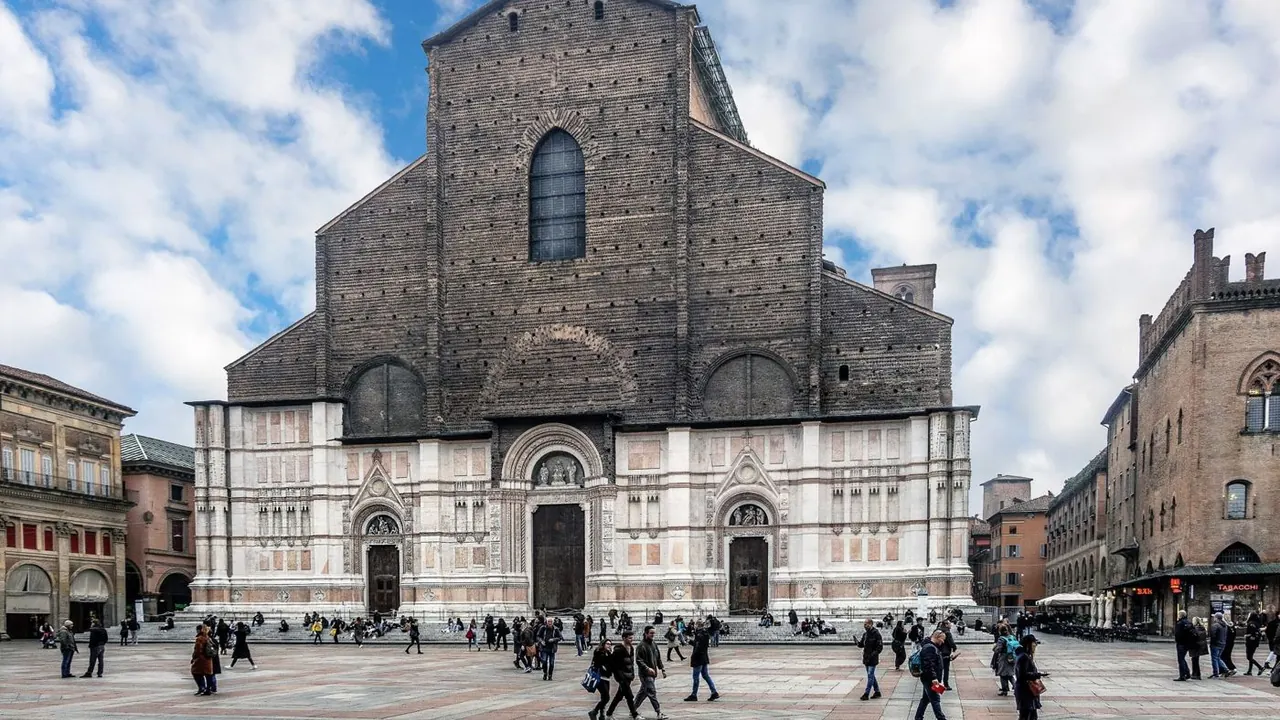
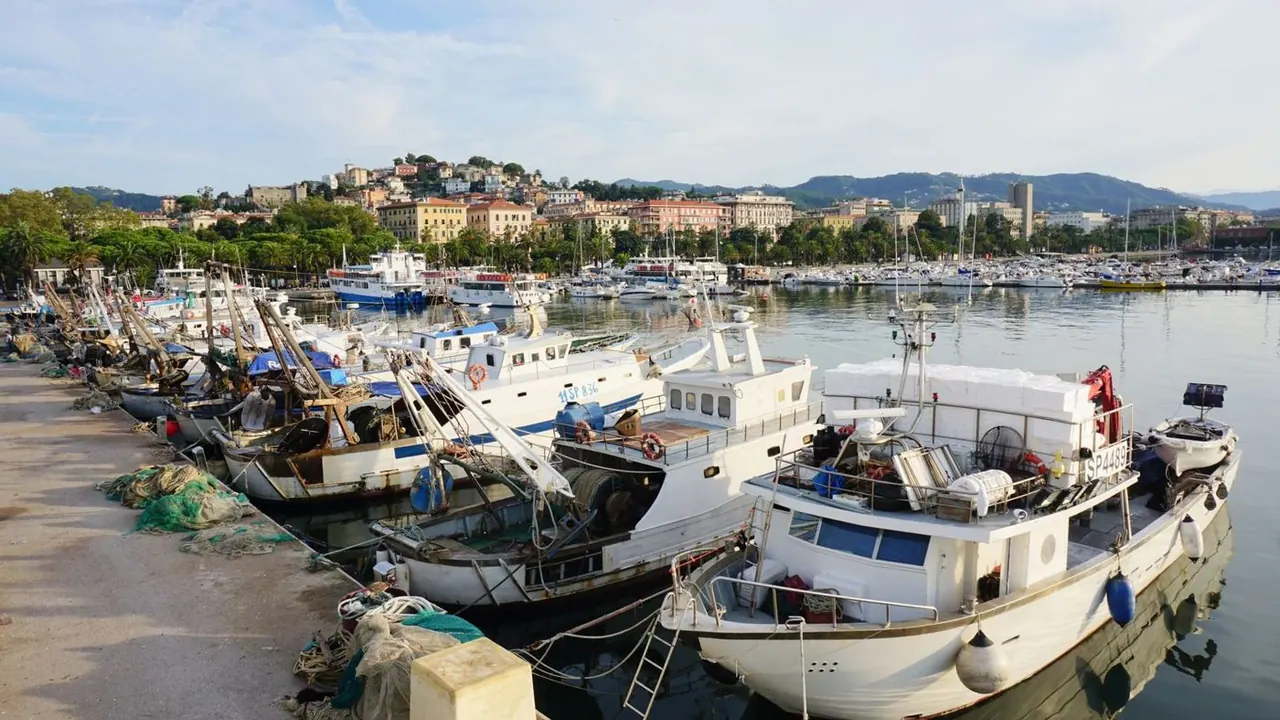
Photos: Bologna by Vanni Lazzari, CC BY-SA 4.0, cropped; La Spezia by Irina Balashova, Pexels License.
Bologna or La Spezia?
Our verdict in twelve categories, each scored against the same fixed benchmark cities, and the climate month by month, so you can choose for your trip.
Choose Bologna for
- culture and sights
- live music and the arts
- nightlife
Bologna is the choice for travellers who plan their days around the table and the old streets. It has a whole medieval brick city under its porticoes, the cooking that gave Italy ragù and tortellini, opera and jazz, and student bars that stay open late. It is also an unusually good base for trains to Florence, Ravenna, Parma and Venice. Choose it for a city vacation of eating, looking and moving on by rail, best in spring or autumn.
Choose La Spezia for
- beaches
- nature and the outdoors
- prices
La Spezia suits people who would rather spend the day outside. It is the working port and practical base for the Cinque Terre, with cliff paths, clear coves around Portovenere and Palmaria, and boats along the gulf, all within minutes. The town itself has less to see and the evenings end early, so it fits walkers and swimmers who want an early night before a morning on the trails.
Scoreboard
Twelve categories on one fixed scale from 0 to 100. The shaded stretch is the gap between the two.
Your match
Pick a travel style or drag the sliders, and both match scores follow your weighting.
Wins on culture and sights and live music and the arts with your weighting.
Wins on beaches and nature and the outdoors with your weighting.
What matters to you?
Category by category
What the scores mean for a trip.
Beaches & swimming
Neither city has a beach in town, but the sea is far closer to La Spezia and much better. Buses and trains reach the sheltered sand and pebble of San Terenzo and Lerici, the coves at Fiascherino and Tellaro, rocky swimming in very clear water off Palmaria, and the long sandy beach at Monterosso.
From Bologna the nearest sea is the Romagna Riviera, an hour away by train, where the Adriatic is warm and shallow but often greenish, and the shore is lined with rows of rented umbrellas. That works as a day out in a heatwave, not as a reason to come.
Food & drink
Bologna is one of the places Italian food travellers come for. Hand-rolled tagliatelle al ragù, tortellini in brodo and mortadella are made in old osterie, the Quadrilatero lanes are full of delicatessens, and Parmigiano and Parma ham are made less than an hour away.
La Spezia eats more simply and more by the sea: farinata from wood ovens, mesciua soup, pesto on trofie, and stuffed mussels from the ropes off Portovenere, with crisp Cinque Terre whites to drink. It is honest, good-value cooking, lighter in summer than Bologna's, but the range is that of a provincial port.
Culture & sights
Bologna is the sightseeing city of the two by a long way. Its red-brick medieval core, UNESCO-listed porticoes, the Two Towers, the seven churches of Santo Stefano and the anatomical theatre of the Archiginnasio need two or three days.
La Spezia was built in the nineteenth century as a naval base, with straight avenues and Liberty facades rather than an old core. The Museo Amedeo Lia and the Lunigiana stele statues in the Castello San Giorgio are worth a morning each, but most of the region's history lies out along the coast.
Nightlife
Both cities have a Piazza Verdi, and the difference between them sums up the gap. In Bologna it is the heart of the student quarter, crowded outside cheap bars late into the night, and Via del Pratello carries on with taverns and pubs until late. The exception is August, when the students leave.
In La Spezia the evening is an aperitivo on Via del Prione or the seafront, perhaps moving to the waterfront bars at Lerici in summer, and then the town goes to bed. Most visitors there want to be up early for the trails anyway.
Nature & outdoors
This is La Spezia's strongest card. Vine and olive terraces drop into the sea along the Cinque Terre national park, with the Sentiero Azzurro and the quieter ridge paths above it, Palmaria's forts and sea caves, the pine woods of Montemarcello, and the marble peaks of the Apuan Alps an hour inland. Kayaking and diving in the gulf add to it.
Bologna's outdoors is gentler: the arcaded climb to San Luca, the Colli Bolognesi, the gypsum caves of the Parco dei Gessi, and the Via degli Dei across the Apennines to Florence for those with several days.
Day trips
Both are excellent bases, but Bologna has the wider reach. As northern Italy's rail junction it puts Florence half an hour away and Ravenna, Ferrara, Modena and Parma within easy regional rides, with Verona, Padua and Venice also doable in a day. That makes a run of great art cities possible from one hotel.
La Spezia's trips are mostly coast and villages: the five Cinque Terre villages minutes away by train, Portovenere by boat, walled Sarzana and Roman Luni inland, with Pisa and Lucca about an hour off. Florence is only just possible from there in a long day.
Good for families
Neither city does much better with children than the other, and neither has a zoo or aquarium, but the days look different. Bologna's flat, largely car-free centre and shady porticoes are easy to walk, and climbing the Asinelli tower or adding a day at Mirabilandia gives older children some excitement.
La Spezia's best family days are on the water, with boat trips round Portovenere and shallow beaches at San Terenzo. Its steep villages and crowded summer trains are harder with toddlers.
Getting around
Both are compact, flat, walkable towns where a car is more trouble than it is worth, and neither has a metro. Bologna has a slight edge: its porticoes give shade and cover from the rain, and fast trains leave the central station for all of northern Italy.
La Spezia works well as a hub too, with coastal trains, buses round the gulf and seasonal ferries to the villages. In summer, though, the Cinque Terre trains and platforms get crowded, which slows down the very trips most visitors came for.
Shopping & style
In both cities the things to take home are mostly edible, but Bologna offers more to browse. Besides the Quadrilatero delicatessens there are luxury houses on Via Farini and in the Galleria Cavour, the Montagnola market and weekend antiques in Piazza Santo Stefano.
La Spezia's Via del Prione and Corso Cavour are lined with everyday chains and a few boutiques, so the real finds are pesto, Sciacchetrà, Monterosso anchovies and Carrara marble from the towns nearby.
Affordability
Overall costs are similar, but the money goes in different places. In Bologna eating out is the bargain and most sights are free churches and squares, while hotels in the old town are expensive, especially during trade fairs.
La Spezia is the cheaper place to sleep near the Cinque Terre, and its trains and buses cost little. However, trail passes, boat trips and bathing establishments add up, and summer rooms cost noticeably more than in spring or autumn.
Live music & performing arts
Bologna is a real music city. The Teatro Comunale is one of Italy's historic opera houses, jazz plays in basement clubs most nights, students fill small venues with indie gigs, and in summer there are concerts and screenings in Piazza Maggiore.
La Spezia has the Teatro Civico, a long-running summer jazz festival and open-air concerts in castle courtyards around the gulf. For most of the year there is little on, and for opera you have to go to Genoa or Pisa.
Wellness & relaxation
Neither is a spa destination, but Bologna has thermal water closer to hand: the spring-fed pools of Castel San Pietro Terme are twenty minutes away, and old Porretta Terme lies in an Apennine valley. La Spezia's nearest baths, at Equi Terme, are an hour inland. Its calm comes instead from the slow pace of Palmaria and a long lunch in Tellaro outside the summer season.
When should you go?
Pick your month. The climate figures are measured averages, not a forecast.
Bologna in July
La Spezia in July
Daytime high, °C
Rainfall in the month, mm
Where the figures come from
Bologna has no rain gauge within 25 km of the centre, so its rainfall comes from a gridded climate dataset read at the city rather than from a gauge further away.
Bologna's sunshine is measured 82 km from the centre, at Cervia.
La Spezia's temperatures are measured 65 km from the centre, at Pisa / S. Giusto.
La Spezia has no rain gauge within 25 km of the centre, so its rainfall comes from a gridded climate dataset read at the city rather than from a gauge further away.
Temperature and rainfall are climate normals, averaged over the years shown. Bologna: 1991-2020 normals, Bologna / Borgo Panigale (5.5 km from centre). La Spezia: 1991-2020 normals, Pisa / S. Giusto (64.8 km from centre).
Bologna sits on the Po plain, so the seasons swing hard. July and August reach about 32°C in heavy, humid air, which makes long walks round the centre tiring, and in January highs of around 7°C bring grey, chilly days. For walking the streets, May and early June are the best months: warm, very sunny and among the driest of the year. September is still pleasantly warm, but it starts the wettest part of the year, and the rain stays heavier through October and November.
La Spezia is milder all year, with winter days near 11°C and summers a little less fierce than inland. The sea is warm enough to swim from June to early October and peaks around 25°C in August. Autumn is wet on the coast too, and wetter than in Bologna, with up to 151mm in November. June is the best month for combining walking and swimming here: the paths are dry, the days are long and the water has warmed. Early September comes next, with the sea still warm but the rain beginning to return.
Which traveller are you?
For a culture and arts trip, Bologna is clearly better. It has an intact medieval centre, the Archiginnasio and the Pinacoteca, opera at the Teatro Comunale and jazz most nights, and Florence and Ravenna are both within an hour by train.
On a beach and sun trip, La Spezia is the better base. Sheltered beaches at Lerici and San Terenzo, very clear water off Palmaria and sand at Monterosso are all close by, while from Bologna the sea means an hour's train to the lidos of Rimini.
For an outdoors trip, choose La Spezia for the Cinque Terre cliff paths, the loop walk on Palmaria, kayaking in the gulf and the Apuan Alps inland. Bologna has gentle hill walks and the Via degli Dei, but the countryside to the north is flat.
Before you go
| Measure | Bologna | La Spezia |
|---|---|---|
| Official language | Italian | Italian |
| Currency | Euro (EUR) | Euro (EUR) |
| Sockets | CFL230 V, 50 Hz | CFL230 V, 50 Hz |
| Driving side | Right | Right |
| Time zone | UTC+1, UTC+2 in summer | UTC+1, UTC+2 in summer |
| Emergency number | 112 | 112 |
| Elevation | 54 m | 3 m |
| Main airport | Bologna Guglielmo Marconi Airport (BLQ)6 km from centre98 non-stop destinations | Pisa International Airport (PSA)65 km from centre82 non-stop destinations |
| Public holidays this year | 13 days | 13 days |
By the numbers
| Measure | Bologna | La Spezia |
|---|---|---|
| City population | 387,971 | 92,119 |
| People per km² | 2,754 | 1,792 |
| Museums within 10 km | 68 | 12 |
| UNESCO World Heritage sites within 50 km | 3 | 2 |
| Swim season, months above 21 °C | - | 4 months |
Where else could you go?
Every comparison below shares a destination with this one, so you can follow Bologna or La Spezia somewhere new.