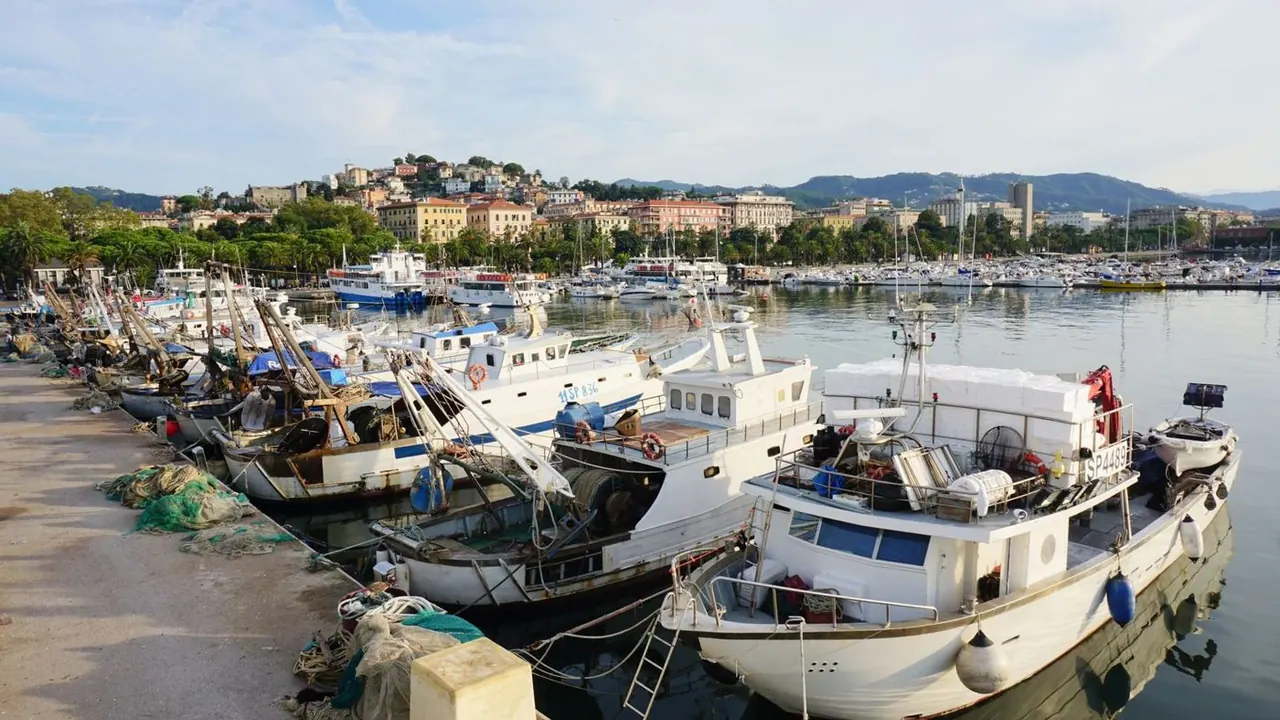
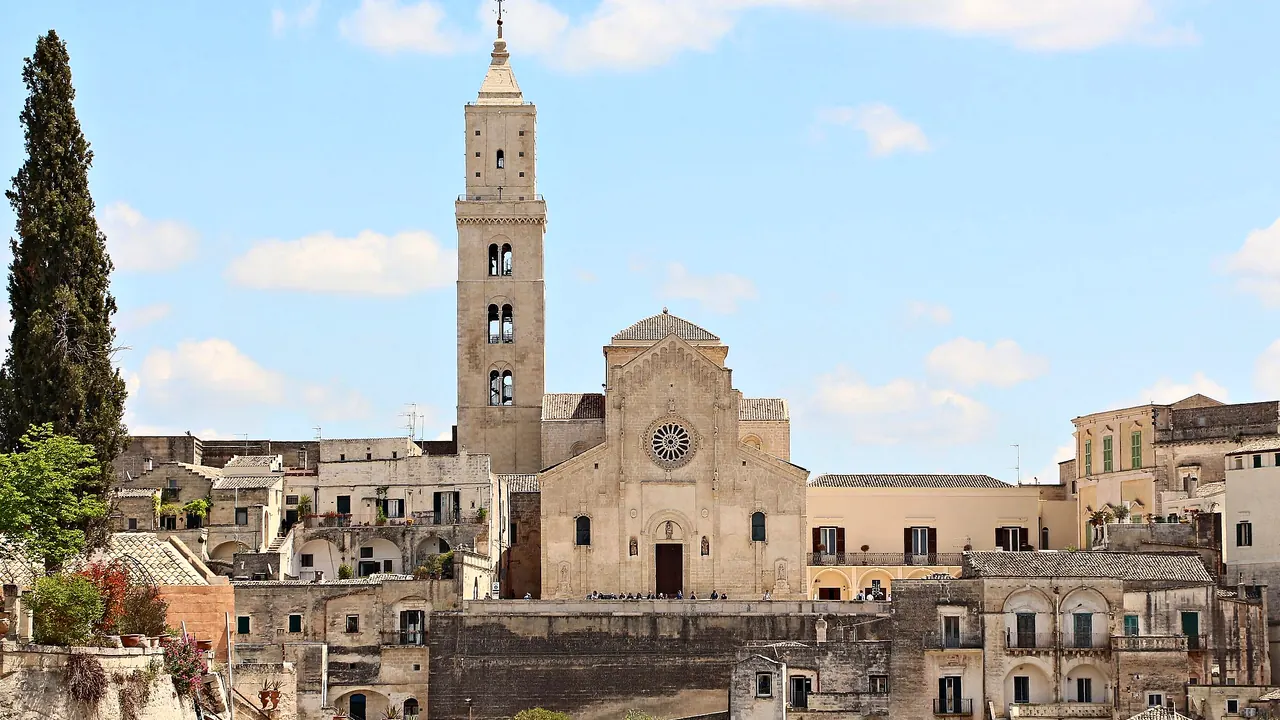
Photos: La Spezia by Irina Balashova, Pexels License; Matera by Bernard Gagnon, CC BY 4.0, cropped.
La Spezia or Matera?
Our verdict in twelve categories, each scored against the same fixed benchmark cities, and the climate month by month, so you can choose for your trip.
Choose La Spezia for
- getting around
- beaches
- families
La Spezia suits a traveller who comes for the coast and the paths more than for the town itself. It is a practical, well-connected base for the Cinque Terre, Portovenere and the gulf beaches, with trains doing the work a car would do elsewhere. Its Ligurian seafood and flat, easy centre also make it the more comfortable choice for families and walkers.
Choose Matera for
- culture and sights
- prices
- wellness
Matera is for someone who wants to see a place unlike anywhere else. The cave districts of the Sassi, their frescoed rock churches and the gorge below are by far the stronger sight of the two, and the town rewards slow evenings and early mornings. It asks more of you in return: steep steps, almost no rail link, and a hire car for nearly everything beyond the town.
Scoreboard
Twelve categories on one fixed scale from 0 to 100. The shaded stretch is the gap between the two.
Your match
Pick a travel style or drag the sliders, and both match scores follow your weighting.
Wins on getting around and beaches with your weighting.
Wins on culture and sights and prices with your weighting.
What matters to you?
Category by category
What the scores mean for a trip.
Beaches & swimming
Neither town has a beach of its own, but La Spezia gets you to the water far more easily. Buses and trains reach the sheltered sand at San Terenzo and Lerici, the clear rocky coves of Portovenere and Palmaria, and Monterosso's long sandy beach. Most of these beaches are small and pebbly, though, and much of the shore is taken up by paid bathing establishments.
From Matera the sea means a drive of about three quarters of an hour to the Ionian coast at Metaponto and Policoro. There you get long, wide sand and shallow water, with more room than anything on the Ligurian gulf. Without a car, though, you can hardly get there.
Food & drink
La Spezia has the edge for a food-led stay, mostly because the sea is on the plate. There are mussels farmed on ropes off Portovenere, anchovies from Monterosso, farinata from wood ovens and pesto on trofie, all bought from or backed by the covered market on Piazza Cavour and served with crisp Cinque Terre whites. Matera's cooking is inland and earthier. It is built on its horn-shaped durum-wheat bread, pulse soups, cavatelli, lamb and crackling peperoni cruschi, with Aglianico to drink.
Both are small-city kitchens with little beyond the regional dishes. The difference is that Matera has no real street food or market life, while La Spezia's focaccia shops and farinata give it an everyday snacking habit.
Culture & sights
Here Matera is in another league. The Sassi are two districts of cave homes and rock-cut churches stacked up the side of the Gravina gorge, lived in since prehistoric times, and they make one of the most remarkable townscapes in Italy. The frescoed rock churches, the Palombaro Lungo cistern you can walk through and Carlo Levi's panorama at Palazzo Lanfranchi round out a short visit that is like no other.
La Spezia is a nineteenth-century naval town of arcaded streets and Liberty facades, and the early Italian paintings of the Museo Amedeo Lia are its highlight. It makes a pleasant day or two of museums, but most of its history is out along the coast.
Nightlife
Neither is a place for a night out, though La Spezia has a little more going on. The aperitivo along Via del Prione and around Piazza Verdi draws a real crowd, summer evenings move on to the waterfront bars at Lerici and San Terenzo, and there is the odd club night. Matera has no clubs at all. An evening there is a passeggiata on Via del Corso and a glass of wine in a cave bar above the lit-up Sassi, which is lovely for a couple, and the town goes quiet soon after dinner.
Nature & outdoors
La Spezia sits at the edge of the Cinque Terre national park, where vine terraces drop to the sea and the coastal and ridge paths link the villages. The fort walk on Palmaria, the Montemarcello promontory and the marble peaks of the Apuan Alps are all within reach, and you can kayak and dive in the gulf. The outdoors is the main reason to stay here.
Matera's landscape is starker and closer to hand. The Gravina gorge lies right below the Sassi, with the stony Murgia plateau across it, its abandoned rock churches, Neolithic sites and kestrels nesting in the cliffs. It is excellent for half-day walks, but the bigger country of the Lucanian Dolomites and Pollino needs a car and a long day.
Day trips
Both are strong bases, but La Spezia's outings are closer and you need no car for them. The Cinque Terre villages are minutes away by train, Portovenere and Lerici a short bus or boat ride, and Pisa and Lucca about an hour by rail.
Matera's list is just as tempting: the trulli of Alberobello, the white towns of the Valle d'Itria, Castel del Monte, the abandoned hill town of Craco and the peak villages of Castelmezzano and Pietrapertosa. Most are around an hour away by road, and without a hire car you can reach very few of them.
Good for families
La Spezia is the easier choice with children. The centre is flat enough for a pushchair, and boat trips round Portovenere and the shallow, sheltered beaches at Lerici and San Terenzo make good family days, even if packed trains and steep villages tire small legs.
Matera fascinates older children with its caves, the underground cistern and the scramble down into the gorge. The uneven stone steps of the Sassi rule out a pushchair, though, and summer afternoons are hot with little shade. Neither town has a zoo, aquarium or theme park.
Getting around
La Spezia is made for a stay without a car. It has a flat, walkable centre, coastal trains through the Cinque Terre to Genoa, inland lines to Pisa and Florence, buses round the gulf and ferries from spring to autumn. The only real drawback is how crowded the trains get in summer.
Matera is walkable too, but the walking is harder, with steep stairways between the upper town and the Sassi. Beyond the town it is poorly connected. It is off the national rail network, a slow narrow-gauge line runs to Bari and buses are few, so a hire car does most of the work.
Shopping & style
La Spezia's shopping is the everyday high street of a provincial port. There are clothing chains, shoe shops and a few independent boutiques along Via del Prione and Corso Cavour, plus the working market on Piazza Cavour. Of the two it is more useful, though nobody would come for it.
Matera's shops are mostly workshops and stalls in the Sassi that sell to visitors: painted cuccù whistles, tufa-stone carvings of the town and papier-mâché. They have more character but offer far less range. In both towns the best things to take home are edible, pesto and Sciacchetrà from one, dried peppers and Aglianico from the other.
Affordability
The two cost much the same overall. What differs is where the money goes. In La Spezia, staying in town rather than in the Cinque Terre villages is the saving, but national park trail passes, boat trips and bathing establishments add up over a stay.
In Matera, meals in the upper-town trattorias are cheap and walking the Sassi and the Murgia costs nothing. A cave hotel is the splurge, and guesthouses in the newer town keep things modest. The hire car most visitors need is a cost that La Spezia's cheap trains avoid.
Live music & performing arts
La Spezia has a little more to see. The Teatro Civico runs a season, the small historic Teatro degli Impavidi in nearby Sarzana adds a few more shows, and in summer there are concerts in piazzas and castle courtyards around the gulf.
Matera has concerts from its conservatory and summer events staged against the backdrop of the Sassi. Its one big night is the Festa della Bruna, the patron feast, when the papier-mâché float is torn apart after the procession. Both towns have a summer jazz festival, and for opera you have to travel from either.
Wellness & relaxation
La Spezia's nearest proper soak is out of town, at the small thermal baths of Equi Terme in the Lunigiana valley, about an hour inland. Otherwise rest here means a hotel spa, a long lunch in Lerici or Tellaro, or the quiet of Palmaria, all best outside the summer crowds.
Matera has the more memorable spas, set in candlelit cave rooms with pools cut into the rock. The early-morning Sassi, before the tour groups arrive, are restful in themselves, and the calmest months run from autumn to spring.
When should you go?
Pick your month. The climate figures are measured averages, not a forecast.
La Spezia in July
Matera in July
Daytime high, °C
Rainfall in the month, mm
Where the figures come from
La Spezia's temperatures are measured 65 km from the centre, at Pisa / S. Giusto.
La Spezia has no rain gauge within 25 km of the centre, so its rainfall comes from a gridded climate dataset read at the city rather than from a gauge further away.
Matera has no rain gauge within 25 km of the centre, so its rainfall comes from a gridded climate dataset read at the city rather than from a gauge further away.
Temperature and rainfall are climate normals, averaged over the years shown. La Spezia: 1991-2020 normals, Pisa / S. Giusto (64.8 km from centre). Matera: 2005-2025, 10 years observed (rainfall 1991-2020) normals, Matera / Martella (4.8 km from centre).
La Spezia's sea is warm enough for swimming from June to September, reaching about 25°C in August, and July is its sunniest and driest month. Midsummer highs of 30°C make the coastal paths hard going at midday, so the best walking is in May and the second half of September. After that the autumn rain sets in, and October and November are the wettest months, with around 150mm each.
Matera's summer is hotter, about 32°C in July on a bare plateau with little shade, so the Sassi are best early and late in the day. The Ionian coast it drives to is slightly warmer than the gulf in late summer and stays good for swimming through September. Matera is drier than La Spezia for most of the year, especially in autumn and winter, so October still suits the gorge trails, and so do April and May. Winters are cool in both towns, with highs of around 10°C to 12°C.
Which traveller are you?
For a culture and arts trip, Matera is the clear pick. The Sassi, the frescoed rock churches and the walk-through cistern add up to something you will not find anywhere else. La Spezia's museums fill a day or two, and most of the area's history lies along the coast.
On an outdoors trip, La Spezia wins. The Cinque Terre footpaths start a short train ride away, Palmaria and Montemarcello are close by, and the Apuan Alps are within reach. Matera's gorge and Murgia walks are superb but shorter, and the bigger landscapes need a car.
On a family trip with children, La Spezia is the easier base. The flat streets suit a pushchair, sheltered beaches and boat trips fill the days, and trains do the work of a car. Matera's steep steps and hot, shadeless afternoons suit only older children.
Before you go
| Measure | La Spezia | Matera |
|---|---|---|
| Official language | Italian | Italian |
| Currency | Euro (EUR) | Euro (EUR) |
| Sockets | CFL230 V, 50 Hz | CFL230 V, 50 Hz |
| Driving side | Right | Right |
| Time zone | UTC+1, UTC+2 in summer | UTC+1, UTC+2 in summer |
| Emergency number | 112 | 112 |
| Elevation | 3 m | 401 m |
| Main airport | Pisa International Airport (PSA)65 km from centre82 non-stop destinations | Bari Karol Wojtyła International Airport (BRI)54 km from centre104 non-stop destinations |
| Public holidays this year | 13 days | 13 days |
By the numbers
| Measure | La Spezia | Matera |
|---|---|---|
| City population | 92,119 | 59,685 |
| People per km² | 1,792 | 152 |
| Museums within 10 km | 12 | 8 |
| UNESCO World Heritage sites within 50 km | 2 | 1 |
| Swim season, months above 21 °C | 4 months | 5 months |
Where else could you go?
Every comparison below shares a destination with this one, so you can follow La Spezia or Matera somewhere new.
- Portofinovs La Spezia
- Barivs Matera
- Luccavs La Spezia
- Pisavs La Spezia
- Genoavs La Spezia
- Florencevs La Spezia