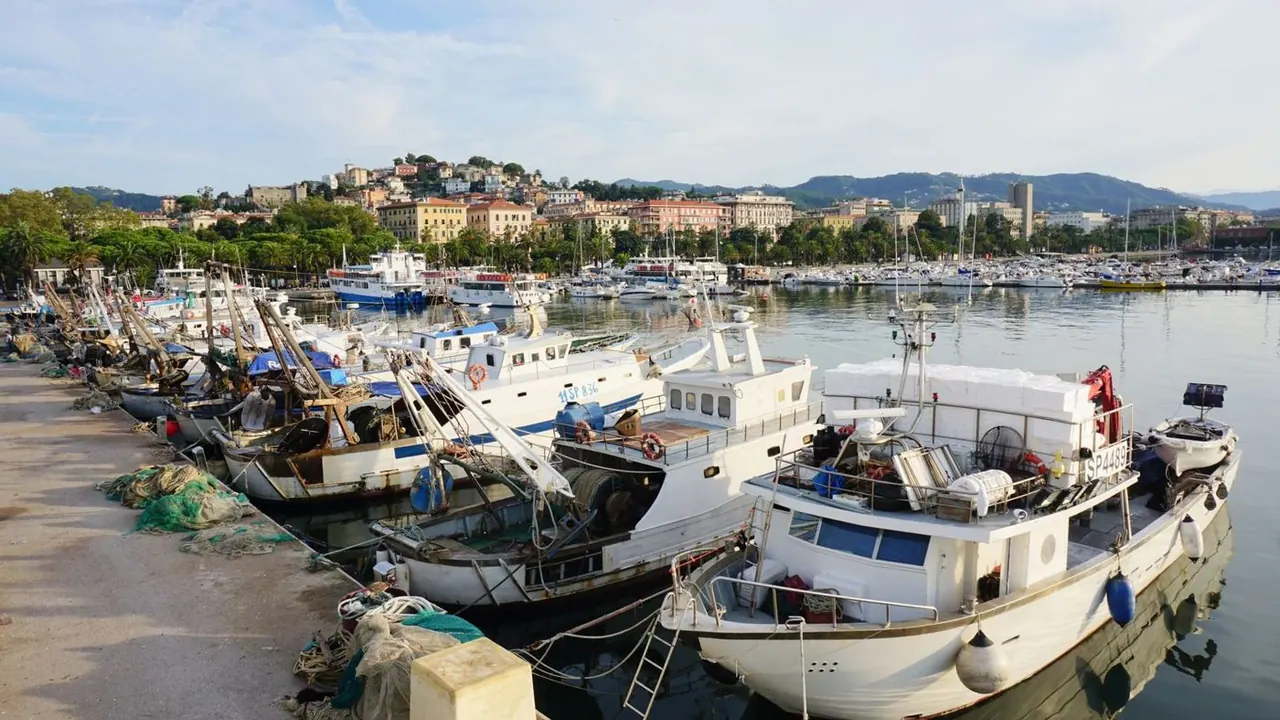
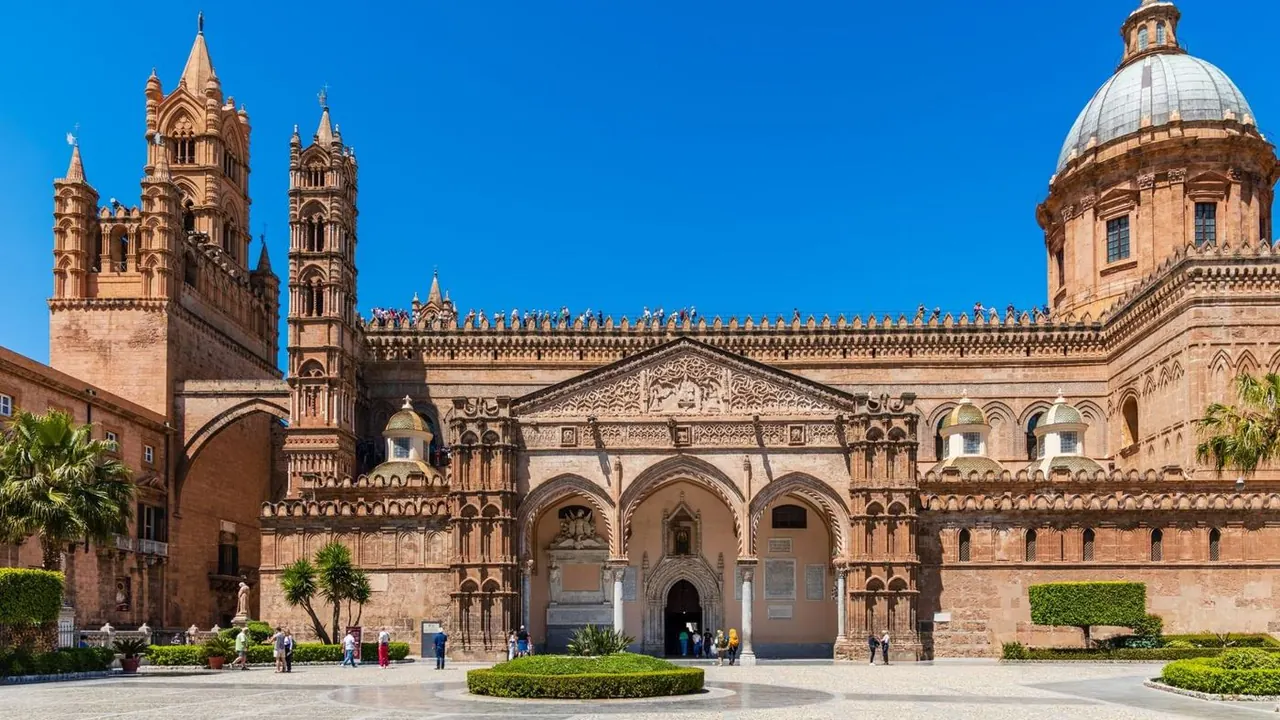
Photos: La Spezia by Irina Balashova, Pexels License; Palermo by Antonino Giangrasso, Pexels License.
La Spezia or Palermo?
Our verdict in twelve categories, each scored against the same fixed benchmark cities, and the climate month by month, so you can choose for your trip.
Choose La Spezia for
- getting around
- nature and the outdoors
- families
La Spezia is the better base for travellers who come for the coast itself rather than for a city. The Cinque Terre villages, Portovenere and the cliff paths are minutes away by train, bus or boat, the compact centre is easy without a car, and evenings end early. Choose it for a walking vacation of terraced coastline and boat days, and accept that the town has few sights, little nightlife and not many stages of its own.
Choose Palermo for
- culture and sights
- live music and the arts
- nightlife
Palermo suits someone who wants the city to be the point of the trip. Its Arab-Norman mosaics, the street food of Ballarò and the Capo, the opera season at the Teatro Massimo and late evenings in the Vucciria give it far more depth, and Mondello offers better swimming than anything near La Spezia. It is also cheaper, though harder to get around, and the best countryside and ancient sites are easier to reach with a hire car.
Scoreboard
Twelve categories on one fixed scale from 0 to 100. The shaded stretch is the gap between the two.
Your match
Pick a travel style or drag the sliders, and both match scores follow your weighting.
Wins on getting around and nature and the outdoors with your weighting.
Wins on culture and sights and live music and the arts with your weighting.
What matters to you?
Category by category
What the scores mean for a trip.
Beaches & swimming
Neither city swims from its own waterfront. From La Spezia a beach day means heading out to the small, mostly pebbly coves of Lerici, San Terenzo and Tellaro, the rocks of Portovenere and Palmaria, or taking the train to Monterosso. Much of that shore is taken up by paid bathing establishments.
Palermo has the better beach in Mondello, a sheltered bay of pale sand and shallow turquoise water half an hour away by bus. On quieter days you can swim off the rocks into deep water at Capo Gallo and Sferracavallo. Mondello does get crowded at weekends, but for a sandy beach within easy reach of the city, Palermo is well ahead.
Food & drink
La Spezia eats well in a modest Ligurian way: farinata from wood ovens, mesciua soup, pesto on trofie and testaroli, and mussels grown on ropes off Portovenere, with crisp Cinque Terre whites to drink. It is a good provincial table rather than a reason to travel.
Palermo is one of Italy's great street-food cities, and that is the difference. A morning in Ballarò or the Capo brings panelle, arancine and pani ca' meusa, the cooking carries Arab flavours of saffron, raisins and pine nuts, and the cannoli, cassata and brioche with granita make the pastry shops worth a visit in their own right. Neither city has much fine dining.
Culture & sights
La Spezia is a nineteenth-century naval town of arcaded avenues and Liberty facades. Its sights fill a day or two: the early Italian paintings of the Museo Amedeo Lia, the naval museum and the Lunigiana stele statues in Castello San Giorgio.
Palermo is in another league. The gold mosaics of the Palatine Chapel, the red domes of San Giovanni degli Eremiti and the rest of the Arab-Norman route are some of the most unusual monuments in Europe. Add the Salinas and Palazzo Abatellis museums, the baroque oratories and the Capuchin catacombs, and the old centre, crumbling in places, can easily fill a week.
Nightlife
In La Spezia the evening is an aperitivo on Via del Prione or the seafront, in summer perhaps at the bars in Lerici, and then an early night before the trails. Palermo stays out much later: the Vucciria turns into a street party of grills, cheap beer and small bars, and the wine and cocktail bars of the Kalsa fill up after a late dinner. Neither is a clubbing city, though in summer Palermo's dancing moves to the beach venues around Mondello.
Nature & outdoors
La Spezia has the edge because its landscape starts on the doorstep and you can reach it on foot or by train. The terraced cliffs and paths of the Cinque Terre, the loop past old forts on Palmaria and the pine woods of Montemarcello are all close, the gulf is good for kayaking and diving, and the marble peaks of the Apuan Alps are about an hour inland.
Palermo's setting is wilder and on a bigger scale, from Monte Pellegrino above the city to the Zingaro coast and the beech woods and peaks of the Madonie, close to 2,000m. Beyond the city's own mountain, though, most of it needs a car.
Day trips
Both are excellent bases, and the difference is in what you go out to see. Trips from La Spezia are short and coastal: the five Cinque Terre villages by train, Portovenere by boat, Lerici and Tellaro across the gulf, and Pisa, Lucca or Portofino when you want to go further.
Trips from Palermo are longer and centre on ancient sites. Monreale's mosaics, Bagheria's villas and Cefalù are easy, but Segesta, Erice, Selinunte and the Valley of the Temples at Agrigento each take a full day and are much simpler with a hire car.
Good for families
With a pushchair, La Spezia is the easier of the two. Its flat centre and seafront gardens are simple to get around, and boat trips round Portovenere and the islands make good days out. The catch is everything beyond town: steep villages and packed summer trains are hard work with toddlers.
Palermo makes children welcome in other ways, with restaurants that take them in late into the evening, puppet shows of knights and Saracens, and gelato and granita on every corner. Day to day it is tougher going, with uneven stone lanes, few pavements and hot summers, and many families do better staying by the sea outside the old town.
Getting around
La Spezia is the easier place to get around. The station, the market and the seafront are a short, flat walk apart, and trains, buses and summer ferries cover the gulf and the Cinque Terre, so you will not need a car, though the coastal trains are packed in summer.
Palermo's centre is walkable along Via Maqueda and Corso Vittorio Emanuele, but the side lanes lack pavements and the buses crawl through traffic. Reaching the inland sites usually means hiring a car in a city where driving is stressful.
Shopping & style
Neither city is a shopping destination, but Palermo gives you more to browse. Via Libertà has Italian fashion and a few luxury labels. The local crafts are distinctive too: painted ceramics and moor's-head vases, marionettes from the puppet workshops, coral jewellery and the flea market near the cathedral. La Spezia offers chains and a few boutiques on Via del Prione, and its best buys are edible ones such as pesto, olive oil and Sciacchetrà.
Affordability
Palermo is the cheaper stay. Several stops at the market stalls make a full meal, trattorie and pastries cost less than in the north, and guesthouses in the old centre are fairly priced outside July and August. The main extra cost is a hire car for day trips.
La Spezia is mid-priced. It is good value next to the Cinque Terre villages it serves, but summer rooms cost what they do elsewhere in Western Europe, and trail passes, boat trips and bathing establishments add up over a stay.
Live music & performing arts
Palermo has a real musical life. The Teatro Massimo runs a full season of opera and ballet, the Politeama is home to the Sicilian symphony orchestra, and the family-run theatres of the Opera dei Pupi stage armoured marionettes in a tradition you will not find in Liguria.
La Spezia has prose theatre and touring shows at the Teatro Civico, plus a long-established summer jazz festival and concerts in castle courtyards around the gulf. For opera you have to go to Genoa or Pisa.
Wellness & relaxation
The calm La Spezia offers is the quiet of the coast: Palmaria's paths, the seafront out of season and a long lunch in Lerici or Tellaro. For thermal waters you go to the small baths at Equi Terme, about an hour inland in the Lunigiana.
Palermo is noisier, with scooters and market shouts, so its restful moments are smaller ones: the long afternoon lull, the shade of the Orto Botanico and the cloisters, and the evening walk along the Foro Italico. Its spa towns are Termini Imerese, a short train ride east, and Sciacca, with its older tradition, on the south coast.
When should you go?
Pick your month. The climate figures are measured averages, not a forecast.
La Spezia in July
Palermo in July
Daytime high, °C
Rainfall in the month, mm
Where the figures come from
La Spezia's temperatures are measured 65 km from the centre, at Pisa / S. Giusto.
La Spezia has no rain gauge within 25 km of the centre, so its rainfall comes from a gridded climate dataset read at the city rather than from a gauge further away.
Palermo has no rain gauge within 25 km of the centre, so its rainfall comes from a gridded climate dataset read at the city rather than from a gauge further away.
Palermo's sunshine is measured 67 km from the centre, at Ustica.
Temperature and rainfall are climate normals, averaged over the years shown. La Spezia: 1991-2020 normals, Pisa / S. Giusto (64.8 km from centre). Palermo: 1991-2020 (sunshine 1961-1990) normals, Palermo / Punta Raisi (24.1 km from centre).
La Spezia has the shorter beach season and the hotter summer. The sea in the gulf is warm enough for swimming from June to September, but July and August afternoons reach about 30°C, which makes the coastal paths hard going. The autumn rain starts in September, at about 81mm, and October and November are wetter still. For walking, the best time is May and June before the heat, when days are warm, fairly dry and long on sunshine.
Palermo's summer is steadier and lasts longer. July is almost rainless, at about 2mm, the sunshine is stronger through the year, and the sea warms to 27°C in August and stays pleasant into October. Spring here is warmer earlier but dry and bright, and the winters are milder than in Liguria, so the streets are comfortable for walking from November to March, although autumn and December bring most of the year's rain.
Which traveller are you?
On an outdoors trip, La Spezia is the stronger choice. The Cinque Terre trails start a short train ride away, Palmaria and Montemarcello are on the doorstep, and the Apuan Alps are about an hour inland, with no car needed for most of it. Palermo's mountains and reserves mostly need driving.
For a culture and arts trip, Palermo wins clearly. The Palatine Chapel, the Arab-Norman churches, Serpotta's oratories and the Salinas museum fill several days, and the Teatro Massimo adds opera in the evening. La Spezia's Museo Amedeo Lia and naval museum make a day or two at most.
On a food and nightlife trip, Palermo is the livelier city. Its markets turn arancine, panelle and sfincione into a meal on foot, and the Vucciria and the Kalsa are still busy past midnight. La Spezia has good farinata and gulf mussels, but after the aperitivo the town goes quiet early.
Before you go
| Measure | La Spezia | Palermo |
|---|---|---|
| Official language | Italian | Italian |
| Currency | Euro (EUR) | Euro (EUR) |
| Sockets | CFL230 V, 50 Hz | CFL230 V, 50 Hz |
| Driving side | Right | Right |
| Time zone | UTC+1, UTC+2 in summer | UTC+1, UTC+2 in summer |
| Emergency number | 112 | 112 |
| Elevation | 3 m | 14 m |
| Main airport | Pisa International Airport (PSA)65 km from centre82 non-stop destinations | Falcone–Borsellino Airport (PMO)25 km from centre106 non-stop destinations |
| Public holidays this year | 13 days | 13 days |
By the numbers
| Measure | La Spezia | Palermo |
|---|---|---|
| City population | 92,119 | 630,167 |
| People per km² | 1,792 | 3,924 |
| Museums within 10 km | 12 | 42 |
| UNESCO World Heritage sites within 50 km | 2 | 1 |
| Swim season, months above 21 °C | 4 months | 5 months |
Where else could you go?
Every comparison below shares a destination with this one, so you can follow La Spezia or Palermo somewhere new.