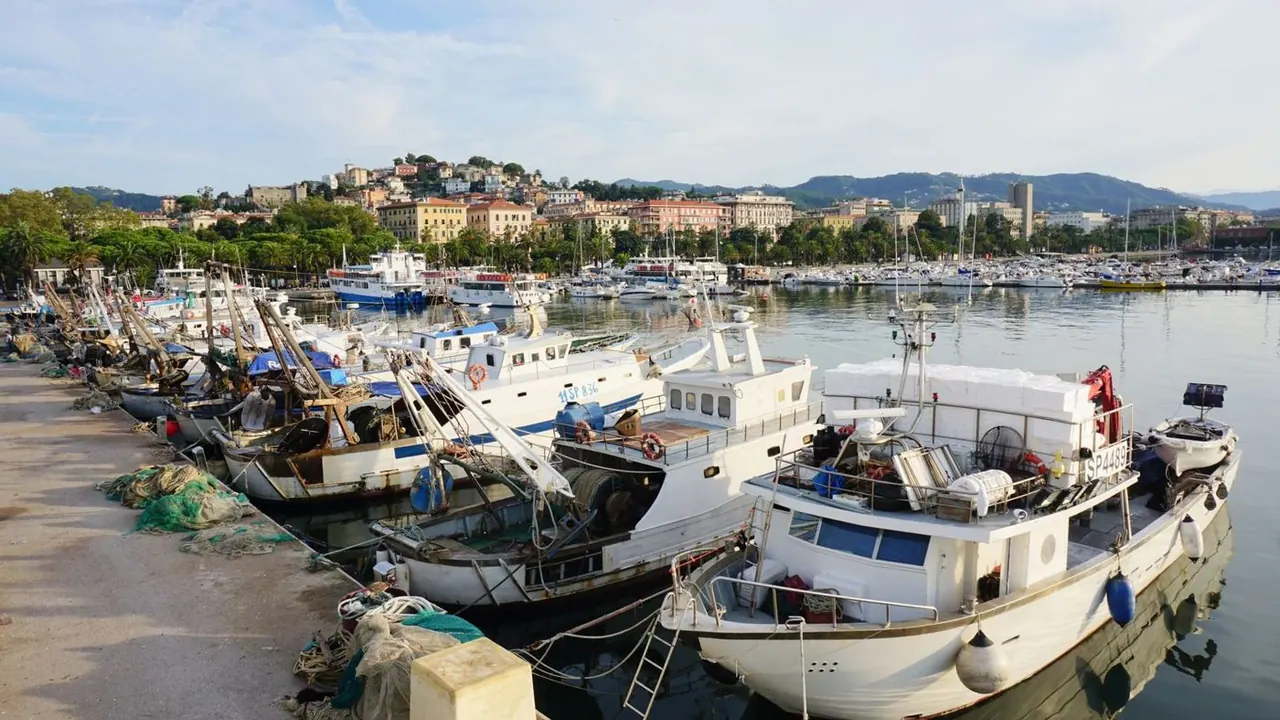
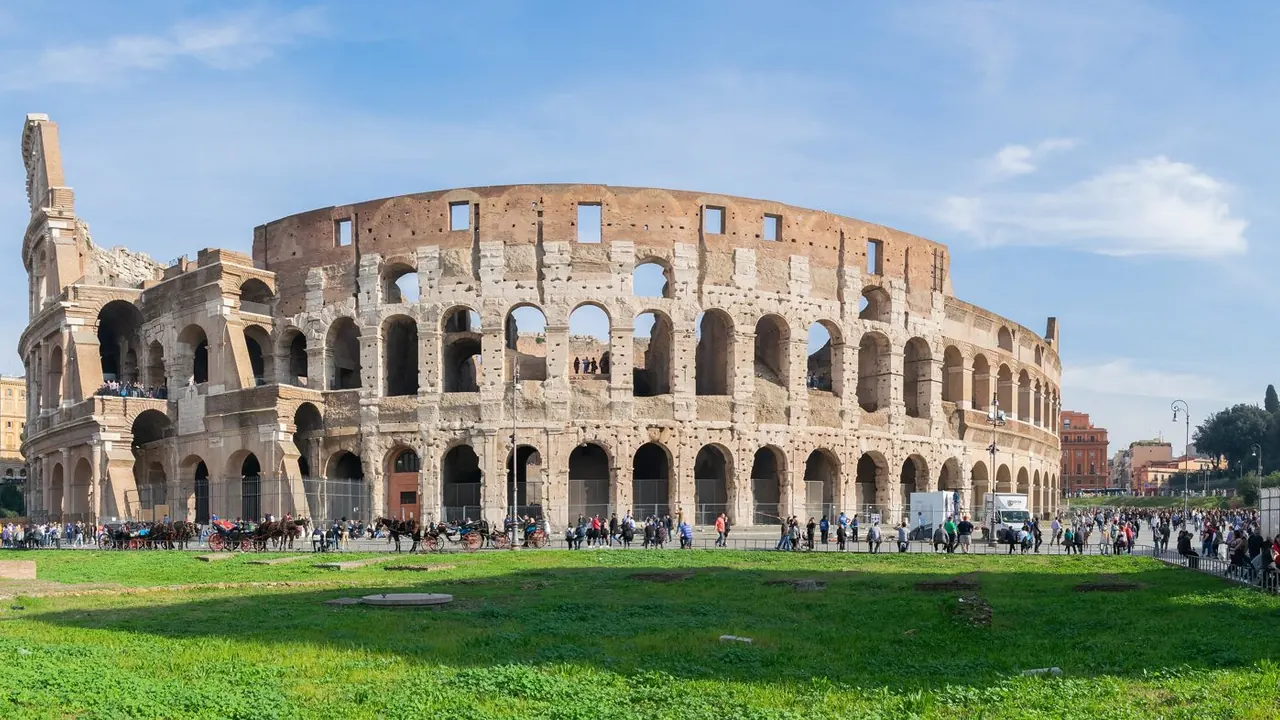
Photos: La Spezia by Irina Balashova, Pexels License; Rome by Tournasol7, CC BY-SA 4.0, cropped.
La Spezia or Rome?
Our verdict in twelve categories, each scored against the same fixed benchmark cities, and the climate month by month, so you can choose for your trip.
Choose La Spezia for
- nature and the outdoors
- prices
- beaches
La Spezia suits travellers who want the coast to be the point of the trip. It is a practical, fairly priced base for walking the Cinque Terre cliff paths, swimming in the coves around Lerici and Palmaria and hopping between villages by train and ferry. The town itself is quiet in the evenings and light on sights, so it works best for active people who are out all day and asleep early.
Choose Rome for
- culture and sights
- live music and the arts
- shopping
Rome is the choice for anyone drawn by history, art and food. Ancient ruins, Baroque piazzas and the Vatican collections fill a week easily, the trattorias of Testaccio and Trastevere are a reason to go in their own right, and the evenings, the opera and the shopping go well beyond anything a provincial port offers. Expect to pay more for a room and to spend your time in streets rather than on trails.
Scoreboard
Twelve categories on one fixed scale from 0 to 100. The shaded stretch is the gap between the two.
Your match
Pick a travel style or drag the sliders, and both match scores follow your weighting.
Wins on nature and the outdoors and prices with your weighting.
Wins on culture and sights and live music and the arts with your weighting.
What matters to you?
Category by category
What the scores mean for a trip.
Beaches & swimming
La Spezia has the better swimming, but you still have to travel to reach it. Buses to Lerici and San Terenzo bring sheltered sand and pebble, the coves at Fiascherino and Tellaro lie under olive terraces, and the rocks of Portovenere and Palmaria have very clear water. A short train ride up the coast reaches Monterosso's sandy beach.
Rome's sea is Ostia, half an hour by train, with long beaches of dark volcanic sand lined with paid lidos and water that is rarely clear. Pretty coves like Sperlonga need a much longer trip, so from Rome the beach is an escape from the heat rather than a pleasure in itself.
Food & drink
Rome is the stronger eating destination by a wide margin. Its cuisine is all its own: the four classic pastas, fried artichokes in the old Ghetto, offal dishes in Testaccio, pizza al taglio and supplì on the street, and a market culture that rewards anyone who walks away from the menus around the big sights.
La Spezia's cooking is simpler Ligurian food: farinata from wood ovens, mesciua soup, pesto on trofie and testaroli, and rope-grown mussels from the gulf. The choice is narrow and fine dining is scarce. Its glass is the better one, though, with crisp Cinque Terre and Colli di Luni whites and sweet Sciacchetrà, where Rome has little more than Frascati.
Culture & sights
There is hardly a contest here. Rome holds layer on layer of history, from the Colosseum, the Palatine and the Pantheon to early Christian mosaics, Bernini's piazzas and Caravaggios in side chapels, and the Vatican Museums alone could take a full day.
La Spezia is a nineteenth-century naval town of arcaded streets and Liberty facades with no medieval core. The Museo Amedeo Lia's early Italian paintings and the Lunigiana stele statues in Castello San Giorgio are worth a visit, but they fill a day or two, and the region's real history lies out along the coast.
Nightlife
Rome gives you far more to do after dark. Trastevere's lanes stay crowded with wine bars until late, Monti has small cocktail bars, San Lorenzo is cheap and studenty, and Pigneto draws an arty crowd, though clubbing in Testaccio and Ostiense is limited.
La Spezia's evening is the aperitivo on Via del Prione or the seafront, moving to the waterfront at Lerici in summer, and then the town goes quiet. Most visitors here are saving their energy for the trails the next morning.
Nature & outdoors
For landscape, La Spezia is the obvious choice. Terraced vineyards fall into the sea along the Cinque Terre national park, the Sentiero Azzurro and the higher ridge paths link the villages, and Palmaria and the Montemarcello promontory give quieter walks nearby. Kayaking and diving in the gulf and serious hiking in the Apuan Alps add range.
Rome's green spaces are its villa parks and the Appian Way, where a ride past tombs and aqueduct arches is a real highlight. For woods and lakes you head out to the Alban Hills, and the mountains of the Apennines are about ninety minutes away.
Day trips
Both are superb bases, and what differs is what lies around them. From La Spezia the outings are about coast and scenery: the Cinque Terre villages minutes away by train, the painted harbour of Portovenere, walled Sarzana, Carrara's quarries, and Pisa and Lucca about an hour off.
From Rome the trips are mostly into history: the excavated port of Ostia Antica, Hadrian's Villa and Villa d'Este at Tivoli, Etruscan tombs at Tarquinia and Cerveteri, and cliff-top Orvieto. With high-speed trains, Florence and Naples are easy day trips.
Good for families
Neither city is built around children, and they fall short in different ways. La Spezia's best family days are on the water, with boat trips round Portovenere and shallow beaches at San Terenzo, and its flat centre is easy with a pushchair. It has no zoo or aquarium, though, and the steep villages and crowded trains suit older children best.
Rome has more to entertain: gladiators, catacombs, the Bioparco and rowing boats in Villa Borghese, and gelato every day. Against that come long queues, uneven cobbles and summer heat, so sightseeing with small children is tiring.
Getting around
La Spezia is the easier place to get around. The station, market, museums and seafront are a short flat walk apart, and coastal trains, gulf buses and seasonal ferries run straight to the villages, though they fill up in summer.
In Rome the walk from the Colosseum to the Pantheon and over to Trastevere is a pleasure in itself, but cobbles, scooters and heat wear you down. The metro barely reaches the historic core, and buses and trams get stuck in traffic.
Shopping & style
Rome is much better for shopping. The big Italian fashion houses line Via Condotti and the streets around the Spanish Steps, Monti has independent designers and vintage shops, and Via dei Coronari and Via Margutta keep their antique dealers and artisan workshops, with Porta Portese's flea market on Sundays.
La Spezia offers chain stores and a few boutiques on Via del Prione and Corso Cavour. What is worth taking home is edible: pesto, olive oil, Sciacchetrà and anchovies.
Affordability
La Spezia is the cheaper stay, and that is why so many people use it as a base. Rooms cost clearly less than in the Cinque Terre villages, trains are inexpensive, and farinata and trattoria meals are fair value. Trail passes, boat trips and paid beaches still add up in summer.
In Rome, accommodation is the big cost: central rooms are small and expensive, and the Vatican, Colosseum and Borghese all charge substantial entry fees. Free drinking fountains, churches full of art and standing espresso help keep daily spending down.
Live music & performing arts
Rome has a real performing arts scene, and La Spezia does not. The Teatro dell'Opera stages opera and ballet in winter and moves outdoors to the Baths of Caracalla in summer, Santa Cecilia's orchestra plays at Renzo Piano's Auditorium, and church concerts and jazz clubs fill out the calendar.
La Spezia has the Teatro Civico's season and a long-established summer jazz festival with concerts in castle courtyards around the gulf. For most of the year little is on, and for opera you have to go to Genoa or Pisa.
Wellness & relaxation
For thermal water you have to leave both cities, and the choice is far wider from Rome. From La Spezia, apart from hotel spas, the only option is the small baths at Equi Terme in the Lunigiana valley, about an hour inland. The town's strength is its slow pace: quiet off-season evenings on the seafront, a long lunch in Tellaro and the calm of Palmaria.
Rome has hammam-style day spas as well as hotel spas. The large sulphurous pools at Bagni di Tivoli are just outside the city, and around Viterbo, about ninety minutes north, there are free open-air hot springs. The centre is loud with scooters and crowds, so for quiet you go to the villa gardens or up the Aventine.
When should you go?
Pick your month. The climate figures are measured averages, not a forecast.
La Spezia in July
Rome in July
Daytime high, °C
Rainfall in the month, mm
Where the figures come from
La Spezia's temperatures are measured 65 km from the centre, at Pisa / S. Giusto.
La Spezia has no rain gauge within 25 km of the centre, so its rainfall comes from a gridded climate dataset read at the city rather than from a gauge further away.
Rome's sunshine is measured 31 km from the centre, at Vigna Di Valle.
Temperature and rainfall are climate normals, averaged over the years shown. La Spezia: 1991-2020 normals, Pisa / S. Giusto (64.8 km from centre). Rome: 1991-2020 normals, Roma / Ciampino (15.1 km from centre).
Both cities follow the same Mediterranean year of hot, dry summers and wet late autumns. In La Spezia the sea is comfortable for swimming from June, reaches about 25°C in August and stays pleasant into early October, so that is the beach window. For the coastal walks, May and late September are kinder, before and after the strongest heat. The rain turns heavy from September, and October and November each bring over 150mm, the wettest stretch of the year.
Rome runs a little hotter and sunnier through the summer, with highs of 31°C in July and August that make midday sightseeing hard going, and the sea off Ostia warms on the same timetable as the gulf. April, May and October are the best months for long days on foot. Winters in both are mild, around 12°C by day, and Rome's autumn rain is noticeably lighter than La Spezia's.
Which traveller are you?
For a culture and arts trip, Rome is the clear pick. The Forum, the Pantheon, the Sistine Chapel and the Borghese Gallery sit within walking distance of one another, and opera at the Baths of Caracalla finishes the day in a way La Spezia's small museums and theatre season cannot match.
On an outdoors trip, choose La Spezia. The Cinque Terre footpaths, the Palmaria loop and Montemarcello's pine woods start within minutes of town, with kayaking along the gulf and the marble peaks of the Apuan Alps an hour inland. Rome offers parks and bike rides, not real hiking.
For a food and nightlife trip, Rome comes out well ahead. Carbonara and supplì in Testaccio, Jewish-style artichokes in the Ghetto and late evenings in the wine bars of Trastevere and Monti outclass La Spezia's farinata and its early-ending aperitivo hour.
Before you go
| Measure | La Spezia | Rome |
|---|---|---|
| Official language | Italian | Italian |
| Currency | Euro (EUR) | Euro (EUR) |
| Sockets | CFL230 V, 50 Hz | CFL230 V, 50 Hz |
| Driving side | Right | Right |
| Time zone | UTC+1, UTC+2 in summer | UTC+1, UTC+2 in summer |
| Emergency number | 112 | 112 |
| Elevation | 3 m | 21 m |
| Main airport | Pisa International Airport (PSA)65 km from centre82 non-stop destinations | Rome–Fiumicino Leonardo da Vinci International Airport (FCO)23 km from centre242 non-stop destinations |
| Public holidays this year | 13 days | 13 days |
By the numbers
| Measure | La Spezia | Rome |
|---|---|---|
| City population | 92,119 | 2,748,109 |
| People per km² | 1,792 | 2,135 |
| Museums within 10 km | 12 | 178 |
| UNESCO World Heritage sites within 50 km | 2 | 7 |
| Swim season, months above 21 °C | 4 months | 5 months |
Where else could you go?
Every comparison below shares a destination with this one, so you can follow La Spezia or Rome somewhere new.