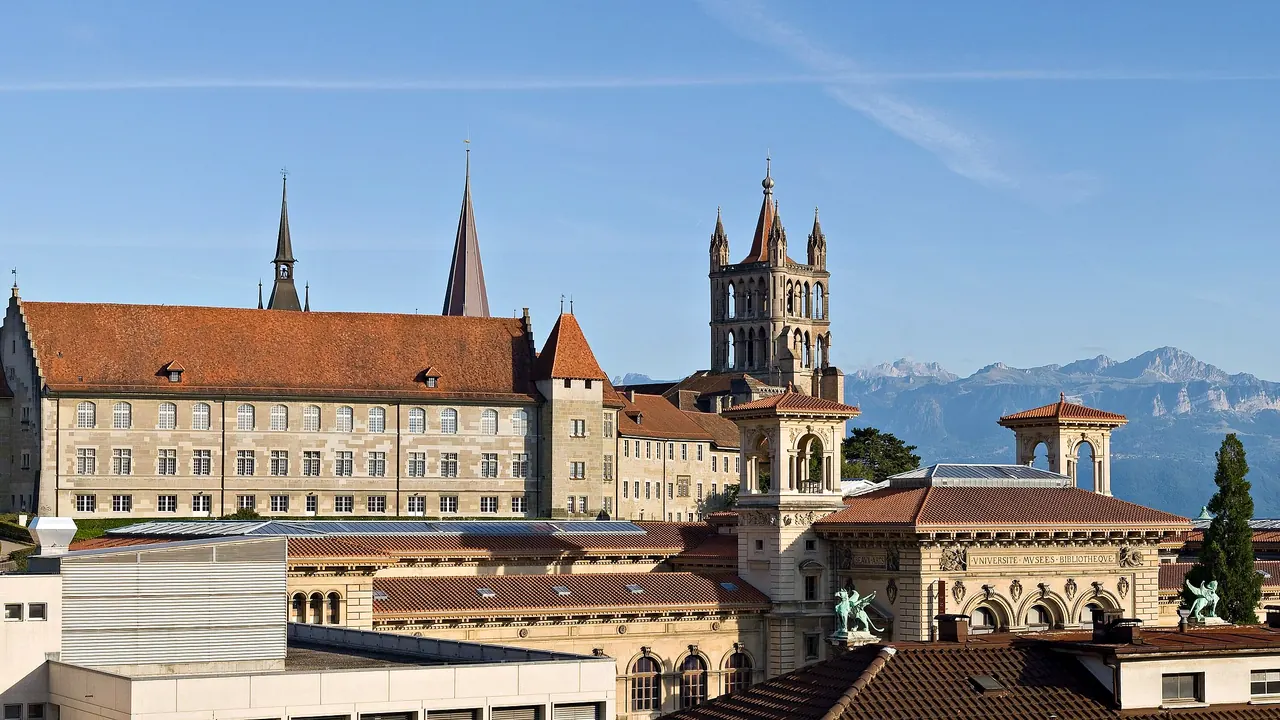
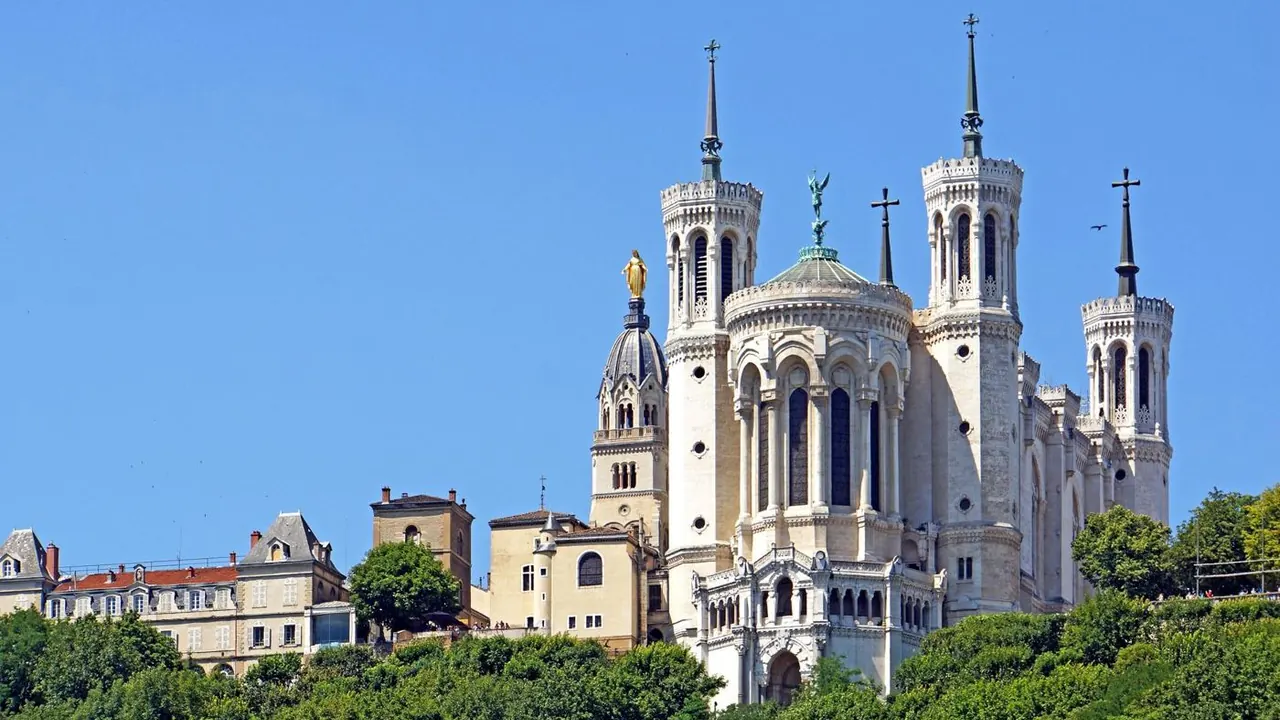
Photos: Lausanne by Christian Mehlführer, CC BY-SA 3.0, cropped; Lyon by Dennis G. Jarvis, CC BY-SA 2.0, cropped.
Lausanne or Lyon?
Our verdict in twelve categories, each scored against the same fixed benchmark cities, and the climate month by month, so you can choose for your trip.
Choose Lausanne for
- beaches
- nature and the outdoors
- wellness
Pick Lausanne if the landscape matters more than the menu. The French Alps rise across the lake, the Lavaux vineyard paths begin at the edge of town, and trains reach the Vaud Alps, the Jura, Gruyères, Bern and Chillon without a car. It suits walkers, skiers and anyone who wants a calm lakeside base, as long as the budget can take Swiss prices.
Choose Lyon for
- prices
- food and drink
- culture and sights
Lyon is the better choice for eating, sightseeing and evenings out. Bouchons and Les Halles Paul Bocuse, the Roman theatres on Fourvière and the Renaissance lanes of Vieux Lyon fill several days. The bars on the Presqu'île and on the Rhône barges keep the nights going, and the whole stay costs far less. The trade-off is gentler countryside, with the serious mountains a drive away.
Scoreboard
Twelve categories on one fixed scale from 0 to 100. The shaded stretch is the gap between the two.
Your match
Pick a travel style or drag the sliders, and both match scores follow your weighting.
Wins on beaches and nature and the outdoors with your weighting.
Wins on prices and food and drink with your weighting.
What matters to you?
Category by category
What the scores mean for a trip.
Beaches & swimming
Neither city is a beach destination, but only Lausanne lets you swim in town. From late June to early September, Lake Geneva is warm enough for a swim from the lawns at Vidy, the old lido at Bellerive or the shingle towards Lutry.
Lyon's rivers are for sunbathing on the quays, not swimming. To cool off you go to the supervised bathing lake at Miribel-Jonage on the city's edge, or take a long day out to Annecy or the Lac du Bourget.
Food & drink
This is where Lyon pulls clearly ahead. Its bouchons serve a whole local cuisine, from quenelles in crayfish sauce to praline tart. The fine-dining tradition goes back to the Mères lyonnaises, and set lunches make good cooking easy to find at every level. Les Halles Paul Bocuse and the Sunday markets on the Saône add plenty more.
Lausanne eats well but in a narrower range: lake perch, papet vaudois, fondue in winter and a few celebrated tables nearby. Its real strength is wine, with Lavaux Chasselas tasted straight from the growers in village caveaux. Between the top tables and the basics, the choice is fairly ordinary.
Culture & sights
Lyon has far more to see, and it takes several full days. There are Roman theatres and a Gallo-Roman museum on Fourvière, and Renaissance lanes and traboules in Vieux Lyon. Add the Musée des Beaux-Arts, the old silk-weavers' quarter of Croix-Rousse and the Institut Lumière, where cinema began.
Lausanne is a smaller visit, centred on the Gothic cathedral, where a night watchman calls the hours, and a compact old town on the hill. Its museums matter more than its streets, especially the Olympic Museum at Ouchy and the Collection de l'Art Brut, and two or three days cover it.
Nightlife
Lyon offers more nights out and more variety. There are wine and cocktail bars on the Presqu'île, pubs in Vieux Lyon, and bars and clubs on barges along the Rhône. A serious electronic scene runs through warehouse clubs and the Nuits Sonores festival in spring.
In Lausanne, going out mostly means the Flon, where clubs and late bars fill old warehouses at weekends, plus wine bars in the old town and summer evenings at Ouchy. It is lively for a city its size, but quiet midweek and expensive by the glass.
Nature & outdoors
Lausanne has the bigger landscape on its doorstep. The French Alps rise across the lake, and the Lavaux terraces between Lutry and Saint-Saphorin make a superb walk. You can sail and paddleboard on the lake itself. The Vaud Alps and the Jura are about an hour away for hiking and skiing, often in sunshine above the winter fog.
Lyon's outdoors is gentler and more urban: car-free quays along the Rhône for running and cycling, the large Parc de la Tête d'Or, and easy walking in the Monts d'Or and the Beaujolais hills. Chartreuse and Vercors offer real hiking, but the high Alps are about two hours away and mostly need a car.
Day trips
Both are fine bases, but Lausanne's trips are quicker and almost all work by train. Montreux and the Château de Chillon are about twenty minutes along the shore, and Geneva and Bern are each around an hour away. Gruyères and Murten are close by, and boats cross the lake to Évian.
From Lyon, the best day trips are wine and old towns: Roman Vienne close by, medieval Pérouges, the Beaujolais villages and Burgundy around Beaune. The Alpine lakes and Annecy are further from Lyon than from Lausanne, and Geneva is only just within reach.
Good for families
Both cities are easy with children, and in both the steep hills are hard going with a pushchair. The difference is in the outings. Lausanne's are on and around the water: paddle steamers, the summer pools at Bellerive, and the Sauvabelin woods with their animal park, pedal boats and wooden lookout tower.
Lyon's best family day is in the Parc de la Tête d'Or, with its free zoo, pony rides and little train. The city adds dinosaur skeletons at the Musée des Confluences and Guignol puppet shows. Eating out as a family costs far more in Lausanne.
Getting around
Neither city needs a car, but they get you around in different ways. Lausanne is small and steep, and the m2 metro does the climbing from the lake at Ouchy to the upper town. Fast Swiss trains from the main station cover everything further afield.
Lyon is bigger, but its core on the Presqu'île is flat and pleasant to walk. Four metro lines, trams and funiculars up Fourvière fill the gaps, and bike-share and riverside cycle paths make cycling the easy option.
Shopping & style
Lyon has much the wider range. You will find chains on the rue de la République, luxury labels around Place des Jacobins, a large mall at Part-Dieu and antique dealers on the rue Auguste Comte. Silk scarves and designer workshops on Croix-Rousse add something you cannot buy elsewhere.
Lausanne is narrower: watches, jewellery and chocolate on Rue de Bourg, chains in the Flon, and few independent shops. It is the place for a Swiss watch or a bottle of Lavaux wine, while Lyon suits broader shopping.
Affordability
There is a wide gap in cost. Lausanne has full Swiss prices for rooms, meals, wine and taxis, so travellers on a budget rely on supermarket picnics and the free lakeside promenades.
Lyon is not a budget city, but hotel rooms are reasonably priced except during trade fairs and the Fête des Lumières. Generous set lunches in bouchons make eating well affordable in a way Lausanne cannot match, and the zoo is free.
Live music & performing arts
Both cities have more stage life than their size suggests, and in both, dance leads. Lausanne has the Béjart Ballet, the Prix de Lausanne and the contemporary work of the Théâtre de Vidy, and the Montreux Jazz Festival is along the lake in July.
Lyon has more on any given night. It has an opera house with its own ballet, the Orchestre National, the Célestins, the Maison de la Danse and the Biennale de la Danse. In summer, the Nuits de Fourvière festival puts on concerts and plays in the Roman theatres above the city.
Wellness & relaxation
Neither city has a bathing tradition of its own, but Lausanne is better placed for a restful stay. The grand lakeside hotels have large spas, and the thermal springs at Yverdon-les-Bains and Lavey-les-Bains are each under an hour by train. The quiet paths through the Lavaux vines are close by.
In Lyon, relaxing is more about the pace of the city: long lunches, Sunday mornings by the Saône, a few hammams and the open-air pool on the Rhône quays. Its nearest proper spa town, Aix-les-Bains, is about an hour and a half away.
When should you go?
Pick your month. The climate figures are measured averages, not a forecast.
Lausanne in July
Lyon in July
Daytime high, °C
Rainfall in the month, mm
Where the figures come from
Lausanne's temperatures are measured 40 km from the centre, at Payerne.
Lausanne has no rain gauge within 25 km of the centre, so its rainfall comes from a gridded climate dataset read at the city rather than from a gauge further away.
Temperature and rainfall are climate normals, averaged over the years shown. Lausanne: 1991-2020 (sunshine 1961-1990) normals, Payerne (39.7 km from centre). Lyon: 1991-2020 (sunshine 1981-2010) normals, Lyon / Bron (10.6 km from centre).
Lausanne is the cooler of the two. July peaks near 26°C, which keeps summer pleasant for the climb from Ouchy up to the cathedral. Its rain is spread evenly across the year, and summer is actually the wettest season, with about 115mm in July. Late June to early September is the time to swim in the lake. Winter highs drop to about 4°C, so the cold months suit the mountains better than the town. May, June and September are the most comfortable months for walking the streets.
Lyon runs a couple of degrees warmer and is drier in summer. July and August reach about 28°C, which makes for good long evenings on the river quays, though the middle of the day can feel hot on the Fourvière stairs. Its wettest spell comes in autumn, with October around 101mm, and its winters are milder than Lausanne's. Spring and September are the best months for walking. Both cities get much the same amount of sunshine through the year: long, bright days from May to August, and a dull, grey stretch from November to January.
Which traveller are you?
For a food and nightlife trip, Lyon wins easily. Bouchons, generous set lunches, Les Halles Paul Bocuse and the nearby Beaujolais take care of the table. Bars on the Presqu'île, barges on the Rhône and a serious electronic club scene keep evenings going longer than in Lausanne.
On an outdoors trip, Lausanne is the stronger base. You can walk through the Lavaux vines, sail on Lake Geneva, and hike or ski in the Vaud Alps or the Jura, all within about an hour by train. Lyon's wilder country mostly needs a car.
On a tight budget, Lyon is the realistic choice. Hotel rooms are reasonably priced for most of the year, set lunches in bouchons stretch the money a long way and the zoo is free. In Lausanne, Swiss prices make even simple meals out add up fast.
Before you go
| Measure | Lausanne | Lyon |
|---|---|---|
| Official language | French, German, Italian, Romansh | French |
| Currency | Swiss Franc (CHF) | Euro (EUR) |
| Sockets | CJ230 V, 50 Hz | CE230 V, 50 Hz |
| Driving side | Right | Right |
| Time zone | UTC+1, UTC+2 in summer | UTC+1, UTC+2 in summer |
| Emergency number | 112 | 112 |
| Elevation | 495 m | 160 m |
| Main airport | Geneva International Airport (GVA)52 km from centre150 non-stop destinations | Lyon Saint-Exupéry Airport (LYS)20 km from centre141 non-stop destinations |
| Public holidays this year | 9 days | 11 days |
By the numbers
| Measure | Lausanne | Lyon |
|---|---|---|
| City population | 144,873 | 519,127 |
| People per km² | 3,499 | 10,838 |
| Museums within 10 km | 31 | 43 |
| UNESCO World Heritage sites within 50 km | 3 | 2 |
Where else could you go?
Every comparison below shares a destination with this one, so you can follow Lausanne or Lyon somewhere new.
- Genevavs Lausanne
- Chamonixvs Lausanne
- Bernvs Lausanne
- Annecyvs Lausanne
- Interlakenvs Lausanne
- Annecyvs Lyon