Photos: Lecce by Giuseppe Milo, CC BY 3.0, cropped; Positano by Bernard Gagnon, CC BY 4.0, cropped.
Lecce or Positano?
Our verdict in twelve categories, each scored against the same fixed benchmark cities, and the climate month by month, so you can choose for your trip.
Choose Lecce for
- culture and sights
- prices
- food and drink
Lecce suits travellers who want a real town to live in for a week: a Baroque old centre to wander, cheap and distinctive Salento cooking, piazzas full of families in the evening and two seas within easy driving distance. It works best for people happy to hire a car, and for anyone who wants their money to stretch further than it will on the Amalfi Coast.
Choose Positano for
- nature and the outdoors
- day trips
- shopping
Positano is for a shorter, more scenic stay where the landscape is the point. The cliffs, the Path of the Gods and the boats to Capri, Amalfi and Ravello give it the stronger outdoors and the better excursions, but you pay heavily for the setting, there is little to see in town, and the endless stairs make it a poor match for small children.
Scoreboard
Twelve categories on one fixed scale from 0 to 100. The shaded stretch is the gap between the two.
Your match
Pick a travel style or drag the sliders, and both match scores follow your weighting.
Wins on culture and sights and prices with your weighting.
Wins on nature and the outdoors and day trips with your weighting.
What matters to you?
Category by category
What the scores mean for a trip.
Beaches & swimming
Both give you warm, clear sea through the summer, but in very different ways. Lecce lies inland, so its best swimming means a drive of half an hour or so to the sandy coves and sea stacks of Torre dell'Orso or the long, shallow fine-sand beaches of Porto Cesareo on the Ionian side.
Positano has the sea at its feet: Spiaggia Grande and Fornillo are steep, coarse grey sand and pebble, with deep blue water and boats out to quieter coves. Choose Lecce's coast for sand and variety across two seas, Positano for stepping straight from your room into the water.
Food & drink
Lecce eats far better and more variously day to day. Mornings start with a pasticciotto and iced almond-milk espresso, lunch might be ciceri e tria or orecchiette with turnip tops, and dinner comes with dark Negroamaro, all at low cost in old-town osterie.
Positano's cooking is good but repetitive: clams, grilled fish and lemon desserts on terraces where the view is part of the price. There is little street food or market life, and many kitchens close through the winter, so the food alone is not a reason to choose it.
Culture & sights
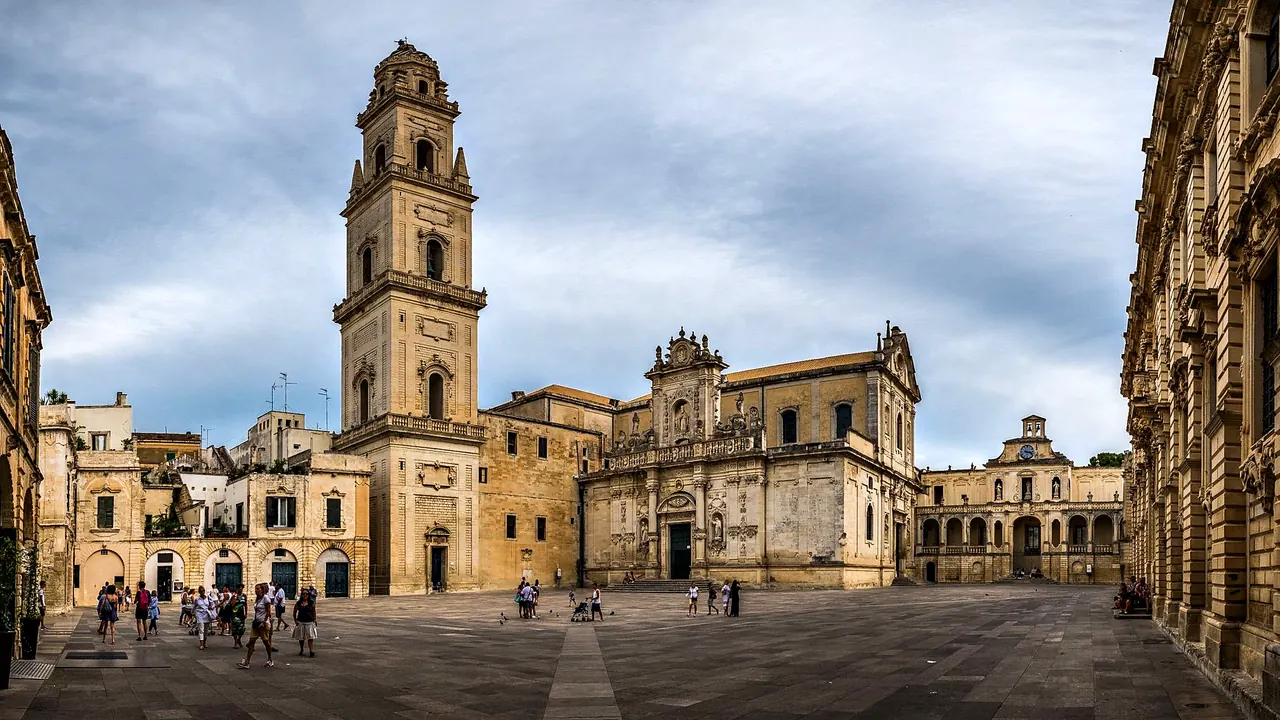
Here the gap is wide. Lecce's old town is one of Italy's great Baroque ensembles, with Santa Croce's carved facade, the enclosed Piazza del Duomo, a half-excavated Roman amphitheatre, the Castle of Charles V and Messapian layers underground.
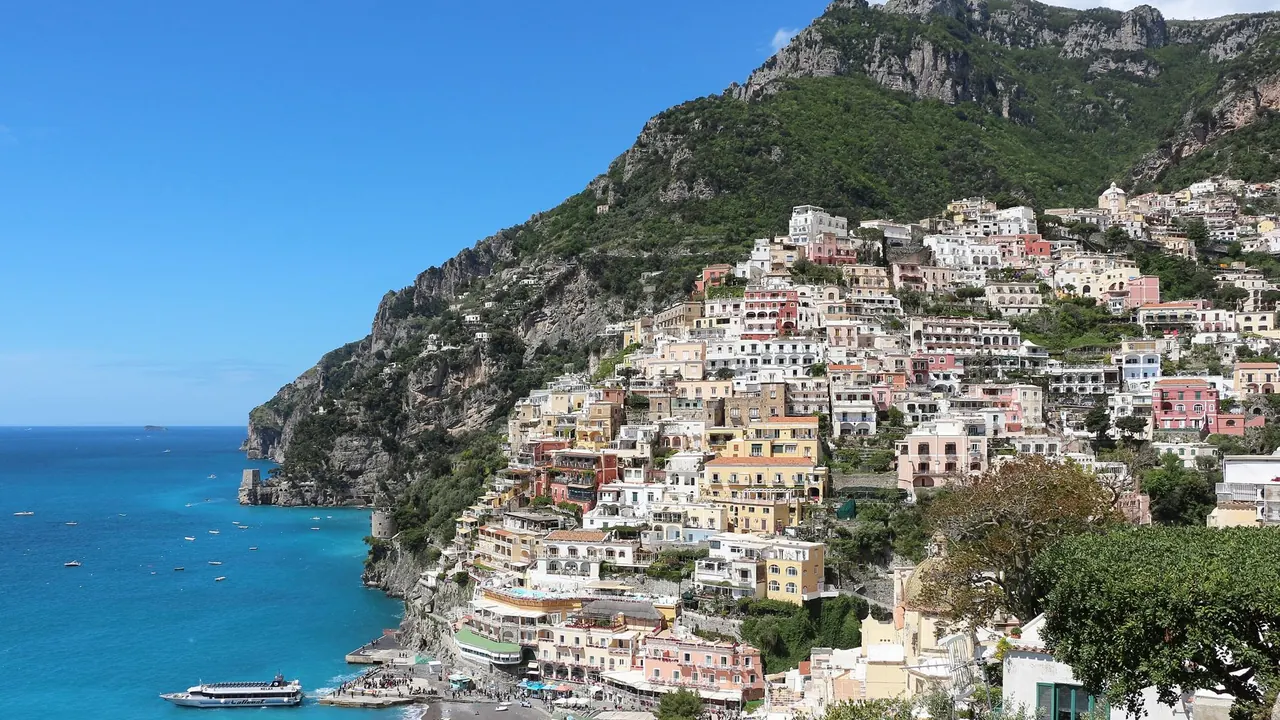
Positano's sight is its own stacked, pastel profile, plus the majolica dome of Santa Maria Assunta and the painted Roman villa beneath it. That fills a morning; for monuments you would head to Naples or Pompeii instead.
Nightlife
Neither is a party destination, but Lecce offers more of an evening. Students keep the wine bars and small cocktail bars in the old town's lanes going late at weekends for most of the year, and in summer the coast near Gallipoli has open-air discos.
Positano's nights are aperitivo with a view, a long dinner and one dressy cave club at the end of the main beach, all of which fades once the season ends. It suits a romantic evening for two rather than a night out.
Nature & outdoors
Positano has the more dramatic landscape by far. The Lattari mountains drop sheer into the sea, the Path of the Gods runs high above terraced lemon groves, and steep trails climb through chestnut woods to ridges over 1,000m.
Lecce's surroundings are flat olive groves and red earth, better for gentle cycling than hiking. Its outdoors is the coast: the cliffs and sea caves between Roca Vecchia and Santa Maria di Leuca, the Alimini wetlands for birds and the pine woods of Porto Selvaggio.
Day trips
Positano has the more famous list within reach. Capri is half an hour by boat, Amalfi and Ravello are a ferry ride along the coast, and Pompeii, Herculaneum and Paestum can each be done in a day, though out of season the ferries stop and the buses are slow.
Lecce is a solid base for the Salento, with Otranto's cathedral mosaic, island Gallipoli, Galatina's frescoes and, further north, Ostuni and the trulli of Alberobello. Most of these really need a car, and none quite match the pull of Pompeii or Capri.
Good for families
Lecce is the easier place with children. Its old centre is flat and largely free of traffic, the piazzas fill with families in the evening, and the shallow sand around Porto Cesareo is ideal for toddlers, even if there are no dedicated attractions.
Positano is built of stairs, so pushchairs are useless, and its pebbly beaches shelve quickly. Older children who love boats and swimming will enjoy it; families with very young children generally will not.
Getting around
Lecce is simpler on foot, with flat, partly pedestrian streets and a station at the edge of the old town linking it to Bari. Beyond the city, though, slow local trains and summer-only beach buses mean most visitors hire a car.
In Positano a car is more trouble than it is worth. Every walk involves hundreds of steps, the coast road is narrow and jammed in summer, and boats from the main beach do the real work, mostly in season.
Shopping & style
Positano gives shopping a bigger part in the visit. Its lanes are lined with boutiques selling the white linen and printed resort wear of moda Positano, and sandal makers cut a pair to fit while you wait, even if it is all one look.
Lecce's best buys are crafts rather than clothes: papier-mâché saints from old-town workshops, carved limestone and Grottaglie ceramics, plus olive oil and taralli. It makes for pleasant browsing rather than an afternoon of serious spending.
Affordability
The difference in cost is stark. Lecce is good value for Italy, with cheap street pastries, simple trattorias and fairly priced rooms in old palazzi, although August and a hire car push the bill up.
Positano is among the most expensive places to stay in the country, with every lounger, terrace and boat transfer priced for the view. Staying in Praiano or Sorrento and coming in by ferry is the usual way to soften it.
Live music & performing arts
Lecce has more to attend in its own right: a modest season of opera and theatre at the Politeama Greco and the Paisiello, and in summer the pizzica tambourine dance at village festivals, culminating in the Notte della Taranta at Melpignano.
Positano itself offers little beyond the odd summer concert in a church. The real draw is an evening trip to Ravello's classical festival on its terrace above the sea, with Naples further off for opera.
Wellness & relaxation
Neither has a bathing tradition of its own, and both are equally restful in different ways. Near Lecce you can take the sulphur waters at Santa Cesarea Terme in clifftop grottoes, or retreat to a converted masseria with a spa in the countryside.
Positano's calm comes from its upscale hotels with spas and cliff-cut pools, but the crowds and stairs of July and August make May, June and late September its more peaceful months.
When should you go?
Pick your month. The climate figures are measured averages, not a forecast.
Lecce in July
Positano in July
Daytime high, °C
Rainfall in the month, mm
Where the figures come from
Lecce's temperatures are measured 38 km from the centre, at Brindisi.
Lecce has no rain gauge within 25 km of the centre, so its rainfall comes from a gridded climate dataset read at the city rather than from a gauge further away.
Positano's temperatures are measured 25 km from the centre, at Capri.
Positano has no rain gauge within 25 km of the centre, so its rainfall comes from a gridded climate dataset read at the city rather than from a gauge further away.
Positano's sunshine is measured 59 km from the centre, at Grazzanise.
Temperature and rainfall are climate normals, averaged over the years shown. Lecce: 1991-2020 (sunshine 1981-2010) normals, Brindisi (38 km from centre). Positano: 2005-2025 (sunshine 1991-2020, rainfall 1991-2020) normals, Capri (25.3 km from centre).
The two share a very similar calendar for warmth. Both are pleasant for walking in April and May, both reach about 30°C in July and August, and in both the sea is warm enough to swim from June until early October, peaking at about 26°C in August. The difference is in rain and sun. Lecce, on the flat Salento plain, is the drier and brighter of the two, with almost no rain in summer and more sunshine in every month of the year.
Positano's mountains catch more rain, especially from October to December, when November brings about 127mm, and its spring is noticeably damper than Lecce's. For the beach, June and September are the sweet spot in both. For walking, spring and autumn suit both, though Positano's cliff paths are at their best in May and late September, before the autumn rains set in.
Which traveller are you?
For a culture and arts trip, Lecce is the clear choice. Its honey-coloured Baroque streets, Santa Croce, the cathedral square and the Roman amphitheatre fill several days, while Positano's church and buried villa take a couple of hours.
On an outdoors trip, Positano wins easily. The Path of the Gods, the wooded ridges above Montepertuso and kayaking to the Li Galli islets beat Lecce's flat olive plain, though Lecce's coast does offer good snorkelling and clifftop walks near Otranto.
On a trip with a tight budget, Lecce makes far more sense. Pastries, osterie and old-palazzo bed and breakfasts are fairly priced for Italy, whereas Positano charges for every view, lounger and boat ride, and a sea-view room can cost more than in a capital.
Before you go
| Measure | Lecce | Positano |
|---|---|---|
| Official language | Italian | Italian |
| Currency | Euro (EUR) | Euro (EUR) |
| Sockets | CFL230 V, 50 Hz | CFL230 V, 50 Hz |
| Driving side | Right | Right |
| Time zone | UTC+1, UTC+2 in summer | UTC+1, UTC+2 in summer |
| Emergency number | 112 | 112 |
| Elevation | 49 m | 142 m |
| Main airport | Brindisi Airport (BDS)39 km from centre49 non-stop destinations | Naples International Airport (NAP)33 km from centre131 non-stop destinations |
| Public holidays this year | 13 days | 13 days |
By the numbers
| Measure | Lecce | Positano |
|---|---|---|
| City population | 94,783 | 3,729 |
| People per km² | 393 | 429 |
| Museums within 10 km | 11 | 10 |
| UNESCO World Heritage sites within 50 km | 0 | 5 |
| Swim season, months above 21 °C | 4 months | 5 months |
Where else could you go?
Every comparison below shares a destination with this one, so you can follow Lecce or Positano somewhere new.