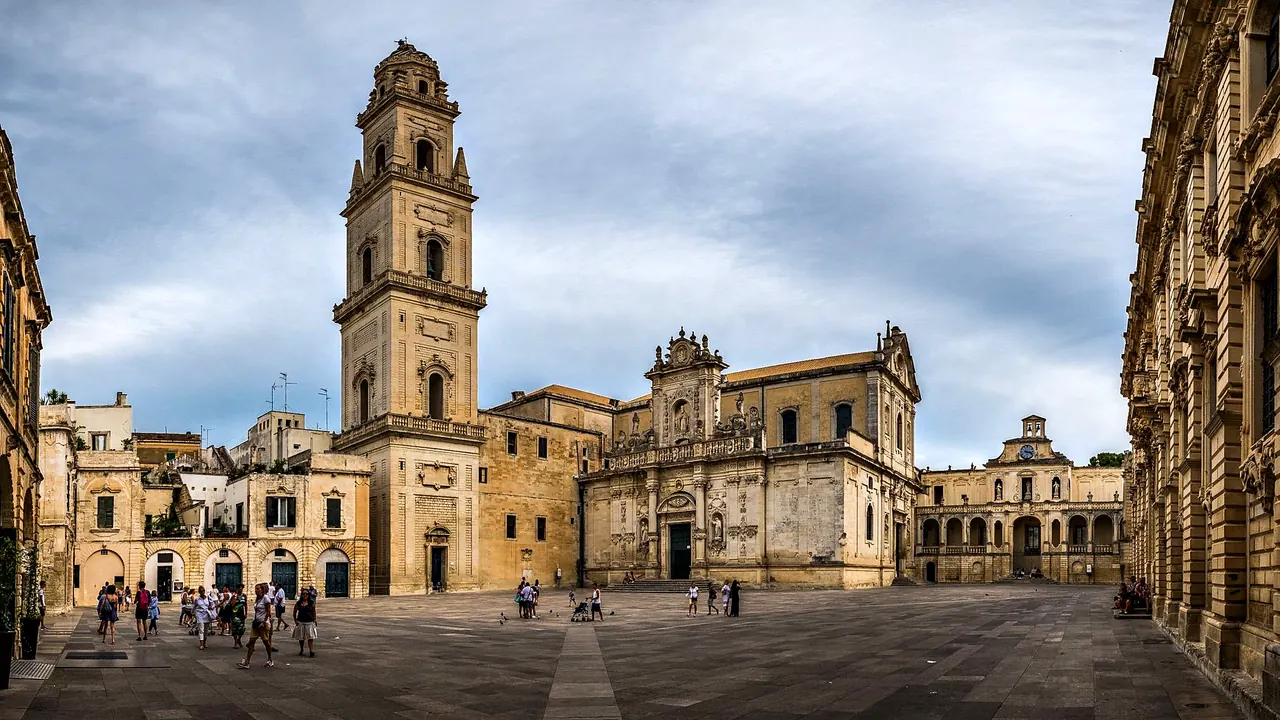
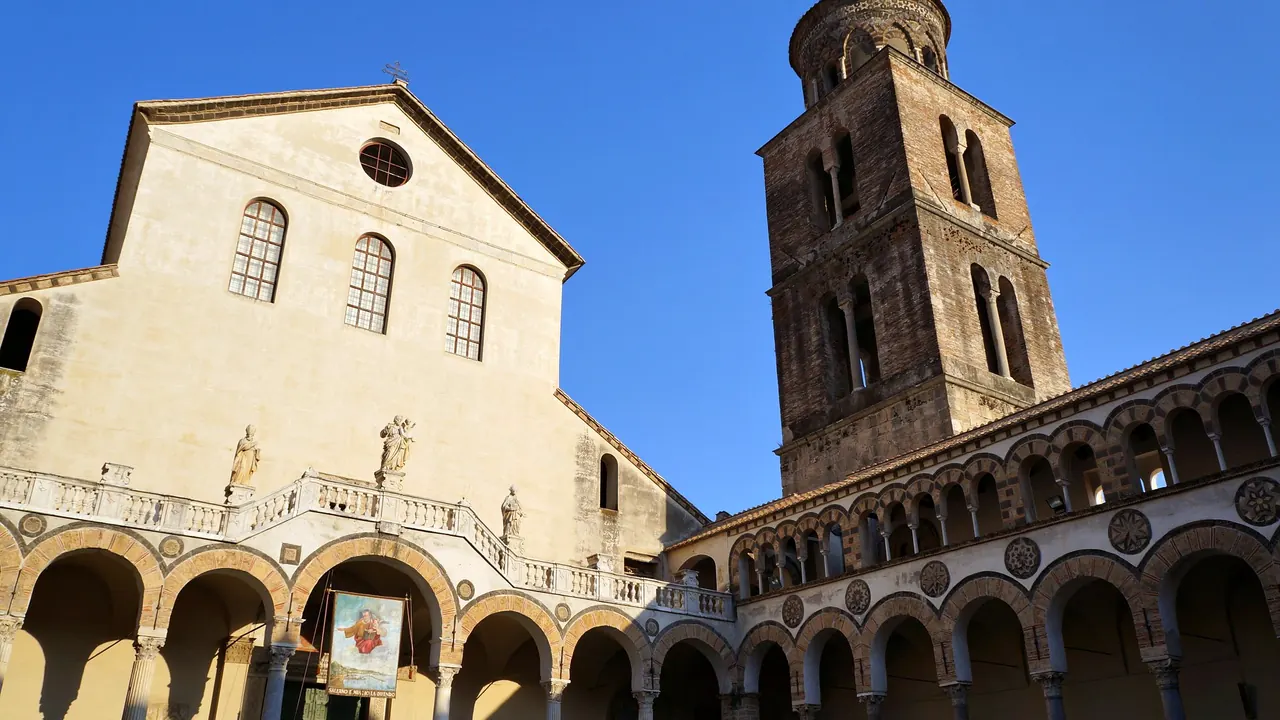
Photos: Lecce by Giuseppe Milo, CC BY 3.0, cropped; Salerno by Leandro Neumann Ciuffo, CC BY 2.0, cropped.
Lecce or Salerno?
Our verdict in twelve categories, each scored against the same fixed benchmark cities, and the climate month by month, so you can choose for your trip.
Choose Lecce for
- culture and sights
- wellness
- beaches
Lecce suits travellers who want to settle into one place and enjoy it slowly. The old town is a complete Baroque set piece in honey-coloured stone, best seen on foot at dusk. The Salento's beaches on two seas are within easy driving distance, and the countryside offers quiet masserie and the cliff springs of Santa Cesarea. Hire a car and Lecce gives you a sightseeing city and a beach vacation in the same trip.
Choose Salerno for
- day trips
- nature and the outdoors
- getting around
Salerno is the better pick for travellers who see their base as a launch pad. Paestum, Pompeii, Naples and the Amalfi Coast are all close by train or ferry, and the Lattari mountains and the Cilento are among the best walking country in southern Italy. The town has less to see than Lecce, but it costs less to stay in than the cliff villages, and you can manage the whole trip without a car.
Scoreboard
Twelve categories on one fixed scale from 0 to 100. The shaded stretch is the gap between the two.
Your match
Pick a travel style or drag the sliders, and both match scores follow your weighting.
Wins on culture and sights and wellness with your weighting.
Wins on day trips and nature and the outdoors with your weighting.
What matters to you?
Category by category
What the scores mean for a trip.
Beaches & swimming
Lecce gives you better swimming, though neither city is a beach resort in itself. Its own nearby sands at San Cataldo are ordinary, but the Salento offers two different seas: limestone coves and sea stacks on the Adriatic, and long, shallow fine-sand beaches with very clear water around Porto Cesareo on the Ionian.
Salerno has the sea at the end of the street, but its city beaches are grey sand, and the water near the port is murky. For a proper beach day you head south to the lidos and pine woods towards Paestum, or take the ferry to the pebbly coves of the Amalfi Coast.
Food & drink
The two cities eat equally well, but they eat differently. Lecce's cooking is inland peasant food: pasticciotto and iced almond coffee for breakfast, then ciceri e tria, fava purée with chicory, and dark Negroamaro and Primitivo wines.
Salerno looks to the sea and the plain, with fried seafood, pasta with clams, Cetara's colatura and buffalo mozzarella made that morning, served with whites such as Fiano and Falanghina. Lecce is the more unusual table, while Salerno has more variety from one meal to the next.
Culture & sights
Lecce is the clear choice for sightseeing in the town itself. Its whole old town is a Baroque showpiece of carved limestone, from the facade of Santa Croce to the Piazza del Duomo, with a half-excavated Roman amphitheatre and Messapian layers underground. Its museums are modest, but walking the streets is the point.
Salerno's heritage is medieval and more compact: the Norman cathedral with the crypt of Saint Matthew, the Giardino della Minerva with its link to Europe's first medical school, and the Arechi Castle high above. It is worth a day or two. The region's great ancient sites lie outside the city.
Nightlife
Evenings are much the same in both: a passeggiata, an aperitivo, then wine bars until late, with little dancing in town. In Lecce the bars are in the old town's lanes, kept lively by students, and in summer the clubs are out on the coast around Gallipoli. Salerno's crowd fills Largo Campo and Via dei Mercanti, and Naples is close enough for a bigger night out.
Nature & outdoors
Salerno is far better for the outdoors. The Amalfi Coast's cliffs and lemon terraces begin at the edge of the city, old mule tracks cross the Lattari mountains behind it, and the Cilento national park to the south adds wooded hills, river gorges and the headlands around Palinuro.
Lecce's surroundings are a flat plain of olive groves, good for easy cycling but with no hills to climb. Its nature is mostly on the coast: clifftop paths and sea caves towards Otranto, birdwatching at Le Cesine and the Alimini lakes, and snorkelling and diving in clear water.
Day trips
Salerno is one of the best bases in Italy for day trips. Paestum's temples and Pompeii are each about half an hour away by train, and Naples is not much further. Ferries cross the gulf to Amalfi and Positano, and Ravello, Herculaneum and Caserta are all easy days out.
Lecce has a good spread of trips too, including Otranto's cathedral mosaic, Gallipoli on its island, Galatina's frescoes and, further north, Ostuni and the trulli of Alberobello. These are mostly lovely towns rather than world-famous sites, though, and most of them are much easier with a car.
Good for families
Neither city has a zoo, aquarium or theme park, and both rely on gelato, late evenings in the squares and shallow sandy beaches. Lecce's old town is flat and largely free of traffic, which is easy with a pushchair, and the beaches around Porto Cesareo are ideal for small children. Salerno gives families a long, flat seafront with playgrounds and its winter Luci d'Artista lights, but its old town is all steps, and the winding Amalfi road can make children carsick.
Getting around
Salerno is the easier city if you won't have a car. Its station, seafront, shopping street and old town lie in one walkable strip, and trains go straight to Naples, Pompeii and Paestum. In summer, ferries replace the crowded coast road.
Lecce's centre is flat and compact, and fast trains run north to Bari. Beyond the city, though, the Salento's local railways are slow and its beach buses run only in summer. Most visitors end up hiring a car and parking outside the walls.
Shopping & style
Salerno has a little more for shoppers, mainly the long pedestrian Corso Vittorio Emanuele with its Italian chains. Nearby, there are hand-painted Vietri majolica, limoncello and colatura to bring home.
Lecce's distinctive craft is cartapesta: papier-mâché saints and nativity figures made in workshops in the old town, along with small carvings in local stone and Grottaglie ceramics. Apart from that there are a few fashion shops and food stores, which make for pleasant browsing rather than a shopping trip.
Affordability
Both are good-value southern cities, and both become expensive in August. In Lecce, cheap street pastries and osterie are offset by the hire car, and by beach-club loungers when the whole Salento fills up. Salerno's main advantage is that it costs far less than staying on the Amalfi Coast itself, and its trains and buses are cheap. Over several days, though, ferry fares and entry tickets to the big archaeological sites add up.
Live music & performing arts
Neither city is a big draw for performances, but they offer different things. Salerno's gilded Teatro Verdi has a respectable season of opera, concerts and ballet, and the cliff-top concerts of the Ravello Festival are within reach in summer. Lecce's theatres are more modest. Its real live tradition is pizzica, the tambourine dance played at village festivals all summer and at the Notte della Taranta in Melpignano in August.
Wellness & relaxation
Lecce is the more restful of the two. The long afternoon closing sets a slow pace, and several old fortified masserie on the plain now operate as quiet retreats with spas. Santa Cesarea Terme, with sulphur pools in grottoes above the sea, is less than an hour away.
Salerno's calm is mostly found on its palm-lined seafront at sunset and in the quiet upper lanes of the old town. Outside that, it is a working port with heavy traffic. For spa treatments you are limited to hotel spas or the inland springs at Contursi Terme.
When should you go?
Pick your month. The climate figures are measured averages, not a forecast.
Lecce in July
Salerno in July
Daytime high, °C
Rainfall in the month, mm
Where the figures come from
Lecce's temperatures are measured 38 km from the centre, at Brindisi.
Lecce has no rain gauge within 25 km of the centre, so its rainfall comes from a gridded climate dataset read at the city rather than from a gauge further away.
Salerno's temperatures are measured 71 km from the centre, at Grazzanise.
Salerno has no rain gauge within 25 km of the centre, so its rainfall comes from a gridded climate dataset read at the city rather than from a gauge further away.
Temperature and rainfall are climate normals, averaged over the years shown. Lecce: 1991-2020 (sunshine 1981-2010) normals, Brindisi (38 km from centre). Salerno: 1991-2020 normals, Grazzanise (71.3 km from centre).
Lecce and Salerno share the southern Italian pattern of hot, dry summers and mild, wet winters, but Lecce is the drier and sunnier of the two in every month. The sea off both reaches about 22°C in June and stays warm enough for swimming through September. October is still fine for a swim in both places, and Salerno's water is a touch warmer by then. In July and August daytime highs are around 30°C in both, too hot for walking the streets at midday, so sightseeing moves to mornings and evenings. May, June and late September are the best months for exploring both towns on foot, and for hiking near Salerno.
The rain sets in from September in both cities and peaks in November, when Lecce gets about 102mm. That is a wet month by any measure, but Salerno is wetter still, with about 154mm, and its rain is heavier right through autumn and winter. Salerno's sea stays a little warmer into December, but for a trip between October and March, Lecce gives you more sunshine and less rain.
Which traveller are you?
For a culture and arts trip, Lecce is the stronger choice. Its old town is one of Italy's most complete Baroque townscapes, with Santa Croce, the enclosed Piazza del Duomo and a Roman amphitheatre at its centre. Salerno's medieval cathedral and lanes can be covered in a day or two.
On an outdoors trip, choose Salerno. The mule tracks of the Lattari mountains, the Path of the Gods, the Valle delle Ferriere and the gorges of the Cilento give real hiking. Around Lecce the land is a flat plain, and the outdoor life is mostly the cliffs and wetlands along the coast.
On a beach and sun trip, Lecce wins, provided you have a car. Within an hour it reaches the pale coves of Torre dell'Orso on the Adriatic and the clear, shallow water at Punta Prosciutto on the Ionian. It also has more sunshine through the summer than Salerno.
Before you go
| Measure | Lecce | Salerno |
|---|---|---|
| Official language | Italian | Italian |
| Currency | Euro (EUR) | Euro (EUR) |
| Sockets | CFL230 V, 50 Hz | CFL230 V, 50 Hz |
| Driving side | Right | Right |
| Time zone | UTC+1, UTC+2 in summer | UTC+1, UTC+2 in summer |
| Emergency number | 112 | 112 |
| Elevation | 49 m | 4 m |
| Main airport | Brindisi Airport (BDS)39 km from centre49 non-stop destinations | Naples International Airport (NAP)46 km from centre131 non-stop destinations |
| Public holidays this year | 13 days | 13 days |
By the numbers
| Measure | Lecce | Salerno |
|---|---|---|
| City population | 94,783 | 127,186 |
| People per km² | 393 | 2,123 |
| Museums within 10 km | 11 | 9 |
| UNESCO World Heritage sites within 50 km | 0 | 5 |
| Swim season, months above 21 °C | 4 months | 5 months |
Where else could you go?
Every comparison below shares a destination with this one, so you can follow Lecce or Salerno somewhere new.