Photos: Lecce by Giuseppe Milo, CC BY 3.0, cropped; Split by Bernard Gagnon, CC BY-SA 4.0, cropped.
Lecce or Split?
Our verdict in twelve categories, each scored against the same fixed benchmark cities, and the climate month by month, so you can choose for your trip.
Choose Lecce for
- prices
- food and drink
- wellness
Lecce suits travellers who want a Baroque town to wander slowly, the more distinctive cooking of the two and a smaller bill. Days are built around the sandy coves of Torre dell'Orso or the shallow Ionian beaches near Porto Cesareo, with evenings back on the piazzas. Plan on hiring a car, because the Salento coast and its stone towns are hard to reach otherwise.
Choose Split for
- nature and the outdoors
- getting around
- nightlife
Choose Split if you want the sea and the mountains close to your room. Marjan's pine woods, ridge walks on Mosor and the Cetina canyon are all near, ferries from the harbour make Hvar and Brač easy day trips, and summer nights in the palace alleys go on later. High summer costs more, but you can manage the whole stay without a car.
Scoreboard
Twelve categories on one fixed scale from 0 to 100. The shaded stretch is the gap between the two.
Your match
Pick a travel style or drag the sliders, and both match scores follow your weighting.
Wins on prices and food and drink with your weighting.
Wins on nature and the outdoors and getting around with your weighting.
What matters to you?
Category by category
What the scores mean for a trip.
Beaches & swimming
Both make a proper beach vacation, but in different ways. Lecce's beaches are a drive away, and what you get is sand: pale coves and sea stacks at Torre dell'Orso and Torre Sant'Andrea, and the long, shallow fine sand of Porto Cesareo and Punta Prosciutto on the Ionian side.
In Split you can walk to the sea from the old town. Bačvice is a short stroll from the palace and the coves around Marjan have pine shade, but most of the shore is pebble or concrete platforms. That is why so many people take the ferry to Brač or Hvar for longer beaches.
Food & drink
Lecce has the more characterful food. The day runs from a warm pasticciotto with almond-milk iced coffee to ciceri e tria and orecchiette with turnip tops at dinner, served cheaply in old-town osterie with Negroamaro and Primitivo.
Split cooks well but sticks closer to the sea, with grilled fish, black risotto, pašticada and peka in the konobas of Varoš. Many menus inside the palace are aimed at summer visitors, so the best meals take more finding. Neither city offers much range beyond its own regional cooking.
Culture & sights
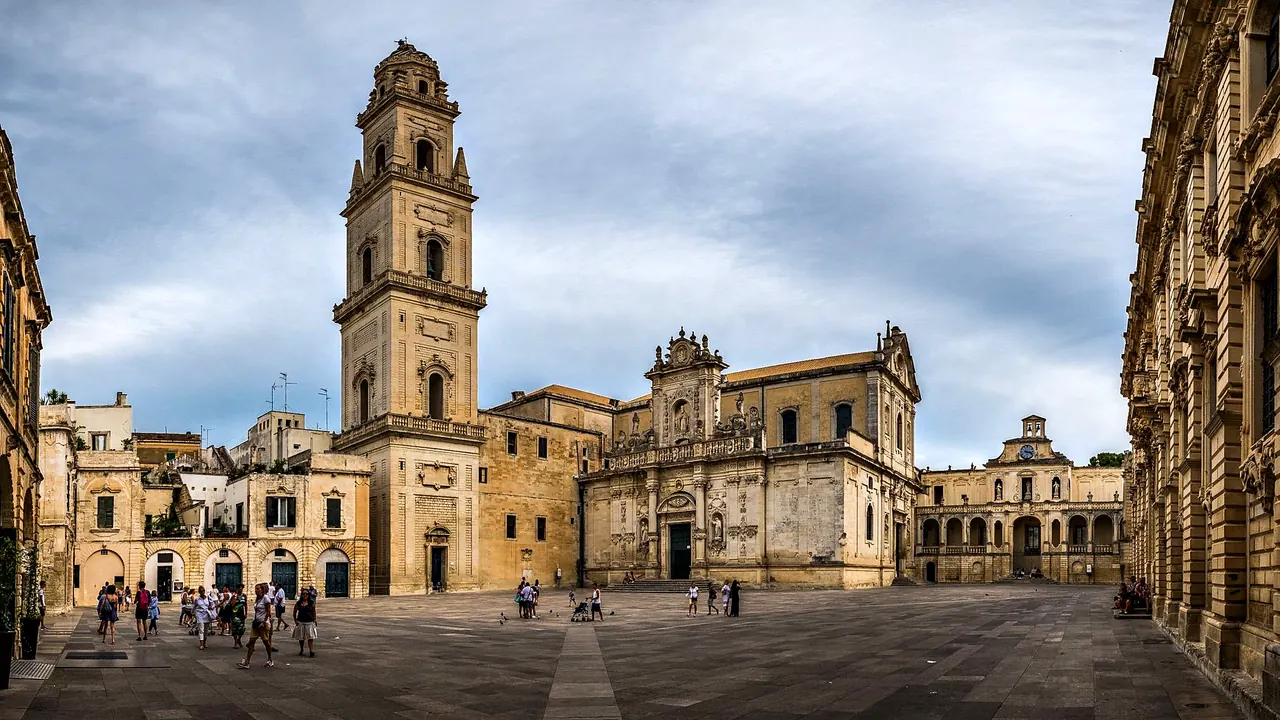
Both have old towns worth crossing a sea for, though they were built more than a thousand years apart. Lecce's appeal is the whole townscape: street after street of honey-coloured Baroque carving, Santa Croce and the enclosed Piazza del Duomo, with half a Roman amphitheatre sunk below the main square.
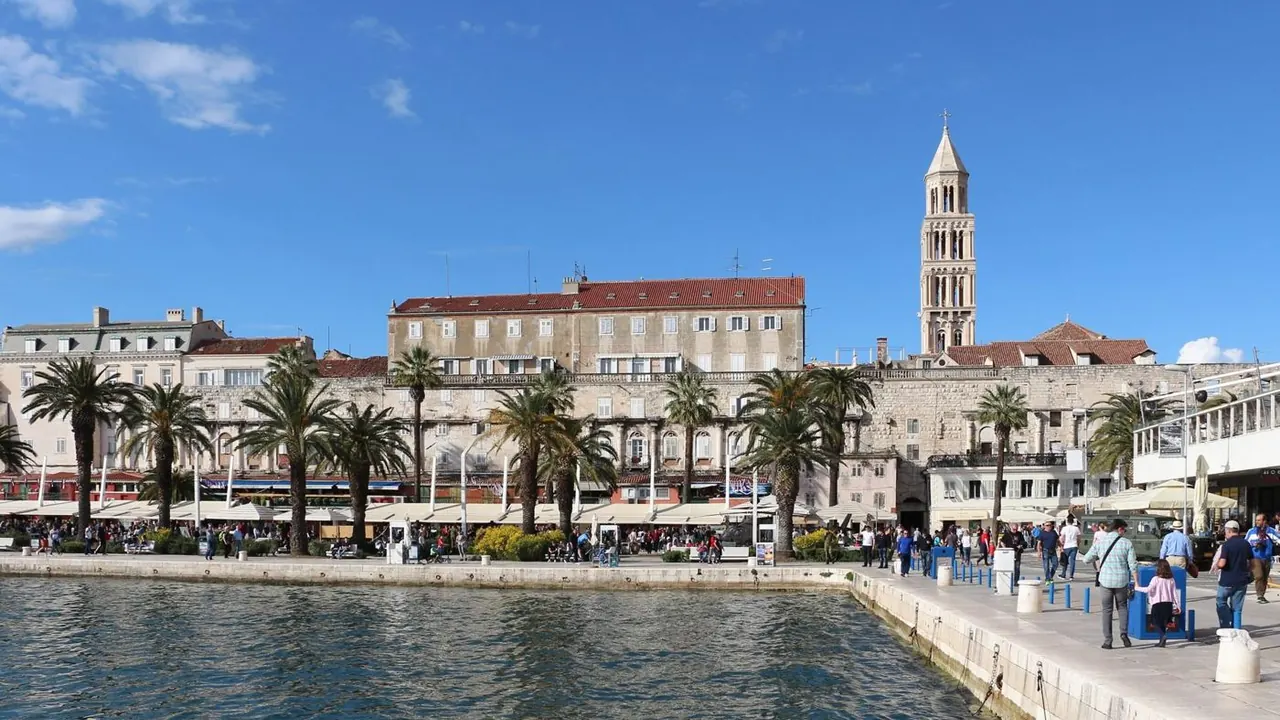
Split keeps most of its history in one place, Diocletian's Palace. It is a Roman emperor's residence that people still live in, with his mausoleum turned into a cathedral and vaulted halls underneath. The Meštrović Gallery gives Split the better single museum, while Lecce rewards longer, slower wandering.
Nightlife
Split has the livelier summer nights. Bars fill the palace alleys and stairways, and the beach bars and clubs around Bačvice stay open into the early hours, all within walking distance. In Lecce the evening is an aperitivo on the piazzas and wine bars in the lanes. Dancing there means driving to the coast near Gallipoli.
Outside summer the picture changes. Split's scene shrinks to a few bars from October to May, while Lecce's students keep the old town going at weekends for much of the year.
Nature & outdoors
Split is far better for the outdoors. Marjan's forest trails start at the edge of the old town, and Mosor and Kozjak have proper ridge walks. Biokovo rises above Makarska, the Cetina canyon at Omiš is used for rafting and canyoning, and the Krka waterfalls are about an hour away.
Lecce's countryside is a flat plain of olive groves, good for gentle cycling and not much else. Its outdoors is the coast: clifftop paths from Roca Vecchia towards Otranto, boat trips into sea caves, and birdwatching at Le Cesine and the Alimini lakes.
Day trips
Both are natural bases, but Split's day trips are easier and more varied. Trogir is about half an hour away and Šibenik about an hour, Salona and Klis Fortress are just outside town, and ferries take you to Hvar and Brač without a car.
Lecce has a strong list of its own: Otranto's cathedral mosaic, Gallipoli's island old town, Galatina's frescoes, and further north Ostuni and the trulli of Alberobello. Most of these, though, are far simpler with a hire car, and the Itria valley makes a long day.
Good for families
Both are relaxed places for children, and neither has a zoo or theme park. Lecce's advantage is sand: the shallow beaches around Porto Cesareo suit toddlers, and the old town's flat, traffic-free piazzas fill with families in the evening, though every beach day means a drive.
Split gives children more to do without a car. Bačvice is good for paddling, Marjan has room to run, and a ferry ride is often what they remember best. The palace's polished stone steps make harder work of a pushchair.
Getting around
Split is much easier without a car. The centre is compact and car-free, and the ferry port, bus station and railway station all sit together on the harbour, so you can walk from your room to a boat or a coach.
Lecce's old town is just as walkable, and flatter. Beyond it, though, the Salento's local trains are slow and the beach buses run only in summer. Most visitors end up hiring a car and parking outside the walls.
Shopping & style
Neither city is worth the trip for shopping. The difference is in what to bring home. In Lecce it is cartapesta saints and nativity figures from old-town workshops, small limestone carvings and Grottaglie ceramics. In Split it is browsing the Pazar market for figs, honey and brandy, then taking home Dalmatian wine and olive oil.
Affordability
Lecce is the cheaper stay for most of the year. Pastries, trattorias and local wine cost little, and bed and breakfasts in old palazzi are fairly priced. The exception is August, when the whole Salento gets expensive and a hire car adds to the bill.
In July and August, Split costs close to a large Western European city, and fish sold by weight on the waterfront and island ferries push the total higher. It is more reasonable in the shoulder months and in winter, but even then it rarely matches Lecce.
Live music & performing arts
Each has a modest theatre season and a folk tradition that is the real summer draw. Lecce's is pizzica, the fast tambourine dance played at village festivals and at the huge Notte della Taranta night in Melpignano each August.
Split's is klapa, unaccompanied harmony singing, often heard in the palace's domed vestibule, and the Split Summer Festival stages opera on the Peristyle. Split's open-air opera has the grander setting, while Lecce's music is earthier and made for dancing.
Wellness & relaxation
Neither city has a bathing tradition of its own, but Lecce has more within reach. The sulphur springs of Santa Cesarea Terme, in grottoes and pools on the sea cliffs, are under an hour away, and several old masserie on the plain now work as quiet country spas.
In Split, calm is more a habit than a place: fjaka, the long coffees on the Riva and the shade of Marjan's pine woods. Spas mostly mean hotel spas in the resorts east of the centre, and in midsummer the old town is loud enough that real rest means going out to an island.
When should you go?
Pick your month. The climate figures are measured averages, not a forecast.
Lecce in July
Split in July
Daytime high, °C
Rainfall in the month, mm
Where the figures come from
Lecce's temperatures are measured 38 km from the centre, at Brindisi.
Lecce has no rain gauge within 25 km of the centre, so its rainfall comes from a gridded climate dataset read at the city rather than from a gauge further away.
Temperature and rainfall are climate normals, averaged over the years shown. Lecce: 1991-2020 (sunshine 1981-2010) normals, Brindisi (38 km from centre). Split: 1991-2020 (sunshine 1971-2000, rainfall 1981-2010) normals, Split / Marjan (0.9 km from centre).
The two share a similar Adriatic year. Both are good for swimming from June to September, and the sea reaches about 25°C in August. July and August climb to about 30°C in Lecce and 31°C in Split, too hot for sightseeing at midday, so the streets are best in the morning and evening. Lecce is the drier and sunnier of the two in summer, and its spring is noticeably dry, which makes April and May good walking months there.
In both cities the rain sets in from September and peaks in November, when Split is the wetter, with 100mm. Split's spring is damper too. Winters are mild in both and a little warmer in Lecce, while the sea off Split holds its warmth slightly longer into late autumn.
Which traveller are you?
On an outdoors trip, Split is the clear choice. Marjan's trails begin at the edge of the old town and Mosor and Biokovo are there for ridge walks. You can raft the Cetina canyon or kayak and sail among the islands. Lecce has a flat plain and its coast.
For a trip on a tight budget, Lecce goes further. Pastries, osterie and local wine cost little, and rooms in old palazzi are fairly priced for most of the year. Split in July and August costs close to what a large Western European city charges.
On a relaxing and wellness trip, Lecce has more within reach. You can bathe in the sulphur grottoes of Santa Cesarea Terme, and old masserie on the plain have been turned into quiet spas. Split's old town gets loud on summer nights, so real rest there usually means going out to an island.
Before you go
| Measure | Lecce | Split |
|---|---|---|
| Official language | Italian | Croatian |
| Currency | Euro (EUR) | Euro (EUR) |
| Sockets | CFL230 V, 50 Hz | CF230 V, 50 Hz |
| Driving side | Right | Right |
| Time zone | UTC+1, UTC+2 in summer | UTC+1, UTC+2 in summer |
| Emergency number | 112 | 112 |
| Elevation | 49 m | 0 m |
| Main airport | Brindisi Airport (BDS)39 km from centre49 non-stop destinations | Split Saint Jerome Airport (SPU)12 km from centre69 non-stop destinations |
| Public holidays this year | 13 days | 14 days |
By the numbers
| Measure | Lecce | Split |
|---|---|---|
| City population | 94,783 | 160,577 |
| People per km² | 393 | - |
| Museums within 10 km | 11 | 11 |
| UNESCO World Heritage sites within 50 km | 0 | 4 |
| Swim season, months above 21 °C | 4 months | 4 months |
Where else could you go?
Every comparison below shares a destination with this one, so you can follow Lecce or Split somewhere new.