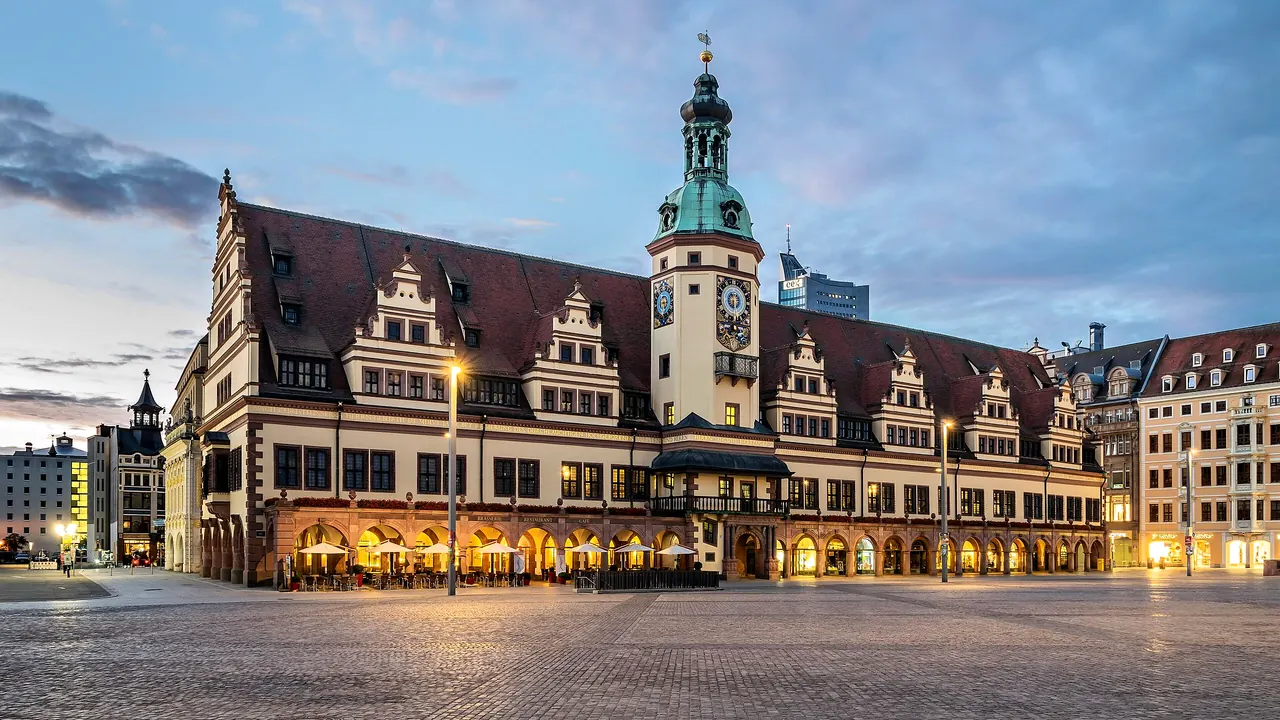
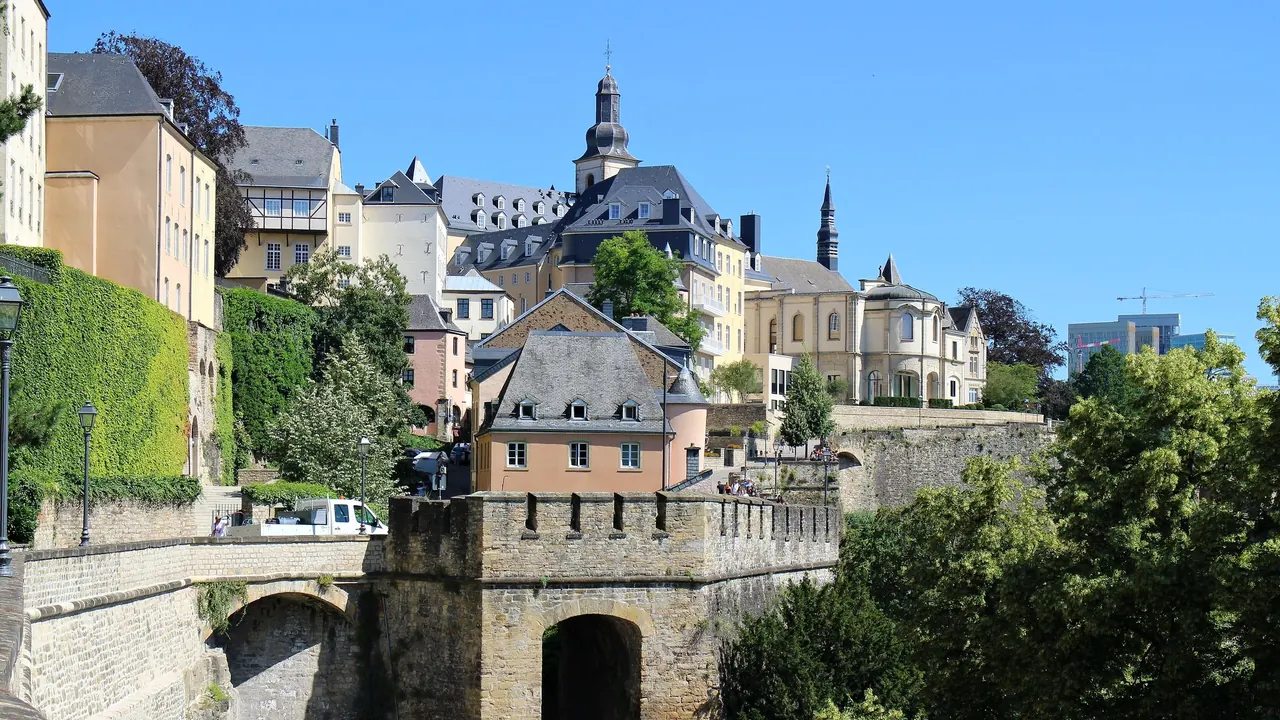
Photos: Leipzig by Krzysztof Golik, CC BY-SA 4.0, cropped; Luxembourg by Suicasmo, CC BY-SA 4.0, cropped.
Leipzig or Luxembourg?
Our verdict in twelve categories, each scored against the same fixed benchmark cities, and the climate month by month, so you can choose for your trip.
Choose Leipzig for
- prices
- nightlife
- live music and the arts
Leipzig suits travellers who plan their evenings around music, from the Gewandhaus and Bach's choir to all-night clubs in old factories. It costs much less to stay in, it's easy with children thanks to its zoo and lakes, and its central rail hub puts Dresden, Weimar and Berlin within day-trip range. Choose it for a lively, good-value city stay with plenty to fill the nights.
Choose Luxembourg for
- wellness
- nature and the outdoors
- food and drink
Luxembourg is the better pick for a quieter, scenic trip where the setting matters more than the programme. The fortress city sits above wooded gorges, the Müllerthal's rock passages and the Mondorf thermal spa are each about half an hour away, and Moselle crémant is poured everywhere. Free public transport makes it effortless to explore, but you pay heavily for the room and the restaurant table.
Scoreboard
Twelve categories on one fixed scale from 0 to 100. The shaded stretch is the gap between the two.
Your match
Pick a travel style or drag the sliders, and both match scores follow your weighting.
Wins on prices and nightlife with your weighting.
Wins on wellness and nature and the outdoors with your weighting.
What matters to you?
Category by category
What the scores mean for a trip.
Beaches & swimming
Neither city has a coast, but Leipzig's lakes are the better swimming. The flooded mines south of town, the Cospudener See and Markkleeberger See, have sandy shores and beach bars, and a tram or a bike ride through the forest gets you there, so a hot afternoon needs no planning.
Luxembourg's bathing spots are further away and simpler. The Upper Sûre reservoir is an hour north, and the gravel pits at Remerschen in the Moselle valley make the nearer outing. For most visitors the big indoor pools in town will be the everyday swim.
Food & drink
The two eat equally well, but in different ways. Leipzig is casual and good value: Saxon roasts with dumplings, sour Gose beer, old coffee houses and the brunch cafés and beer gardens of the Südvorstadt and Plagwitz. Fine dining is scarce.
Luxembourg is the reverse. French cooking leads a serious fine-dining scene, Portuguese and Italian neighbourhood places fill in, and crisp Moselle Riesling and crémant come by the glass. Cheap, casual meals are harder to find, so lunch is when to eat out.
Culture & sights
Both reward two or three days, but they tell different stories. Leipzig's sights are about people and events: Bach's grave in the Thomaskirche, the Nikolaikirche where the 1989 revolution started, the Stasi headquarters at the Runde Ecke and the trade-fair arcades around them.
Luxembourg's draw is its site. The UNESCO-listed fortress wraps around a plateau above the gorges, you can walk the Bock casemates through the rock, and the Corniche looks down on the stone houses of the Grund. MUDAM on Kirchberg adds contemporary art.
Nightlife
Leipzig is by far the better night out. Its student population and empty industrial buildings gave it an electronic club scene in old factories, with weekend nights running past dawn and relaxed doors. The Karli and Connewitz are lined with bars, and the converted mills of Plagwitz have bars along the canals.
Luxembourg is smaller and earlier. The Rives de Clausen and the pubs of the Grund liven up on Thursdays and Fridays with young professionals, but many residents leave at weekends. A glass of crémant on a terrace is the usual evening.
Nature & outdoors
Luxembourg has more varied landscape close at hand. Wooded gorges run through the city itself, the mossy sandstone passages of the Müllerthal are half an hour away, and the Ardennes hills and Moselle vineyard terraces are not much further.
Leipzig is green but flat. The Auwald floodplain forest and the canals you can paddle from Plagwitz make good half days, as do the lakes for cycling and stand-up paddling. For hills, though, you take a train to Saxon Switzerland or the Harz.
Day trips
Both are excellent bases, and the difference is where the trains go. From Leipzig, nearly every trip stays in central Germany: Dresden and Weimar are about an hour away, Wittenberg, Naumburg and Dessau's Bauhaus fill other days, and Berlin is close enough for a day.
From Luxembourg, the trips cross borders. Roman Trier and Metz, with its Gothic cathedral, are both under an hour away, Nancy is a bit further, and Vianden's castle, Echternach and the Moselle wine villages give you a closer slow afternoon.
Good for families
Leipzig gives children more to do. The zoo, with its covered Gondwanaland tropical hall, works in any weather, and in summer the Belantis theme park and the sandy shallows of the lakes extend a stay. The flat centre and easy trams help with pushchairs.
Luxembourg is calm, safe and easy with a buggy, and the fortress tunnels feel like an adventure. Beyond those and the small Parc Merveilleux, though, there's no zoo or theme park, so it suits a short family stay rather than a week.
Getting around
Both are easy without a car, for different reasons. Luxembourg's trams, buses and trains are free across the whole country. Public lifts and a funicular connect the upper town, the river quarters and Kirchberg, which you need because the city is built on several levels.
Leipzig is flat, so walking and cycling come naturally, and its trams and the S-Bahn reach the lakes. Regional and long-distance trains leave from the same huge station at the edge of the old town.
Shopping & style
Neither city is a shopping destination, but they cater to different tastes. Leipzig's covered trade-fair arcades are mostly chains. The interesting finds are in Plagwitz, with vintage clothes and record shops on Karl-Heine-Strasse and the galleries at the Spinnerei, a former cotton mill.
Luxembourg leans upmarket, with luxury and premium brands along the Grand-Rue. The best things to take home are the porcelain tableware the country has made for centuries and a few bottles of Moselle crémant.
Affordability
This is where the two differ most. Leipzig's rooms are cheap by German standards, even within walking distance of the old town. Except during the big trade-fair weeks, a stay there costs a fraction of what it does in Luxembourg, though restaurant meals are priced at German levels.
Luxembourg's hotels are priced for business travellers and its restaurants are well above the Western European norm. Free transport, free museums and lunch menus soften the bill, and some visitors stay in Trier or Metz and come in by train.
Live music & performing arts
Leipzig's music has a deep local tradition. The Gewandhaus Orchestra and the opera house face each other across Augustusplatz, the Thomanerchor sings Bach in his own church, and the Bachfest fills the city's churches each June. Add operetta, cabaret and the huge Wave-Gotik-Treffen at Whitsun, and few evenings are empty.
Luxembourg's Philharmonie has fine acoustics and its own orchestra, and the Grand Théâtre and Neimënster's summer concerts in the Grund are worth a look. Most of the programme comes from elsewhere, though.
Wellness & relaxation
Luxembourg is the better choice for a restful stay, mainly because of Mondorf-les-Bains. Its thermal spring and park of pools and saunas are half an hour away and make an easy day out. The quiet walks through the Pétrusse valley help too.
Leipzig has saunas, pool complexes and hotel spas, but its spa towns are a separate trip. It relaxes you in other ways, with long walks through the floodplain forest and slow Sundays.
When should you go?
Pick your month. The climate figures are measured averages, not a forecast.
Leipzig in July
Luxembourg in July
Daytime high, °C
Rainfall in the month, mm
Temperature and rainfall are climate normals, averaged over the years shown. Leipzig: 1991-2020 (sunshine 1961-1990, rainfall 1961-1990) normals, Leipzig-Holzhausen (5.7 km from centre). Luxembourg: 1991-2020 normals, Luxembourg / Luxembourg (6.3 km from centre).
The two cities have almost the same temperatures through the year. Both are cold from December to February, with daytime highs around 4°C, which is better for concert halls and museums than for long walks. They warm up through May, and July and August are the only months warm enough for an afternoon at the lakes, with Leipzig peaking at about 25°C and Luxembourg a degree cooler. Late spring and September are the most comfortable times for walking around either city.
Where they differ is rain and sun. Leipzig is drier in every month except April, and its wettest weather comes in early and late summer. Luxembourg has steady rain in every season, heaviest in December at 89mm, so a winter visit there is often damp as well as cold. In return, Luxembourg gets clearly more sunshine from spring to early autumn, about 258 hours in July, which makes its summer and September especially good for the gorges and vineyard paths. Leipzig's winter days are short and grey, so plan that season around indoor evenings.
Which traveller are you?
On a trip on a tight budget, Leipzig is the clear choice. Central rooms cost far less than in Luxembourg, beer and simple food in the student districts are fair, and concert tickets are reasonable. In Luxembourg, the free transport doesn't make up for its hotel and restaurant bills.
For an outdoors trip, Luxembourg wins. You can walk wooded gorges without leaving the city centre, the Müllerthal's sandstone trails are half an hour away, and the Ardennes and the Moselle cycle paths lie beyond. Leipzig's flat floodplain forest and canoe routes are pleasant, but real hiking there means a two-hour train ride.
On a culture and arts trip built around music, Leipzig is hard to beat. The Gewandhaus Orchestra, the opera house, the Thomanerchor in Bach's own church and the Bachfest give it a living tradition. Luxembourg's Philharmonie is excellent, but most of what plays there is on tour.
Before you go
| Measure | Leipzig | Luxembourg |
|---|---|---|
| Official language | German | French, German, Luxembourgish |
| Currency | Euro (EUR) | Euro (EUR) |
| Sockets | CF230 V, 50 Hz | CF230 V, 50 Hz |
| Driving side | Right | Right |
| Time zone | UTC+1, UTC+2 in summer | UTC+1, UTC+2 in summer |
| Emergency number | 112 | 112 |
| Elevation | 110 m | 300 m |
| Main airport | Leipzig/Halle Airport (LEJ)13 km from centre20 non-stop destinations | Luxembourg-Findel International Airport (LUX)6 km from centre115 non-stop destinations |
| Public holidays this year | 11 days | 12 days |
By the numbers
| Measure | Leipzig | Luxembourg |
|---|---|---|
| City population | 615,932 | 137,678 |
| People per km² | 2,068 | 2,663 |
| Museums within 10 km | 40 | 19 |
| UNESCO World Heritage sites within 50 km | 1 | 4 |
Where else could you go?
Every comparison below shares a destination with this one, so you can follow Leipzig or Luxembourg somewhere new.
- Dresdenvs Leipzig
- Karlovy Varyvs Leipzig
- Maastrichtvs Luxembourg
- Berlinvs Leipzig
- Colognevs Luxembourg
- Strasbourgvs Luxembourg