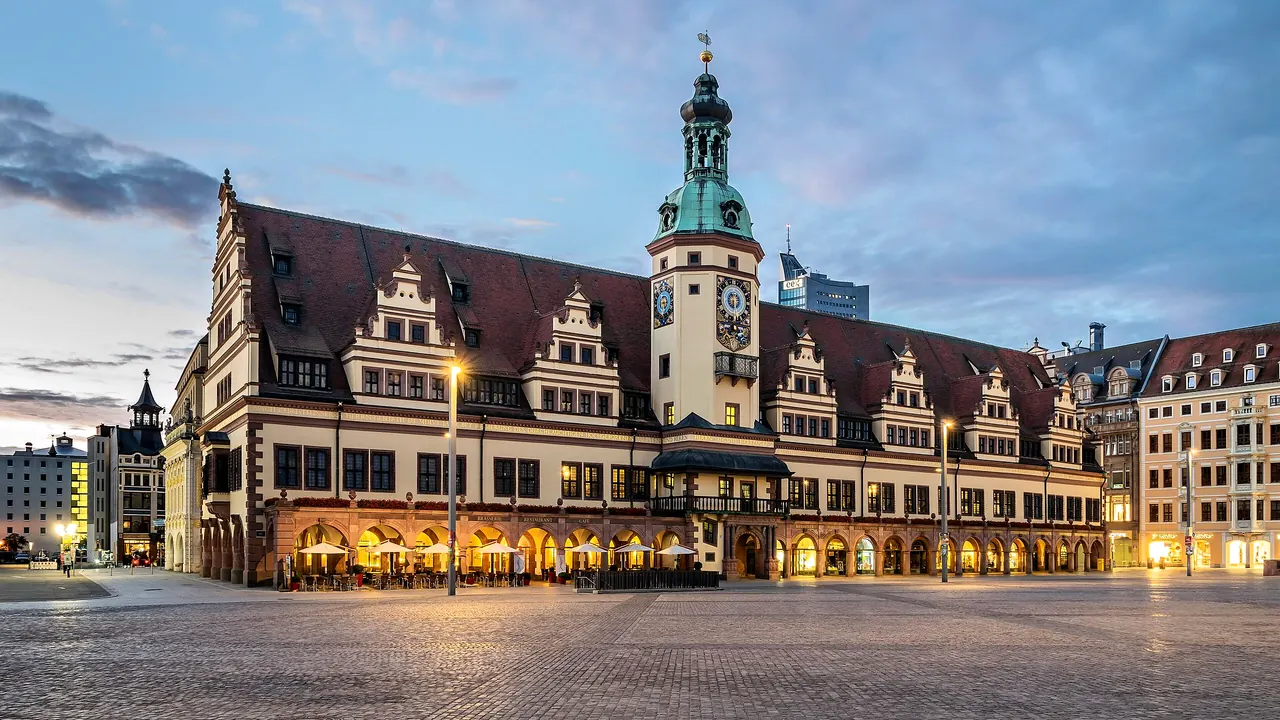
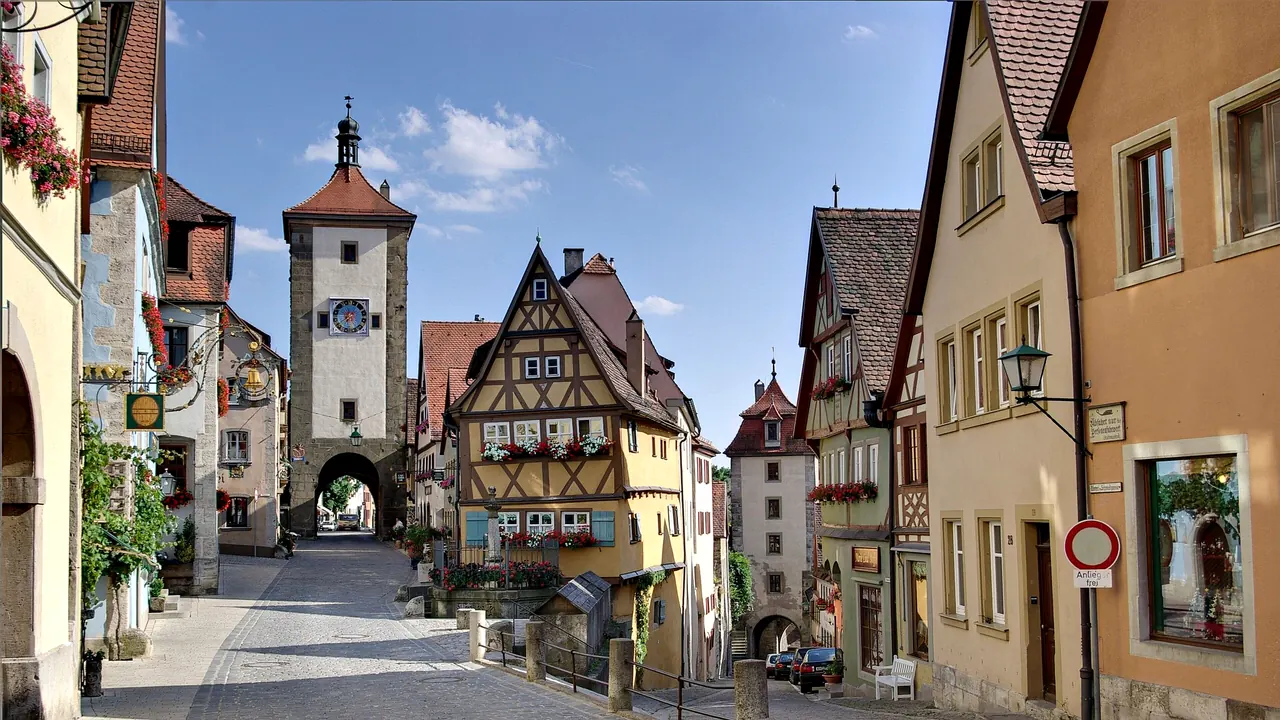
Photos: Leipzig by Krzysztof Golik, CC BY-SA 4.0, cropped; Rothenburg ob der Tauber by Berthold Werner, Public domain.
Leipzig or Rothenburg ob der Tauber?
Our verdict in twelve categories, each scored against the same fixed benchmark cities, and the climate month by month, so you can choose for your trip.
Choose Leipzig for
- live music and the arts
- nightlife
- beaches
Leipzig is the choice for a city with more going on. Its music life, from the Gewandhaus Orchestra to the Thomanerchor, has no real match in a small Franconian town, and its industrial-era clubs, canal-side bars in Plagwitz and student streets around the Karli keep evenings busy. It also suits anyone who wants to travel without a car, because Dresden, Weimar, Erfurt and even Berlin are easy train rides from the main station.
Choose Rothenburg ob der Tauber for
- wellness
- culture and sights
Rothenburg ob der Tauber rewards a slower and narrower kind of trip. The appeal is walking the ramparts and lanes of an almost untouched medieval walled town. It is best once the day visitors have gone, when the streets go quiet and there is little to do besides dinner in a timbered inn. It suits couples and drivers touring the Romantic Road, and anyone who prefers silent lanes at night to a late night out.
Scoreboard
Twelve categories on one fixed scale from 0 to 100. The shaded stretch is the gap between the two.
Your match
Pick a travel style or drag the sliders, and both match scores follow your weighting.
Wins on live music and the arts and nightlife with your weighting.
Wins on wellness and culture and sights with your weighting.
What matters to you?
Category by category
What the scores mean for a trip.
Beaches & swimming
Neither town is a beach destination, but only Leipzig offers proper swimming. The flooded mines to the south, the Cospudener See and Markkleeberger See, have sandy shores and clear water, and you can get there by tram or by bike through the forest. On a hot day they make a real afternoon out.
In Rothenburg, swimming means the town's outdoor pool, or an hour's drive to the grassy bathing areas of the Franconian lake district.
Food & drink
Leipzig eats better and more widely. Alongside Saxon roasts and the marzipan Leipziger Lerche, there is salted Gose beer and a coffee-house tradition that goes back to the early eighteenth century. The casual international cooking and beer gardens of the Südvorstadt and Plagwitz give you plenty of choice for a few days.
Rothenburg keeps to hearty Franconian food: Schäufele, bratwurst, and Silvaner poured from the squat Bocksbeutel bottle. Many kitchens around the Marktplatz cook for coach parties. The rewarding meals are in family-run guesthouses and wine taverns pouring Tauber valley wine.
Culture & sights
Both repay a short stay about equally, but in very different ways. Leipzig's sights tell a long city story: Bach's grave in the Thomaskirche, the Nikolaikirche where the 1989 revolution gathered pace, the former Stasi headquarters, and solid museums such as the Grassi collections.
In Rothenburg the town itself is the exhibit. You walk the covered wall walk, look down the lanes at the Plönlein, and go into St Jakob's to see Riemenschneider's carved Holy Blood Altar. It is a single, complete medieval picture rather than layers of history.
Nightlife
Leipzig is a town for staying out late. Its club culture grew up among students in old factories and warehouses, electronic music leads, the doors are relaxed, and weekend nights run well past dawn. Bars line the Karli, Connewitz further south is the alternative end, and Lindenau has canal-side bars in converted mills, though outside term time and away from weekends the city can feel quiet.
Rothenburg is a place for an early night. An evening out means the night watchman's lantern tour and a glass of wine in an inn, and the lanes are mostly silent by eleven. For anything livelier you have to go to Würzburg or Nuremberg.
Nature & outdoors
Both are gentle green places without hills to climb, but Leipzig has more to do outdoors. The Auwald floodplain forest runs through the middle of the city, you can canoe the canals from Plagwitz towards the centre, and the lake district adds sailing, paddleboarding and a white-water course.
Rothenburg's outdoors starts at the town walls. Paths drop into the Tauber valley past mills and meadows, and the river's well-known family cycle path heads off through vineyards. It is lovely countryside for walking, at its best in blossom time and autumn colour, but it has less variety.
Day trips
Leipzig is the stronger base, mainly because the trains do the work. Dresden, Weimar, Erfurt, Halle, Wittenberg and Berlin can all be reached directly from one station, with no car needed.
Rothenburg's surroundings are just as rich in their own way: Dinkelsbühl, Nördlingen in its crater, Schwäbisch Hall, and Würzburg's Residenz along the Romantic Road. But the branch line and sparse buses mean you really need a car to reach them.
Good for families
Leipzig is the easier place for children over several days. The zoo is among Europe's best, its tropical hall works in any weather, and summer adds shallow lake beaches and the Belantis theme park.
Rothenburg is enchanting for a day or two. Children can walk the ramparts, follow the night watchman, and older ones can shudder at the shame masks in the Crime Museum. After that there is little made for them, and the cobbles and steep valley paths are hard going with a pushchair.
Getting around
Both centres take about a quarter of an hour to cross on foot, and the difference begins beyond that. Leipzig is flat, with trams and an S-Bahn line reaching the outer districts and the lakes, many cycle lanes, and long-distance trains from the same station.
Rothenburg's car-free old town is a pleasure to walk, apart from the cobbles and the steep climb back from the valley. Leaving it means changing trains at Steinach or waiting for infrequent buses, so drivers have a clear advantage.
Shopping & style
Leipzig gives you more ordinary and more individual shopping. The covered trade-fair arcades in the old town are mostly chains. The interesting part is in the west: vintage and record shops on Karl-Heine-Strasse, and the galleries of the Spinnerei cotton mill.
Rothenburg sells one thing very well: Christmas. Its shops offer baubles, nutcrackers and Erzgebirge carvings all year, and the Christmas market on the Marktplatz is famous for its atmosphere. Beyond those and the cuckoo clocks and pewter, there is almost no fashion or everyday shopping.
Affordability
Neither is a budget destination, but Leipzig's rooms go further. There is plenty of mid-range choice within walking distance of the old town, except during the big trade fairs, when rates climb sharply.
Rothenburg adds a tourist premium to normal small-town German prices, especially for guesthouses inside the walls and meals near the Marktplatz in December and on summer weekends. Staying in a village outside the walls brings the cost down noticeably.
Live music & performing arts
Leipzig is in another league here. The Gewandhaus Orchestra and the opera house face each other across Augustusplatz, and the Thomanerchor sings Bach in his own church. The Bachfest each June and the goth crowds of the Wave-Gotik-Treffen at Whitsun add highlights to the year.
Rothenburg's stage is mostly its own history. There is the costumed Meistertrunk play, a small summer open-air theatre, and organ concerts in St Jakob's, while most evenings have no show at all.
Wellness & relaxation
Rothenburg is slightly the more restful of the two, and it is better placed for spas. Once the coaches leave, the walls and valley paths fall silent, and Bad Windsheim's salt-water float pool and historic Bad Mergentheim are both within an hour.
In Leipzig, wellness means modern sauna complexes and a few lakeside saunas. Its calm comes from walks under the oaks of the Auwald and an unhurried Sunday pace.
When should you go?
Pick your month. The climate figures are measured averages, not a forecast.
Leipzig in July
Rothenburg ob der Tauber in July
Daytime high, °C
Rainfall in the month, mm
Where the figures come from
Rothenburg ob der Tauber's sunshine is measured 27 km from the centre, at Feuchtwangen-heilbronn.
Temperature and rainfall are climate normals, averaged over the years shown. Leipzig: 1991-2020 (sunshine 1961-1990, rainfall 1961-1990) normals, Leipzig-Holzhausen (5.7 km from centre). Rothenburg ob der Tauber: 1991-2020 normals, Rothenburg ob der Tauber (0.9 km from centre).
The two towns share almost the same temperatures through the year. Both are cold and grey from November to February, warm up through spring, and reach about 25°C by day in July and August. That is warm enough in Leipzig for the flooded-mine lakes south of town, which are really a July and August pleasure. May to September is the comfortable stretch for walking in both, and Rothenburg's valley paths are at their prettiest in spring and autumn.
Where they differ is sun and rain. Rothenburg gets clearly more sunshine in summer, around 246 hours in July against 206 in Leipzig, but it is also damper in the cool months, with steady rain from autumn right through winter. Leipzig is drier in winter, and its wettest months fall in early and late summer, so a June or August visit there may bring the odd heavy shower.
Which traveller are you?
For a food and nightlife trip, Leipzig wins easily. Days can drift from a long brunch to a beer garden and on to a bar crawl, and a weekend night can end after sunrise. Rothenburg offers a good dinner, a glass of wine and an early night.
On a family trip with children, Leipzig holds up better over a week. Whatever the weather there is an answer, and the trams make outings easy. Rothenburg feels like stepping into a picture book, but most families finish it within two days.
On a relaxing and wellness trip, Rothenburg has the edge. A stay there sets an unhurried rhythm of slow walks and long dinners, with a proper thermal bath an easy drive away. Leipzig can be calm, but it is a city, and its spas are ordinary.
Before you go
| Measure | Leipzig | Rothenburg ob der Tauber |
|---|---|---|
| Official language | German | German |
| Currency | Euro (EUR) | Euro (EUR) |
| Sockets | CF230 V, 50 Hz | CF230 V, 50 Hz |
| Driving side | Right | Right |
| Time zone | UTC+1, UTC+2 in summer | UTC+1, UTC+2 in summer |
| Emergency number | 112 | 112 |
| Elevation | 110 m | 430 m |
| Main airport | Leipzig/Halle Airport (LEJ)13 km from centre20 non-stop destinations | Nuremberg Airport (NUE)66 km from centre56 non-stop destinations |
| Public holidays this year | 11 days | 12 days |
By the numbers
| Measure | Leipzig | Rothenburg ob der Tauber |
|---|---|---|
| City population | 615,932 | 11,331 |
| People per km² | 2,068 | 272 |
| Museums within 10 km | 40 | 6 |
| UNESCO World Heritage sites within 50 km | 1 | 2 |
Where else could you go?
Every comparison below shares a destination with this one, so you can follow Leipzig or Rothenburg ob der Tauber somewhere new.
- Nurembergvs Rothenburg ob der Tauber
- Bambergvs Rothenburg ob der Tauber
- Stuttgartvs Rothenburg ob der Tauber
- Dresdenvs Leipzig
- Heidelbergvs Rothenburg ob der Tauber
- Karlovy Varyvs Leipzig