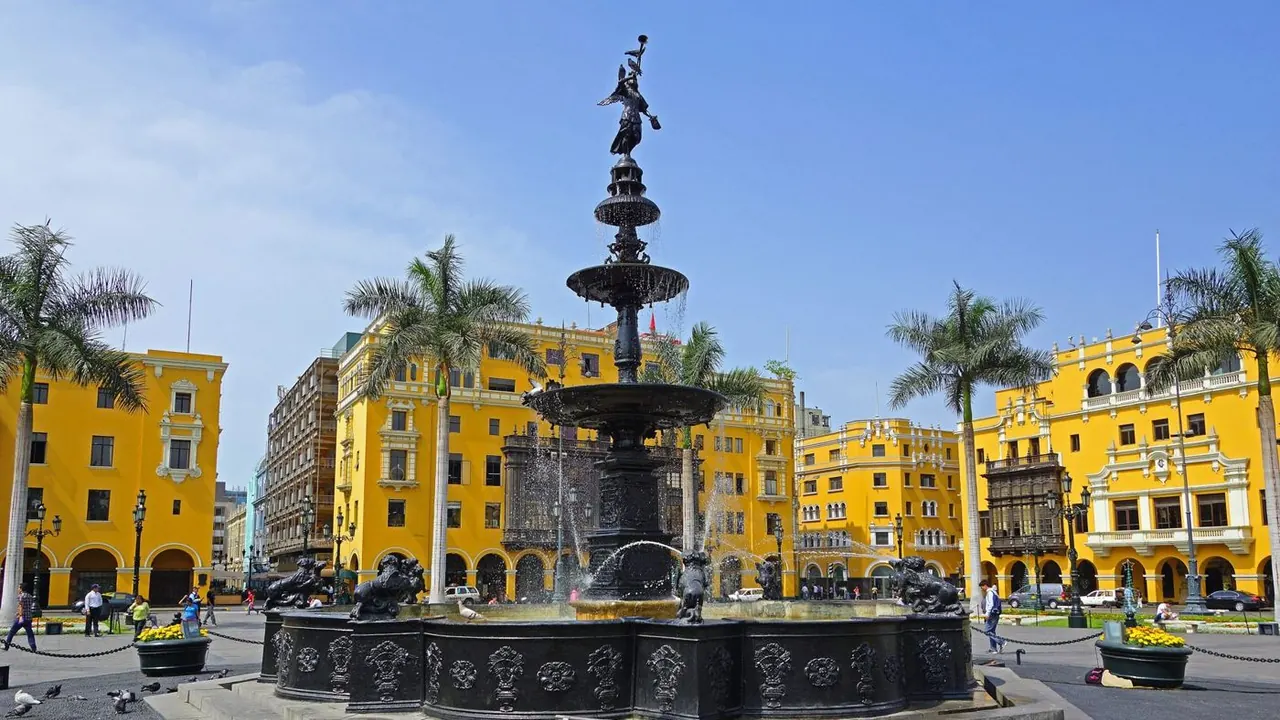
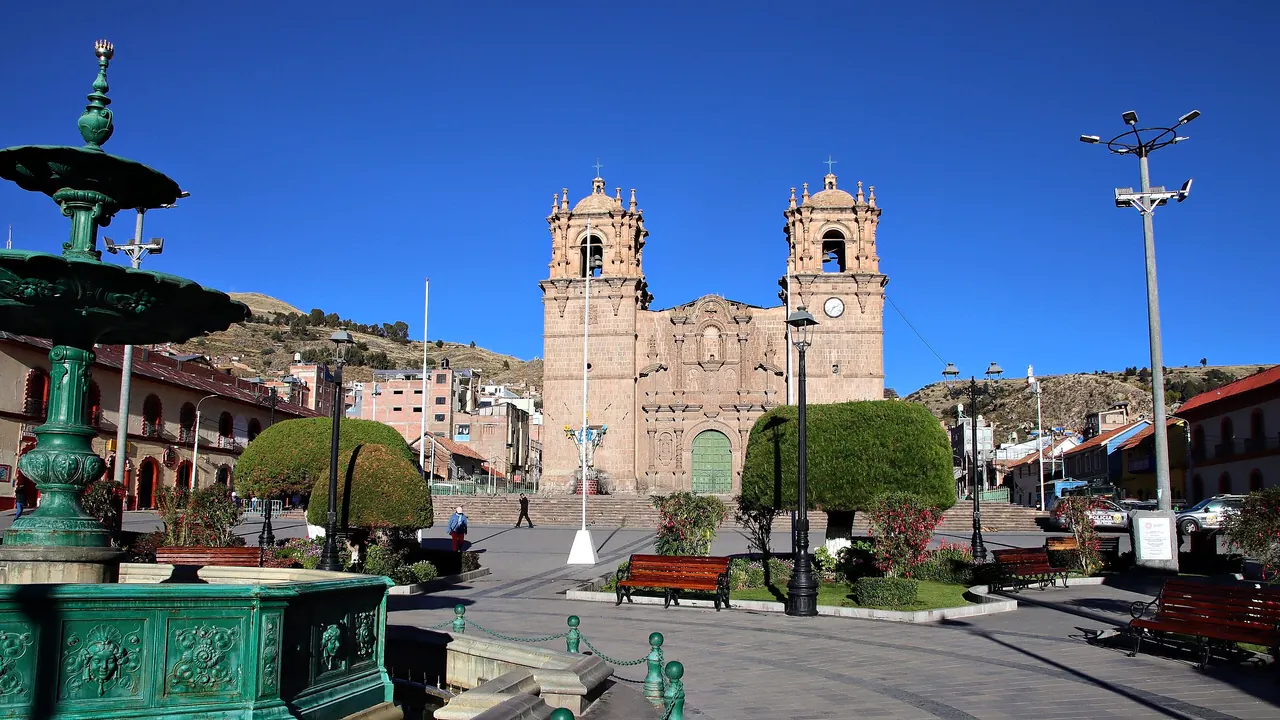
Photos: Lima by James C., CC BY-SA 2.0, cropped; Puno by Draceane, CC BY-SA 4.0, cropped.
Lima or Puno?
Our verdict in twelve categories, each scored against the same fixed benchmark cities, and the climate month by month, so you can choose for your trip.
Choose Lima for
- food and drink
- nightlife
- beaches
Lima is the choice for a trip built around the table and the evening. Its cooking draws in the coast, the Andes and the Amazon, and its viceregal centre and pre-Columbian museums give the days a backbone. Barranco then keeps you out late. It also copes far better with children and with anyone who wants creature comforts, provided you accept the traffic and stay in Miraflores or Barranco.
Choose Puno for
- day trips
- nature and the outdoors
- prices
Puno makes sense for travellers who come for the landscape and the lake. The town itself is plain and quickly seen, but it is the gateway to the reed islands, Taquile's weavers and the burial towers of Sillustani, all under a wide altiplano sky. It is cheap, quiet after dinner and demanding at altitude, so it suits fit adults on a slower overland route rather than families or food lovers.
Scoreboard
Twelve categories on one fixed scale from 0 to 100. The shaded stretch is the gap between the two.
Your match
Pick a travel style or drag the sliders, and both match scores follow your weighting.
Wins on food and drink and nightlife with your weighting.
Wins on day trips and nature and the outdoors with your weighting.
What matters to you?
Category by category
What the scores mean for a trip.
Beaches & swimming
Neither city is a beach destination, but Lima at least has the Pacific. Below its cliffs the Costa Verde offers pebbles and surf, and the sandy coves around Punta Hermosa and San Bartolo, about an hour south, make a decent summer day out.
Puno's waterfront is a working lake port at 3,800m, with water that stays cold enough to make any swim a brief dare. A dip off an island cove on a sunny afternoon is the most it offers.
Food & drink
This is the widest gap between the two. Lima is one of the great eating cities of the Americas, and its range runs from market stalls in Surquillo and lunchtime ceviche to chifa, Nikkei and tasting menus built on Peru's ecosystems, with pisco sours to match.
Puno eats simply and well enough: lake trout, quinoa stews, chairo soup and hot drinks at the Mercado Central counters. Beyond the traveller restaurants on Jirón Lima there is little depth, and most visitors treat it as a refuelling stop.
Culture & sights
Lima has far more to see. The UNESCO-listed centre around the Plaza de Armas, San Francisco's catacombs, the Larco Museum's pre-Columbian gold and adobe pyramids such as Huaca Pucllana among the apartment blocks can fill several days.
Puno's own sights fit into an afternoon: the baroque cathedral, the view from Kuntur Wasi, a couple of small museums and the Yavari steamship. Its living culture lies out on the lake rather than in the town.
Nightlife
Lima has a real night out. Barranco's mansion bars and clubs fill from midnight, Miraflores adds a more polished scene around Parque Kennedy, and the dancing leans towards salsa and cumbia.
Puno's evenings usually end with dinner and a pisco sour on Jirón Lima. The cold, the altitude and early boat departures see to that, except during the festival season, when the streets take over.
Nature & outdoors
Puno's landscape is the stronger draw. Lake Titicaca runs to the horizon with the snow peaks of the Cordillera Real beyond, and its reed-bed reserve shelters ibis and the flightless Titicaca grebe. Kayaking and village walks on the Capachica peninsula are the main ways out into it, though thin air limits how much you can do.
Lima's outdoors faces the sea and is gentler: cycling the clifftop malecón, paragliding from its parks, surfing below, and swimming with sea lions at the Palomino Islands. Inland its desert hills stay brown except when the winter fog greens the lomas.
Day trips
Puno is built for excursions. The floating Uros islands are a short boat ride away, Taquile and Amantaní take longer crossings, and the stone towers of Sillustani and the colonial churches of Juli are easy road trips across the altiplano.
Lima has fewer good options within a day. Pachacamac's adobe temples and the old port of Callao are worthwhile, but Caral, Paracas and the Ica vineyards are far enough away to need an overnight stay.
Good for families
Lima is the far easier place with children. Parque de las Leyendas pairs a zoo with ruins, the fountains of the Circuito Mágico del Agua light up at night, and the cliffside playgrounds and summer beaches fill the gaps. The traffic and long distances are the main strain.
Puno is genuinely hard on small children: altitude sickness, freezing nights and poorly heated rooms. Apart from climbing a reed watchtower on the Uros islands, there is little for them.
Getting around
Puno's advantage is scale. The plaza, Jirón Lima, the market and the port are a few minutes apart, and boats and colectivos reach everything else. The catch is the climb back up from the lake, which leaves newcomers short of breath.
Lima is pleasant on foot only within Miraflores and Barranco. Beyond them, the Metropolitano is the quick way to the centre, and otherwise you rely on ride-hailing through some of South America's slowest traffic.
Shopping & style
Both cities sell alpaca, but Lima gives you more choice and more certainty about quality. Specialist knitwear shops in Miraflores and San Isidro, the Petit Thouars craft markets with goods from every region, and Barranco's design shops give it the edge, along with large malls for everything else.
Puno's port market is mostly sweaters, ponchos and chullo hats of uneven quality. Its real strength is buying knitting and weaving directly from the makers on Taquile.
Affordability
Lima is good value for a capital. Set lunches in neighbourhood restaurants, ride-hailing across town and most museum entries cost little, and a mid-range room in Miraflores or Barranco undercuts most Western capitals. The bill climbs at the top end, where the celebrated tasting menus charge international prices and the upscale cevicherías and cocktail bars of Miraflores add up quickly.
Puno is cheaper still for everyday spending, with simple guesthouses in the centre, colectivos and set lunches all costing very little. Its pricier end is real, though. The handful of comfortable lakeside hotels are a clear step up from the family guesthouses, and the traveller restaurants on Jirón Lima charge noticeably more than the places townspeople use.
Live music & performing arts
Lima has more to offer through the year. Barranco's peñas, with música criolla and Afro-Peruvian cajón, go on late and get the audience dancing, while the Gran Teatro Nacional and the Teatro Municipal stage the symphony, ballet and opera.
Puno's moment is February, when the Candelaria festival fills the streets with masked dancers, brass bands and panpipes for days on end. For the rest of the year it offers dinner shows of Andean music.
Wellness & relaxation
Neither city is built for rest, but Miraflores and San Isidro at least have hotel spas, day spas and massage studios. An early walk or yoga session in the clifftop parks brings some calm above the Pacific before the traffic starts.
In Puno, pampering stops at a massage in one of the better lakeside hotels, and the thin air makes the first days tiring rather than restful. Its quiet is of a different kind: dusk on the islands, or an hour in the sun with coca tea while your body adjusts.
When should you go?
Pick your month. The climate figures are measured averages, not a forecast.
Lima in July
Puno in July
Daytime high, °C
Rainfall in the month, mm
Where the figures come from
Puno's temperatures are measured 42 km from the centre, at Juliaca.
Puno has no rain gauge within 25 km of the centre, so its rainfall comes from a gridded climate dataset read at the city rather than from a gauge further away.
Temperature and rainfall are climate normals, averaged over the years shown. Lima: 1991-2020 normals, Lima-Callao / Aerop. Internacional Jorgechavez (10.9 km from centre). Puno: 1991-2020 normals, Juliaca (42.3 km from centre).
Lima barely sees rain at any time of year, so what changes there is warmth and light. From December to April afternoons reach about 27°C, the Pacific warms to around 22°C and the southern beaches are at their liveliest. From June to October a grey ceiling settles over the city, the sun all but disappears and the days stay cool. That is still fine for walking the streets, but it is dull for the coast.
Puno's daytime temperature hardly moves, staying around 18°C in every month, but its rainfall swings hard. December to March is the wet season, peaking at about 169mm in February, while May to August is almost dry, with clear days and freezing nights. The two complement each other: Lima is at its best during Puno's rains, and Puno's crisp dry season falls in Lima's grey winter.
Which traveller are you?
On a food and nightlife trip, Lima is the clear pick. Cevicherías at lunch, chifa and Nikkei kitchens, anticucho carts and celebrated tasting menus fill the days, and Barranco's bars and clubs run until dawn. Puno's trout dinners and early nights cannot compete.
For an outdoors trip, Puno wins. Lake Titicaca, the totora reed beds with their rare grebes, kayaking off the Capachica peninsula and steep island trails beat Lima's clifftop malecón and sea-lion boat trips, as long as you allow time for the altitude.
On a tight budget, Puno stretches money further. Family guesthouses, market breakfasts, tricycle taxis and shared boats to the islands all cost very little. Lima is good value too, but its sprawl and famous restaurants make overspending much easier.
Before you go
| Measure | Lima | Puno |
|---|---|---|
| Official language | Spanish, Aymara, Quechua | Spanish, Aymara, Quechua |
| Currency | Sol (PEN) | Sol (PEN) |
| Sockets | ABC220 V, 60 Hz | ABC220 V, 60 Hz |
| Driving side | Right | Right |
| Time zone | UTC-5 | UTC-5 |
| Emergency number | 111 or 911 | 111 or 911 |
| Elevation | 154 m | 3,830 m |
| Main airport | Jorge Chávez International Airport (LIM)9 km from centre61 non-stop destinations | Inca Manco Capac International Airport (JUL)44 km from centre1 non-stop destination |
| Public holidays this year | 17 days | 17 days |
By the numbers
| Measure | Lima | Puno |
|---|---|---|
| City population | 9,943,800 | 128,637 |
| People per km² | 3,721 | - |
| Museums within 10 km | 47 | 1 |
| UNESCO World Heritage sites within 50 km | 2 | 1 |
| Swim season, months above 21 °C | 2 months | - |
Where else could you go?
Every comparison below shares a destination with this one, so you can follow Lima or Puno somewhere new.