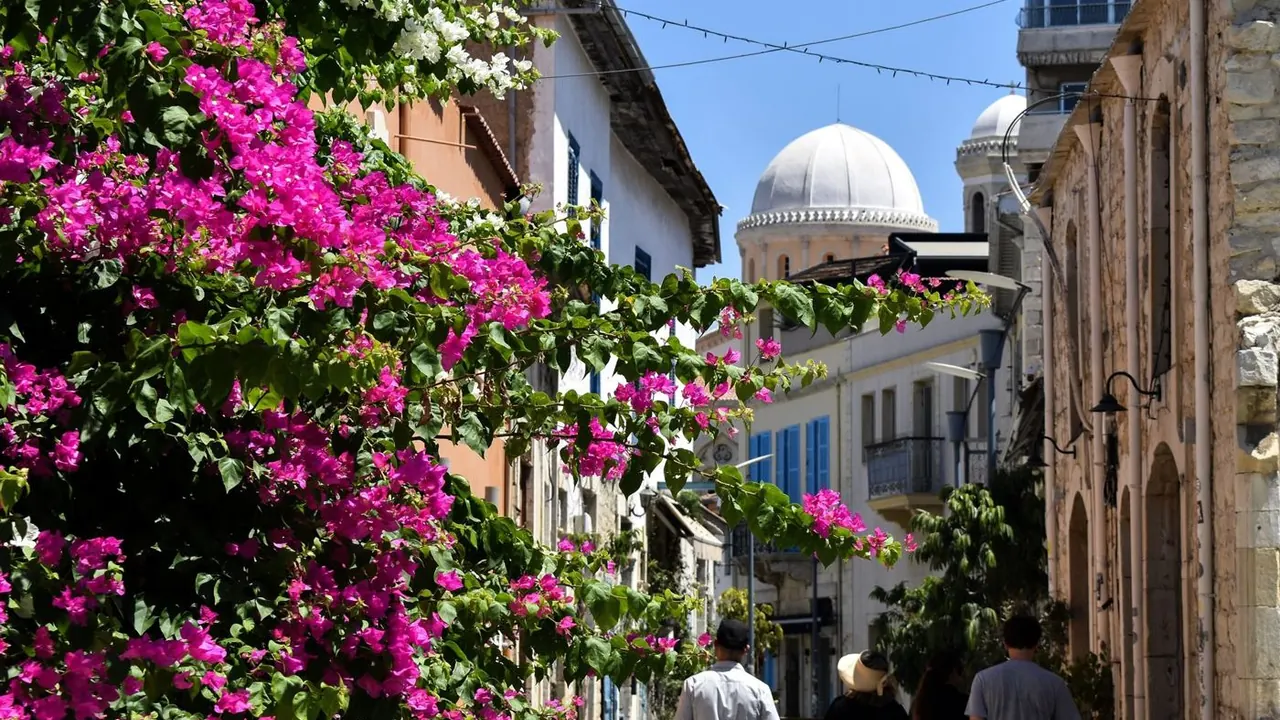
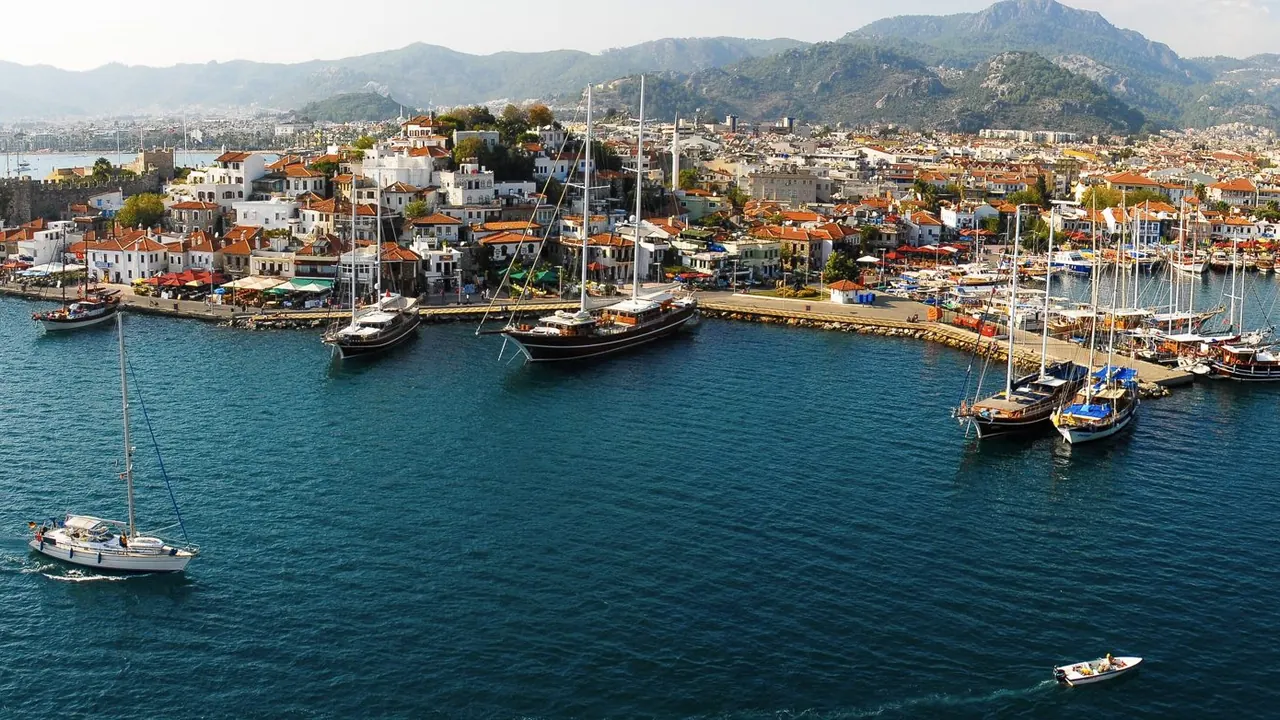
Photos: Limassol by Julian Lupyan, CC0; Marmaris by Mstyslav Chernov, CC BY-SA 3.0, cropped.
Limassol or Marmaris?
Our verdict in twelve categories, each scored against the same fixed benchmark cities, and the climate month by month, so you can choose for your trip.
Choose Limassol for
- culture and sights
- live music and the arts
- food and drink
Limassol is the better choice for travellers who want the beach plus something to do with their days. It sits in the middle of Cyprus's south coast, so Kourion, Paphos, the painted churches of Troodos and divided Nicosia are all within reach, and meals built around long meze and local wine are a real part of the trip. It suits couples and independent travellers who will hire a car and treat the sea as one part of the vacation.
Choose Marmaris for
- prices
- getting around
- nightlife
Marmaris rewards those who want a cheaper resort vacation framed by pine-covered hills and some of the best sailing water on the Turkish coast. Gulet cruises, cove-hopping boat trips and the Carian Trail give it the edge outdoors, and Bar Street gives young groups a loud, late summer night out. Look elsewhere for history or good food in town.
Scoreboard
Twelve categories on one fixed scale from 0 to 100. The shaded stretch is the gap between the two.
Your match
Pick a travel style or drag the sliders, and both match scores follow your weighting.
Too close to call, 1 point apart
Wins on culture and sights and live music and the arts with your weighting.
Wins on prices and getting around with your weighting.
What matters to you?
Category by category
What the scores mean for a trip.
Beaches & swimming
These two are broadly level for swimming, but the beaches work differently. Limassol's city beaches are grey sand and fine shingle stretched along an open seafront, practical rather than pretty, and the best swimming means driving to Governor's Beach under its chalk cliffs, the long bay at Kourion or the cove at Pissouri.
Marmaris swims in an almost enclosed bay, so the water off the main strip is calm. The better spots are reached by boat or water taxi: coves around the bay, the quieter beaches of Icmeler and Turunc, and the fine sand of Sedir Island. It does get more crowded in high summer.
Food & drink
Limassol eats noticeably better. A long meze in a family taverna in the old town or the hill villages is a meal in its own right, and the wine villages on the slopes of Troodos add Xynisteri, Maratheftiko and the sweet Commandaria.
In Marmaris, much of what you find near the seafront is resort cooking, and good Turkish food means seeking out lokanta, pide houses and the harbour fish restaurants. Its weekly market and the local pine honey are the highlights.
Culture & sights
Neither town is a sightseeing destination, but Limassol gives a curious visitor a good deal more. It has a medieval castle museum, an old quarter of churches and mosques from its mixed Greek and Turkish past, a district archaeological museum and the hillside ruins of Amathus on the edge of the city.
Marmaris has a small Ottoman castle above the harbour, an hour's wander through whitewashed lanes and a caravanserai turned bazaar. History lovers there spend their days on excursions.
Nightlife
Marmaris is the livelier choice in summer, though only in one direction. Bar Street packs a lane with clubs, laser shows and foam parties that run until near dawn for a young, mostly British crowd. Most of it shuts from November to April.
Limassol is more mixed and more grown-up. Its evenings centre on the bars around Saripolou Square, where people drink outdoors late, with lounge bars at the marina and a few clubs on the tourist strip. It suits a long evening of drinks better than a club weekend.
Nature & outdoors
Marmaris has the stronger setting. Its bay is ringed by pine-clad hills, and the barely built Bozburun and Datca peninsulas make it one of the great sailing grounds of the Turkish coast, with the Carian Trail, sea kayaking and the turtle beach near Dalyan on land and water.
Limassol's appeal lies more inland and higher up. Within an hour you can walk under black pine near Mount Olympos or to the Caledonia waterfall, and in some winters ski there, while the Akrotiri salt lake draws flamingos. In both places the summer lowlands are too hot for walking.
Day trips
Limassol has the wider choice of outings, and most of them go deep into the island's history: Kourion and Kolossi to the west, Paphos's mosaics beyond, Troodos churches and Omodos inland, Lefkara and Choirokoitia to the east, and Nicosia with its Green Line crossing.
Marmaris has fewer outings, but they are memorable. The best is the hour's ferry to medieval Rhodes, and Dalyan's river boats under the rock tombs, the boatbuilding harbours of Selimiye and Bozburun and the long road to Knidos fill other days.
Good for families
Families will find these two much alike: calm, shallow water, hotels with kids' clubs and pools, a waterpark nearby, and warm attitudes to children, with little else made for them and a midsummer heat that pushes everything to mornings.
The differences lie in where to stay and what to add. In Marmaris, families stay in Icmeler or Armutalan to keep clear of Bar Street's noise, and bay boat trips with swimming stops delight older children. Limassol's long promenade suits pushchairs, and it adds a small zoo and late taverna dinners where children are welcome.
Getting around
Marmaris is easier to get around without a car. Everything that matters lies around one bay, linked by a flat promenade, dolmus minibuses that run all the time, and water taxis to Icmeler and Turunc.
Limassol sprawls for many kilometres along the coast, and only the old town and port area are compact enough to walk. Coast-road buses and intercity coaches help, but there is no railway in Cyprus and inland buses are sparse, so most visitors hire a car and drive on the left.
Shopping & style
Neither is a shopping destination, and they appeal to different shoppers. Limassol offers high-street chains, malls and a few marina boutiques, with the best finds being edible or handmade: halloumi, Commandaria and Lefkara lace. Marmaris is all haggling in a covered bazaar full of leather, carpets and copy designer goods, with honest buys in pine honey, natural sponges and cotton peshtemal towels.
Affordability
Marmaris is the clearly cheaper choice. All-inclusive deals, cheap dolmus rides and simple lokanta meals keep a week affordable, although seafront dining, Bar Street and organised trips are priced for visitors.
Limassol is among the dearer places in Cyprus. Its beachfront hotels and marina dining charge Western European prices in summer. Taverna meze and buses are fair value, and staying away from the coast or outside summer helps most.
Live music & performing arts
Limassol has a modest programme, but Marmaris has almost none. Limassol's restored Rialto and Pattihio theatres host drama, touring concerts and dance in the cooler months, and an ancient play at Kourion at sunset is a real occasion. In Marmaris it comes down to hotel shows, staged Turkish nights and cover bands, with no theatre to plan around.
Wellness & relaxation
Marmaris gives more to someone who wants to unwind. Hammams are everywhere for steam, scrub and foam massage, the Dalyan mud baths and hot springs make an easy half-day, and Turunc, Selimiye and Bozburun are properly slow places to stay.
Limassol has no bathing tradition of its own, so relaxing there means a resort hotel spa, a long lunch and an evening walk along the promenade. For real quiet, you would head up into the cool pine air of the Troodos villages.
When should you go?
Pick your month. The climate figures are measured averages, not a forecast.
Limassol in July
Marmaris in July
Daytime high, °C
Rainfall in the month, mm
Where the figures come from
Limassol has no rain gauge within 25 km of the centre, so its rainfall comes from a gridded climate dataset read at the city rather than from a gauge further away.
Limassol's sunshine is measured 59 km from the centre, at Larnaca Airport.
Marmaris's temperatures are measured 49 km from the centre, at Dalaman.
Marmaris has no rain gauge within 25 km of the centre, so its rainfall comes from a gridded climate dataset read at the city rather than from a gauge further away.
Temperature and rainfall are climate normals, averaged over the years shown. Limassol: 1998-2020 (sunshine 1991-2020, rainfall 1991-2020) normals, Akrotiri (11.6 km from centre). Marmaris: 2000-2020 (rainfall 1991-2020) normals, Dalaman (48.8 km from centre).
Both coasts share the same rhythm: hot, almost rainless summers and mild, wet winters. In Limassol the sea is warm enough to swim from May, peaks around 27°C in August and stays pleasant through October and into November. Marmaris follows it closely, with a slightly cooler sea by October. July and August reach the low 30s in both, which is fine for lying by the water but hard going for walking the streets at midday. Late May, June, September and early October are the most comfortable beach months.
Winter is where they part, and rain makes the difference more than warmth. Limassol's wettest months, December and January, bring under 100mm each, while Marmaris gets about 230mm in each and stays wet from October to March. Daytime highs are only slightly warmer in Limassol, a degree or two at most, but its drier skies and long sunny days make it the better choice for walking and day trips from November to March.
Which traveller are you?
On a culture and arts trip, Limassol is clearly the better base. Its own sights are modest, but Kourion, the Paphos mosaics, Choirokoitia and the Troodos churches are all short drives away, and summer brings ancient plays to Kourion. Marmaris has little beyond its castle.
For a trip on a tight budget, Marmaris lets the money stretch further. You can come in spring or autumn, spend the days on free beaches and the promenade, shop at the weekly market and still afford the Rhodes ferry. In Limassol, most outings beyond the city need a hire car, and that cost soon adds up.
On an outdoors trip, Marmaris suits anyone who wants to spend the days on the water, with a week afloat, a day of kayaking or a few dives in clear bays. A walker who prefers mountains could pick Limassol instead and drive up for cool forest trails while the coast bakes.
Before you go
| Measure | Limassol | Marmaris |
|---|---|---|
| Official language | Turkish, Greek, Modern Greek | Turkish |
| Currency | Euro (EUR) | Turkish Lira (TRY) |
| Sockets | G240 V, 50 Hz | CF230 V, 50 Hz |
| Driving side | Left | Right |
| Time zone | UTC+2, UTC+3 in summer | UTC+3 |
| Emergency number | 112 | 112 |
| Elevation | 10 m | 7 m |
| Main airport | Larnaca International Airport (LCA)58 km from centre112 non-stop destinations | Dalaman International Airport (DLM)49 km from centre61 non-stop destinations |
| Public holidays this year | 17 days | 14 days |
By the numbers
| Measure | Limassol | Marmaris |
|---|---|---|
| City population | 107,970 | 97,818 |
| People per km² | 2,405 | 111 |
| Museums within 10 km | 2 | 1 |
| UNESCO World Heritage sites within 50 km | 3 | 1 |
| Swim season, months above 21 °C | 6 months | 6 months |
Where else could you go?
Every comparison below shares a destination with this one, so you can follow Limassol or Marmaris somewhere new.