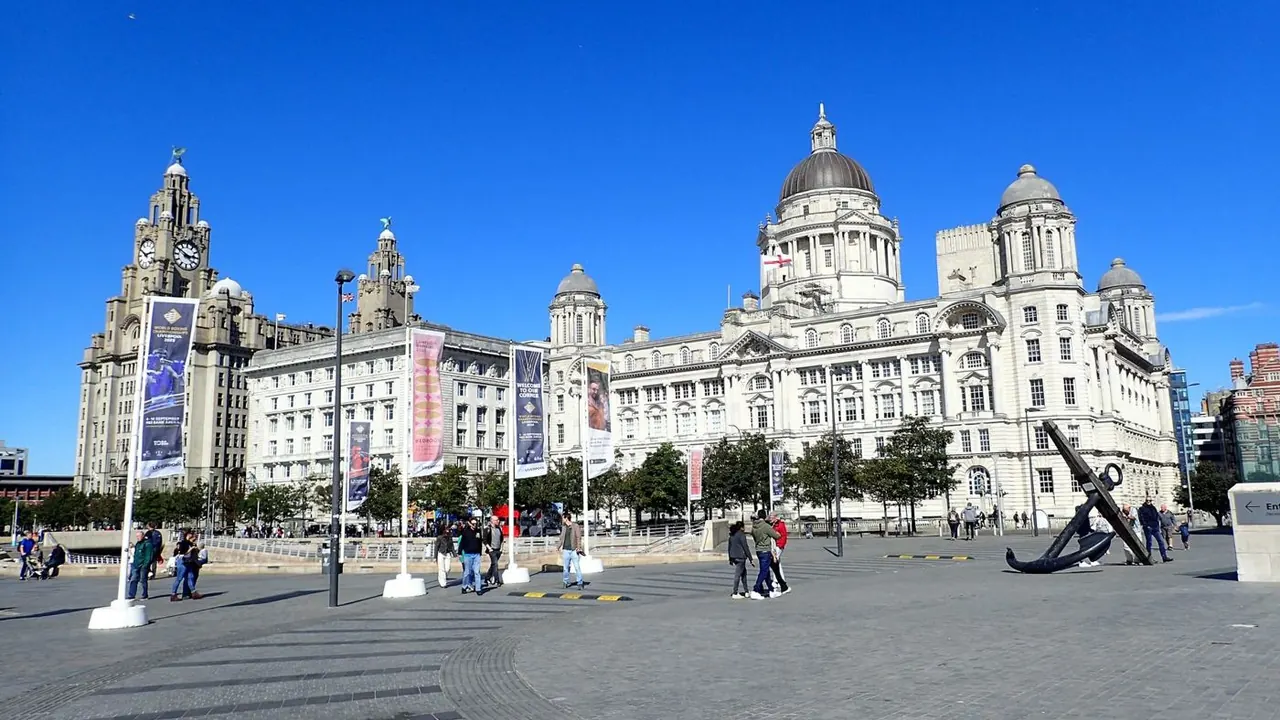
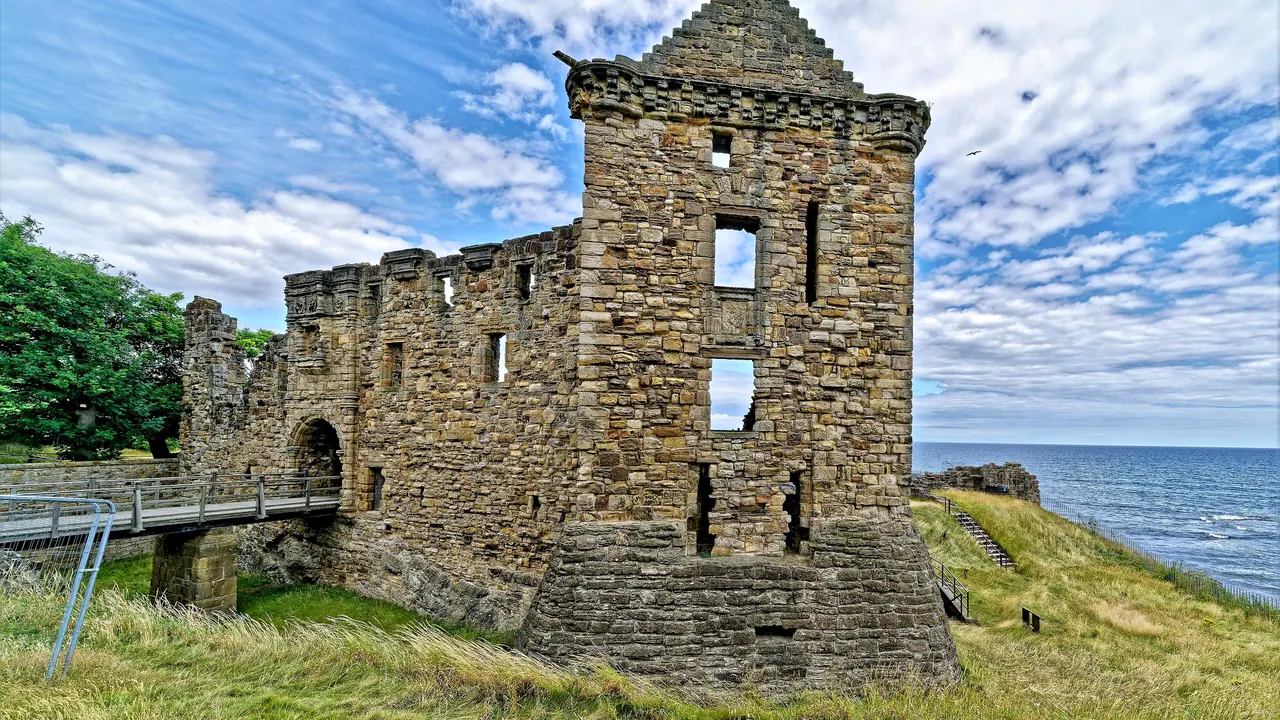
Photos: Liverpool by Marathon, CC BY-SA 2.0, cropped; St Andrews by Holger Uwe Schmitt, CC BY-SA 4.0, cropped.
Liverpool or St Andrews?
Our verdict in twelve categories, each scored against the same fixed benchmark cities, and the climate month by month, so you can choose for your trip.
Choose Liverpool for
- nightlife
- live music and the arts
- culture and sights
Liverpool is the choice for a city break with some energy to it. Its waterfront museums, two cathedrals and art galleries fill two or three days, live music and late bars carry on into the night, and because most of the big collections are free, money goes further than in most British cities. It suits groups of friends, music lovers and families who want plenty to do in a compact centre.
Choose St Andrews for
- wellness
- nature and the outdoors
- day trips
St Andrews rewards a slower trip by the sea. It is a small medieval town of ruins, university quadrangles and long sandy beaches, with the Fife Coastal Path and the East Neuk fishing villages on its doorstep and Edinburgh within a day's reach. Golfers, walkers and anyone happy with quiet evenings will feel at home, provided they accept that rooms cost more and nights end early.
Scoreboard
Twelve categories on one fixed scale from 0 to 100. The shaded stretch is the gap between the two.
Your match
Pick a travel style or drag the sliders, and both match scores follow your weighting.
Wins on nightlife and live music and the arts with your weighting.
Wins on wellness and nature and the outdoors with your weighting.
What matters to you?
Category by category
What the scores mean for a trip.
Beaches & swimming
St Andrews has slightly the better beaches, mainly because they are right there: West Sands, East Sands and little Castle Sands are all a walk from the centre. Liverpool's sand means a Merseyrail ride north to Crosby's iron figures or Formby's dunes, or a trip across the river to New Brighton and West Kirby.
Swimming is a poor reason to choose either. The Irish Sea off Liverpool runs a few degrees warmer than the North Sea, but its far-retreating tide and soft mud make parts of the shore unsafe, while St Andrews' colder water draws a local habit of brisk year-round dipping. Sheltered East Sands is the friendlier spot for children.
Food & drink
Liverpool has more to eat and more variety, though neither is a destination for food alone. A bowl of scouse in a pub, the independent kitchens of Bold Street, the street-food halls of the Baltic Triangle and an old Chinatown give a visitor several different evenings, and the Victorian gin palaces are a pleasure in themselves.
St Andrews offers fewer choices but a stronger sense of place: Fife lamb, East Neuk crab and lobster, and fish and chips eaten by a harbour down the coast. Its cafés and ice cream parlours are charming, but the range runs out quickly and the town is quiet after dinner.
Culture & sights
Liverpool has more to see and needs longer. The Three Graces and the warehouses of the Royal Albert Dock frame the Maritime Museum and the International Slavery Museum, William Brown Street adds the Walker Art Gallery and the World Museum, and the two 20th-century cathedrals face each other along Hope Street. The Beatles add a further layer.
St Andrews is older and smaller in scale. Its draws are medieval: the ruined cathedral with St Rule's Tower, the clifftop castle with its bottle dungeon and siege tunnels, and a university dating from 1413, plus the golf heritage of the Old Course. It makes a lovely walk through history, but a day or two covers it.
Nightlife
This is where the two differ most. Liverpool is a party city, with bars and clubs around Concert Square, Seel Street and Wood Street packed at weekends, electronic nights in the Baltic Triangle and calmer local bars on Lark Lane.
St Andrews offers traditional pubs, golfers' lounges and a students' union that is the nearest thing to a club. Outside term it goes to bed early, and anyone wanting a proper night out has to travel to Dundee or Edinburgh.
Nature & outdoors
St Andrews has the stronger outdoors, and it starts at the edge of town. The Fife Coastal Path runs past sea stacks and caves towards the East Neuk, seals haul out on the shore at Tentsmuir, and the Lomond Hills and the Perthshire Highlands are within driving distance for real hill walking.
Liverpool is flat and its green spaces are mostly urban: Sefton Park with its palm house, the Mersey promenade and the ferry. Formby's pinewoods, with their red squirrels, and the Wirral Way are good half-day escapes, but proper mountains in North Wales or the Lake District are around two hours away.
Day trips
St Andrews is the better base for outings. The pantile-roofed harbours of Crail, Anstruther and Elie are close by, Falkland Palace and Dundee's V&A are each a short trip, and Edinburgh makes an easy full day. Scone, Glamis, Culross and Stirling Castle broaden the list further, though most of them work best by car.
Liverpool's strongest trips are by train: Chester's Roman walls and timbered Rows in under an hour, Manchester's museums, Port Sunlight and Southport's pier. Conwy and Llandudno make a longer day, but after Chester the options thin out.
Good for families
Liverpool keeps children busier. The free World Museum has dinosaurs, an aquarium and a planetarium, the Museum of Liverpool has its own play gallery, and Chester Zoo and Knowsley Safari Park are within easy reach. The ferry is a cheap thrill, though the weekend crowds in the centre need some planning.
St Andrews is gentler and safer, and small enough for older children to roam. Rock pools on East Sands, the small aquarium, crawling through the castle's siege tunnels and Craigtoun Park's miniature railway fill a few relaxed days, but there is no major attraction and bad weather can cut a beach day short.
Getting around
Both centres are easy on foot, and Liverpool has a slight edge for anyone without a car. Its docks, Pier Head, Ropewalks and cathedrals sit within about 2km of each other, and Merseyrail reaches the coast at Crosby, Formby and the Wirral frequently. Sefton Park and Anfield mean a bus, and the bus network takes some figuring out.
St Andrews is even smaller, with beaches, castle and Old Course all a short stroll apart. The problem is getting in and out: there is no station, so trains mean a bus or taxi to Leuchars, and much of the countryside is far easier by car.
Shopping & style
Liverpool is the place for a proper shop. Liverpool ONE gathers the big British chains and department stores in open-air streets between the centre and the docks, and Bold Street adds vintage clothes, records and independent boutiques. Luxury labels are scarce, however.
St Andrews is an afternoon's browse along its three main streets, with golf gear and Old Course souvenirs, cashmere and knitwear, tartan and good bookshops. It is pleasant but shallow, and serious shoppers go on to Edinburgh.
Affordability
Liverpool is noticeably easier on the wallet. Hotel rooms are reasonably priced for a British city on most dates, the maritime, slavery and Walker collections are free, and pub meals keep eating out sensible. Big match weekends, the Grand National and major concerts are the times when prices climb.
St Andrews has few rooms and prices them for golfers and visiting university families, with sharp rises at tournaments and graduations. Its sights are modestly priced and lunches can be cheap, but a round on the famous courses is a real expense. Staying in the East Neuk villages helps to spread the cost.
Live music & performing arts
Liverpool is far richer here. Bands play most nights around Mathew Street, Seel Street and the Baltic Triangle, the Cavern Club draws pilgrims to its cellar, and the Royal Liverpool Philharmonic plays a full season in its art deco hall. The Everyman and the Playhouse make their own theatre, while the Empire takes the big touring shows.
St Andrews has a modest programme built around the university: drama and comedy at the Byre Theatre, choral evenings in St Salvator's Chapel and the odd pub folk session. Much of it falls quiet in the summer break, which is when most visitors come.
Wellness & relaxation
St Andrews is the better place to unwind, though neither is a spa destination. Its slow pace, long walks on West Sands and quiet evenings do much of the work, the golf resorts' spas and pools are open to non-residents, and a cold dip off East Sands is a local ritual.
In Liverpool, restful moments have to be sought out: an afternoon in Sefton Park, a slow ferry crossing or a quiet hour in the free galleries. Wellness there mostly means hotel spas, and the centre is loud on weekend nights.
When should you go?
Pick your month. The climate figures are measured averages, not a forecast.
Liverpool in July
St Andrews in July
Daytime high, °C
Rainfall in the month, mm
Where the figures come from
Liverpool's temperatures are measured 47 km from the centre, at Manchester Airport.
Liverpool has no rain gauge within 25 km of the centre, so its rainfall comes from a gridded climate dataset read at the city rather than from a gauge further away.
Temperature and rainfall are climate normals, averaged over the years shown. Liverpool: 1991-2020 normals, Manchester Airport (47.4 km from centre). St Andrews: 1991-2020 normals, Leuchars (6.5 km from centre).
Neither place has beach weather in the Mediterranean sense, and the best months for both run from May to September. Liverpool is a little warmer in high summer, reaching about 21°C in July against the high teens in St Andrews, and its sea warms to around 17°C by August, still a cold swim. St Andrews tends to be the sunnier of the two in spring, which makes April and May fine months for its coastal walks and golf, while Liverpool gets more sunshine through July and August.
Autumn brings the rain to both, with October the wettest month, but Liverpool stays wet into winter, at around 80mm a month, while St Andrews eases off a little. Winters are similar and chilly, with highs near 7°C, short grey days and wind off the sea. That is fine for Liverpool's museums and pubs but less kind to a town whose pleasures are mostly outdoors.
Which traveller are you?
For a food and nightlife trip, Liverpool is the clear pick. Concert Square, Seel Street and the Baltic Triangle keep going well past midnight, while Bold Street and Chinatown give far more choice for eating than St Andrews, where pubs close the evening early.
On a relaxing and wellness trip, St Andrews suits better. The pace is unhurried, West Sands invites long walks, the golf resorts have full spas open to visitors, and the evenings are quiet, whereas Liverpool's centre is loud at weekends and offers little beyond hotel spas.
For a golf trip, St Andrews has no rival here. The Old Course, the Swilcan Bridge, the British Golf Museum and links courses all around town make it a pilgrimage, and even the public putting green lets beginners try the famous turf.
Before you go
| Measure | Liverpool | St Andrews |
|---|---|---|
| Official language | English | English |
| Currency | Pound Sterling (GBP) | Pound Sterling (GBP) |
| Sockets | G230 V, 50 Hz | G230 V, 50 Hz |
| Driving side | Left | Left |
| Time zone | UTC, UTC+1 in summer | UTC, UTC+1 in summer |
| Emergency number | 112 or 999 | 112 or 999 |
| Elevation | 70 m | 24 m |
| Main airport | Liverpool John Lennon Airport (LPL)12 km from centre75 non-stop destinations | Edinburgh Airport (EDI)56 km from centre163 non-stop destinations |
| Public holidays this year | 8 days | 10 days |
By the numbers
| Measure | Liverpool | St Andrews |
|---|---|---|
| City population | 513,441 | 16,460 |
| People per km² | 4,592 | - |
| Museums within 10 km | 31 | 5 |
| UNESCO World Heritage sites within 50 km | 2 | 0 |
| Swim season, months above 21 °C | None | None |
Where else could you go?
Every comparison below shares a destination with this one, so you can follow Liverpool or St Andrews somewhere new.
- Edinburghvs St Andrews
- Manchestervs Liverpool
- Aberdeenvs St Andrews
- Glasgowvs St Andrews
- Yorkvs Liverpool
- Invernessvs St Andrews