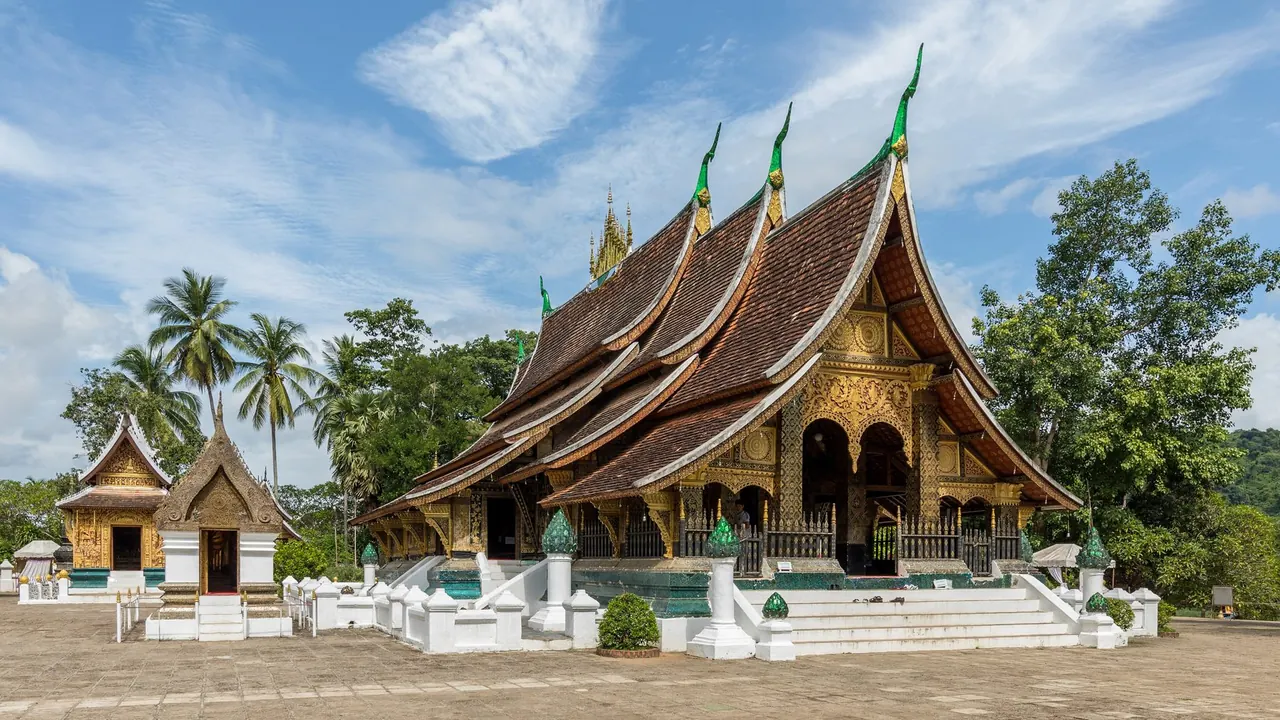
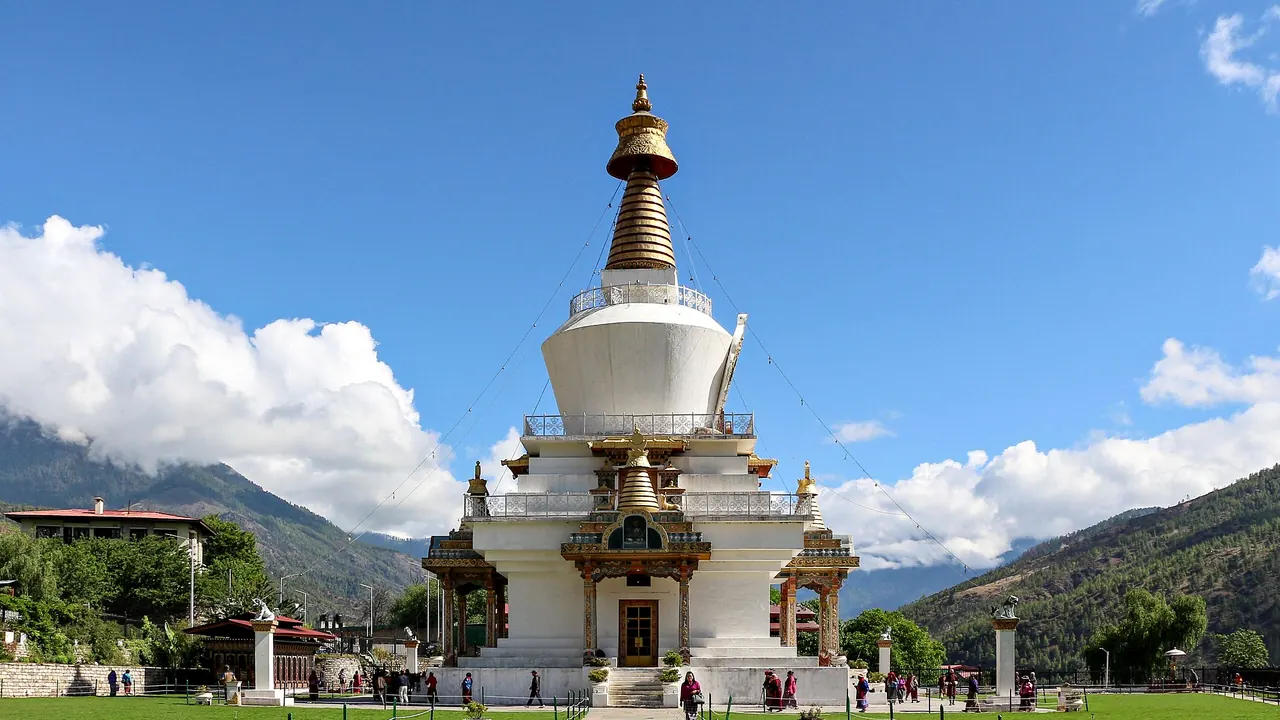
Photos: Luang Prabang by Basile Morin, CC BY-SA 4.0, cropped; Thimphu by Bernard Gagnon, CC BY-SA 4.0, cropped.
Luang Prabang or Thimphu?
Our verdict in twelve categories, each scored against the same fixed benchmark cities, and the climate month by month, so you can choose for your trip.
Choose Luang Prabang for
- prices
- beaches
- culture and sights
Luang Prabang suits travellers who want a slow, inexpensive stay in a town they can walk from end to end. The whole peninsula is a heritage site of monasteries and colonial shophouses. The food is cheaper and has more range, and Kuang Si gives children and adults a swim in the forest. It is the better fit for independent travellers, families with older children and anyone watching their spending.
Choose Thimphu for
- day trips
- nature and the outdoors
- live music and the arts
Choose Thimphu for the mountains and for the rarity of Bhutan itself. Hiking starts at the edge of town, Paro and the Tiger's Nest make a day out of real stature, and the autumn Tshechu fills the dzong courtyard with masked dances. It costs far more and comes with a guide and driver, so it rewards walkers and travellers willing to pay for a carefully managed trip that few others make.
Scoreboard
Twelve categories on one fixed scale from 0 to 100. The shaded stretch is the gap between the two.
Your match
Pick a travel style or drag the sliders, and both match scores follow your weighting.
Wins on prices and beaches with your weighting.
Wins on day trips and nature and the outdoors with your weighting.
What matters to you?
Category by category
What the scores mean for a trip.
Beaches & swimming
Neither city is a place to swim, but Luang Prabang at least gives you somewhere to get into the water. The turquoise pools below Kuang Si and the smaller Tad Sae falls make a memorable half-day swim in the forest.
Thimphu has nothing like them. The Wang Chhu is a cold, fast mountain river, and even hotel pools are scarce. Anyone who wants time in the water on a Bhutan trip should plan it somewhere else on the route.
Food & drink
Luang Prabang eats better, mainly because its food has more layers. Lao dishes such as or lam and jeow bong, the morning market and the cheap buffet lane sit alongside baguettes, bakeries and strong coffee from the French era, and the riverside terraces turn dinner into an occasion.
Thimphu's cooking is fierier and more of its own, built on ema datshi, red rice and momos. Tourist buffets tone it down, though, and there are few restaurants to choose from. The town's best food experience is the weekend Centenary Farmers' Market rather than any meal.
Culture & sights
Luang Prabang's old town is the stronger place for sightseeing. The entire peninsula is under UNESCO protection, with more than thirty monasteries, the sweeping roofs of Wat Xieng Thong and the Royal Palace museum all a short walk apart, and the dawn alms round passes through its streets.
Thimphu's heritage is just as much in daily use, but it is more spread out. Tashichho Dzong, the Memorial Chorten and Buddha Dordenma are the highlights, backed by small museums and the school of the thirteen traditional arts. That is a list for two or three days, not a townscape you live inside.
Nightlife
Both are early-night places, but Thimphu has a little more to do after dark. Karaoke rooms, a couple of weekend dance clubs and the drayangs, where singers take requests for folk and pop songs, give its evenings a local flavour. In Luang Prabang an evening out means a drink in a garden bar or on a riverside terrace, and then a curfew around midnight leaves the streets silent.
Nature & outdoors
Thimphu has the bigger landscape. The city fills a pine-covered valley at about 2,300m, hikes climb straight from it to Tango, Cheri and Phajoding monasteries, the Dochula pass looks out to the eastern Himalaya, and guided treks such as the Druk Path start close by.
Luang Prabang's scenery is lower and greener: wooded hills around the two rivers, the Kuang Si falls, slow boats past limestone cliffs, kayaking on the Nam Khan and treks to hill villages. It is lovely and easy to reach, but softer, and late in the dry season smoke from field burning can haze the views.
Day trips
Thimphu has one outing that outclasses anything near Luang Prabang. Paro has its dzong, the ancient Kyichu Lhakhang and the steep morning climb to the Tiger's Nest. Dochula fits into half a day, while Punakha is better as an overnight stop than a long drive there and back.
From Luang Prabang the classic outing is the boat up the Mekong to the Pak Ou caves and their Buddha images, with the weaving villages close by. The train puts the karst scenery of Vang Vieng and the temples of Vientiane within a day's reach.
Good for families
Luang Prabang is the slightly easier choice for families. Its trump card is Kuang Si, where children get the bears and the swimming pools in one outing, and there are boat rides and flat streets to cycle together. Thimphu has the takin preserve, the prayer wheels and short forest walks, but the long, winding drives and the first days at altitude weigh on small children, and in both towns older children get far more out of the trip than toddlers.
Getting around
Luang Prabang is the easier town to explore on your own. The old town is flat, compact and quiet enough to cross on foot or by bicycle, and tuk-tuks and boats cover the waterfalls and caves.
Thimphu's centre around Norzin Lam is pleasant to walk, with a white-gloved policeman directing traffic instead of lights. Beyond it the city climbs steep hillsides, though, and the main sights are uphill and far apart. Most visitors depend on their car and driver, which is comfortable but leaves less freedom to wander.
Shopping & style
Both are towns for crafts rather than fashion, and Luang Prabang has the edge on choice and ease. Its nightly market of red-roofed stalls runs the length of the main street, and in the weaving studios in town and in nearby villages you can watch natural dyeing before you buy.
Thimphu's prize is handwoven kira fabric and yak wool, along with thangkas and wooden masks. These are found mainly in the government emporium, the craft bazaar and the shops along Norzin Lam.
Affordability
This is where the two differ most sharply. Luang Prabang is cheap for most visitors, with inexpensive guesthouses, market food and massages, though the boutique hotels and riverside dining can push the bill up.
Thimphu's local cafés and taxis cost little. The cost comes from Bhutan's daily fee for foreign visitors, together with the usual guide, driver and hotels of tourist standard, which make any stay expensive. Keeping the trip short is the only real saving.
Live music & performing arts
Thimphu has the bigger occasion. During the autumn Tshechu, masked cham dances fill the courtyard of Tashichho Dzong for several days, and it is worth timing a trip around. The Royal Academy of Performing Arts and the drayangs keep music going the rest of the year. Luang Prabang's main show is the masked Phralak Phralam, the Lao Ramayana, at the Royal Palace theatre, with a few folk evenings besides.
Wellness & relaxation
Both are calm, slow places, so the difference lies in their rituals. In Luang Prabang, gentle Lao massage is on offer along every main street, the herbal saunas are scented with lemongrass, and boutique hotels hold yoga by the river. The days are paced by the monks' alms round and the sunset over the Mekong.
Thimphu's speciality is the dotsho, a wooden tub of river water heated with hot stones and infused with artemisia, and it is ideal after a hike. Meditation sessions at monasteries and the spas in upmarket lodges complete the picture.
When should you go?
Pick your month. The climate figures are measured averages, not a forecast.
Luang Prabang in July
Thimphu in July
Daytime high, °C
Rainfall in the month, mm
Where the figures come from
Thimphu has no weather station within reach, so its figures come from a gridded climate model rather than a measured record, and read a broad area rather than the city itself.
Temperature and rainfall are climate normals, averaged over the years shown. Luang Prabang: 1991-2020 normals, Luang-Prabang (0.8 km from centre). Thimphu: 1991-2020 normals, TerraClimate 4 km grid at the town, no weather station within 90 km.
Luang Prabang is warm all year. November to January is the best stretch: dry and sunny, with highs of about 28 to 30°C, comfortable for walking the old town and for a swim at Kuang Si. February stays dry, but the heat is already building, and by April it reaches about 36°C, which makes long midday walks hard going. The rains arrive in May and are heaviest in August, when the hills turn green, the trails get muddy and the sunshine drops away.
Thimphu has cool mountain weather rather than tropical heat. Winter days reach only about 12°C, with very little rain. The monsoon comes in the same months as in Laos, and July is the wettest at 248mm, with cloud over the trails. October and November are the sweet spot for hiking, mild with the rains fading, and spring is a pleasant second. The two complement each other: in midwinter, when Thimphu is chilly, Luang Prabang is at its best, and in the hot spring months Thimphu's valley is far more comfortable for walking.
Which traveller are you?
On a trip on a tight budget, Luang Prabang is the clear pick. Guesthouses, market meals, massages and bicycle hire all cost little. In Thimphu, Bhutan's daily visitor fee and the guide-and-driver model keep costs high however simply you eat.
For an outdoors trip, Thimphu wins. Monastery hikes to Tango, Cheri and Phajoding start from town, Dochula shows the Himalayan snow peaks and the Druk Path trek begins nearby. Luang Prabang offers kayaking, river boats and village treks in gentler, lower hills.
On a family trip with children, Luang Prabang is easier going. Kuang Si's bear sanctuary and swimming pools, the long-tail boats and flat, quiet streets for cycling keep children busy. Thimphu's days of temples, its altitude and its winding mountain drives test young patience more.
Before you go
| Measure | Luang Prabang | Thimphu |
|---|---|---|
| Official language | Lao | Dzongkha |
| Currency | Lao Kip (LAK) | Ngultrum (BTN) |
| Sockets | ABCEF230 V, 50 Hz | CFGM230 V, 50 Hz |
| Driving side | Right | Left |
| Time zone | UTC+7 | UTC+6 |
| Emergency number | Police 191, ambulance 195, fire 190 | Police 113, ambulance 112, fire 110 |
| Elevation | 305 m | 2,321 m |
| Main airport | Luang Phabang International Airport (LPQ)4 km from centre7 non-stop destinations | Paro International Airport (PBH)22 km from centre15 non-stop destinations |
By the numbers
| Measure | Luang Prabang | Thimphu |
|---|---|---|
| City population | 53,792 | 114,551 |
| People per km² | - | 4,243 |
| Museums within 10 km | 0 | 1 |
| UNESCO World Heritage sites within 50 km | 1 | 0 |
Where else could you go?
Every comparison below shares a destination with this one, so you can follow Luang Prabang or Thimphu somewhere new.
- Darjeelingvs Thimphu
- Vientianevs Luang Prabang
- Chiang Raivs Luang Prabang
- Lhasavs Thimphu
- Sapavs Luang Prabang
- Chiang Maivs Luang Prabang