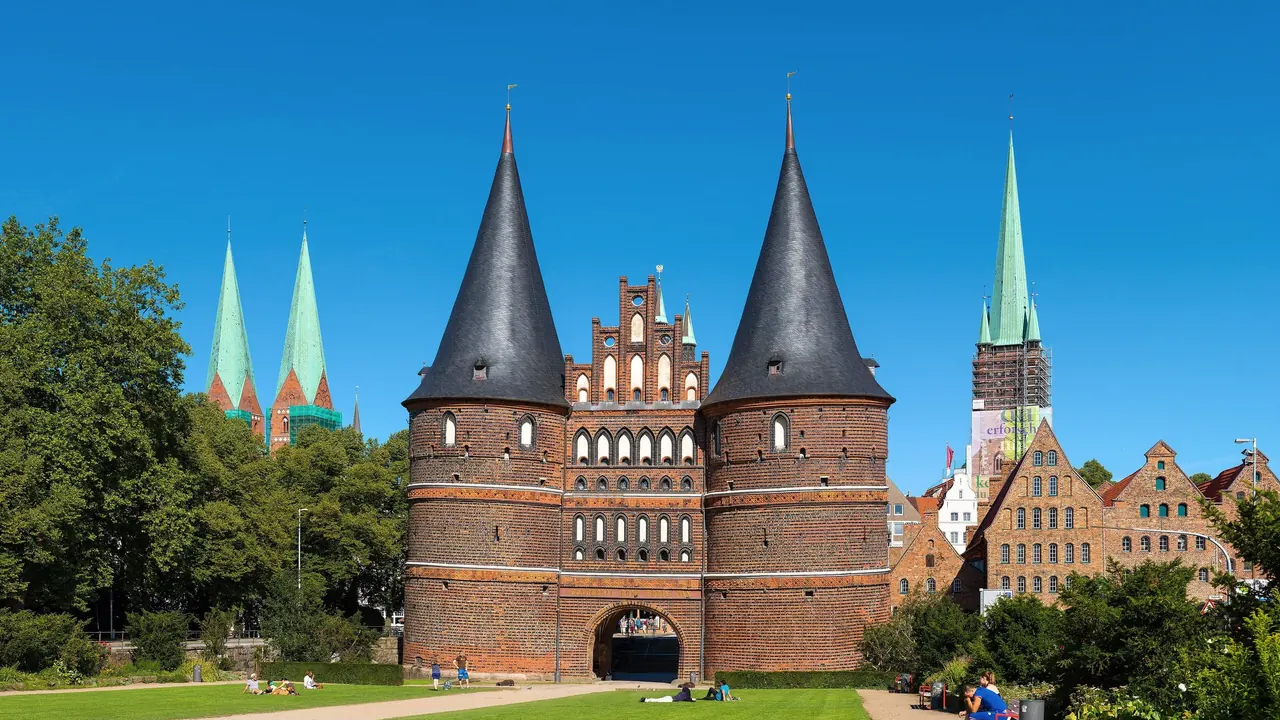
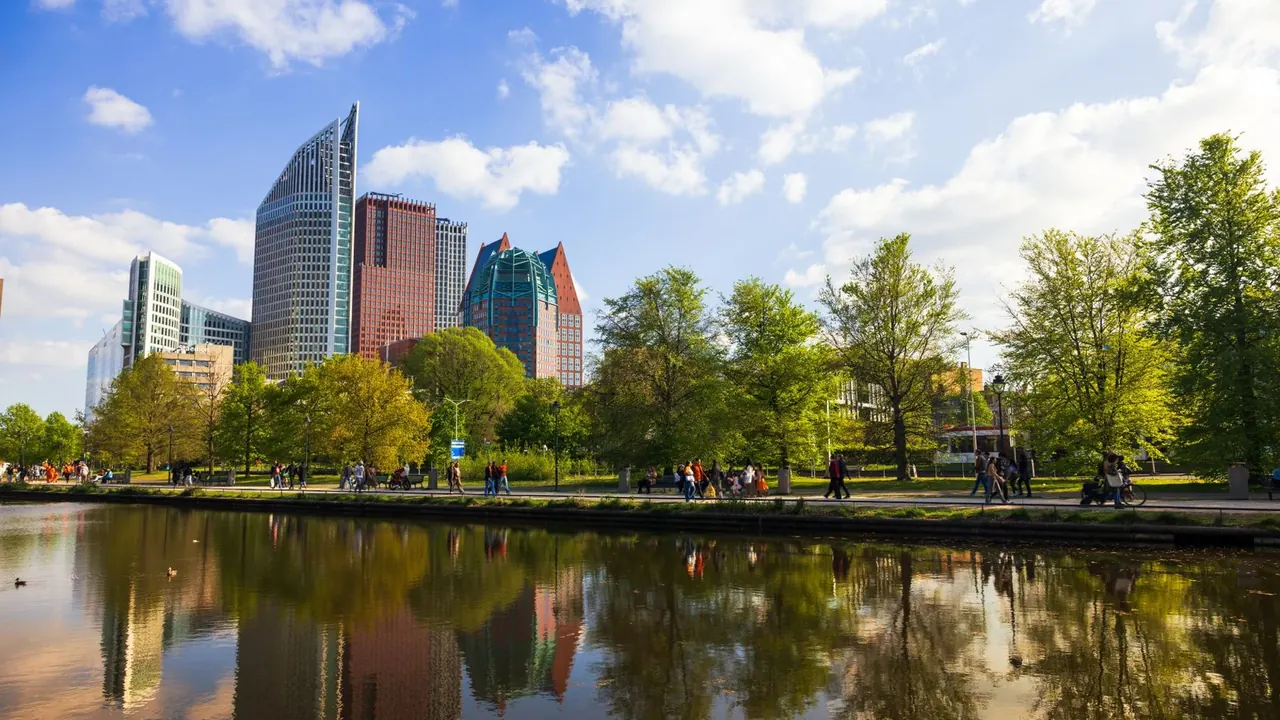
Photos: Lubeck by Christian Wolf (www.c-w-design.de), CC BY-SA 3.0 DE, cropped; The Hague by Bráulio jardim, Pexels License.
Lubeck or The Hague?
Our verdict in twelve categories, each scored against the same fixed benchmark cities, and the climate month by month, so you can choose for your trip.
Choose Lubeck for
- prices
- culture and sights
Lübeck suits travellers who want one complete old town to wander rather than a list of attractions. Its island of brick churches, gabled merchants' houses and hidden courtyards is the trip in itself, small enough to cover on foot and calm by evening. It also costs less than The Hague, and in high summer the Travemünde shore is a short train ride away. Choose it for a quiet, unhurried stay with history around every corner, and accept that evenings out and shopping are modest.
Choose The Hague for
- day trips
- shopping
- families
The Hague is the better pick for a trip with more variety, and above all for a base from which to see the Netherlands. Delft, Leiden, Rotterdam and Amsterdam are all close enough for an easy day out, and back in the city there is Vermeer at the Mauritshuis, Nederlands Dans Theater and Madurodam for the children. Families, art lovers and anyone who wants a livelier evening will get more from it, provided they budget for Northern European prices.
Scoreboard
Twelve categories on one fixed scale from 0 to 100. The shaded stretch is the gap between the two.
Your match
Pick a travel style or drag the sliders, and both match scores follow your weighting.
Wins on prices and culture and sights with your weighting.
Wins on day trips and shopping with your weighting.
What matters to you?
Category by category
What the scores mean for a trip.
Beaches & swimming
On the beach the two are evenly matched, and both have a long sandy shore within easy reach of the centre, Travemünde by regional train and Scheveningen by tram. Neither sea is warm enough for a swimming vacation.
What differs is the water itself. Lübeck's Baltic bay is calm, shallow and without tides, which makes it gentler for small children paddling, and the wicker beach chairs give it a classic German resort feel. The Hague's North Sea brings wind, waves and currents, so swims are brisker, but it also brings surfers and kitesurfers, and Scheveningen's summer pavilions make it more of a social beach.
Food & drink
The Hague has the edge at the table, mainly thanks to its Indonesian cooking, from a full rijsttafel to a simple plate of rendang, which is among the best outside Indonesia. Its small Chinatown and the Scheveningen fish stalls widen the choice further.
Lübeck's strengths are narrower and more local: marzipan from historic confectioners, smoked herring, labskaus and Rotspon wine, best enjoyed under the ship models of the Schiffergesellschaft. Beyond that it is solid provincial German eating.
Culture & sights
Both reward two or so unhurried days of sightseeing, but the appeal is different. In Lübeck the city itself is the attraction: a UNESCO-listed Hanseatic old town of brick Gothic churches, the Holstentor and stepped-gabled houses, where the pleasure lies in wandering the passages and courtyards.
The Hague is a city of institutions and collections. The Binnenhof, the Peace Palace and the embassy streets set a stately tone, and the art is first class: Vermeer and Rembrandt at the Mauritshuis, the largest Mondrian collection in the world at the Kunstmuseum, and Panorama Mesdag. Choose Lübeck for atmosphere and The Hague for paintings.
Nightlife
Neither is a party city, but The Hague gives you more to do after dark. The terraces on the Plein and the Grote Markt stay busy at weekends, and in summer the Scheveningen beach pavilions turn sundowners into dancing.
Lübeck winds down early, with pubs and wine bars in the old town and along the Obertrave, and Travemünde's promenade the liveliest spot on summer nights. In both cities serious clubbers take the train, to Hamburg from one and to Rotterdam or Amsterdam from the other.
Nature & outdoors
Both sit in flat, gentle country with no hills, and both have plenty to offer a cyclist. Lübeck's outdoors is about water and woods: canoeing on the reedy Wakenitz towards the Lauenburg lakes, the clay cliff walk at Brodtener Steilufer and the Holstein Switzerland lakes within an hour.
The Hague's nature is coastal. The Meijendel dunes and the Westduinpark lie between the city and the sea, the old Haagse Bos forest reaches almost into the centre, and windy days bring out kitesurfers and surfers.
Day trips
The Hague is one of the best bases in Europe for day trips. Delft and Leiden are about fifteen minutes away, Rotterdam and Gouda not much further, and Amsterdam, Haarlem and Utrecht under an hour, with Kinderdijk's windmills and the Keukenhof bulb fields in spring as well.
Lübeck has a good short list rather than a long one. Hamburg is the obvious full day, Wismar and Schwerin's island castle make fine outings, and Ratzeburg and Eutin are pleasant closer to home, but after these the choice runs out.
Good for families
The Hague is the stronger family choice and works in any season. Madurodam is a ready-made day out, and Scheveningen's sea aquarium, Museon, the Louwman car museum and Duinrell nearby give children plenty of variety even when it rains.
Lübeck shines mainly in summer, when the shallow Travemünde beach and Hansa-Park on the bay carry the trip. Outside the warm months there is little made for children beyond the old town's towers and marzipan shops.
Getting around
Both are easy without a car, but in different ways. Lübeck's sights lie on an island about 2km long, so you walk almost everywhere, over some cobbles, with the station just across the river from the Holstentor.
The Hague is more spread out but better served. Frequent trams run to Scheveningen and Madurodam, cycle lanes are everywhere, and two main stations put Delft and Leiden as close as a suburb, which is what gives it the edge.
Shopping & style
The Hague is the better place to shop. The Denneweg and Noordeinde have antique dealers, galleries and small fashion boutiques, the 1880s Passage makes a covered stroll, and the Haagse Markt is one of Europe's largest open-air markets.
Lübeck offers German chains on Breite Strasse, a few independents in the side passages around Hüxstrasse, and marzipan as the souvenir everyone carries home. For serious fashion, people head to Hamburg.
Affordability
Lübeck is clearly the cheaper stay. Old-town rooms are moderately priced, tavern and harbour kiosk meals are reasonable, and the train to the coast costs little. Only Travemünde in high summer pushes costs up.
The Hague charges full Northern European prices for rooms, meals and drinks. Weekends, when the government and business travellers leave, bring better hotel deals, and Indonesian and Surinamese eateries and the Haagse Markt keep daily spending down.
Live music & performing arts
The Hague offers more on stage, with a real draw in Nederlands Dans Theater, one of the leading contemporary dance companies, performing on home ground. The Residentie Orkest, conservatory concerts and decent pop venues add depth, though Dutch-language drama and the lack of resident opera limit it.
Lübeck's strengths are opera at Theater Lübeck, which The Hague lacks, and organ music in the Marienkirche, where Buxtehude played. The Schleswig-Holstein Music Festival brings it its liveliest season in summer.
Wellness & relaxation
Both cities are calm places to unwind, and both have seaside resorts that date from the early nineteenth century. Lübeck's version is Travemünde's spa-resort tradition, with wellness hotels along the bay and a seawater pool complex at Scheveningen's Baltic counterpart, Scharbeutz.
In The Hague, wellness means a full day at one of the large Dutch sauna complexes, with steam rooms, cold plunges and gardens, where nudity is the norm. Lübeck's gentler offer comes from its quiet courtyards and riverside benches.
When should you go?
Pick your month. The climate figures are measured averages, not a forecast.
Lubeck in July
The Hague in July
Daytime high, °C
Rainfall in the month, mm
Where the figures come from
The Hague has no rain gauge within 25 km of the centre, so its rainfall comes from a gridded climate dataset read at the city rather than from a gauge further away.
The Hague's sunshine is measured 60 km from the centre, at De Bilt.
Temperature and rainfall are climate normals, averaged over the years shown. Lubeck: 1991-2020 normals, Luebeck-Blankensee (6 km from centre). The Hague: 1991-2020 normals, Valkenburg (13.6 km from centre).
Both cities are at their best from late May to early September, but the summers feel different. Lübeck gets warmer, with July and August highs around 24°C against 21°C on the Dutch coast, and May to July are its sunniest months. In both places the sea only reaches about 18°C to 19°C in August, so beach days are for sunbathing and short dips, and the Baltic at Lübeck cools much faster after September than the North Sea does.
The rain is spread differently too. In Lübeck it falls fairly evenly through the year, peaking lightly in summer. The Hague gets steadily wetter from late summer, and October is its wettest month at about 104mm, so autumn there means wind and showers. Winters are cold and grey in both, with Lübeck a little colder at around 4°C in January and The Hague slightly milder and less gloomy. For walking the streets, spring and early autumn suit Lübeck well, while The Hague is better in April and May than in October.
Which traveller are you?
On a trip on a tight budget, Lübeck is easier on the wallet. Its rooms are moderately priced, a harbour fish sandwich or a tavern meal costs little, and the whole heritage old town is free to walk. The Hague charges full Northern European prices, though its Indonesian eateries help.
On a family trip with children, The Hague offers far more. Madurodam's miniature Netherlands, the sea aquarium and pier at Scheveningen, Museon and the Duinrell water park fill several days, and pushchair-friendly trams link them. Lübeck's calm beach and Hansa-Park mostly work only in summer.
For a short city break, Lübeck is the neater choice. The old town on its compact island holds the Holstentor, the Marienkirche, the Hansemuseum and the Buddenbrookhaus within a short walk of the station, so two days show you the whole place without any planning.
Before you go
| Measure | Lubeck | The Hague |
|---|---|---|
| Official language | German | Dutch |
| Currency | Euro (EUR) | Euro (EUR) |
| Sockets | CF230 V, 50 Hz | CF230 V, 50 Hz |
| Driving side | Right | Right |
| Time zone | UTC+1, UTC+2 in summer | UTC+1, UTC+2 in summer |
| Emergency number | 112 | 112 |
| Elevation | 13 m | 1 m |
| Main airport | Hamburg Helmut Schmidt Airport (HAM)53 km from centre120 non-stop destinations | Rotterdam The Hague Airport (RTM)16 km from centre53 non-stop destinations |
| Public holidays this year | 10 days | 11 days |
By the numbers
| Measure | Lubeck | The Hague |
|---|---|---|
| City population | 217,061 | 548,320 |
| People per km² | 1,013 | 5,589 |
| Museums within 10 km | 23 | 54 |
| UNESCO World Heritage sites within 50 km | 1 | 4 |
| Swim season, months above 21 °C | None | None |
Where else could you go?
Every comparison below shares a destination with this one, so you can follow Lubeck or The Hague somewhere new.
- Rotterdamvs The Hague
- Haarlemvs The Hague
- Amsterdamvs The Hague
- Utrechtvs The Hague
- Hamburgvs Lubeck
- Antwerpvs The Hague