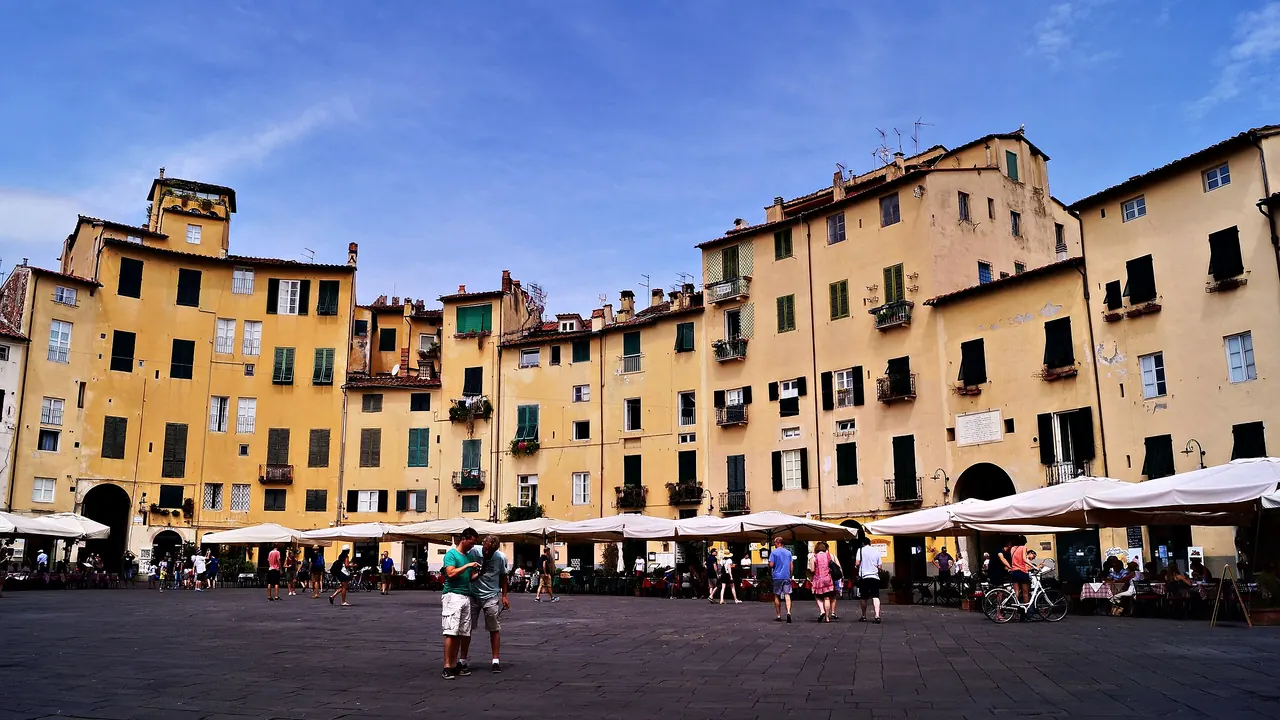
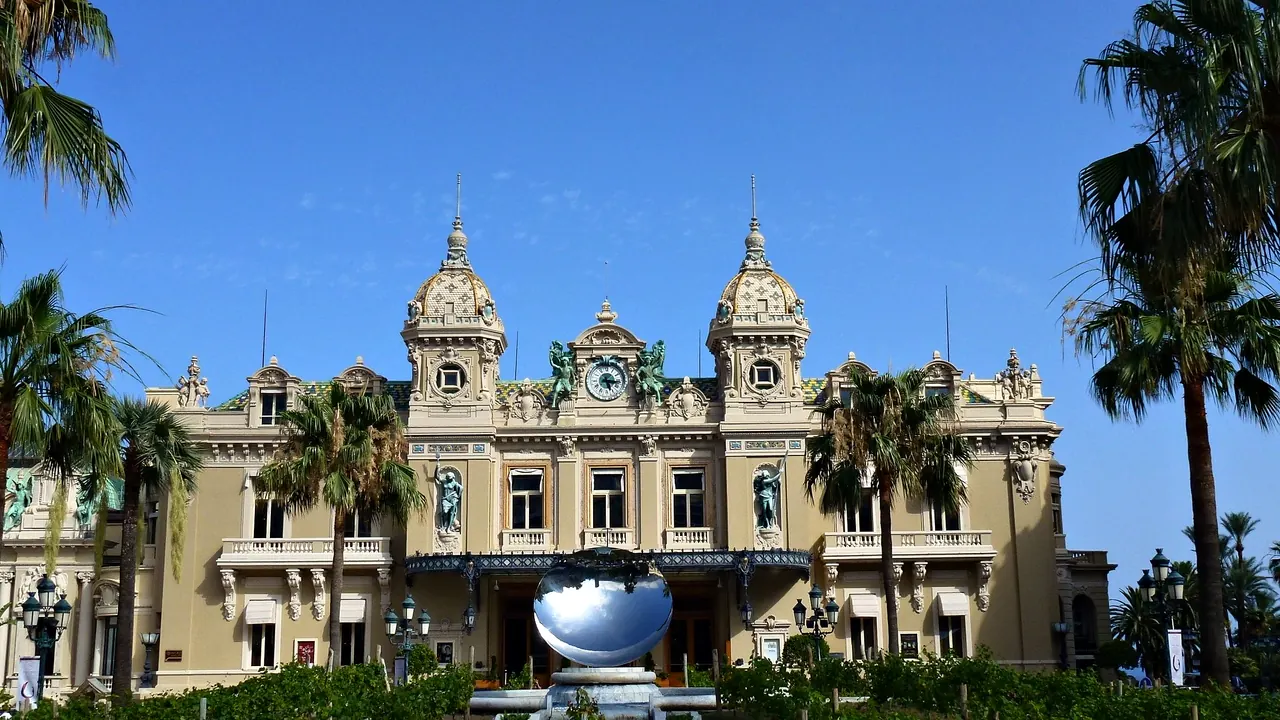
Photos: Lucca by Stefano Sansavini, CC BY-SA 4.0, cropped; Monaco by otterboris, CC BY 3.0, cropped.
Lucca or Monaco?
Our verdict in twelve categories, each scored against the same fixed benchmark cities, and the climate month by month, so you can choose for your trip.
Choose Lucca for
- nature and the outdoors
- prices
- day trips
Lucca suits travellers who want a slow, walkable Tuscan town as a base for seeing more. You walk or cycle inside complete Renaissance walls, eat in plain family trattorias, and take the train out to Pisa, Florence, the Versilia sands or the Apuan Alps. It costs a fraction of what Monaco does, and it is better for anyone who wants countryside, mountains and a choice of beaches within easy reach.
Choose Monaco for
- nightlife
- shopping
- live music and the arts
Monaco is the choice for a short, polished stay where money matters less than the setting. It offers opera in the gilded Salle Garnier, the big fashion and jewellery houses around the casino, late nights in seafront clubs and the Riviera towns along the coastal line. You give up open landscape and get glamour and a strong classical season instead. Many visitors treat it as a stop within a wider Riviera trip rather than a week's base.
Scoreboard
Twelve categories on one fixed scale from 0 to 100. The shaded stretch is the gap between the two.
Your match
Pick a travel style or drag the sliders, and both match scores follow your weighting.
Wins on nature and the outdoors and prices with your weighting.
Wins on nightlife and shopping with your weighting.
What matters to you?
Category by category
What the scores mean for a trip.
Beaches & swimming
Lucca has the better beaches, though you have to travel for them. A short train ride takes you to the Versilia coast, where long, gently shelving sand runs from Viareggio to Forte dei Marmi, and the pine-backed dunes of the Lecciona give you a wilder free stretch.
Monaco's sea is right on the doorstep, but the only real beach is Larvotto, a short landscaped strip of imported gravel and sand that fills up on summer weekends. The water is clear and calm, and rocky platforms and a harbour seawater pool add some variety, but here a swim fits between other plans rather than filling the day.
Food & drink
The two are broadly level, but the food is very different. In Lucca you eat rustic provincial dishes such as spelt soup, meat-filled tordelli and chestnut-flour dishes, in family osterie at fair prices. Monaco leans towards grand hotel dining rooms and starred kitchens, and its Provençal-Ligurian specialities, such as barbajuans and stocafi, are best eaten at the Condamine market counters. Both have a narrow range of cuisines, so menus start to repeat after a few days in either place.
Culture & sights
Lucca has more to see, and the town itself is the main sight. You can walk the complete ring of walls, look at the carved arcades of San Michele in Foro and the mosaic of San Frediano, see Ilaria del Carretto's tomb in the cathedral, and stand in the oval piazza traced on a Roman amphitheatre. Its churches and towers reward slow wandering.
Monaco packs its sights into a few set pieces: the Prince's Palace and changing of the guard, the cathedral with Princess Grace's tomb, the Oceanographic Museum on its cliff and the Belle Époque casino. These are memorable, but they are mostly about the dynasty and its showpieces, with little of Lucca's layered medieval fabric.
Nightlife
Monaco has much more going on after dark. The evening starts in hotel bars and gaming rooms on the casino square and moves on to famous clubs and lounges on Avenue Princesse Grace that stay open until dawn in summer, with strict doors and steep drinks.
Lucca's evenings are an aperitivo in a piazza, a long dinner and a stroll on the walls, and the centre is quiet by midnight. If you want to dance there, you need a late taxi back from the Versilia coast.
Nature & outdoors
Lucca is far stronger for the outdoors. The walls make a 4km green loop for running and cycling, and paths follow the Serchio out of town. Within an hour you reach the Apuan Alps' limestone peaks and marble quarries, the Garfagnana's beech and chestnut forests, and the reed beds of Lake Massaciuccoli for birdwatching.
Monaco is almost entirely built over, so its green spaces are designed gardens such as the clifftop Exotic Garden and the Fontvieille rose garden. Its real outdoor asset is the sea: snorkelling in the protected area off Larvotto, paddleboarding or a boat along the coast. For hiking you have to cross into the French hills.
Day trips
Both make excellent bases, but Lucca reaches more of the big names. Pisa is half an hour by train and Florence a little over an hour, and nearer at hand are villa gardens at Marlia, Pinocchio's Collodi and the sculptors' studios of Pietrasanta. With an early start, the Cinque Terre and San Gimignano are within reach too.
Monaco's outings run along the coastal railway: Nice in about twenty minutes, Menton's lemon groves, Villefranche's harbour, Èze perched above the sea and Cap Ferrat's Rothschild villa. You can also cross into Italy for Sanremo or Dolceacqua. It is a fine string of seaside towns, but there are fewer great art cities among them.
Good for families
Neither place has much aimed at children, but each has its strengths. Lucca gives children room: the flat, mostly car-free centre is made for a family quadricycle ride around the walls, and Pinocchio Park and the Versilia beaches are a short trip away.
Monaco is spotless and very safe, and it has one standout attraction in the Oceanographic Museum's aquarium, with its sharks and touch pool. Larvotto's shallows suit small swimmers, though, as with everything here, a family stay is costly.
Getting around
Both are easy on foot, and Monaco has a slight edge. Lucca is flat, and inside the walls you walk or cycle everywhere, with trains from just outside the gates. The catch is the countryside, where sparse buses make a car useful.
Monaco is steep, but free public lifts, escalators and tunnels link its tiers, buses cover every district and a small electric boat crosses the port. Nowhere is far, so you never need a car.
Shopping & style
Monaco is far stronger for serious shopping, but only at the luxury end. The big fashion houses, high jewellers and watchmakers cluster around the casino and in the Métropole and One Monte-Carlo arcades, but beyond that circuit there are only everyday shops and souvenirs.
Lucca's Via Fillungo mixes fashion and jewellery behind old Liberty-style shopfronts, and the side lanes sell olive oil, farro and buccellato. The highlight is the monthly antiques market around the cathedral, one of Italy's oldest, which suits browsers more than big spenders.
Affordability
This is where the two differ most. Lucca is ordinary central Italian pricing, cheaper than Florence, with free walls and churches, fair trattorias and cheap regional trains. Rooms are the main cost, and they are cheaper just outside the walls.
Monaco is one of the costliest places on earth to stay. Hotels, cocktails and beach loungers are all priced for the wealthy, and even a casual meal costs more than elsewhere on the Riviera. The free lifts and cheap buses help a little, but many visitors on a budget stay in France and come in for the day.
Live music & performing arts
Monaco has the stronger classical scene. The Opéra de Monte-Carlo performs in the gilded Salle Garnier, where the Ballets Russes once worked, alongside an orchestra and ballet company of international standing. There is the Printemps des Arts in spring and a jazz festival in autumn, though opera is mostly a winter affair.
Lucca's music is built around Puccini, the town's most famous son. Short recitals of his arias in a central church run for most of the year, and the Teatro del Giglio hosts an opera season. In summer you can see open-air opera by the lake at Torre del Lago and big outdoor concerts in Piazza Napoleone.
Wellness & relaxation
The two are about level, but they offer different kinds of rest. In Lucca you relax through the pace of the town, with traffic-free streets and a golden-hour walk on the walls, and you take a train or drive out for a proper soak at Montecatini's belle époque baths, the cave pools of Monsummano or the steam grottoes of Bagni di Lucca.
Monaco has its pampering in town, with a large seawater thalassotherapy centre by the casino and polished hotel spas, all at a high price. The streets themselves are dense and busy, though, so for quiet you go to the gardens on the Rock.
When should you go?
Pick your month. The climate figures are measured averages, not a forecast.
Lucca in July
Monaco in July
Daytime high, °C
Rainfall in the month, mm
Temperature and rainfall are climate normals, averaged over the years shown. Lucca: 1991-2020 normals, Pisa / S. Giusto (21.4 km from centre). Monaco: 1991-2020 normals, Nice (19.9 km from centre).
Lucca is at its best in May and June, when the days are warm, the rain is light and the streets are pleasant to walk all day. July and August reach about 30°C on the inland plain, which makes midday sightseeing hard work. From September the rain returns, and October and November are the wettest months at well over 120mm, so autumn there is better for churches and chestnut dishes than for long days outside. Monaco stays a couple of degrees cooler in high summer and is almost dry in July. September is drier there than in Lucca, so its good season runs a little longer, and the heavy rain holds off until October.
For swimming the two are much alike. The sea off Versilia and off Larvotto is warm enough from June, reaches about 25°C in August and cools at the same pace on both coasts through the autumn. Winter is where they part. Monaco is slightly milder and much sunnier, which makes it the better choice for walking in the cooler months, while Lucca's short, grey winter days push you towards indoor sights.
Which traveller are you?
On a trip with a tight budget, Lucca is the only realistic choice of the two. You can spend several days there paying for little beyond a bed and meals. In Monaco nearly everything, from the room to a coffee on a terrace, is priced for the wealthy.
For an outdoors trip, Lucca suits you far better. Mountains, forest trails and wetlands are all close to a comfortable town base, so you can spend active days outside and still come back to quiet evenings. Monaco has no open country of its own, and its outdoor life is mostly on the water.
On a shopping trip, Monaco is the place if you have a large budget and a particular label or watch in mind, because the luxury names are all a short walk apart. Lucca is better for unhurried browsing for food gifts and old objects, but it has little fashion depth.
Before you go
| Measure | Lucca | Monaco |
|---|---|---|
| Official language | Italian | French |
| Currency | Euro (EUR) | Euro (EUR) |
| Sockets | CFL230 V, 50 Hz | CEF230 V, 50 Hz |
| Driving side | Right | Right |
| Time zone | UTC+1, UTC+2 in summer | UTC+1, UTC+2 in summer |
| Emergency number | 112 | 112 |
| Elevation | 19 m | 68 m |
| Main airport | Pisa International Airport (PSA)21 km from centre82 non-stop destinations | Nice-Côte d'Azur Airport (NCE)18 km from centre130 non-stop destinations |
| Public holidays this year | 13 days | 12 days |
By the numbers
| Measure | Lucca | Monaco |
|---|---|---|
| Population | 88,798 | 38,857 |
| People per km² | 478 | 18,503 |
| Museums within 10 km | 20 | 14 |
| UNESCO World Heritage sites within 50 km | 4 | 2 |
| Swim season, months above 21 °C | 4 months | 4 months |
Where else could you go?
Every comparison below shares a destination with this one, so you can follow Lucca or Monaco somewhere new.