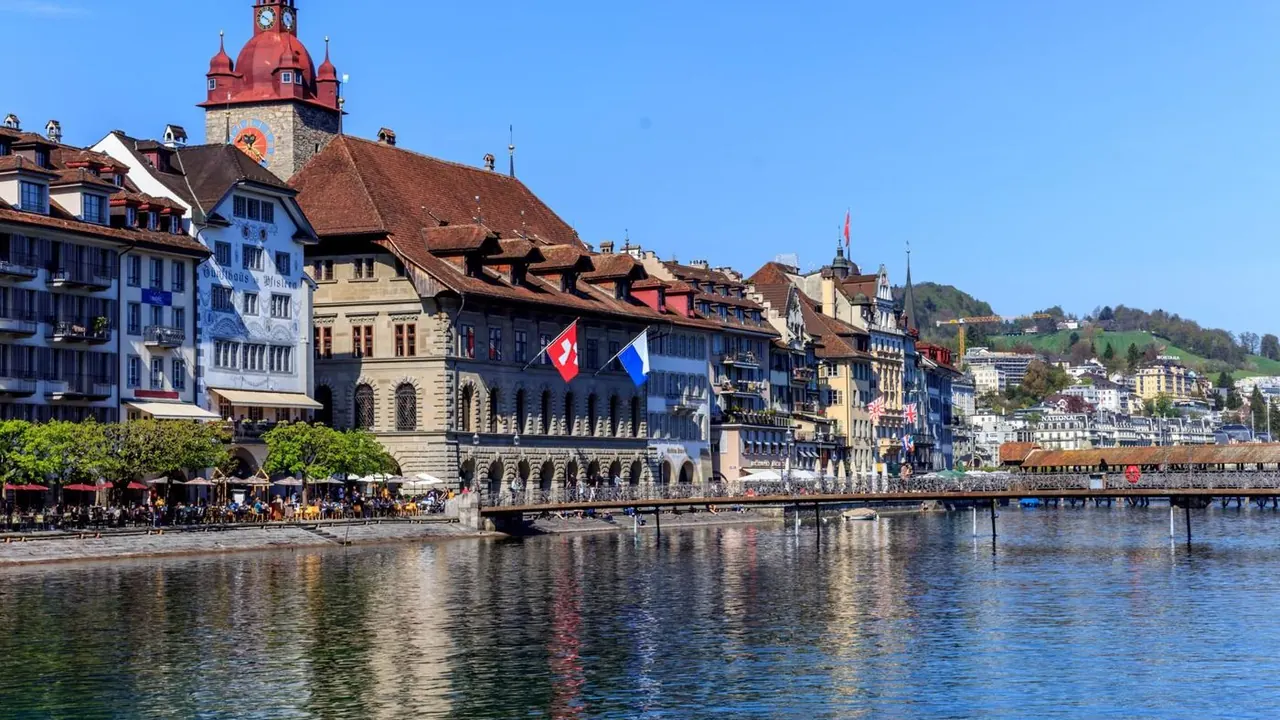
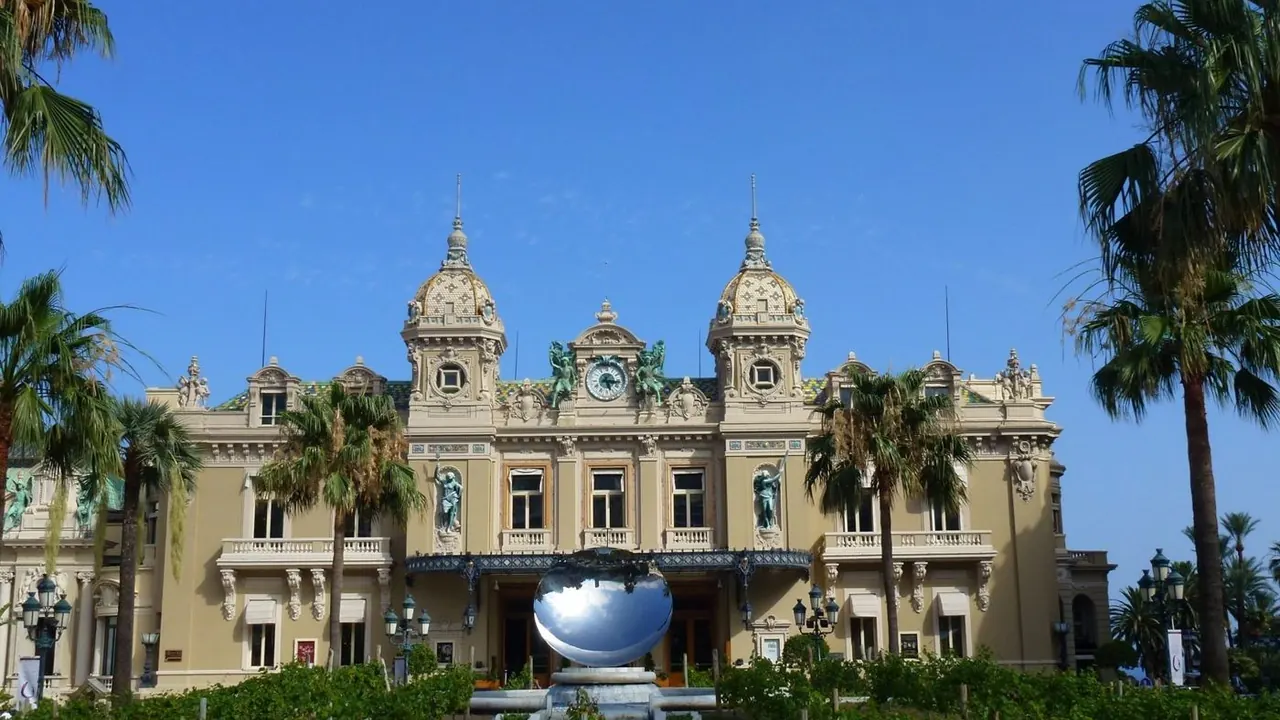
Photos: Lucerne by ILOVESwitzerland, Pexels License; Monaco by otterboris, CC BY 3.0, cropped.
Lucerne or Monaco?
Our verdict in twelve categories, each scored against the same fixed benchmark cities, and the climate month by month, so you can choose for your trip.
Choose Lucerne for
- nature and the outdoors
- getting around
- families
Lucerne is for travellers who want mountains on the doorstep. Pilatus and Rigi rise straight from the lake, paddle steamers and cogwheel railways make every excursion part of the pleasure, and the small, flat Old Town is easy on foot. It suits walkers, families with children and anyone content with quiet evenings and plain Swiss cooking after a day outdoors.
Choose Monaco for
- beaches
- food and drink
- nightlife
For a warm-weather trip on the Mediterranean, Monaco makes more sense. From June into early October the sea is clear and calm enough for long swims, the dining rooms and harbour terraces are far more polished, and evenings are for dressing up around the Casino. With Nice, Menton and Èze a short train or bus ride away, it works best as a glamorous Riviera base rather than a place to hike.
Scoreboard
Twelve categories on one fixed scale from 0 to 100. The shaded stretch is the gap between the two.
Your match
Pick a travel style or drag the sliders, and both match scores follow your weighting.
Wins on nature and the outdoors and getting around with your weighting.
Wins on beaches and food and drink with your weighting.
What matters to you?
Category by category
What the scores mean for a trip.
Beaches & swimming
Monaco is the better place to swim. Larvotto is a real if small groomed beach with calm, clear water, rocky platforms and beach clubs add more, and the season runs from June into October, with Cap d'Ail and Menton nearby for a change of scene.
Lucerne has no sand at all, only lake baths, jetties and the lawns at Ufschötti. The water is clean and the mountain backdrop is lovely, but it is only warm enough in high summer and works as a break between excursions.
Food & drink
Monaco eats much better. Its starred and grand hotel dining rooms cook Ligurian and Riviera food built on olive oil, fish and herbs, and the Condamine market sells local barbagiuan and socca, though casual eating is scarce.
Lucerne offers hearty, reliable Swiss fare: Chügelipastete, rösti, raclette and lake perch in wood-panelled taverns. It is pleasant on a riverside terrace but narrow in range, and many places near the Chapel Bridge cater for tour groups.
Culture & sights
The two are broadly level, each with a compact set of sights seen in a day or two. Lucerne's strength is a genuinely medieval townscape, with the covered Chapel Bridge, frescoed squares, the climbable towers of the Musegg Wall, the Lion Monument, and fine Picasso and Klee at the Rosengart Collection.
Monaco's appeal is royal and Belle Époque rather than medieval. The Prince's Palace and its guard ceremony, Grace Kelly's grave in the cathedral, the Oceanographic Museum on the cliff and the Casino give it more spectacle, while Lucerne has the more rewarding art collection.
Nightlife
Neither is a party city, but Monaco gives you more to do after dark. Evenings revolve around the Casino square, hotel bars and glossy seafront clubs, at their liveliest in summer and on Grand Prix weekend, though dress codes and prices rule out a casual night.
Lucerne winds down early: a drink by the water, a few cocktail bars near the station and a small club scene kept alive by students at weekends. The exception is Fasnacht, when the whole Old Town stays out in costume until dawn.
Nature & outdoors
Lucerne's setting is in another league. The lake branches between mountains, Pilatus climbs to over 2,000m on the steepest cogwheel railway in the world, Rigi has broad ridge walks, and paddle steamers let you combine boat, train and hike in one day, with skiing in winter.
Monaco itself is built over, but the limestone cliffs behind it are dramatic. The mule path up to Èze, the coastal walks around Cap Martin and the clear water for snorkelling and diving give it a sea-and-cliff outdoors that Lucerne cannot match, even if the scale is smaller.
Day trips
Both make excellent bases, and Monaco has a slight edge for variety. The coastal train reaches Villefranche, Nice and Menton within half an hour, and Antibes, Saint-Paul-de-Vence, Grasse and the Italian towns of Sanremo and Dolceacqua are all within easy range by public transport.
Lucerne's trips lean towards Swiss cities and history. Bern, Basel and Zurich are each under an hour by train, and a boat down the lake reaches the Rütli meadow and the William Tell country around Altdorf.
Good for families
Lucerne is the easier choice with children. The Swiss Museum of Transport fills a whole day with trains, planes and a planetarium, and the steamers, cogwheel trains and summer toboggan run on Pilatus are adventures in themselves, though rainy days can run short of ideas.
Monaco is safe and spotless, and the aquarium's sharks and turtles, Larvotto's gentle water and the palace guards please most children. Beyond those, its formal restaurants and steep streets make it feel built for adults.
Getting around
Lucerne is simpler. The station, boat piers and Old Town sit together on the flat lakefront, and steamers, trains and mountain railways run on one integrated ticket system, so even the big excursions need no car.
Monaco is tiny, about 3km from end to end, but it climbs steeply from the sea. Free public lifts and escalators help once you learn the network, and the station buried in the hillside makes the rest of the Riviera easy to reach.
Shopping & style
Both are narrow luxury offers, with Monaco slightly ahead. The Carré d'Or around the Casino gardens gathers the big fashion houses and high jewellers in a few streets, and window-shopping there is part of an evening out.
Lucerne's speciality is Swiss watches, sold in large houses on Schwanenplatz, along with army knives, chocolate and cuckoo clocks. It has fewer fashion labels than Monaco, and in both places anyone after everyday clothes will be disappointed.
Affordability
Neither can be done cheaply, and the difference between them is small. Lucerne is marginally less punishing, and supermarket picnics by the lake and a Swiss travel pass covering the boats soften the cost, though the mountain railways weigh heavily on the budget.
Monaco's hotels are priced for the very wealthy and cheap meals barely exist. The usual workaround is to sleep in Nice, Menton or Beausoleil and visit for the day, enjoying the free lifts, gardens and harbour walks.
Live music & performing arts
Both punch well above their size in classical music, but in different ways. Lucerne is about the concert hall: the Lucerne Festival brings the world's leading orchestras to Jean Nouvel's lakefront hall, famous for its acoustics, mainly in late summer.
Monaco is stronger on opera and dance. The gilded Salle Garnier in the Casino hosts the Monte-Carlo Opera, Les Ballets de Monte-Carlo has an international name, and the main season runs from winter to spring, which makes it the better pick for a cold-season arts trip.
Wellness & relaxation
Monaco has more to offer for a pampering break. Its large thalassotherapy centre beside the Casino, with heated seawater pools and treatments, carries on a long sea-cure tradition, and the grand hotels add sizeable spas.
Lucerne's restfulness comes from the setting rather than the facilities. A slow steamer cruise, the quiet lakeside promenades and Mario Botta's mineral bath high on the Rigi, about an hour away, suit travellers who unwind by looking at mountains.
When should you go?
Pick your month. The climate figures are measured averages, not a forecast.
Lucerne in July
Monaco in July
Daytime high, °C
Rainfall in the month, mm
Where the figures come from
Lucerne has no rain gauge within 25 km of the centre, so its rainfall comes from a gridded climate dataset read at the city rather than from a gauge further away.
Lucerne's sunshine is measured 42 km from the centre, at Zurich Town / Ville..
Temperature and rainfall are climate normals, averaged over the years shown. Lucerne: 2005-2025 (sunshine 1991-2020, rainfall 1991-2020) normals, Emmen (4.2 km from centre). Monaco: 1991-2020 normals, Nice (19.9 km from centre).
Lucerne is at its best from June to September. The days are mild to warm then, peaking around 24°C in July and August, which is good for hiking and lake steamers. A swim from the lake baths is only comfortable in high summer. These are also the wettest months, with about 124mm of rain a month from May to July, so low cloud can hide the peaks for days. Winter in town is cold, grey and short on sun, and it rewards only those heading up for snow.
Monaco has the opposite pattern. Summers are hot, sunny and nearly dry, with highs of 28°C and the sea reaching 25°C in August. The sea is warm enough for swimming from June to September, but the steep streets are hard work at midday. The rain comes in autumn and is heaviest in November, at about 138mm, so October and November are the months to avoid. Spring is the best time for walking. April and May are mild, fairly dry and bright while Lucerne is still cool, and through the winter Monaco stays far milder and sunnier than the lake.
Which traveller are you?
For an outdoors trip, Lucerne is the clear pick. Cogwheel railways and cable cars lift you onto Pilatus, Rigi and the Stanserhorn, ridge walks start at the top, and the Titlis glacier keeps snow all year, all without a car.
On a beach and sun trip, Monaco wins easily. Larvotto's sheltered water warms to Mediterranean temperatures, the coves of Cap d'Ail and the beaches of Menton are close, and summers are dry, while Lucerne's lake season is short and its shore is lawns and jetties.
For a food and nightlife trip, Monaco offers far more. Its starred hotel dining rooms, Riviera cooking and harbour terraces outclass Lucerne's fondue and guild-house menus, and the Casino square and seafront clubs keep going long after Lucerne's lakefront has emptied.
Before you go
| Measure | Lucerne | Monaco |
|---|---|---|
| Official language | French, German, Italian, Romansh | French |
| Currency | Swiss Franc (CHF) | Euro (EUR) |
| Sockets | CJ230 V, 50 Hz | CEF230 V, 50 Hz |
| Driving side | Right | Right |
| Time zone | UTC+1, UTC+2 in summer | UTC+1, UTC+2 in summer |
| Emergency number | 112 | 112 |
| Elevation | 436 m | 68 m |
| Main airport | Zürich Airport (ZRH)49 km from centre226 non-stop destinations | Nice-Côte d'Azur Airport (NCE)18 km from centre130 non-stop destinations |
| Public holidays this year | 12 days | 12 days |
By the numbers
| Measure | Lucerne | Monaco |
|---|---|---|
| City population | 86,234 | 38,857 |
| People per km² | 2,963 | 18,503 |
| Museums within 10 km | 14 | 14 |
| UNESCO World Heritage sites within 50 km | 1 | 2 |
| Swim season, months above 21 °C | - | 4 months |
Where else could you go?
Every comparison below shares a destination with this one, so you can follow Lucerne or Monaco somewhere new.