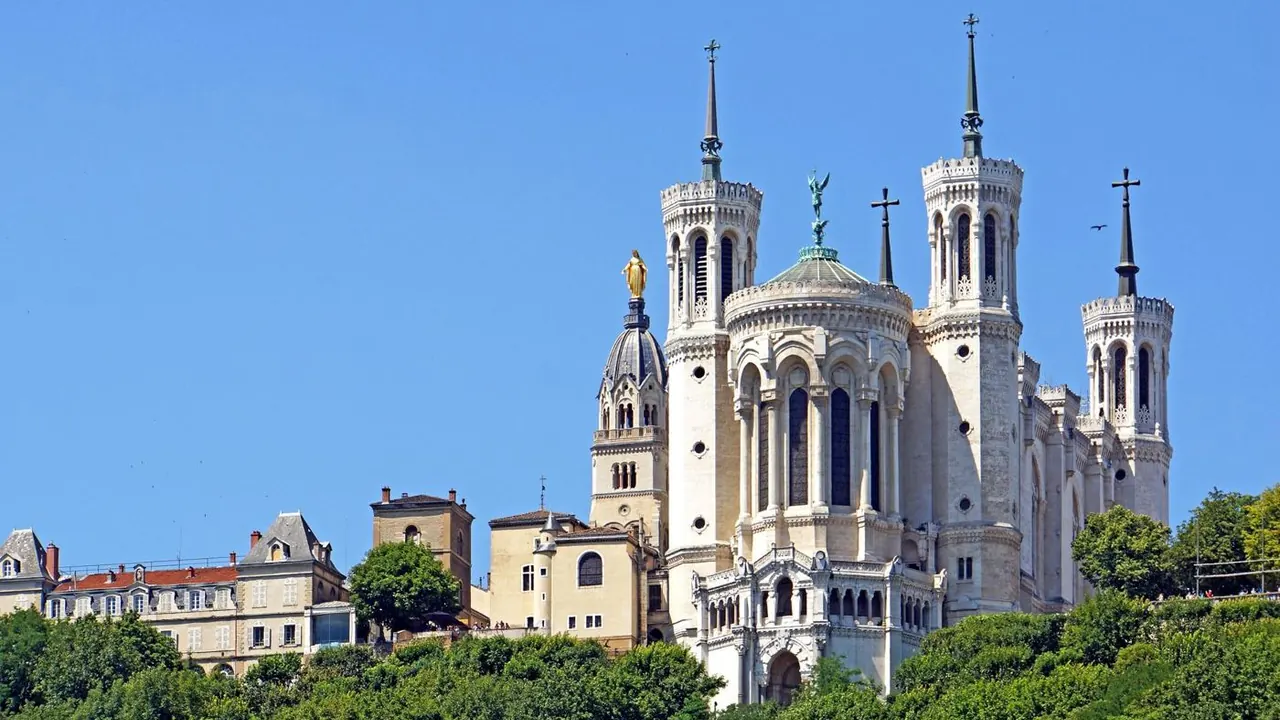
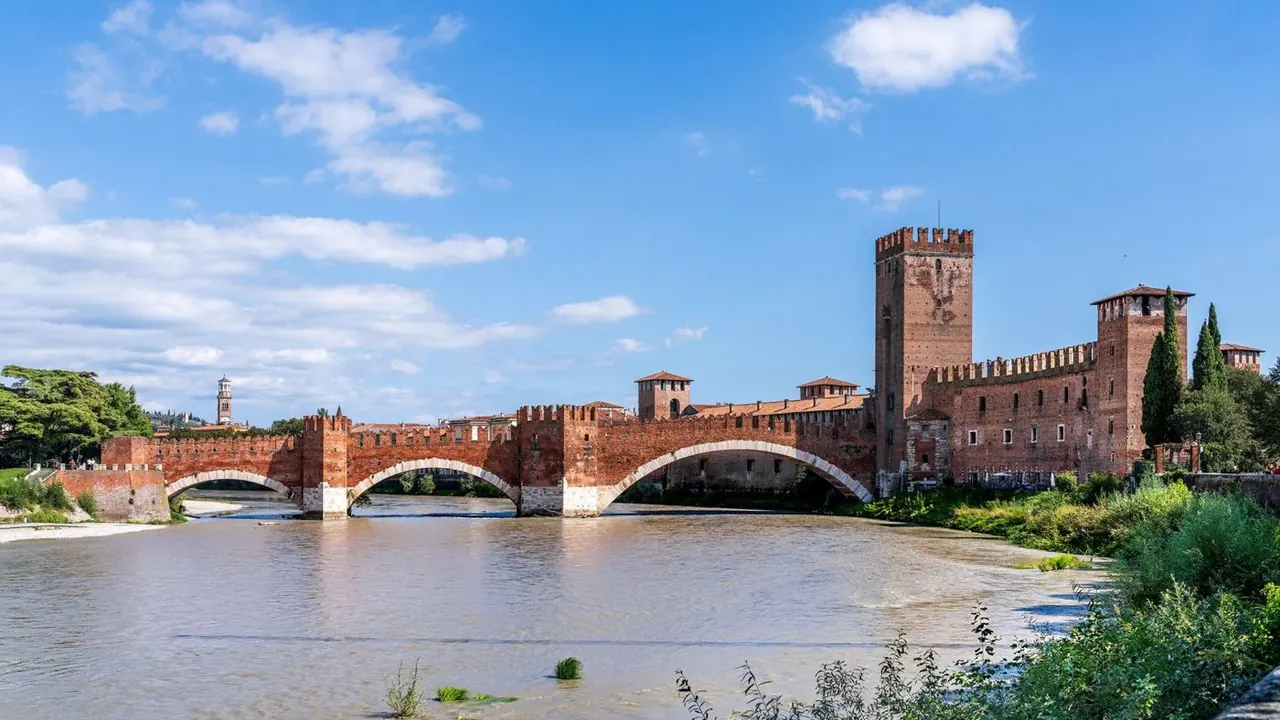
Photos: Lyon by Dennis G. Jarvis, CC BY-SA 2.0, cropped; Verona by NorbertNagel, CC BY-SA 4.0, cropped.
Lyon or Verona?
Our verdict in twelve categories, each scored against the same fixed benchmark cities, and the climate month by month, so you can choose for your trip.
Choose Lyon for
- nightlife
- food and drink
- getting around
Lyon suits travellers who plan the day around the next meal. Its bouchons, the Halles Paul Bocuse and the long set lunches make eating the main event, and the evenings carry on later than Verona's, from wine bars on the Presqu'île to club barges on the Rhône. A metro, trams and funiculars make it easy to spend a longer stay in the city itself.
Choose Verona for
- beaches
- day trips
- wellness
Verona works best as a base. The small Roman and medieval centre is easy to see on foot, and Venice, Padua, Vicenza and the shores of Lake Garda are all close enough to fill the days around it. Choose it for opera under the stars in the Arena, an afternoon swim in the lake or a soak in Sirmione's warm springs.
Scoreboard
Twelve categories on one fixed scale from 0 to 100. The shaded stretch is the gap between the two.
Your match
Pick a travel style or drag the sliders, and both match scores follow your weighting.
Too close to call, 1 point apart
Wins on nightlife and food and drink with your weighting.
Wins on beaches and day trips with your weighting.
What matters to you?
Category by category
What the scores mean for a trip.
Beaches & swimming
Neither city is on the coast, but Verona has proper swimming much closer. Lake Garda's southern shore is about half an hour away by car or a short train ride to Peschiera. It has calm, clear water, lidos with sunbeds and pebbly coves, and the season runs from June to September.
From Lyon, the nearest swim is the supervised lake at Miribel-Jonage on the city's edge. The Alpine water of Annecy and the Lac du Bourget is a long day out, not something to fit around a city stay.
Food & drink
Lyon is one of Europe's great food cities, and it eats better than Verona at almost every level. Its bouchons serve quenelles, andouillette and praline tart, there is a deep fine-dining tradition that goes back to the Mères lyonnaises, and the generous set lunches make eating well easy. The Halles Paul Bocuse and the markets along the Saône add to it.
Verona's cooking is more rustic and narrower: Amarone risotto, bigoli with duck and bollito with peppery pearà, served in plain osterie around Piazza delle Erbe and in Veronetta. Its strength is the glass in your hand, with Valpolicella and Soave from just outside town. Neither city offers much street food.
Culture & sights
Both cities have a UNESCO-listed centre and two thousand years of history, but the history is laid out very differently. Lyon's is spread across two hills and a river peninsula. The Roman theatres and the Gallo-Roman museum are on Fourvière, the Renaissance lanes and traboules of Vieux Lyon lie below them, and the silk-weavers' workshops stand on Croix-Rousse. The Beaux-Arts and the Musée des Confluences give it more depth in museums, but there is no single famous landmark, and it takes a few full days to see well.
Verona has exactly that landmark in the Arena, and its sights are packed into a compact centre in and around one loop of the Adige: Piazza delle Erbe, the Scaliger tombs, Castelvecchio in Carlo Scarpa's setting, and the Roman theatre just across the river. San Zeno, with its bronze doors, is a pleasant walk to the west. Two or three unhurried days on foot are enough to see it all.
Nightlife
Lyon goes out more, and later. Its large student population fills the wine and cocktail bars between Hôtel de Ville and the Terreaux, and the barges on the Rhône quays turn into bars and clubs. Warehouse clubs towards Gerland and the Confluence keep the electronic scene going.
Verona's evening is the aperitivo, a spritz or a glass of Valpolicella in Piazza delle Erbe, with younger and cheaper bars across the river in Veronetta. Apart from the late crowd leaving the Arena opera in summer, the streets empty well before the small hours.
Nature & outdoors
The outdoors are equally good in both, but you find them in different places. In Lyon the rivers bring them into the city: car-free quays for running and cycling, boating on the lake in the Parc de la Tête d'Or, and the Chartreuse and Vercors massifs an hour or more away.
Verona's best outdoors lie around it. There are vineyard walks in the Valpolicella hills, ridge paths and paragliding on Monte Baldo, wind for sailing at the northern end of Garda, and the gorges of the Lessinia plateau.
Day trips
Both are good bases, but Verona's day trips are in a different league. Venice, Padua's Scrovegni Chapel, Palladio's Vicenza and Mantua are all an easy train ride away. Add the Garda harbours and the cellars of Valpolicella and Soave, and you could fill a week without repeating yourself.
Lyon's outings are lower-key and centre on wine and small old towns: Roman Vienne, medieval Pérouges, the Beaujolais villages and further on Cluny and Beaune. Annecy and Geneva are near the limit of a day out.
Good for families
Lyon keeps its best things for children inside the city. The Parc de la Tête d'Or has a free zoo, pony rides and pedalos, and the Musée des Confluences has dinosaur skeletons. Guignol puppet shows and the Fourvière funiculars add to the fun. The catch is the stepped lanes on the hills, which are hard work with a pushchair.
Verona is the other way round. Its centre is flat, largely pedestrian and easy with a buggy, but apart from the Arena and the Roman theatre the sights are aimed at adults. The big days out, Gardaland and the drive-through safari at Parco Natura Viva, are about half an hour away and need a car or a transfer.
Getting around
Lyon is the easier city to get around. Its flat centre on the Presqu'île is served by metro, trams, buses and funiculars, all on one ticket system, and a rack-style metro line climbs Croix-Rousse. Bike share, riverside cycle paths and the Rhônexpress tram to the airport fill the gaps. The metro is small, though, and the hills are steep, so some journeys still mean a climb or a change.
Verona has no metro or tram, but inside the river loop it hardly needs one, because every main sight is a short walk from the next. Trains to Venice, Milan and the lake are excellent. The Valpolicella villages and the Lessinia are another matter, and much easier to reach with a car.
Shopping & style
Lyon offers a little more to shop for. As well as the chains on rue de la République, the luxury labels near Place des Jacobins and the large mall at Part-Dieu, there is local silk and there are designer workshops on the slopes of Croix-Rousse.
Verona's shopping is smart and provincial, centred on the marble-paved Via Mazzini and the boutiques along Corso Porta Borsari. Keen shoppers head to Milan. In both cities the best things to bring home are edible: pralines and cheese from Lyon, Amarone and pandoro from Verona.
Affordability
In Lyon you save at the table, because the set lunches in bouchons are generous, even though dinner costs the same as anywhere else in France. Rooms are reasonable for most of the year but become scarce and expensive around the Fête des Lumières and the big trade fairs.
In Verona the room is the main cost, since hotels in the historic centre are dear for a provincial city, especially on summer opera nights. On the other hand, getting around on foot costs next to nothing and the local wine is good value. Staying near the station or across the river softens the bill.
Live music & performing arts
Lyon keeps its stages busy all year. The Opéra under its glass vault puts on opera and ballet, the Orchestre National plays at the Auditorium, and the Célestins is one of France's grand old playhouses. Dance is the city's speciality, at the Maison de la Danse and the Biennale, and in summer the Nuits de Fourvière brings performances to the Roman theatres.
Verona puts almost everything into its summer opera season in the Arena, where grand productions of Verdi and Puccini play to thousands of people on the stone tiers. On the same warm nights, Shakespeare and jazz play in the Roman theatre. From autumn to spring the Teatro Filarmonico offers only a modest programme.
Wellness & relaxation
Verona has much better access to thermal water. Sirmione's sulphur springs feed pools that look out over Lake Garda, a warm spring-fed lake sits in a villa garden near Lazise, and the springs at Caldiero have been in use since Roman times.
Lyon's options in town are hammams, hotel spas and the big open-air pool on the Rhône quays. Real thermal bathing means the trip to Aix-les-Bains, about an hour and a half away. In both cities the more ordinary calm comes from long lunches and riverside strolls.
When should you go?
Pick your month. The climate figures are measured averages, not a forecast.
Lyon in July
Verona in July
Daytime high, °C
Rainfall in the month, mm
Temperature and rainfall are climate normals, averaged over the years shown. Lyon: 1991-2020 normals, Lyon / Bron (10.6 km from centre). Verona: 1991-2020 normals, Verona / Villafranca (11.6 km from centre).
The two cities follow a similar year, with Verona a couple of degrees warmer in summer and sunnier in winter. January is cold and grey in both, at around 7°C by day, though Verona gets noticeably more winter sun. Spring warms up from April, and by late May both are pleasant for long days on foot. In July and August Lyon peaks at about 28°C. Verona reaches about 30°C under the brightest skies of its year, which makes it the time for a swim in Lake Garda. The hottest afternoons in Verona's stone piazzas are best spent in the shade or by the water.
September keeps much of the summer warmth and sun without the peak heat, but it is not dry. It is Verona's wettest month, at about 85mm, and almost as wet in Lyon. Lyon's rain then peaks in October at around 100mm, while Verona's autumn stays a little lighter. For comfortable sightseeing, June is the safest month in either city. May and September are warm and often bright, but you should pack for showers.
Which traveller are you?
On a beach and sun trip, Verona is the clear choice. The southern shore of Lake Garda is about half an hour away, with lidos, lawns that run down to the water and Sirmione's limestone shelves. The nearest real swimming from Lyon means a long drive into the Alps.
For a food and nightlife trip, Lyon wins comfortably. You can eat at its bouchons and markets from lunch until late, and after dinner there are wine bars on the Presqu'île, barges on the Rhône and a serious electronic club scene. Verona's evenings mostly end after the aperitivo.
On a relaxing and wellness trip, Verona has the edge. Warm springs rise all around it, at the thermal centre in Sirmione, the spring-fed lake near Lazise and the old baths at Caldiero. Lyon offers day spas, and its nearest real thermal water is at Aix-les-Bains.
Before you go
| Measure | Lyon | Verona |
|---|---|---|
| Official language | French | Italian |
| Currency | Euro (EUR) | Euro (EUR) |
| Sockets | CE230 V, 50 Hz | CFL230 V, 50 Hz |
| Driving side | Right | Right |
| Time zone | UTC+1, UTC+2 in summer | UTC+1, UTC+2 in summer |
| Emergency number | 112 | 112 |
| Elevation | 160 m | 59 m |
| Main airport | Lyon Saint-Exupéry Airport (LYS)20 km from centre141 non-stop destinations | Verona Villafranca Valerio Catullo Airport (VRN)10 km from centre96 non-stop destinations |
| Public holidays this year | 11 days | 13 days |
By the numbers
| Measure | Lyon | Verona |
|---|---|---|
| City population | 519,127 | 255,588 |
| People per km² | 10,838 | 1,285 |
| Museums within 10 km | 43 | 18 |
| UNESCO World Heritage sites within 50 km | 2 | 5 |
Where else could you go?
Every comparison below shares a destination with this one, so you can follow Lyon or Verona somewhere new.