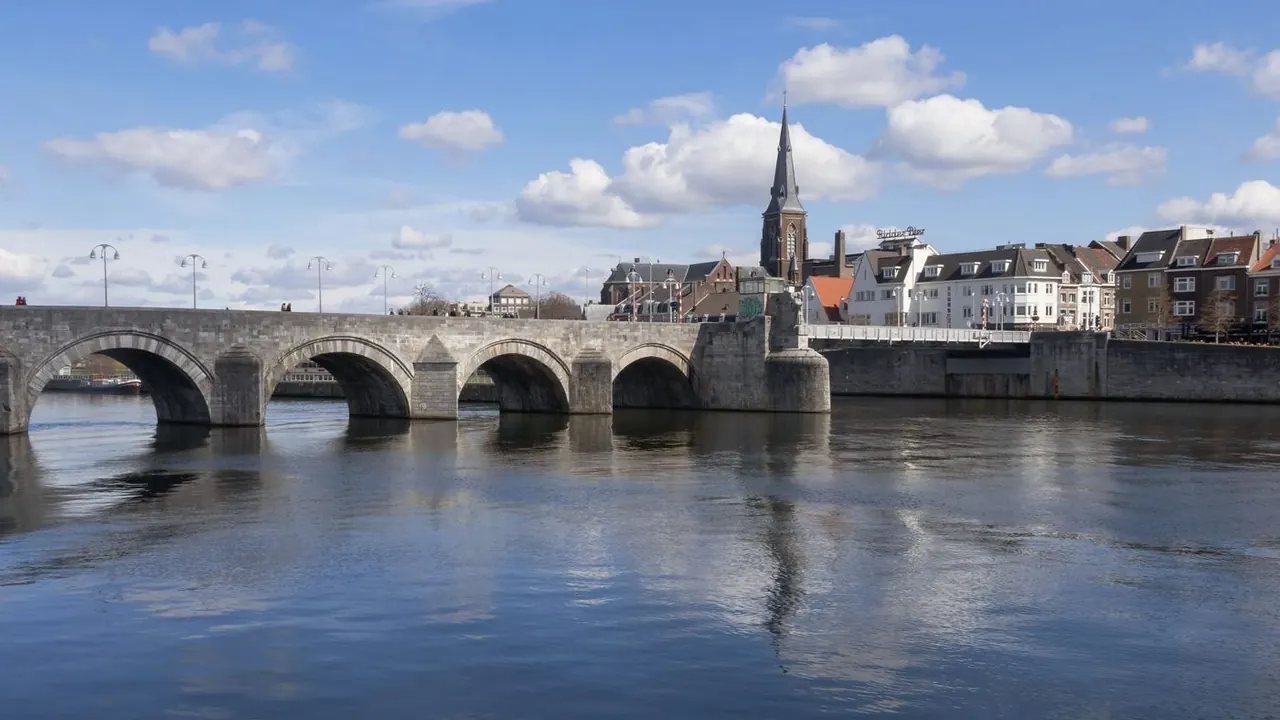
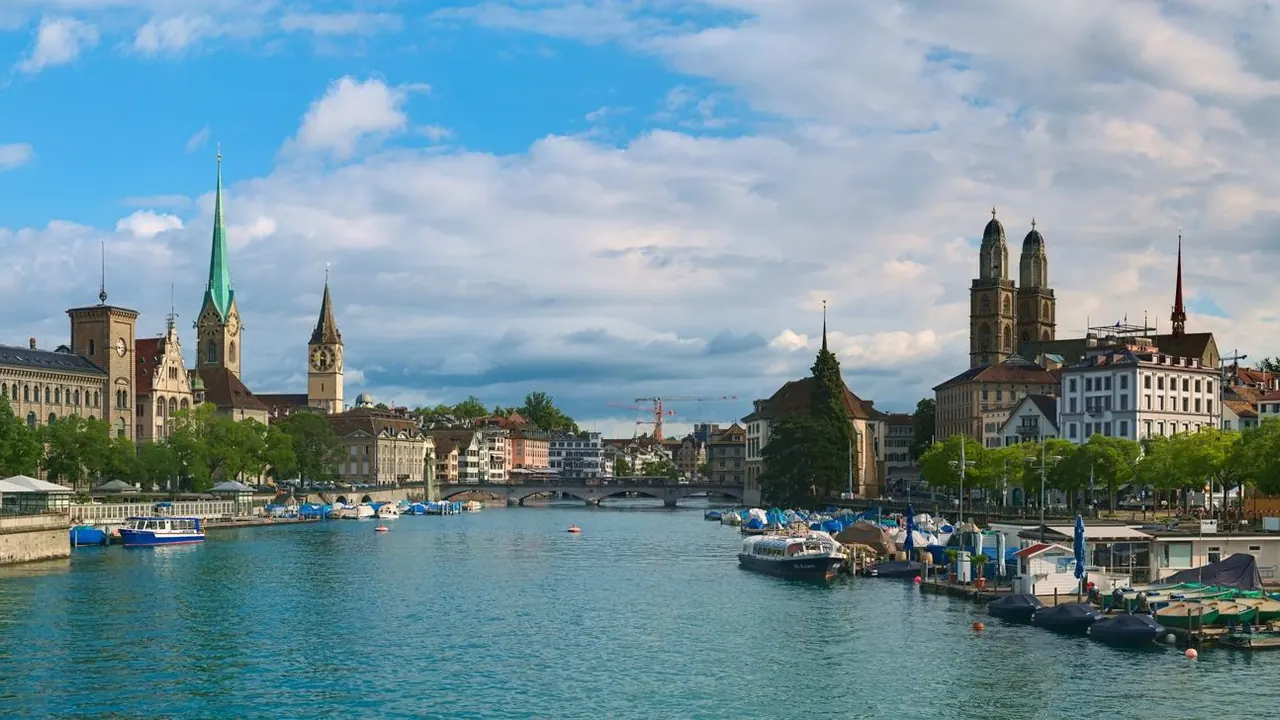
Photos: Maastricht by Michielverbeek, CC BY-SA 4.0, cropped; Zurich by Daniel Kraft, CC BY-SA 3.0, cropped.
Maastricht or Zurich?
Our verdict in twelve categories, each scored against the same fixed benchmark cities, and the climate month by month, so you can choose for your trip.
Choose Maastricht for
- prices
- food and drink
- culture and sights
Maastricht suits a relaxed weekend of long lunches, Belgian beer on the squares and short trips into Belgium and Germany. It is much easier on the wallet, and you can walk across it in a quarter of an hour. At carnival the whole town becomes a street party, which Zurich has nothing to match.
Choose Zurich for
- beaches
- live music and the arts
- nature and the outdoors
Zurich is the better pick if you want more from the days and evenings themselves. It has lake swimming in summer, the Alps about an hour away, a respected opera house and clubs that stay open until morning. It is also easier for families and for anyone who would rather not drive, as long as the budget can cope with one of the most expensive cities in Europe.
Scoreboard
Twelve categories on one fixed scale from 0 to 100. The shaded stretch is the gap between the two.
Your match
Pick a travel style or drag the sliders, and both match scores follow your weighting.
Wins on prices and food and drink with your weighting.
Wins on beaches and live music and the arts with your weighting.
What matters to you?
Category by category
What the scores mean for a trip.
Beaches & swimming
Neither city is a beach destination, but Zurich does far more with its water in summer. From June to early September you can swim from the wooden bathing houses and grassy lidos along its clean lake, or drift down the Limmat with the current at Letten, all close to the old town.
Maastricht has nothing like this in the city itself. The old gravel-pit lakes along the Maas have small sandy shores and are fine for a hot afternoon, but a hotel pool is the more reliable way to swim.
Food & drink
The two cities eat about equally well, but in different styles. Maastricht's food comes from Limburg and Belgium: zuurvlees with fries, vlaai from the bakery, asparagus and game in season, local white wine and Belgian beer. You eat it in brown cafés or out on the terraces of the Vrijthof and Wyck.
Zurich's cooking is richer and more Alpine, with veal Geschnetzeltes and rösti, fondue in the guild-house dining rooms in winter, and chocolate and confectionery as its real strength. Its casual and international places in Kreis 4 and 5 give it a little more variety. Neither city has much street food, and every meal in Zurich costs far more.
Culture & sights
The two are evenly matched for sights, and either can be covered in two or three days. Maastricht's strength is its age. Its Romanesque basilicas, the Helpoort and the medieval walls, the 13th-century bridge and the guided tunnels of the Sint-Pietersberg make the whole town feel historic.
Zurich relies more on its museums. The Kunsthaus, the Swiss National Museum and the Rietberg give it more art and history to see indoors. Its Altstadt adds the Grossmünster, where the Swiss Reformation began, and Chagall's windows in the Fraumünster.
Nightlife
Zurich has far more going on at night, mainly thanks to electronic music. At weekends, clubs in Kreis 4 and 5 and Zurich West stay open until morning, Langstrasse stays busy late, and every August the Street Parade takes over the lake shore. The catch is the price of a round.
Maastricht is a bar town rather than a club town. Students drink Belgian beer in the brown cafés around the Markt and the Vrijthof, and people who want a big night out cross the border. Carnival is the exception, when the whole town parties in the streets for days.
Nature & outdoors
Zurich's setting is far grander. It has the lake with the Glarus Alps on the horizon, the Uetliberg ridge a short train ride away, and proper mountain hiking and skiing within about an hour. That makes it a strong base for active days in any season.
Maastricht's countryside is softer. It has the marl cliffs of the Sint-Pietersberg, the green Jeker valley, and the orchards and sunken lanes of the Heuvelland that road cyclists love. It is lovely in spring and early autumn, but gentle rather than dramatic.
Day trips
Both cities are excellent bases, and Zurich edges ahead because its trips are so easy and so varied. Lucerne, Bern, Basel and St Gallen are each about an hour away by train, the Rhine Falls and Stein am Rhein lie to the north, and you never need a car.
Maastricht's appeal is the number of countries within reach. Aachen and Liège are each about half an hour away and Tongeren and Valkenburg are even closer. Cologne, Brussels and Leuven make longer days out, so one short stay can take in three countries and languages.
Good for families
Maastricht is small, flat and quiet, so children can roam the squares while parents linger on a terrace. Older children can cycle the easy riverside paths along the Maas. For a bigger outing you leave town, perhaps for the large zoo at Kerkrade, and the city's own pleasures are aimed more at adults.
Zurich gives families more to do, and none of it needs a car. The Technorama science centre in Winterthur is about twenty minutes away by train, Lucerne's Swiss Museum of Transport makes a full day out, and the zoo's hill has forest playgrounds. There is no big theme park nearby, though, and the calm evenings suit younger children better than teenagers.
Getting around
Both centres are compact and easy to walk, but Zurich's public transport is far better. Trams, S-Bahn trains, funiculars and even the lake boats all use the same ticket, and direct trains from the main station reach the airport and most of the country.
In Maastricht you walk or cycle. Everything is within about fifteen minutes on foot, and the riverside paths are easy on a bike. Trains run to Liège and Aachen, but the hill villages are much easier to reach by car or bike.
Shopping & style
Zurich has the better shopping, mainly at the expensive end. Bahnhofstrasse runs from the station to the lake past watchmakers, jewellers and department stores, and design shops fill the old railway arches in Zurich West. Prices are high everywhere.
Maastricht is where its Dutch, Belgian and German neighbours come for a weekend of shopping. It has designer boutiques in the restored houses of the Stokstraat quarter, high-street brands on the Grote Staat, independent shops in Wyck and a weekly market on the Markt. It is more relaxed to browse, but has less luxury.
Affordability
Maastricht costs much less. Restaurants, terrace drinks and hotels are priced at the usual Dutch level, a little below the big Dutch cities. The main thing that pushes prices up is the weekend, when visitors on short breaks fill the rooms, so arriving on a Sunday and leaving before Friday is the simplest way to save.
Zurich costs more to visit than almost anywhere else in Europe, and the high prices apply to museums and transport as well as rooms, meals and drinks. The visitor card, which combines travel with museum entry, helps a little. Summer helps more, because the public lidos are free, the drinking fountains run with clean water, and a supermarket picnic by the lake is how many careful travellers eat.
Live music & performing arts
Zurich is the place for a night at the opera or a concert. The Opernhaus has a full season of opera and ballet, and the Tonhalle Orchestra plays in a restored nineteenth-century hall. For jazz, indie and touring bands there are the Rote Fabrik and the venues in Kreis 4 and 5.
In Maastricht most performances happen at the theatre on the Vrijthof, home to the regional orchestra and opera, along with organ concerts in the churches and recitals by conservatory students. Its biggest moments are the open-air summer concerts on the Vrijthof and the brass bands at carnival, not a full season of performances.
Wellness & relaxation
Zurich has a little more right on the doorstep. There are thermal pools and a rooftop pool in the vaults of the old Hürlimann brewery, and in winter the bathing houses on the lake and river become saunas, with cold dips between sessions. Baden's hot springs are twenty minutes away by train.
Maastricht has no baths of its own, but the region makes up for it. The thermal spa above Valkenburg, Aachen's baths, in use since Roman times, and the Belgian town of Spa itself are all within an hour. The city's slow rhythm of long lunches and riverside walks is restful in its own way.
When should you go?
Pick your month. The climate figures are measured averages, not a forecast.
Maastricht in July
Zurich in July
Daytime high, °C
Rainfall in the month, mm
Temperature and rainfall are climate normals, averaged over the years shown. Maastricht: 1991-2020 normals, Maastricht Airport Zuid Limburg (10 km from centre). Zurich: 1991-2020 normals, Zurich Town / Ville. (2.2 km from centre).
The two cities have almost the same temperatures through the year. Summer days reach around 24°C in July and August, May to September is comfortable for walking, and winters are cold and grey. Zurich is a little colder, with January highs of only 4°C. The big difference is rain. In Maastricht it falls fairly evenly all year and peaks at 84mm in August. Zurich's early summer is wet, with around 126mm a month from May to July.
Even so, Zurich gets more sunshine in high summer, and July and August are its best months, warm enough for the lake lidos. In Maastricht, late spring and September bring the most settled weather for sitting outside, and April is noticeably dry. Both cities are dim from November to January, so a winter visit means cafés and saunas, and in Zurich the nearby snow.
Which traveller are you?
On a trip on a tight budget, Maastricht is the clear choice. Bakery lunches, cheap beer in brown cafés and a centre you can walk end to end keep costs down. In Zurich, even a casual lunch or a simple hotel room is expensive.
For an outdoors trip, Zurich wins easily. The lakeside paths and the Uetliberg start in town, and Rigi, Pilatus and the slopes at Flumserberg are about an hour away. Maastricht has the gentle Heuvelland hills and good cycling, which are pleasant but much tamer.
On a family trip with children, Zurich makes life easier. The zoo with its rainforest hall, the shallow lake lidos, the boat trips and trams that take buggies keep the days simple. In Maastricht the tunnel tour is the main outing, and most children's attractions are out in Valkenburg.
Before you go
| Measure | Maastricht | Zurich |
|---|---|---|
| Official language | Dutch | French, German, Italian, Romansh |
| Currency | Euro (EUR) | Swiss Franc (CHF) |
| Sockets | CF230 V, 50 Hz | CJ230 V, 50 Hz |
| Driving side | Right | Right |
| Time zone | UTC+1, UTC+2 in summer | UTC+1, UTC+2 in summer |
| Emergency number | 112 | 112 |
| Elevation | 49 m | 408 m |
| Main airport | Maastricht Aachen Airport (MST)9 km from centre5 non-stop destinations | Zürich Airport (ZRH)9 km from centre226 non-stop destinations |
| Public holidays this year | 11 days | 10 days |
By the numbers
| Measure | Maastricht | Zurich |
|---|---|---|
| City population | 120,227 | 440,935 |
| People per km² | 2,000 | 5,016 |
| Museums within 10 km | 21 | 63 |
| UNESCO World Heritage sites within 50 km | 5 | 1 |
Where else could you go?
Every comparison below shares a destination with this one, so you can follow Maastricht or Zurich somewhere new.