Macau or Singapore?
Two destinations compared in twelve categories, each scored against the same fixed benchmark cities. Weight what matters to you and the verdict follows.
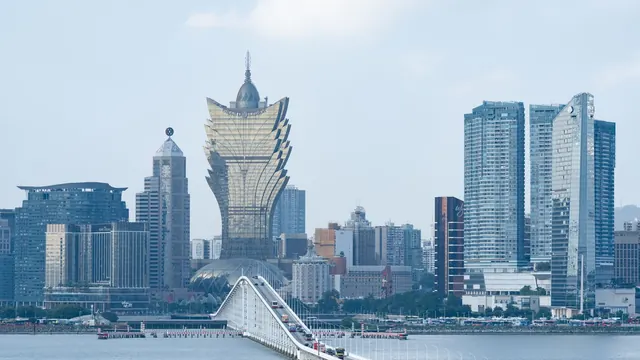
Photo: tian Jin, Pexels License
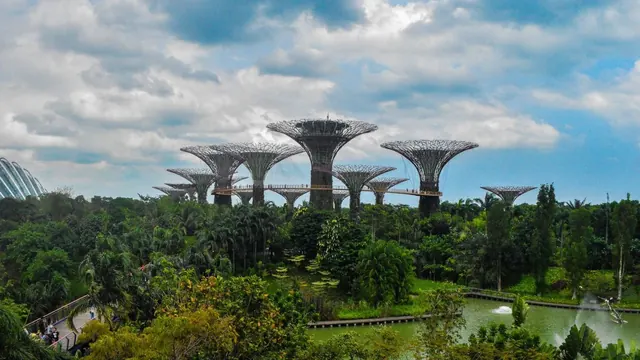
Photo: Kai Kai, Pexels License
Your match
Wins on day trips and prices with your weighting.
Wins on nature and the outdoors and families with your weighting.
What matters to you?
Pick a travel style or drag the sliders. The match scores above update as you do.
The verdict
Macau suits a traveller who wants a short, unusual stop built around eating and old streets. It has Macanese cooking that you will find almost nowhere else, a UNESCO-listed centre where Portuguese churches stand beside Chinese temples, and Hong Kong and Guangzhou within easy reach for a day out. It works well as two or three days added to a Hong Kong trip, and it costs less if you stay midweek.
Singapore is the easier place to spend a full week, and the better one if you have children. Its wildlife parks and Sentosa keep families busy, the MRT takes the effort out of every journey, there is real rainforest inside the city limits, and the hawker centres feed you well at any hour. Expect to pay noticeably more for your room.
Scoreboard
Our verdict on each category, scored 0 to 100 against fixed benchmark cities.
Category by category
What the scores mean for a trip to Macau or Singapore.
Beaches & swimming2440
Neither city is a beach destination, but Singapore makes a better job of it. Macau's two beaches, Hac Sa and Cheoc Van on Coloane, have dark sand and brownish water clouded by silt from the Pearl River. Locals go there for barbecues more than for swimming.
Singapore's Sentosa beaches are man-made, with tankers on the horizon, but the lagoons behind the breakwaters are calm and safe for a swim. A ferry to St John's or Lazarus gets you quieter water. In both cities most visitors end up swimming in the hotel pool.
Food & drink7788
Both are excellent places to eat, but Singapore offers more variety and makes it easier to eat well wherever you are. Macau's strength is a cuisine that belongs to it alone: Macanese dishes such as minchi and African chicken, old Portuguese dining rooms, Cantonese dim sum, and egg tarts eaten in the lanes near St Paul's.
Singapore's hawker centres, from Maxwell to Tekka, serve dishes from Chinese, Malay, Indian and Peranakan cooking side by side. Little India and Kampong Glam keep serving late into the evening. A fine-dining tier sits above all this, so you can eat well at any hour and at almost any budget.
Culture & sights6262
The two are evenly matched, but what you see is very different. Macau's heritage is older and all in one place. The Ruins of St Paul's, Senado Square, A-Ma Temple and the hilltop fortresses record four centuries of Portuguese and Chinese life together, and you can see it all on foot in a day or two.
Singapore's history is younger. Its strength is in its museums, with the National Gallery and the Asian Civilisations Museum, and in its ethnic quarters, each with its own temples and mosques. The modern skyline around Marina Bay is as much a sight as anything historic.
Nightlife4050
Singapore gives you more to do in the evening. Its cocktail bars fill the shophouses of Keong Saik and Telok Ayer, there are rooftop terraces above Marina Bay, and the riverside quays have the main clubs. You can move from one bar to the next without much planning, although drinks are heavily taxed.
Macau's nights are built around the casinos, with lounges and occasional clubs inside the resorts. The old centre goes quiet by late evening, and without an interest in gambling there is little to explore.
Nature & outdoors545
This is one of the widest gaps between the two. Macau is almost entirely built up or reclaimed, and its green space amounts to the wooded hills and short trails of Coloane and the walk around Guia Hill.
Singapore keeps genuine tropical rainforest at Bukit Timah and MacRitchie, where you are likely to see macaques and monitor lizards. It also has the wetlands of Sungei Buloh, with migrating birds and the odd crocodile, and Pulau Ubin with its mangroves. The island is flat and the heat confines hiking to early mornings, but there are several good outings.
Day trips5225
Macau is better placed for days out. Hong Kong is about an hour away by fast ferry or by bus over the sea bridge, and Guangzhou is a short fast-train ride beyond the border at Zhuhai. Every trip means passport control, and some nationalities need a visa for the mainland.
From Singapore, the options are thin. Queues at the causeway to Johor Bahru can eat up much of the day, Bintan and Batam are mainly resort stays, and Malacca really needs a night.
Good for families4888
Singapore is far easier with children. It has the Mandai wildlife parks with the Night Safari, Universal Studios and the aquarium on Sentosa, and the water-play garden at Gardens by the Bay. Lifts, air conditioning and familiar food are found everywhere.
Macau offers a science centre with a planetarium, the panda pavilion on Coloane and elaborate resort pools. However, the city is built around gaming, and the stairways of the old centre are hard work with a pushchair. It works best as a short stop.
Getting around6092
Singapore is far simpler to get around. The step-free, air-conditioned MRT reaches almost every place a visitor goes, from the airport to the rainforest reserves, and you can pay with a contactless card on both trains and buses.
In Macau you explore the hilly old peninsula on foot. Between there and Taipa and Cotai, you piece journeys together from crowded buses, the Taipa light rail and free casino shuttles, and taxis can be hard to find at busy times. Distances are short in both cities.
Shopping & style5876
Both cities sell luxury in large air-conditioned malls, but Singapore has much more beyond them. Orchard Road and Marina Bay Sands cover the big brands. Haji Lane and Tiong Bahru have small boutiques and design shops, and Chinatown and Little India sell spices, saris, gold and Peranakan beadwork.
Macau's resort malls, some styled as Venetian canals, are worth a visit for serious luxury buyers. Outside them, the lanes mostly sell almond cookies and jerky, with Portuguese tiles and tinned fish as the more interesting things to take home.
Affordability4425
Macau is the cheaper of the two, particularly for where you sleep. Resort rooms can be reasonable on weeknights and only climb sharply at weekends and during the mainland's festival weeks, so choosing your dates makes a real difference.
Singapore's rooms are expensive even at plain mid-range hotels, and drinks and the big paid attractions add a lot to the bill. In both cities, street food, public transport and walking keep the rest of your daily spending low.
Live music & performing arts3650
Singapore has more on in any given week. The Esplanade hosts the Singapore Symphony Orchestra's season and stages free outdoor performances by the bay, and touring musicals play at Marina Bay Sands.
Macau's stage life is smaller and seasonal. The historic Dom Pedro V Theatre and the Macao Cultural Centre host the city's orchestra, while the autumn music festival and spring arts festival bring in visiting companies. On an ordinary night there may be little on, so check the programme before you go.
Wellness & relaxation4040
The two are level, and in both a relaxing day means a hotel spa rather than any local bathing tradition. Macau's Cotai resorts are well suited to a full day of pool, spa and room service, and its old-town foot-massage parlours are a cheaper option. Coloane village is the quietest place to slow down.
Singapore adds traditional Chinese medicine clinics in Chinatown and Ayurvedic treatments in Little India. Its calmest moments are outdoors, in the Botanic Gardens early in the morning or on the shaded paths around the reservoirs.
Which traveller are you?
On a family trip with young children, Singapore is the clear choice. The zoo, Night Safari and bird park at Mandai and the rides and aquarium on Sentosa will fill a week, and the trains have lifts throughout. Macau's science centre and pandas fill about a day.
For an outdoors trip, Singapore wins, though within limits. It has rainforest trails at Bukit Timah and MacRitchie, the raised walkways of the Southern Ridges and a bike ride on Pulau Ubin. Macau has little beyond Coloane's short hill paths and the loop around Guia Hill.
On a tight budget, your money goes further in Macau. The historic centre costs nothing to walk, the resort shuttles are free, and midweek rooms can be reasonable. In Singapore the hawker stalls and trains are cheap, but hotel rooms stay expensive every night.
When should you go?
Pick the month you can travel and see both cities side by side. The climate figures are measured averages, not a forecast.
| July | Macau | Singapore |
|---|---|---|
| Daytime high | 32 °C | 31 °C |
| Night-time low | 26 °C | 25 °C |
| Rainfall in the month | 281 mm | 145 mm |
| Sunshine | 7 hours a day | 6 hours a day |
| Sea temperature | 29 °C | 30 °C |
| Daylight | 13 hours a day | 12 hours a day |
Macau has real seasons. October and November are its best months: warm, mostly dry and sunny, good for both walking the old streets and the beach. December to February is cool and dry at around 19°C, pleasant for sightseeing but too cold for swimming. March and April are grey, with little sunshine. From May to September it is hot and very wet, with June bringing about 369mm of rain, although this is also when the sea is warm enough for swimming.
Singapore hardly changes through the year. Daytime highs stay at 31°C to 32°C and the sea is always warm, so walking is a matter for mornings and evenings in every month. Rain falls all year, and November to January is the wettest stretch, with December reaching about 329mm. February is the driest and sunniest month, which makes late winter the time when Singapore is at its best and Macau is at its coolest.
The whole year
Each row is shaded against that destination’s own year, so the deepest cell is its best month for that figure and the palest its weakest. Shades are not comparable between the two rows.
Temperature and rainfall are climate normals, averaged over the years shown. Macau: 1991-2020 normals, Taipa (3.9 km from centre). Singapore: 1991-2020 normals, Singapore / Changi Airport (17 km from centre).
Getting there
| Flying from | Macau | Singapore |
|---|---|---|
| ShanghaiPVG, SHA | 2 h 10 m €159-193 MFM · 7 km | 5 h 10 m €214-241 SIN · 17 km |
| BangkokBKK, DMK | 2 h 35 m €180-240 MFM · 7 km | 2 h 20 m €157-169 SIN · 17 km |
| Kuala LumpurKUL, SZB | 3 h 35 m €253-326 1 stop MFM · 7 km | 1 h 0 m €85-88 SIN · 17 km |
| SeoulICN, GMP | 3 h 10 m no fares MFM · 7 km | 6 h 5 m €240-286 1 stop SIN · 17 km |
| TokyoHND, NRT | 4 h 10 m no fares MFM · 7 km | 6 h 55 m €310-338 SIN · 17 km |
| BeijingPEK, PKX | 3 h 0 m €181-203 1 stop MFM · 7 km | 5 h 55 m €242-270 1 stop SIN · 17 km |
| ManilaMNL | 2 h 0 m €125-142 MFM · 7 km | 3 h 30 m no fares SIN · 17 km |
| Los AngelesLAX, BUR, SNA, VNY | 14 h 25 m no fares HKG · 41 km | 17 h 15 m no fares SIN · 17 km |
| LondonLHR, LGW, STN, LTN +2 | 12 h 0 m €570-666 1 stop HKG · 41 km | 13 h 30 m €463-619 1 stop SIN · 17 km |
| Abu DhabiAUH | 7 h 45 m €690-962 2 stops HKG · 41 km | 7 h 35 m no fares SIN · 17 km |
The busiest departure cities for these two, with a place kept for each other part of the world. Busiest means arriving passengers where an official count exists, and where none does, the number of non-stop services flown: official route statistics are published by the European reporting countries and by nobody else, so a table ranked on them alone would offer a reader in New York or Tokyo ten European cities. Flying times are estimated from the distance between airports, and every row is a city flown non-stop to both. Where the typical offer connects anyway, the stops are shown. Under each figure is the airport the flight lands at and how far that is from the centre, because the nearest airport is not always the one a route is flown to. Where both columns name the same airport it is one flight, and the difference between the two is the distance printed beside it. Typical return fares for 2026-10 to 2026-12, cached market data up to 7 days old. The figure is the middle half of the offers found, so a single price means they agreed and a range means they did not; for a typical route that middle half spans about a quarter of the median, and for the least settled routes rather more than the median itself.
Before you go
| Measure | Macau | Singapore |
|---|---|---|
| Official language | Portuguese, Cantonese, Standard Chinese | English, Tamil, Malay, Standard Chinese |
| Currency | Pataca (MOP) | Singapore Dollar (SGD) |
| Sockets | FGM220 V, 50 Hz | G230 V, 50 Hz |
| Driving side | Left | Left |
| Time zone | UTC+8 | UTC+8 |
| Emergency number | 999 | Police 999, ambulance 995, fire 995 |
| Elevation | 22 m | 21 m |
| Main airport | Macau International Airport (MFM)7 km from centre41 non-stop destinations | Singapore Changi Airport (SIN)17 km from centre167 non-stop destinations |
| Public holidays this year | - | 11 days |
By the numbers
| Measure | Macau | Singapore |
|---|---|---|
| City population | 682,100 | 5,866,139 |
| People per km² | 5,916 | 8,158 |
| Museums within 10 km | 28 | 40 |
| UNESCO World Heritage sites within 50 km | 1 | 1 |
| Swim season, months above 21 °C | 8 months | 12 months |
Where else could you go?
Every comparison below shares a destination with this one, so you can follow Macau or Singapore somewhere new.