Lilongwe
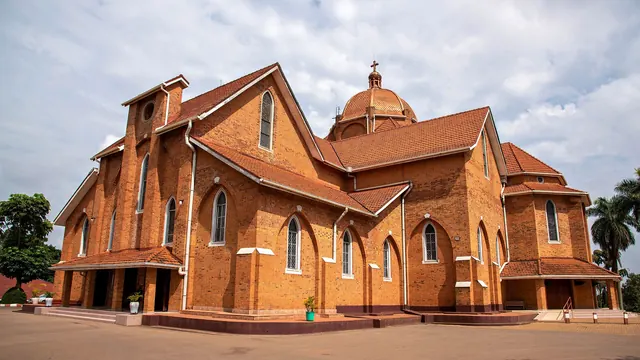
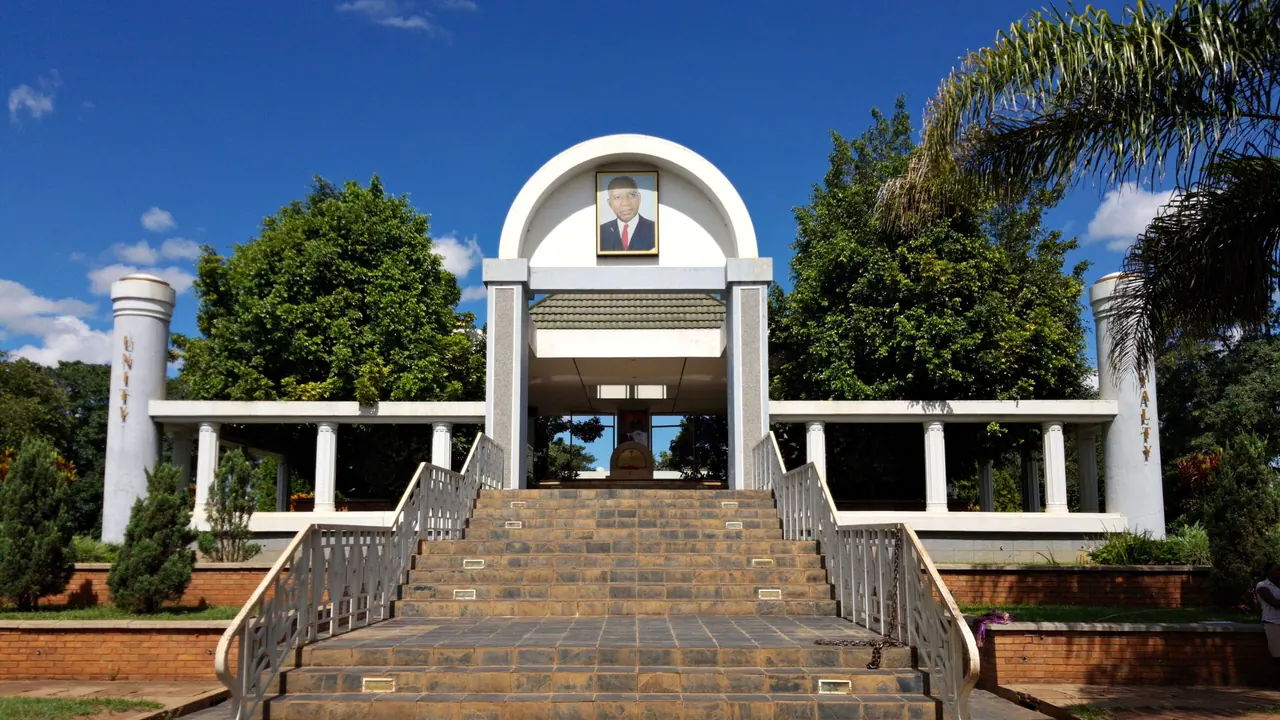
The Kamuzu Mausoleum, resting place of Hastings Kamuzu Banda, in Lilongwe
- Affordability68
- Nature & outdoors42
- Day trips32
Photo: ilf_, CC BY-SA 2.0, cropped
Match
27
Every category weighted equally
- Beach & sun29
- Culture & arts24
- Food & nightlife25
- Family trip30
- Outdoors31
- Relax & unwind28
- Shopping & style25
- On a budget32
Lilongwe in twelve categories
Our verdict on each, scored 0 to 100 against the same fixed benchmark cities, so a score means the same thing on every page.
Beaches & swimming. Scores 18 out of 100.
Food & drink. Scores 28 out of 100.
Culture & sights. Scores 14 out of 100.
Nightlife. Scores 22 out of 100.
Nature & outdoors. Scores 42 out of 100.
Day trips. Scores 32 out of 100.
Good for families. Scores 24 out of 100.
Getting around. Scores 16 out of 100.
Shopping & style. Scores 24 out of 100.
Affordability. Scores 68 out of 100.
Live music & performing arts. Scores 12 out of 100.
Wellness & relaxation. Scores 26 out of 100.
Lilongwe category by category
Beaches & swimming
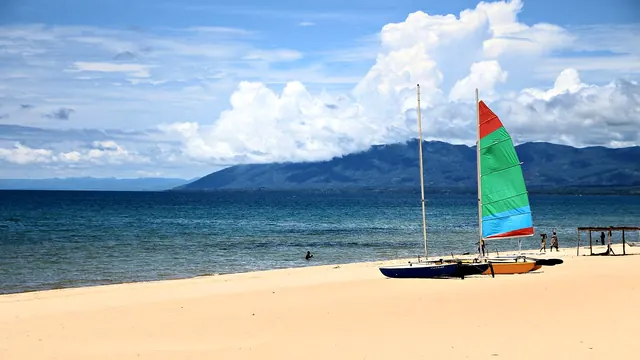
18Lilongwe sits on a high inland plateau with no water to swim in near the city. The nearest beaches are on Lake Malawi around Senga Bay near Salima, about two hours by road. There the freshwater is warm for most of the year, usually 24°C to 28°C, and the sandy shore is lined with lodges and fishing villages. It works as an overnight trip rather than an afternoon out. Bilharzia is present in parts of the lake, so check locally before swimming near reeds or busy village shorelines. In the city, swimming means a hotel or club pool.
Food & drink
28Malawian cooking is simple and filling. Nsima, a stiff maize porridge, is eaten with relishes of greens, beans, goat or chicken. The national favourite is chambo, a tilapia from Lake Malawi, grilled or fried whole. The best places to try it are the small local eateries and roadside grills, where it costs little, and the stalls around the Old Town market, which also sell tropical fruit, groundnuts and dried lake fish.
The sit-down restaurants are spread between Old Town and City Centre. They serve Indian, Chinese, Italian and grilled food for expatriates and aid workers, and some are pleasant, but few are memorable. Malawian tea from the southern estates of Thyolo and Mulanje is easy to find, and so is coffee from the northern highlands. Locally brewed lager is sold everywhere, and thobwa, a sweet fermented maize and millet drink, is worth trying. Overall it is a modest scene, good for a few local dishes but not a reason to come.
Culture & sights
14Lilongwe became the capital in the 1970s and was planned as a low-density garden city, so there is little historic architecture to see. The main landmarks are the Kamuzu Mausoleum, a domed memorial to Malawi's first president, the Parliament building on Capital Hill and the Memorial Tower. Old Town, with its market and older shopfronts, gives the clearest sense of everyday city life. There are no major museums. Visitors interested in Malawi's heritage usually spend a few hours here and do their real sightseeing elsewhere, at the rock art of Chongoni and the cultural centre at Mua.
Nightlife
22Going out in Lilongwe is low-key. It centres on hotel bars, the garden bars at backpacker lodges and a few lounges and clubs in the Old Town and the Area 47 and Area 10 suburbs. On weekends these fill with expatriates and young Malawians, and the music is local dancehall, Afropop and South African house. The city is spread out and poorly lit, so a night out means a taxi from door to door, not wandering between bars. It is fine for a drink and some dancing, but visitors do not come here for the nightlife.
Nature & outdoors
42Lilongwe is a green city, with jacaranda and msasa trees along its avenues. Between Old Town and City Centre a stretch of woodland along the Lingadzi river holds the Lilongwe Wildlife Centre, a rescue sanctuary with trails through the bush. Beyond the city the plateau is farmland and hills. About an hour to the south-west, the Dzalanyama Forest Reserve has miombo woodland, birding and mountain-bike tracks along the Mozambique border. Dedza's granite hills and pine forests, about an hour and a half south, offer good hiking at altitude.
The larger landscapes are further off. The Lake Malawi shore is about two hours east, with the small Kuti game ranch near Salima. Nkhotakota, Liwonde and the Nyika Plateau are each several hours away. Rains fall from November to April, turning the country green. The dry, cooler months from May to August are the best for walking.
Day trips
32Most day trips from Lilongwe head south along the main road towards Blantyre. Dedza is about an hour and a half away, a hill town known for its pottery workshops. Nearby is the Chongoni rock-art area, a UNESCO site whose painted shelters are linked to Chewa initiation traditions. Further on, at about two hours, is Mua Mission, where the KuNgoni Centre has one of the best collections on the region's cultures and Gule Wamkulu masks.
To the east, Salima and the lakeshore villages of Senga Bay make a long day out, but most visitors stay overnight. Beyond these the options thin quickly, and minibuses are slow, so a hired car with a driver is the practical way to go.
Good for families
24Malawians are famously warm towards children, and a family will be made welcome everywhere. Facilities are another matter. The Lilongwe Wildlife Centre, where children can watch rescued animals and walk the woodland trails, is the one real attraction for them. Beyond that, family time means hotel pools and garden restaurants. The city is spread out, with few pavements, so every outing needs a car. Malaria is present all year, which calls for preparation, and healthcare outside the private clinics is limited. Lilongwe works best as a short stop before heading to the lake or a safari lodge.
Getting around
16Lilongwe was planned as separate districts set far apart in open green space. Old Town, City Centre and the residential Areas lie kilometres from each other, and there is no real centre to walk around. Pavements are patchy, and streets are dark at night. Crowded minibuses run the main roads, and bicycle and motorbike taxis wait at junctions, but neither is easy for a first-time visitor. Most people use taxis booked through their hotel or a ride-hailing app, or hire a car with a driver, which is also how to reach anything outside the city.
Shopping & style
24The shopping worth doing in Lilongwe is crafts. Carvers and traders sell wooden chairs, masks, chief's stools, soapstone and beadwork from stalls in Old Town, and expect a long, good-humoured haggle. The Old Town market is a sprawl of fabric, chitenje wraps, hardware and produce, more interesting to walk through than to buy from. Dedza pottery and local textiles turn up in a few lodge and gallery shops. Beyond that, the malls serve residents with supermarkets and chain stores. There is no fashion or design shopping to speak of.
Affordability
68Malawi is a low-cost country, and local life in Lilongwe is very cheap: market food, nsima at roadside eateries, minibuses and beer all cost little. A visitor's budget goes on other things. Comfortable hotels and lodges are few and charge international rates, imported goods and wine are expensive, and the taxis or hired drivers a visitor needs in a car-dependent city add up quickly. Backpackers in the garden lodges can travel very cheaply. Those who want reliable comfort will find it costs more than they might expect.
Live music & performing arts
12Lilongwe has no regular theatre, opera or concert season. Live music comes in bursts: Malawian bands and visiting artists at weekend shows in hotel gardens, lodges and the large Bingu International Convention Centre, and some open-mic and acoustic nights. Traditional dance, including the masked Gule Wamkulu of the Chewa, belongs to village ceremonies rather than to a city stage. The country's best-known music festivals are held on the lakeshore, not in the capital.
Wellness & relaxation
26Malawi has no bathing or spa tradition, and wellness in Lilongwe is limited to massages and treatments at the larger hotels and a few day spas in the residential areas. What the city does offer is calm. The pace is unhurried and the suburbs are leafy and quiet, and a shaded garden at a lodge is a pleasant place to spend an afternoon reading. For a truly restful stay, most travellers head for the lake.
When should you go?
Pick a month to see what it is like. The climate figures are measured averages, not a forecast.
Lilongwe in July
Daytime high, °C
Rainfall in the month, mm
The whole year
Shaded against this destination’s own year: the deepest cell is its best month for that figure and the palest its weakest.
Where the figures come from
Lilongwe's station stands 179 m above the city centre, so the centre is likely a little warmer than the figures say.
Temperature and rainfall are climate normals, averaged over the years shown. Lilongwe: 1982-2025 (rainfall 1961-1990) normals, Lilongwe International Airport (22.6 km from centre).
Before you go
| Measure | Lilongwe |
|---|---|
| Official language | English, Chewa, Tumbuka |
| Currency | Malawi Kwacha (MWK) |
| Sockets | G230 V, 50 Hz |
| Driving side | Left |
| Time zone | UTC+2 |
| Emergency number | Police 990/997, ambulance 998, fire 999 |
| Elevation | 1,050 m |
| Main airport | Kamuzu International Airport (LLW)22 km from centre9 non-stop destinations |
| Public holidays this year | 11 days |
By the numbers
| Measure | Lilongwe |
|---|---|
| Population | 989,318 |
| People per km² | 1,359 |
| Museums within 10 km | 0 |
| UNESCO World Heritage sites within 50 km | 0 |
Compare Lilongwe with
Every comparison with a written verdict behind it.