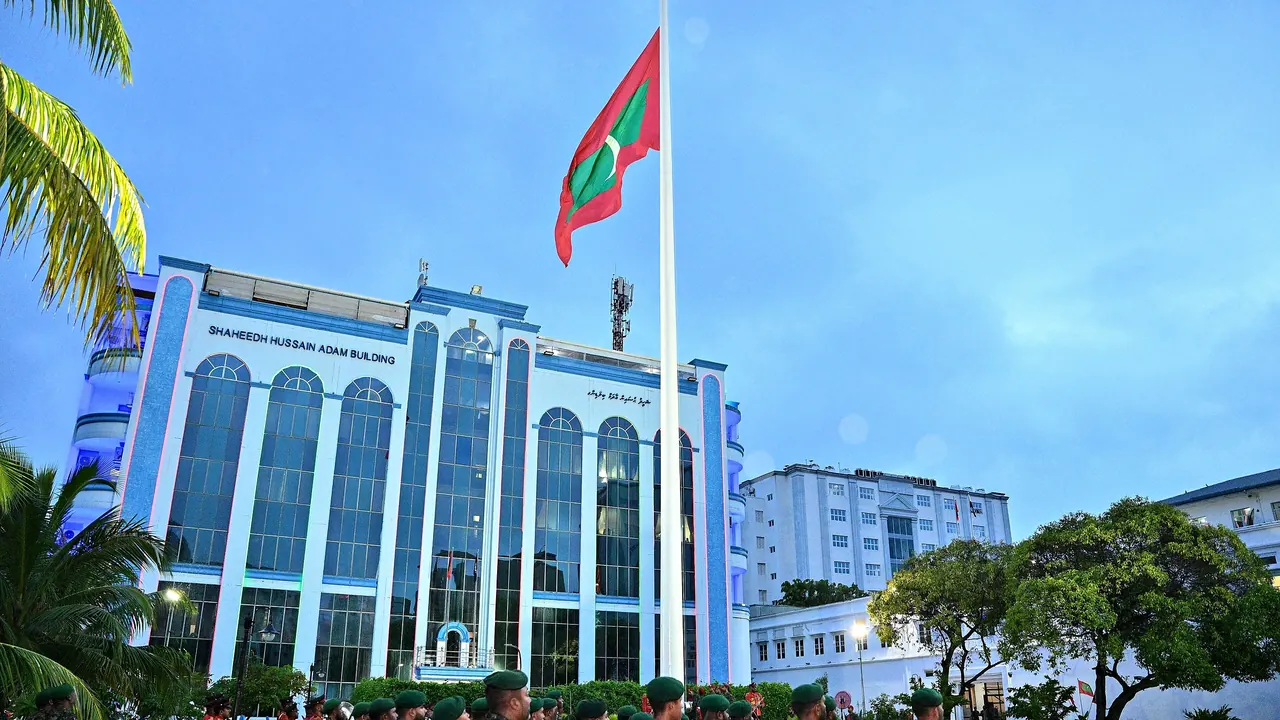
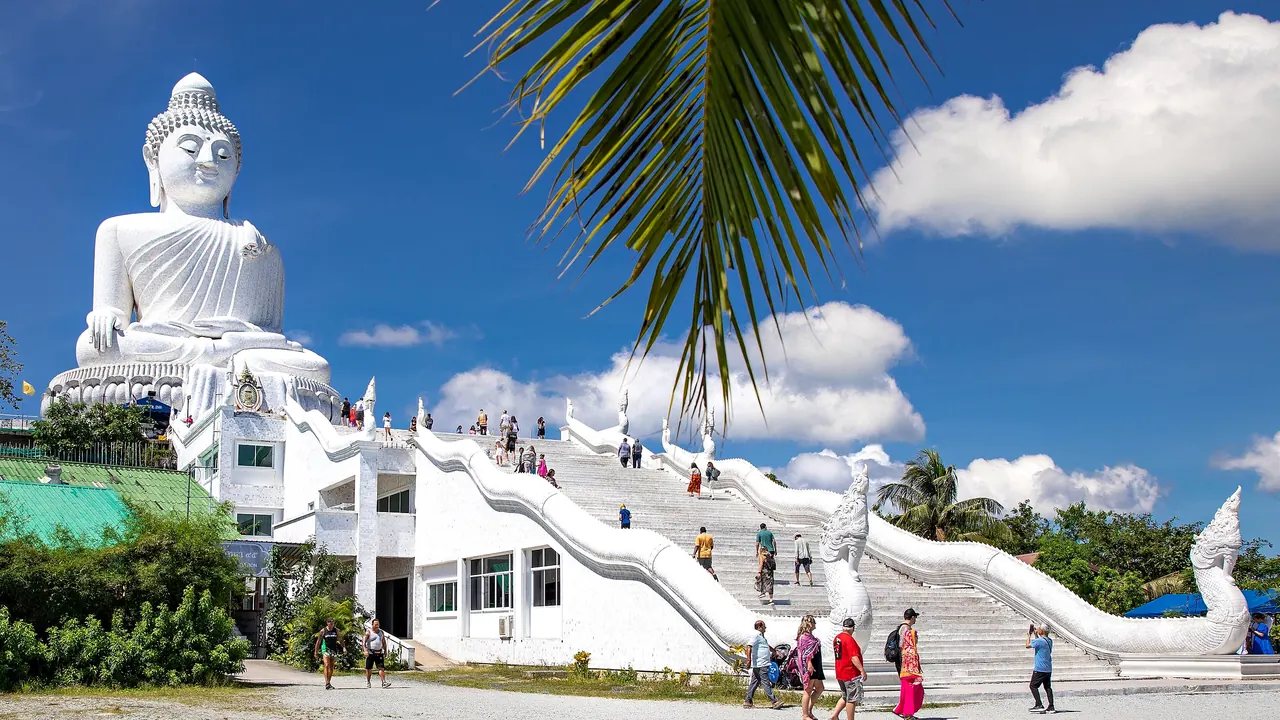
Photos: Malé by The President's Office of the Republic of Maldives, CC BY 4.0, cropped; Phuket by Mussi Katz, CC0.
Malé or Phuket?
Our verdict in twelve categories, each scored against the same fixed benchmark cities, and the climate month by month, so you can choose for your trip.
Choose Malé for
- getting around
Malé works best as a short stop on a Maldives trip rather than as the place to spend it. It is a compact, sober capital where you can walk to everything, try tuna breakfasts in the tea shops, see the coral-stone Old Friday Mosque in a morning, and then take a boat out to the reefs of the surrounding atolls. It suits divers and travellers stopping on their way to a resort or a guesthouse island. Anyone who wants a drink, a night out or a long beach stay in the city itself will find it thin.
Choose Phuket for
- nightlife
- wellness
- families
Phuket is the place for a full vacation. Its west coast is lined with sandy bays, and it has a food culture of its own in Phuket Town, nights out that range from Bangla Road to quiet beach bars, family resorts, and massage and retreats at every price. The catch is the season, because the monsoon surf makes swimming unsafe for half the year. Getting around also means taxis or a scooter rather than walking.
Scoreboard
Twelve categories on one fixed scale from 0 to 100. The shaded stretch is the gap between the two.
Your match
Pick a travel style or drag the sliders, and both match scores follow your weighting.
Wins on getting around with your weighting.
Wins on nightlife and wellness with your weighting.
What matters to you?
Category by category
What the scores mean for a trip.
Beaches & swimming
Malé itself has almost no beach: there is a small artificial strip on the eastern shore and a surf break off the seawall. For sand you cross to Hulhumalé's lagoon strand or to Villimalé, where swimming is done modestly dressed. For bikinis and sandbanks you need a speedboat to Maafushi or a resort day pass.
Phuket is built around its beaches. The west coast has one bay after another, from busy Patong to broad Kata and Karon, the small coves at Nai Harn and Freedom Beach, and the long, quiet northern sands. That holds from November to April. In the monsoon months red flags and rip currents limit swimming in a way Malé's sheltered lagoons do not.
Food & drink
Malé is a good place for one cuisine: mas huni and roshi at breakfast, garudhiya broth, and the fried short eats in tea-shop cabinets. The waterfront fish market, where skipjack is landed and cut, is worth seeing. Beyond that the choice narrows to a few South Asian and Thai kitchens, and the city is dry.
Phuket has more depth. Its Hokkien and Peranakan heritage gives Phuket Town a cooking style of its own, from braised pork belly to morning dim sum, and the night markets, Rawai's seafood and a small fine-dining tier add range. You can also order a beer or wine with dinner.
Culture & sights
Neither is a culture destination, but Phuket has more of it and spread over more places. Malé's heritage takes a morning: the carved coral stone and lacquered wood of Hukuru Miskiy, the Mulee-aage palace and the National Museum's Buddhist-era carvings, with dense concrete around them.
Phuket offers the pastel Sino-Portuguese shophouses and Chinese shrines of Phuket Town's old quarter, plus Wat Chalong, the Big Buddha above Chalong Bay and the Thalang museum's story of the 1785 Burmese siege. That fills a day or two around the beach rather than a morning.
Nightlife
This is where the two differ most. Malé serves no alcohol anywhere, so evenings mean late cafés, juice bars and a walk along the promenade, where local families come out after dark.
Phuket has the full range. Bangla Road in Patong is a loud neon strip of bars and clubs until the small hours. West-coast beach clubs run sunset sessions, Kata and Karon have easy bars, and Phuket Town's shophouses hold cocktail and live-music bars. If the northern beaches are too quiet after dinner, these are within a taxi ride.
Nature & outdoors
Both are mainly about the sea, and Malé's reefs are its real strength: drift dives with grey reef sharks and eagle rays, manta cleaning stations and wrecks in the North and South Malé atolls, all a short boat ride away and best in the calm months from December to April. On land there is nothing, only a flat, built-up island.
Phuket gives more variety. Sea kayaking among the limestone towers and cave lagoons of Phang Nga Bay is a landscape the Maldives cannot match, and the Similan and Racha islands offer diving of a similar class. There is also forest to visit, with gibbons and waterfalls at Khao Phra Thaeo.
Day trips
From Malé every outing is a boat to another island: Hulhumalé, Villimalé, or village islands such as Guraidhoo and Thulusdhoo. They are pleasant but much alike, and there are no historic towns within reach.
Phuket's trips vary more. Phi Phi's twin bays, the stilt village of Koh Panyee under its cliff and rural Koh Yao Noi are by boat, and the bridge north opens the road to Krabi, Ao Nang and old Takua Pa within a few hours. Even so, most visitors pick one or two rather than a programme.
Good for families
Malé is hard going with small children: scooters fill the narrow streets, there is little shade, and there is not much more than Sultan Park and a few playgrounds. Hulhumalé's parks and calm lagoon help, but most families sensibly pass straight through to a resort.
Phuket is set up for families. Kata, Karon, Nai Harn and the northern beaches have gentle dry-season water, and the resorts have kids' clubs and lagoon pools. There are also water parks, the Cape Panwa aquarium and island snorkelling trips. The cautions are the monsoon surf, busy roads and keeping well clear of Patong at night.
Getting around
Malé has the easier logistics. It is about two kilometres across, so you can walk everywhere, though the pavements are cramped. Taxis charge flat city fares, buses cross the bridge to the airport and Hulhumalé, and you never need a car. Only longer island hops need booked speedboats or slow ferries.
Phuket has no rail, and the songthaews run from Phuket Town out to the beaches but not between them. That leaves expensive taxis, tuk-tuks, ride-hailing or a hired scooter on hilly roads with a poor safety record. Most people stay put at one beach.
Shopping & style
Phuket has more to buy. Tailors will make a suit in days, local pearls are a speciality, and the Sunday walking street and old-town boutiques sell batik and Peranakan-style design, with malls for chains.
Shopping in Malé is mostly practical: Majeedhee Magu for everyday goods, and the harbour market for coconuts and jars of smoked tuna paste. Lacquered boxes and woven mats are the genuine crafts worth looking for.
Affordability
Phuket stretches a budget further overall. Street food and Phuket Town's local restaurants are cheap, and there are guesthouses at every beach, although taxis, Patong and high-season resorts push costs up.
In Malé the city itself is cheap, with tea-shop meals, flat-fare taxis and Hulhumalé guesthouses. But the reason to be there is the water, and speedboats, dives and resort passes are expensive, as are most imported goods.
Live music & performing arts
Neither offers serious performance, but Phuket at least fills an evening. There are cabaret revues in Patong, a large theme-park show, Thai boxing nights and cover bands in the bars. In Malé the only tradition is the big-drum music and dance of bodu beru, and you are likely to hear it only at national celebrations or put on at a resort.
Wellness & relaxation
Malé is among the most crowded places a visitor can stay, with scooters through the night and little green space. Its few day spas are a stopgap, and real rest means a resort spa day or another island.
Rest is one of Phuket's main draws. Massage ranges from beach-road shopfronts to pavilions over the sea, and retreats for yoga, detox and fitness gather around Chalong. Mai Khao, Bang Tao, Laguna and Nai Harn give you the quiet green base to go with it.
When should you go?
Pick your month. The climate figures are measured averages, not a forecast.
Malé in July
Phuket in July
Daytime high, °C
Rainfall in the month, mm
Where the figures come from
Phuket's temperatures are measured 27 km from the centre, at Phuket Airport.
Temperature and rainfall are climate normals, averaged over the years shown. Malé: 1991-2020 normals, Male (3.9 km from centre). Phuket: 1991-2020 (sunshine 1961-1990, rainfall 1981-2010) normals, Phuket Airport (26.9 km from centre).
Neither place ever cools down. In both, daytime highs are 30°C or a little above in every month, so the streets are best walked early or after sunset, and the sea is warm enough to swim in all year. Malé's dry spell is short. February and March are its driest and sunniest months, with the calm, clear water of the northeast monsoon that divers come for, and January is nearly as good. Showers build from April, and from May to December there is a long, steady wet season. Every one of those months is wetter than any month of the dry spell, and October is the wettest at 216mm.
Phuket has a sharper divide. December to March is very dry and bright, with the heat peaking at 34°C in March and a calm sea on the west coast. From May to October the southwest monsoon brings much heavier rain than Malé gets, building to 373mm in September, with rough surf and noticeably less sun. Phuket dries out in December while Malé is still wet. January to March is therefore the best time for both, December favours Phuket, and November is damp in both.
Which traveller are you?
On a food and nightlife trip, Phuket is the clear choice. Hokkien noodles and crab curry in Phuket Town's shophouses, seafood at Rawai and evenings that go from sunset beach clubs to Bangla Road are all there. Malé has tea shops and no alcohol at all.
For a relaxing and wellness trip, Phuket again, by a long way. Thai massage is on every beach road, resort spas are open to the sea, and yoga, detox and Muay Thai retreats gather around Chalong. Malé is dense and noisy with scooters, and real rest there means leaving for a resort.
For a short city break, Malé is the one that works as a city. It is about two kilometres across, with its mosques, museum and fish market a short walk apart and reefs a boat ride away. Phuket is a spread-out island where a couple of days goes mostly on taxis.
Before you go
| Measure | Malé | Phuket |
|---|---|---|
| Official language | Maldivian | Thai |
| Currency | Rufiyaa (MVR) | Baht (THB) |
| Sockets | ACGJKL230 V, 50 Hz | ABCF220 V, 50 Hz |
| Driving side | Left | Left |
| Time zone | UTC+5 | UTC+7 |
| Emergency number | Police 119, ambulance 102, fire 118 | Police 191, ambulance 1669, fire 199 |
| Elevation | 2 m | - |
| Main airport | Velana International Airport (MLE)3 km from centre50 non-stop destinations | Phuket International Airport (HKT)87 non-stop destinations |
By the numbers
| Measure | Malé | Phuket |
|---|---|---|
| Population | 133,019 | 77,610 |
| People per km² | 22,934 | 6,468 |
| Museums within 10 km | 1 | - |
| UNESCO World Heritage sites within 50 km | 0 | - |
| Swim season, months above 21 °C | 12 months | 12 months |
Where else could you go?
Every comparison below shares a destination with this one, so you can follow Malé or Phuket somewhere new.
- Koh Phi Phivs Phuket
- Krabivs Phuket
- Koh Lantavs Phuket
- Koh Lipevs Phuket
- Langkawivs Phuket
- Koh Samuivs Phuket