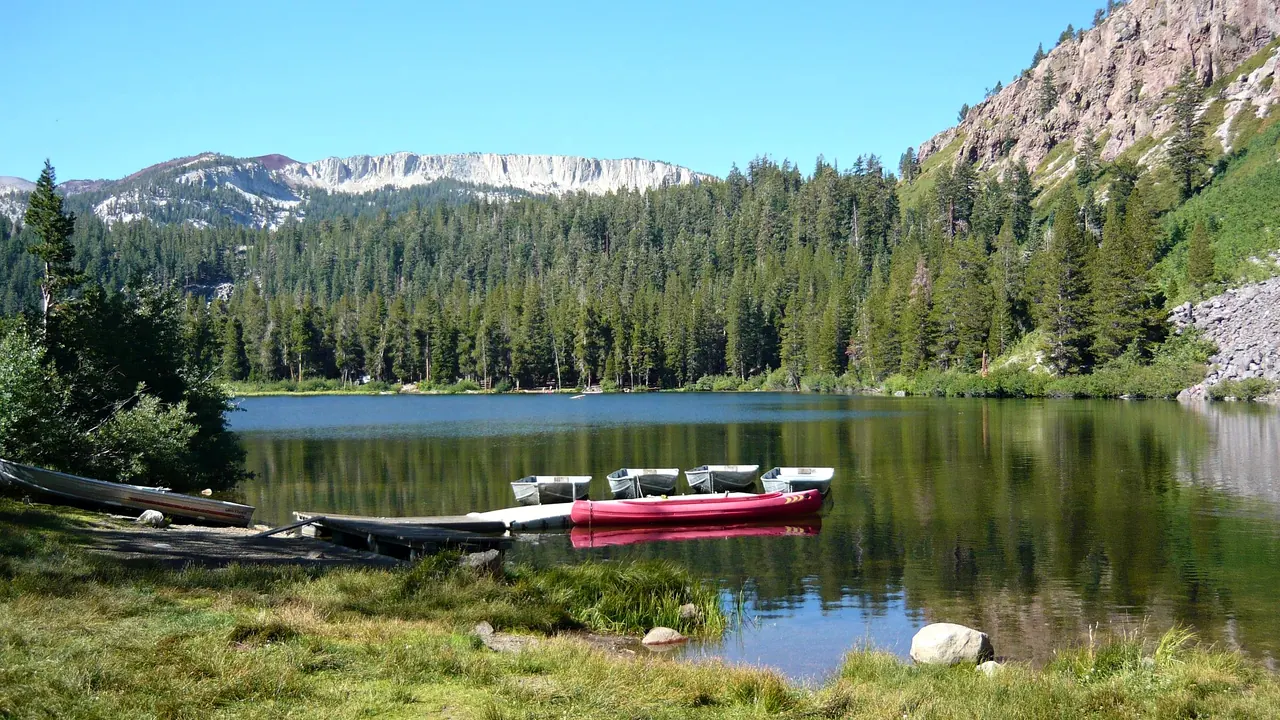
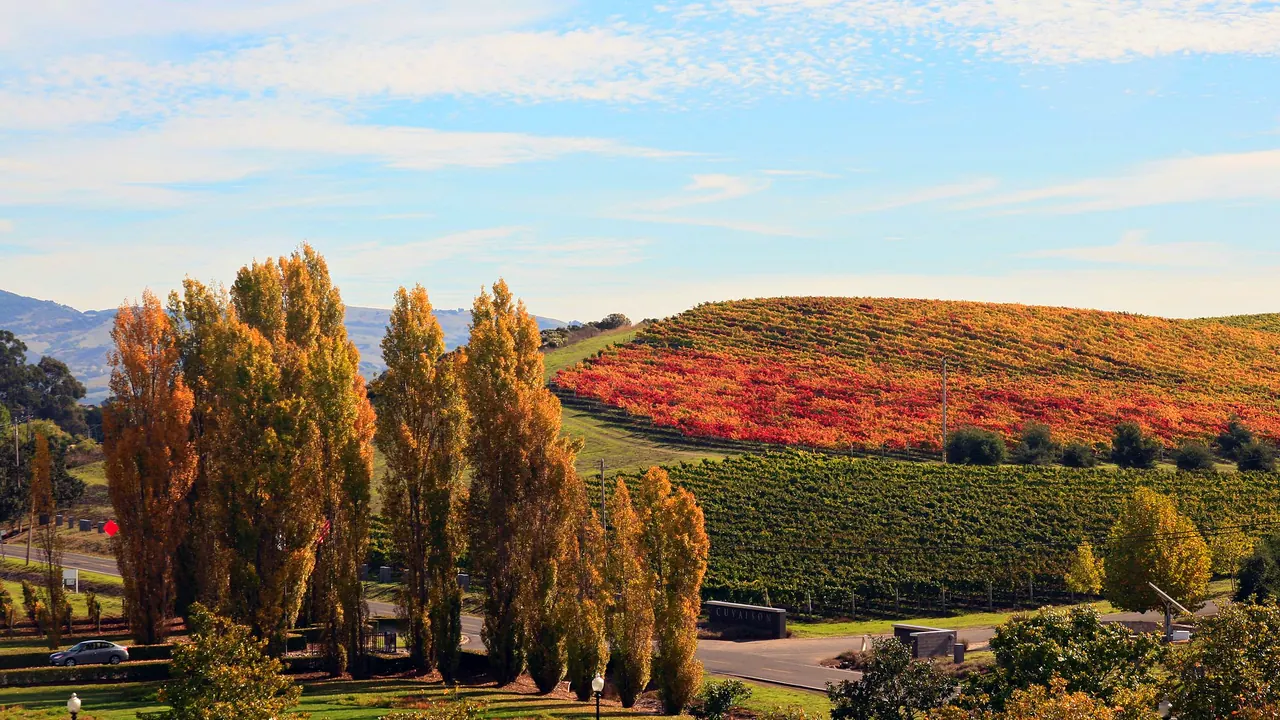
Photos: Mammoth Lakes by Dr. Al. K. Lisch, CC BY-SA 3.0, cropped; Napa by Brocken Inaglory, CC BY-SA 3.0, cropped.
Mammoth Lakes or Napa?
Our verdict in twelve categories, each scored against the same fixed benchmark cities, and the climate month by month, so you can choose for your trip.
Choose Mammoth Lakes for
- nature and the outdoors
- families
- getting around
Mammoth Lakes is for travellers who want to spend their days outside. In winter that means one of North America's largest ski areas. In summer it means trails into the Ansel Adams wilderness, kayaks on the Lakes Basin and the basalt columns of Devils Postpile. It also suits active families, with a big ski school, rowing boats and the gondola to the summit. Expect filling food, quiet evenings and a car for most outings.
Choose Napa for
- food and drink
- day trips
- shopping
Napa makes more sense when the eating and drinking are the point. Its tasting rooms along Highway 29 and the Silverado Trail, the celebrated kitchens of Yountville and St Helena and the mud baths of Calistoga add up to a slow, indulgent trip for adults. Sonoma, Healdsburg and San Francisco are all within easy reach for a day away from the vines. Young children and anyone after big mountain scenery will get more from the Sierra.
Scoreboard
Twelve categories on one fixed scale from 0 to 100. The shaded stretch is the gap between the two.
Your match
Pick a travel style or drag the sliders, and both match scores follow your weighting.
Wins on nature and the outdoors and families with your weighting.
Wins on food and drink and day trips with your weighting.
What matters to you?
Category by category
What the scores mean for a trip.
Beaches & swimming
Neither town is a beach destination, but Mammoth Lakes at least offers a bracing mountain swim. In July and August people swim at Horseshoe Lake in the Lakes Basin or in the slightly warmer Crowley Lake. Napa's nearest coast is the cold, rough shore at Bodega Bay, more than an hour away, so swimming there means a drive to Lake Berryessa or, more often, the hotel pool.
Food & drink
Mammoth Lakes feeds people who have spent the day outside. You get big breakfasts before the lifts, burgers, pizza, steakhouses and beer brewed in town. It is satisfying, but nobody plans a trip around it, and some kitchens scale back in the quiet months.
In Napa the food is the trip. Tastings run from grand Cabernet estates to small cellars in the side valleys, Carneros adds Pinot Noir and sparkling wine, and Yountville and St Helena have some of the most celebrated restaurants in the country. The Oxbow Public Market and the taquerias fill in the more casual end.
Culture & sights
Neither is a sightseeing town, but Napa gives a curious visitor more to look at. It has Victorian buildings along First Street, the restored 1880 Opera House, the di Rosa art estate in Carneros and old stone wineries up the valley. Mammoth Lakes is mostly modern lodges and condominiums, and its small log-cabin history museum is nearly the whole list in town.
Nightlife
Both towns go quiet early, so the difference is in the mood. Mammoth Lakes has après-ski: bars by the lifts and brewery taprooms fill in the late afternoon, and long ski weekends can run late. In Napa the evening is a long dinner followed by a glass at a riverfront wine bar. For a proper night out, people drive to San Francisco, about an hour away.
Nature & outdoors
Mammoth Lakes is one of the great mountain bases in the American West. Its huge ski area often stays open into early summer, and then the same mountain becomes a bike park. The Lakes Basin, Reds Meadow, Rainbow Falls and the Ansel Adams and John Muir wildernesses all start close to town. Further out are Convict Lake, the tufa towers of Mono Lake and, once Tioga Pass opens, Tuolumne Meadows.
Napa's landscape is gentler and shaped by farming. It has a vineyard floor between two ranges, mustard flowers in spring and balloons at dawn. You can walk among the redwoods in Bothe-Napa Valley State Park or climb Mount St Helena. It is lovely for cycling and easy walks, but nothing like the scale of the high Sierra.
Day trips
Napa is well placed for day trips. Yountville, St Helena and Calistoga are short drives up the valley. Sonoma's plaza and mission are about half an hour away, Healdsburg and the Russian River make a second wine country, and San Francisco is an hour away by car or by ferry from Vallejo.
From Mammoth Lakes the options are few and far apart along the highway. The Bodie ghost town and the Manzanar internment camp are both worth the drive, but most outings from here go into the mountains rather than to other towns.
Good for families
Mammoth Lakes suits outdoor families well. It has a large ski school, gentle beginner slopes and a snow tubing hill in winter, and rowing boats, trout fishing and the summit gondola in summer. The weak spots are bad-weather days, with no museums or zoos, and the altitude, which can tire small children for the first day or two.
Napa is mainly a place for adults, and a day of tastings bores children. A theme and animal park in Vallejo, the geyser near Calistoga and hotel pools help, but the summer heat and long drives make it harder going.
Getting around
Both need a car beyond the centre, but Mammoth Lakes is easier without one. In winter, free shuttles and the Village gondola connect the lodgings with the lifts. In summer, a trolley serves the Lakes Basin and a shuttle runs into Reds Meadow. Wider Eastern Sierra trips still mean driving, sometimes with snow chains.
Downtown Napa is compact and walkable, but the wineries are spread along some 50km of valley with sparse buses. Since tasting and driving do not mix, many visitors pay for a driver or a tour.
Shopping & style
Napa has more to browse, though mostly around food and wine. Visitors ship cases home from cellars, buy olive oil and kitchenware at the Oxbow market, and stroll the gift and cookware shops on St Helena's main street, with an outlet mall for familiar brands. Mammoth Lakes is for buying kit: ski, climbing and fly-fishing shops, rental outlets and a few galleries of landscape photography.
Affordability
Neither is cheap, but Mammoth Lakes leaves more room to save. In winter the lift tickets, rentals and lodging are expensive. In summer, though, hiking, the lakes and scenic drives cost little, and a condominium kitchen cuts the cost of eating out.
Napa is priced for luxury throughout. Boutique and resort rooms, tastings at the famous estates and a driver for the day all add up quickly. Staying further south and eating at taquerias softens the bill without making it a budget trip.
Live music & performing arts
Napa has more to choose from. The 1880 Opera House puts on concerts and comedy, a restored Art Deco theatre hosts touring bands, and summer brings a classical festival in winery venues and a large rock and pop festival in late spring. Mammoth Lakes offers community theatre on the college campus, a summer jazz festival and chamber concerts in mountain meadows. These make a pleasant evening, but nobody would plan a trip around them.
Wellness & relaxation
Napa is built for slowing down. Calistoga has offered volcanic mud baths and mineral pools since the nineteenth century, the resorts in Carneros and the hills have large spas, and a typical day of late breakfasts and long lunches is unhurried by design.
Mammoth Lakes has a wilder version. You can soak in undeveloped hot springs out in the sagebrush, facing the Sierra, though without any facilities. The lodges have hot tubs and massage for sore legs, but there is nothing like Napa's spa culture.
When should you go?
Pick your month. The climate figures are measured averages, not a forecast.
Mammoth Lakes in July
Napa in July
Daytime high, °C
Rainfall in the month, mm
Where the figures come from
Mammoth Lakes's station stands 227 m below the city centre, so the centre is likely a little cooler than the figures say.
Mammoth Lakes has no rain gauge within 25 km of the centre, so its rainfall comes from a gridded climate dataset read at the city rather than from a gauge further away.
Napa has no rain gauge within 25 km of the centre, so its rainfall comes from a gridded climate dataset read at the city rather than from a gauge further away.
Napa's sunshine is measured 73 km from the centre, at Sacramento Executive Airport.
Temperature and rainfall are climate normals, averaged over the years shown. Mammoth Lakes: 2008-2020 (rainfall 1991-2020) normals, Mammoth / Whitmore Hot Springs (12 km from centre). Napa: 1991-2020 (sunshine 1981-2010) normals, Napa / Middleton (9.8 km from centre).
Mammoth Lakes swings between two clear seasons. From November to March daytime highs run from 6 to 12°C, and most of the year's precipitation falls then, much of it as snow on the ski mountain. June to September is warm and almost dry, peaking at 28°C in July and August. This is the time for hiking and the lakes, and in those two midsummer months a cold swim is just bearable. April, May and October sit in between, fine for walking but too chilly for the water.
Napa's year is far gentler. Winter highs stay between 13 and 16°C, mild enough for walking the streets, but December to February is the wet season and brings heavier rain than Mammoth Lakes gets in any month. From May to October it is dry, steadily warm and at its sunniest, with highs that barely change from month to month, though outdoor plans still start early. The nearby Pacific stays cold all year, so the coast is for looking at rather than swimming.
Which traveller are you?
For a food and nightlife trip, Napa is the clear choice for the food. It has world-famous restaurants up the valley, the Oxbow market hall and endless tastings. Neither town has much of a late-night scene, but here a long dinner and a wine bar make a good evening.
On an outdoors trip, choose Mammoth Lakes. It has deep-snow skiing, a lift-served bike park, granite lakes for paddling and trails into two wildernesses, and Tioga Pass opens a route into the Yosemite high country. Napa's vineyard cycling and redwood walks are pleasant but much tamer.
On a family trip with children, Mammoth Lakes works far better. Beginner slopes, a tubing hill, trout fishing and rowing boats keep children busy, and condominiums with kitchens make things easier. Napa is built around tastings and long dinners, which children find tedious.
Before you go
| Measure | Mammoth Lakes | Napa |
|---|---|---|
| Currency | US Dollar (USD) | US Dollar (USD) |
| Sockets | AB120 V, 60 Hz | AB120 V, 60 Hz |
| Driving side | Right | Right |
| Time zone | UTC-8, UTC-7 in summer | UTC-8, UTC-7 in summer |
| Emergency number | 911 | 911 |
| Elevation | 2,402 m | 6 m |
| Main airport | Reno Tahoe International Airport (RNO)217 km from centre25 non-stop destinations | San Francisco International Airport (SFO)76 km from centre143 non-stop destinations |
| Public holidays this year | 13 days | 13 days |
By the numbers
| Measure | Mammoth Lakes | Napa |
|---|---|---|
| City population | 7,191 | 79,246 |
| People per km² | 110 | 1,686 |
| Museums within 10 km | 0 | 3 |
| UNESCO World Heritage sites within 50 km | 0 | 0 |
| Swim season, months above 21 °C | - | None |
Where else could you go?
Every comparison below shares a destination with this one, so you can follow Mammoth Lakes or Napa somewhere new.
- Sonomavs Napa
- San Franciscovs Napa
- San Josevs Napa
- South Lake Tahoevs Mammoth Lakes
- Montereyvs Napa
- Carmel-by-the-Seavs Napa