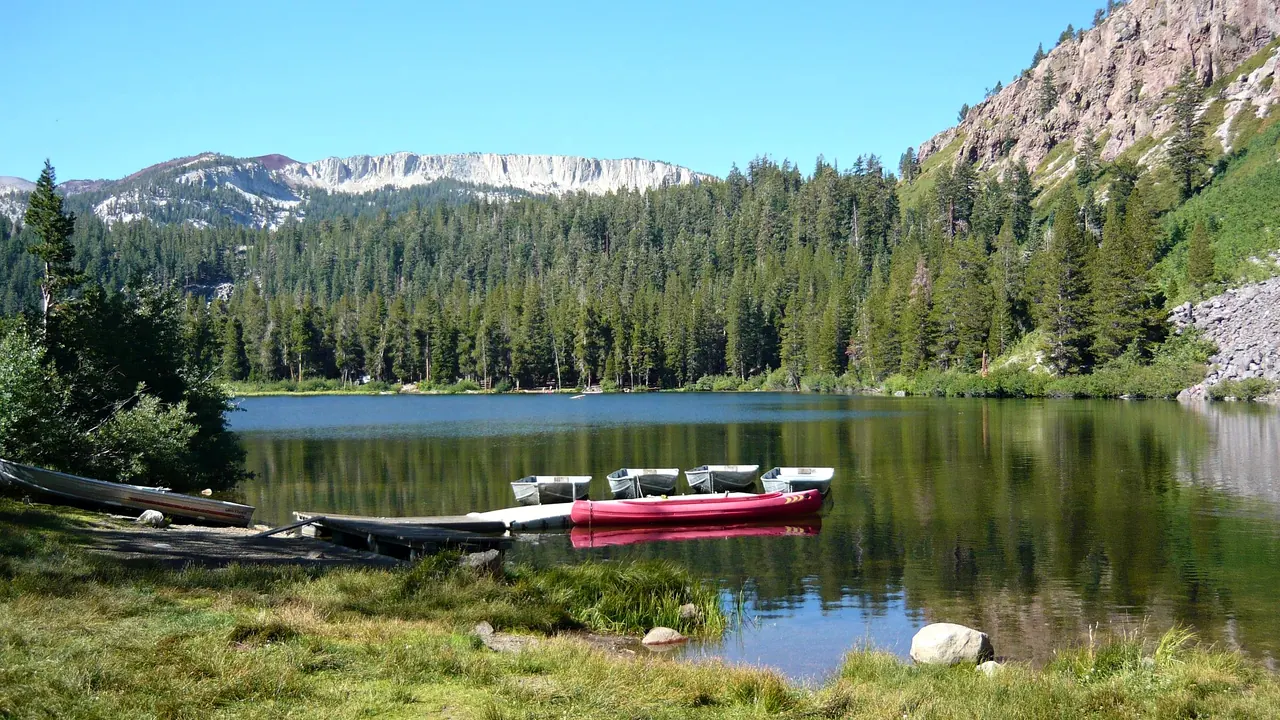
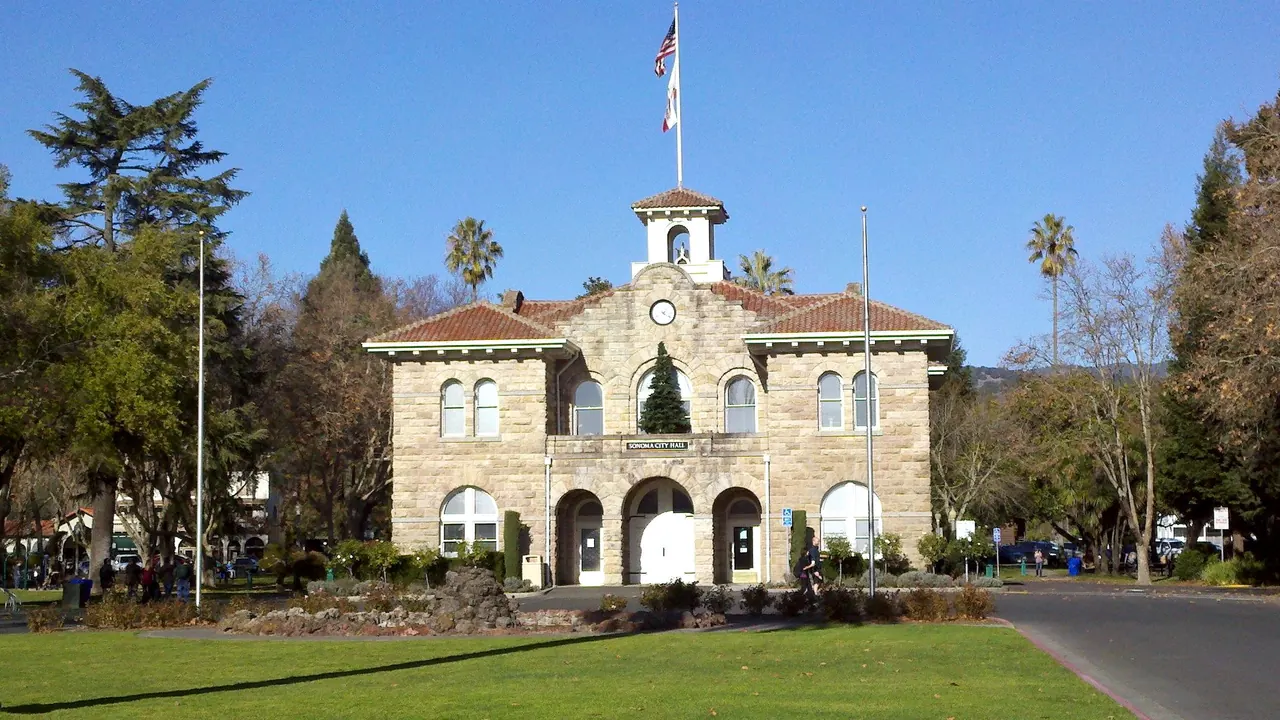
Photos: Mammoth Lakes by Dr. Al. K. Lisch, CC BY-SA 3.0, cropped; Sonoma by Cullen328, CC BY-SA 3.0, cropped.
Mammoth Lakes or Sonoma?
Our verdict in twelve categories, each scored against the same fixed benchmark cities, and the climate month by month, so you can choose for your trip.
Choose Mammoth Lakes for
- families
- nature and the outdoors
- getting around
Mammoth Lakes is the pick for people who want to spend their days outside and are happy for the evenings to be simple. It offers a huge ski mountain in winter, then lakes, wilderness trails, a bike park and the Eastern Sierra's volcanic scenery once the snow goes. It also works far better for families with active children. In exchange you give up almost all culture, good food and shopping, and you will rarely leave the mountains.
Choose Sonoma for
- day trips
- food and drink
- culture and sights
Sonoma suits a slower, more grown-up trip built around the table and the glass. Its wine valley, small historic plaza and easy reach of San Francisco and Napa make it best for couples who want long lunches, tastings, a little history and a different outing each day. The outdoors here is gentle rather than grand, and children will soon run out of things to do.
Scoreboard
Twelve categories on one fixed scale from 0 to 100. The shaded stretch is the gap between the two.
Your match
Pick a travel style or drag the sliders, and both match scores follow your weighting.
Wins on families and nature and the outdoors with your weighting.
Wins on day trips and food and drink with your weighting.
What matters to you?
Category by category
What the scores mean for a trip.
Beaches & swimming
Neither town is a place to swim, and both sit far from any beach you would lie on. In Mammoth Lakes a swim means a brief, cold plunge into Horseshoe Lake or slightly warmer Crowley Lake in high summer, with mountain scenery all around.
Sonoma's options are a hotel pool or the gravel beaches of the Russian River, where the water is warm enough for a lazy afternoon. The dramatic coast at Bodega Bay is for looking at rather than swimming.
Food & drink
Food is where Sonoma clearly pulls ahead. Its wineries and tasting rooms around the plaza, Carneros Pinot Noir and old-vine Zinfandel, and seasonal cooking built on local cheese, olive oil and oysters make eating the main point of a visit.
Mammoth Lakes feeds you well after a day outdoors, with big breakfasts, burgers, steakhouses and local craft beer, but it has no cooking of its own. Meals there keep you going rather than being a reason to come.
Culture & sights
Sonoma has a real, if compact, historic core. You can visit the plaza where the Bear Flag Revolt happened, the last of California's Franciscan missions, the adobe barracks and General Vallejo's house, and the ruins of Jack London's Wolf House are nearby. That is a good half day of history.
Mammoth Lakes offers little more than a log-cabin museum telling the mining story. Its nearest serious heritage sites, Bodie and Manzanar, are an hour or more away.
Nightlife
Neither is a place for a big night out, but Mammoth Lakes has more going on in season. After skiing, the Village and the bars by the lifts fill up, brewery taprooms stay busy, and long ski weekends can run late. Outside winter, though, the town goes to bed early.
In Sonoma the evening is dinner followed perhaps by a glass in a wine bar or saloon on the plaza. People who want more than that drive to Santa Rosa.
Nature & outdoors
Mammoth Lakes is the reason many people visit the Eastern Sierra. It has one of North America's largest ski areas right above town, granite-ringed lakes, routes into the John Muir wilderness, Mono Lake's tufa towers, and in summer the drive over Tioga Pass to Tuolumne Meadows. The scale is high-altitude and wild.
Sonoma's landscape is softer: vineyards between two low ranges, oak woodland, redwood groves at Sugarloaf Ridge, quiet cycling roads and balloon flights at dawn. It is lovely in spring and at harvest, but it has nothing of Mammoth's drama.
Day trips
Sonoma is much better placed for day trips. San Francisco is about an hour's drive, Napa, Yountville and St Helena are just over the hills, and Healdsburg, Petaluma and Sausalito are all easy outings. The weakness is that many of them are simply another wine town.
From Mammoth Lakes the stops along the highway are few and far apart. Bodie's ghost town and the Manzanar site deserve the drive, and most other excursions head into the mountains rather than to other towns.
Good for families
Mammoth Lakes is the clear choice with children who like being outside. They get ski lessons, tubing, the summit gondola, the bike park, rowing boats and fishing in the Lakes Basin. The weak spots are a bad-weather day with no indoor attractions, and the altitude, which can tire young children at first.
Sonoma is safe and calm but made for wine tasting. Once the plaza playground, the miniature railway and the African wildlife park are done, a family is better off staying in San Francisco and visiting for the day.
Getting around
Mammoth Lakes is easier to manage without a car than you might expect, at least for skiing. Free winter shuttles and the gondola from the Village reach the slopes, and a summer trolley and the Reds Meadow shuttle cover the main lake and valley trips. For the wider Sierra you still need to drive.
Sonoma's plaza and its tasting rooms are easy on foot, but the wineries, parks and coast are all spread out and the buses are of little use. That leaves you hiring a car, booking a driver or cycling the flat valley roads.
Shopping & style
Sonoma gives you more to browse. Its plaza and arcades hold independent boutiques, kitchen shops and galleries, and you can buy wine, cheese and olive oil straight from the producers, with a farmers' market in summer.
In Mammoth Lakes shopping means gear: ski, climbing and fly-fishing shops, rental outlets, landscape photography and souvenirs in the Village.
Affordability
Both are expensive, but Mammoth Lakes is a little easier on the budget, mainly outside winter. In summer the hiking, lakes and scenic drives cost almost nothing beyond a park pass, and a condominium kitchen cuts down on meals out. In winter, though, lift tickets and peak-week lodging make it very costly.
Sonoma has no cheap season to compare. Its few rooms are priced for wine-country weekends, and tasting fees and a driver add up over a few days. Many visitors on a budget stay in Santa Rosa or Petaluma instead.
Live music & performing arts
Sonoma has more to attend, at least in summer. There are outdoor shows among the oaks of Jack London park, winery concerts and the 1930s plaza theatre, and touring orchestras play at the Green Music Center about half an hour away.
Mammoth Lakes has a community theatre on the college campus that runs through the year, plus a summer jazz festival and chamber concerts in mountain meadows. It is a pleasant evening out rather than a reason to travel.
Wellness & relaxation
The two are fairly level for relaxation, but they offer different things. In Mammoth Lakes the ritual is a soak in a primitive hot spring out in the sagebrush, reached by dirt road and with no facilities, followed by a lodge hot tub for sore ski legs.
Sonoma's mineral water at Boyes Hot Springs feeds a polished historic resort spa with day passes, and Calistoga's mud baths are within reach. Its quiet plaza mornings and shaded afternoons suit a couple who want comfort more than wild scenery.
When should you go?
Pick your month. The climate figures are measured averages, not a forecast.
Mammoth Lakes in July
Sonoma in July
Daytime high, °C
Rainfall in the month, mm
Where the figures come from
Mammoth Lakes's station stands 227 m below the city centre, so the centre is likely a little cooler than the figures say.
Mammoth Lakes has no rain gauge within 25 km of the centre, so its rainfall comes from a gridded climate dataset read at the city rather than from a gauge further away.
Sonoma has no rain gauge within 25 km of the centre, so its rainfall comes from a gridded climate dataset read at the city rather than from a gauge further away.
Sonoma's sunshine is measured 87 km from the centre, at Sacramento Executive Airport.
Temperature and rainfall are climate normals, averaged over the years shown. Mammoth Lakes: 2008-2020 (rainfall 1991-2020) normals, Mammoth / Whitmore Hot Springs (12 km from centre). Sonoma: 1991-2020 (sunshine 1981-2010) normals, Napa / Middleton (17.8 km from centre).
Mammoth Lakes has two clear seasons. Winter is long and snowy, with highs of about 6°C in December and January and most of the year's precipitation falling between November and March, which is exactly what the ski mountain needs. Spring stays cool and changeable. From June to September it is warm and almost dry, peaking near 28°C in July and August, the only weeks warm enough to think about a dip in the lakes, and autumn is crisp and still good for hiking.
Sonoma never gets truly cold, but its winters are much wetter than in the mountains, with close to 170mm of rain in each of December, January and February. From May to October the valley is dry, sunny and steady at around 26°C, and the summer months bring the most sunshine. The sea on the nearby coast hardly rises above 14°C all year. Spring and the autumn harvest are the most comfortable times for walking the plaza and touring the vineyards.
Which traveller are you?
On an outdoors trip, Mammoth Lakes is far ahead. Skiing that often lasts into early summer, the Lakes Basin, Devils Postpile and the trails into the Ansel Adams wilderness offer much more than Sonoma's vineyard walks and the hill parks up the valley.
For a culture and arts trip, Sonoma is the better base. It has the mission, the barracks and Vallejo's house around its historic plaza, summer performances at Jack London park and a fine concert hall nearby, plus San Francisco an hour away. Mammoth has barely a museum.
On a family trip with children, Mammoth Lakes works much better. There is a big ski school, a tubing hill, rowing boats and trout fishing in summer, and condominiums with kitchens. Sonoma's days revolve around tasting rooms, and a playground and a miniature railway soon run out.
Before you go
| Measure | Mammoth Lakes | Sonoma |
|---|---|---|
| Currency | US Dollar (USD) | US Dollar (USD) |
| Sockets | AB120 V, 60 Hz | AB120 V, 60 Hz |
| Driving side | Right | Right |
| Time zone | UTC-8, UTC-7 in summer | UTC-8, UTC-7 in summer |
| Emergency number | 911 | 911 |
| Elevation | 2,402 m | 26 m |
| Main airport | Reno Tahoe International Airport (RNO)217 km from centre25 non-stop destinations | Charles M. Schulz Sonoma County Airport (STS)39 km from centre14 non-stop destinations |
| Public holidays this year | 13 days | 13 days |
By the numbers
| Measure | Mammoth Lakes | Sonoma |
|---|---|---|
| City population | 7,191 | 10,739 |
| People per km² | 110 | 1,513 |
| Museums within 10 km | 0 | 7 |
| UNESCO World Heritage sites within 50 km | 0 | 0 |
| Swim season, months above 21 °C | - | None |
Where else could you go?
Every comparison below shares a destination with this one, so you can follow Mammoth Lakes or Sonoma somewhere new.
- Napavs Sonoma
- San Franciscovs Sonoma
- San Josevs Sonoma
- South Lake Tahoevs Mammoth Lakes
- Montereyvs Sonoma
- Carmel-by-the-Seavs Sonoma