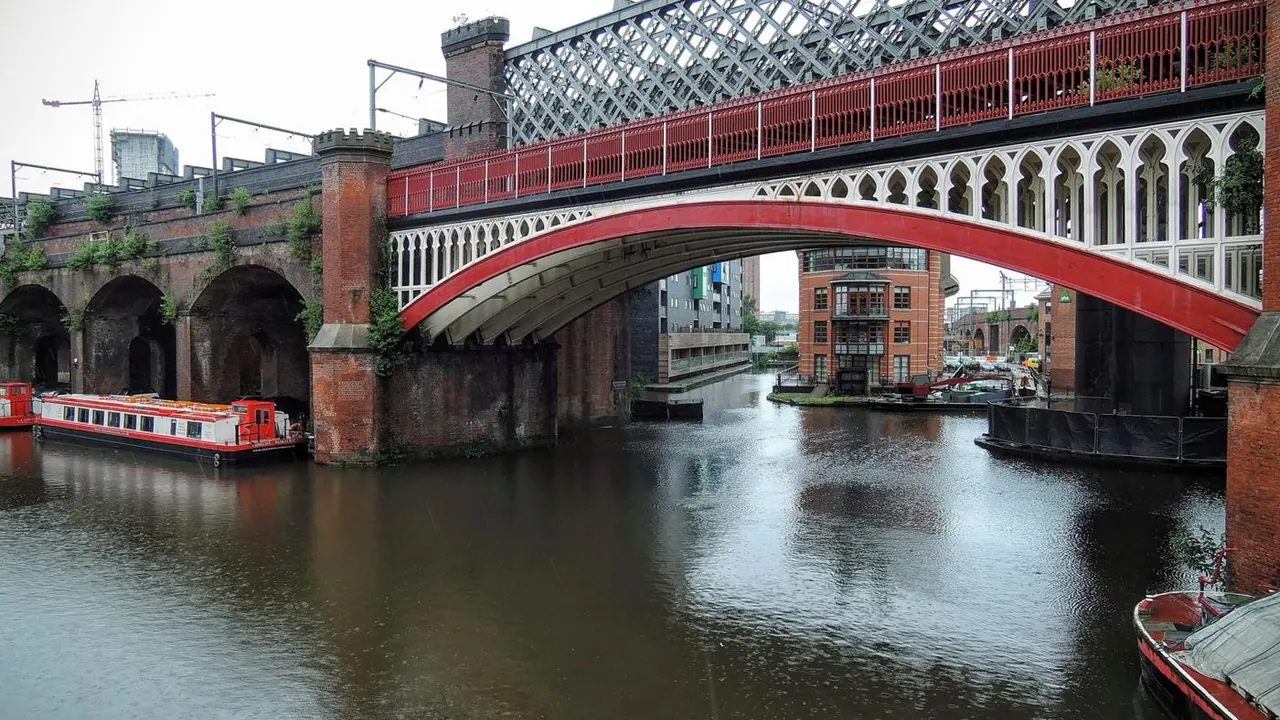
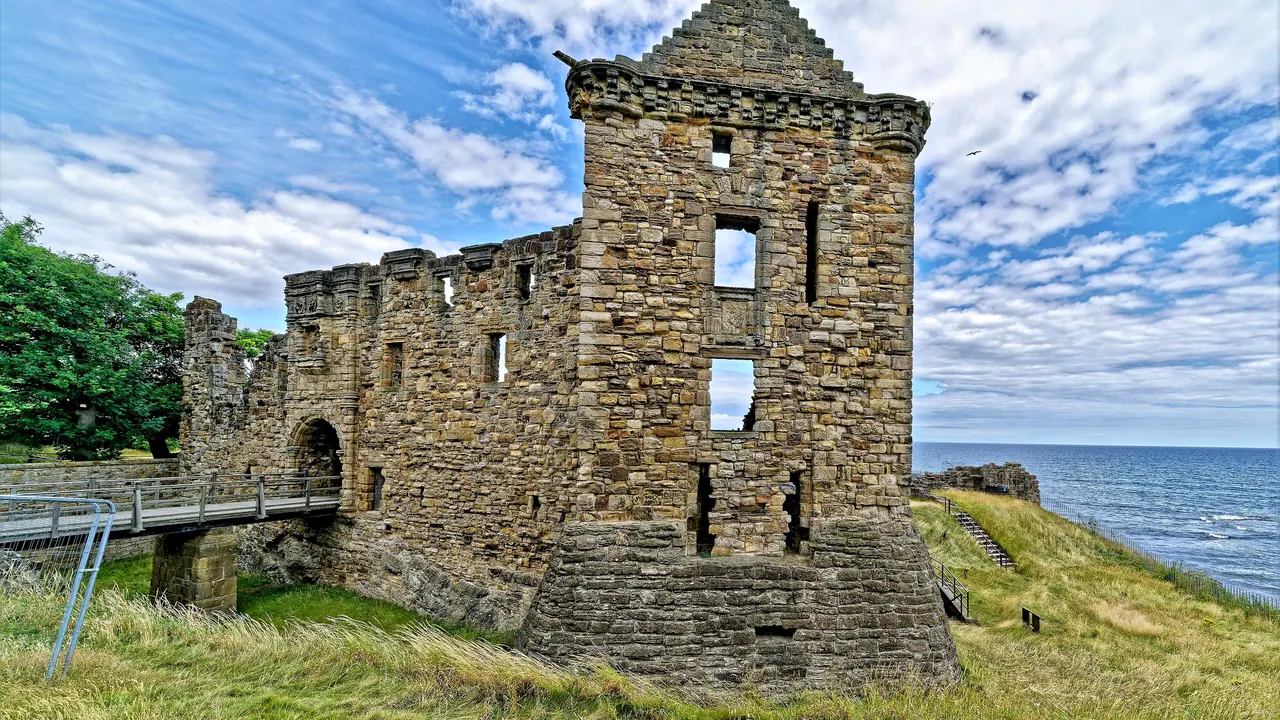
Photos: Manchester by IIya Kuzhekin, CC BY 3.0, cropped; St Andrews by Holger Uwe Schmitt, CC BY-SA 4.0, cropped.
Manchester or St Andrews?
Our verdict in twelve categories, each scored against the same fixed benchmark cities, and the climate month by month, so you can choose for your trip.
Choose Manchester for
- nightlife
- live music and the arts
- shopping
Manchester suits travellers who want a big city with plenty going on after dark. It has a deep gig and club scene, the Hallé at the Bridgewater Hall, the bars of the Northern Quarter and wide shopping. Its rail links put Liverpool, York and the Peak District within easy reach. It is the better pick for a lively weekend, a trip built around music, or a family that needs free indoor museums when it rains.
Choose St Andrews for
- wellness
- beaches
For a quieter few days of sea air, medieval ruins and golf, St Andrews is the stronger choice. The old town is small, the beaches are on the doorstep and the evenings are calm, so it is restful in a way Manchester never is, and the Old Course is a pilgrimage in itself. Expect early nights, few shops and costly rooms. It fits couples, golfers and coastal walkers better than anyone looking for a night out.
Scoreboard
Twelve categories on one fixed scale from 0 to 100. The shaded stretch is the gap between the two.
Your match
Pick a travel style or drag the sliders, and both match scores follow your weighting.
Wins on nightlife and live music and the arts with your weighting.
Wins on wellness and beaches with your weighting.
What matters to you?
Category by category
What the scores mean for a trip.
Beaches & swimming
Manchester is inland, so the seaside means a train out to the dunes and pinewoods at Formby or the promenade at Blackpool. That is an outing for sea air and fish and chips, not a beach day, and anyone who wants to swim uses an indoor pool.
St Andrews at least has its sands within a walk of the centre. West Sands is long and wide, good for walks and kites, East Sands by the harbour is sheltered, and Castle Sands lies under the cliffs. The North Sea is too cold for lazy swims, but a brisk dip and a windy stroll are part of a stay.
Food & drink
Manchester offers far more range. It has one of Britain's larger Chinatowns, cheap South Asian cooking along Wilmslow Road in Rusholme, and food halls in the converted mills of Ancoats and the Northern Quarter. Drink is its real strength, from Victorian pubs to brewery taps under the railway arches.
St Andrews is more about local produce than variety: East Neuk crab and lobster, Fife lamb, ice cream queues on summer evenings, and fish and chips by the harbour in the villages down the coast. It is pleasant for a few days, but the choice runs out quickly.
Culture & sights
Manchester's sights tell the story of the world's first industrial city. There are the neo-Gothic Town Hall, the John Rylands Library, the cotton mills of Ancoats and the Science and Industry Museum on the site of the oldest passenger railway station. Add the Pre-Raphaelites at the Manchester Art Gallery, the Whitworth and the People's History Museum, mostly free, and the city has the deeper collections.
St Andrews looks further back, to its centuries as Scotland's religious capital. You can climb St Rule's Tower beside the cathedral ruins, crawl through the castle's siege tunnels and walk the quadrangles of a university founded in 1413. Its golf heritage is something Manchester cannot match, but the town is seen more quickly.
Nightlife
This is the widest gap between the two. Manchester's nights run from the basement bars and small DJ rooms of the Northern Quarter to the long-established Gay Village on Canal Street, with big warehouse raves in autumn and winter and weekends that go on late.
In St Andrews an evening out means the pub, and in summer the town is in bed early. In term time the students liven up a few places, but anyone who wants to dance takes the bus to Dundee or Edinburgh.
Nature & outdoors
Both give good days outdoors, of different kinds. From Manchester the draw is the hills: trains reach Edale in under an hour for Kinder Scout and the ridge from Mam Tor. Heaton Park and the canal towpaths are closer in. Expect mud and low cloud on the moors.
St Andrews is coastal and low-lying. The Fife Coastal Path runs both ways from town, seals haul out at Tentsmuir and wading birds gather on the Eden estuary. Proper hill walking there means driving to the Lomond Hills or Perthshire.
Day trips
Both make fine bases, but they work in different ways. Manchester runs on trains: Liverpool, Chester and York each make an easy day by rail, and you can reach the Peak District and even the Lake District without a car.
From St Andrews the best outings are short hops along the coast. There are the East Neuk harbours at Crail and Anstruther, the V&A and Scott's ship Discovery in Dundee, and Edinburgh for a longer day. Castles such as Glamis and Stirling are much easier to reach with a car.
Good for families
Manchester gives children more to do in any weather. There are working engines at the Science and Industry Museum, dinosaurs at the Manchester Museum, and an aquarium and indoor snow slope at the Trafford Centre. Chester Zoo is a day out. The downside is a rowdy centre on weekend nights.
St Andrews is calmer, and safe enough for older children to roam. It has rock pools on the sands, the castle tunnels, the miniature railway at Craigtoun Park and the putting green beside the Old Course. It suits a slow few days rather than a packed schedule.
Getting around
Both centres are easy on foot. Manchester adds Metrolink trams to Salford Quays, Old Trafford and the airport, plus two main stations, so a car is rarely needed.
St Andrews is even smaller to walk, but it has no railway station. Trains stop at Leuchars, about 8km away, and the inland sights are far easier to reach by car.
Shopping & style
Manchester is a proper shopping city. The big chains are around Market Street, designer labels are on King Street and in Spinningfields, and the huge Trafford Centre is on the edge of town. The Northern Quarter adds record shops, vintage stalls and Afflecks.
St Andrews makes a pleasant afternoon's browse along its three main streets. It is best for golf gear, cashmere, tartan and bookshops, and serious shoppers there head to Edinburgh.
Affordability
Neither is cheap, but Manchester is easier on a budget. Most major museums are free, curry houses and food halls make cheap meals easy, and the city has plenty of hotel rooms, although prices jump on match and concert nights.
St Andrews has few rooms, priced for golfers and visiting university families, and they climb sharply around tournaments and graduation. Playing the famous courses is a large extra cost. Staying in the East Neuk villages can bring the bill down.
Live music & performing arts
Manchester is far stronger here. The Hallé and the BBC Philharmonic both play at the Bridgewater Hall, and the Royal Exchange puts on theatre in the round inside the old cotton trading hall. The gig circuit runs from back rooms in the Northern Quarter to a huge arena.
St Andrews has the Byre Theatre, university choral and chamber concerts in term time, and folk sessions in some pubs. For orchestras or major theatre, visitors go to Edinburgh or Dundee.
Wellness & relaxation
Manchester has no bathing tradition to speak of. You are limited to hotel spas and a few day spas in the centre, and Victoria Baths is an Edwardian building to tour rather than to swim in. The usual escape is a train to the old spa town of Buxton.
St Andrews has no thermal waters either, but it does better on what lies outdoors. Cold-water dipping in the North Sea is a habit among locals and students, and anyone who wants a warm pool and treatments will find full spas at the golf resorts on the edge of town.
When should you go?
Pick your month. The climate figures are measured averages, not a forecast.
Manchester in July
St Andrews in July
Daytime high, °C
Rainfall in the month, mm
Temperature and rainfall are climate normals, averaged over the years shown. Manchester: 1991-2020 normals, Manchester Airport (14.8 km from centre). St Andrews: 1991-2020 normals, Leuchars (6.5 km from centre).
Neither place ever gets warm enough for a proper beach summer. Manchester is slightly warmer, reaching about 21°C in July, while St Andrews peaks a couple of degrees lower. Its sea is colder too: the Irish Sea off Manchester's nearest coast reaches 17°C in August, and the North Sea off Fife only 14°C. Both are at their best for walking from May to September. St Andrews has the edge in spring, when it is drier and sunnier than Manchester, so April and May are good months for the coastal path and the links.
From autumn the two diverge more. Manchester is the wetter of the two and October is its rainiest month, with about 95mm against 80mm on the Fife coast. Winters in both are short of daylight and grey but rarely bitter. That suits Manchester's museums, pubs and concert halls well enough, but it leaves the beaches at St Andrews to the hardy few who still go for a dip.
Which traveller are you?
On a food and nightlife trip, Manchester is the clear choice. Dinner in Chinatown or along Wilmslow Road in Rusholme can lead on to Northern Quarter bars, Canal Street or a warehouse rave. In St Andrews the evening ends at the pub, and early.
For a relaxing and wellness trip, St Andrews suits better because the whole town runs at an easy pace. Everything is a short walk, the sea is never far away, and there is nothing to plan around. Manchester's weekends are too loud for real rest.
For a golf trip, St Andrews has no rival on this page. The Old Course and the Swilcan Bridge are a walk from the centre, with more links courses all around the town, though playing them is costly. Manchester's sporting pilgrimage is football, not golf.
Before you go
| Measure | Manchester | St Andrews |
|---|---|---|
| Official language | English | English |
| Currency | Pound Sterling (GBP) | Pound Sterling (GBP) |
| Sockets | G230 V, 50 Hz | G230 V, 50 Hz |
| Driving side | Left | Left |
| Time zone | UTC, UTC+1 in summer | UTC, UTC+1 in summer |
| Emergency number | 112 or 999 | 112 or 999 |
| Elevation | 38 m | 24 m |
| Main airport | Manchester Airport (MAN)15 km from centre211 non-stop destinations | Edinburgh Airport (EDI)56 km from centre163 non-stop destinations |
| Public holidays this year | 8 days | 10 days |
By the numbers
| Measure | Manchester | St Andrews |
|---|---|---|
| City population | 547,627 | 16,460 |
| People per km² | 4,737 | - |
| Museums within 10 km | 28 | 5 |
| UNESCO World Heritage sites within 50 km | 2 | 0 |
| Swim season, months above 21 °C | None | None |
Where else could you go?
Every comparison below shares a destination with this one, so you can follow Manchester or St Andrews somewhere new.
- Edinburghvs St Andrews
- Liverpoolvs Manchester
- Yorkvs Manchester
- Aberdeenvs St Andrews
- Glasgowvs St Andrews
- Invernessvs St Andrews