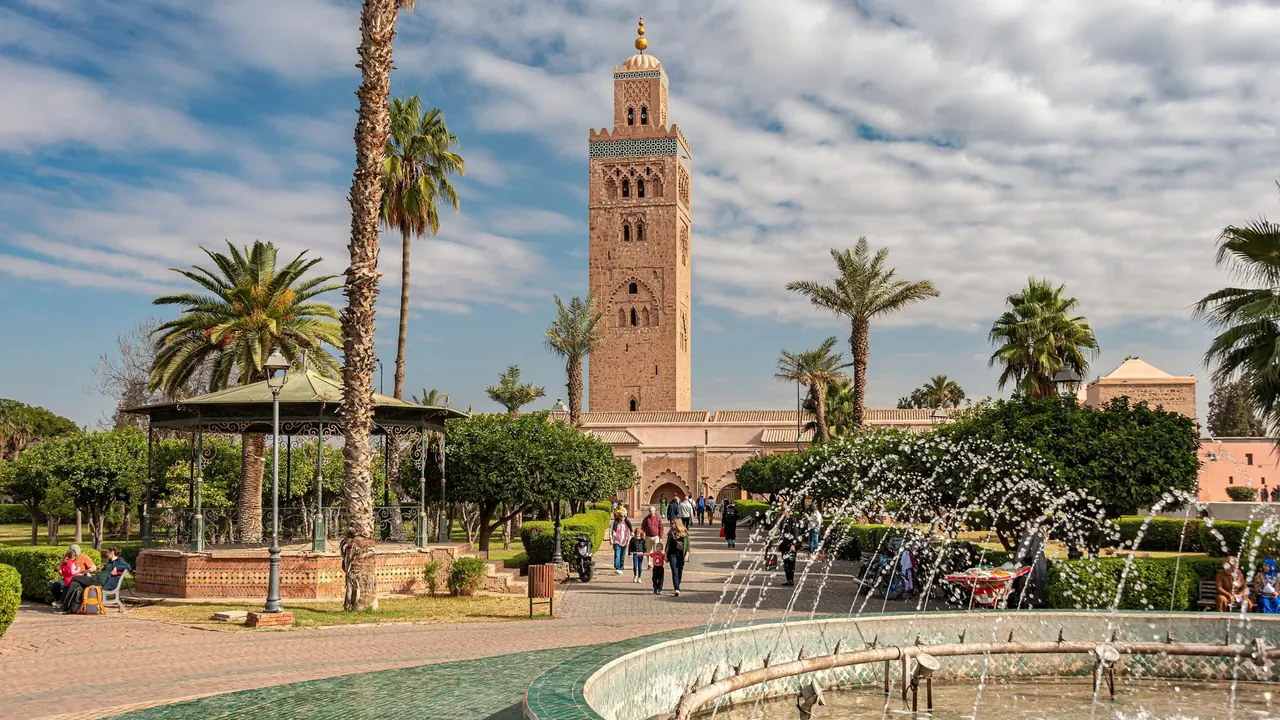
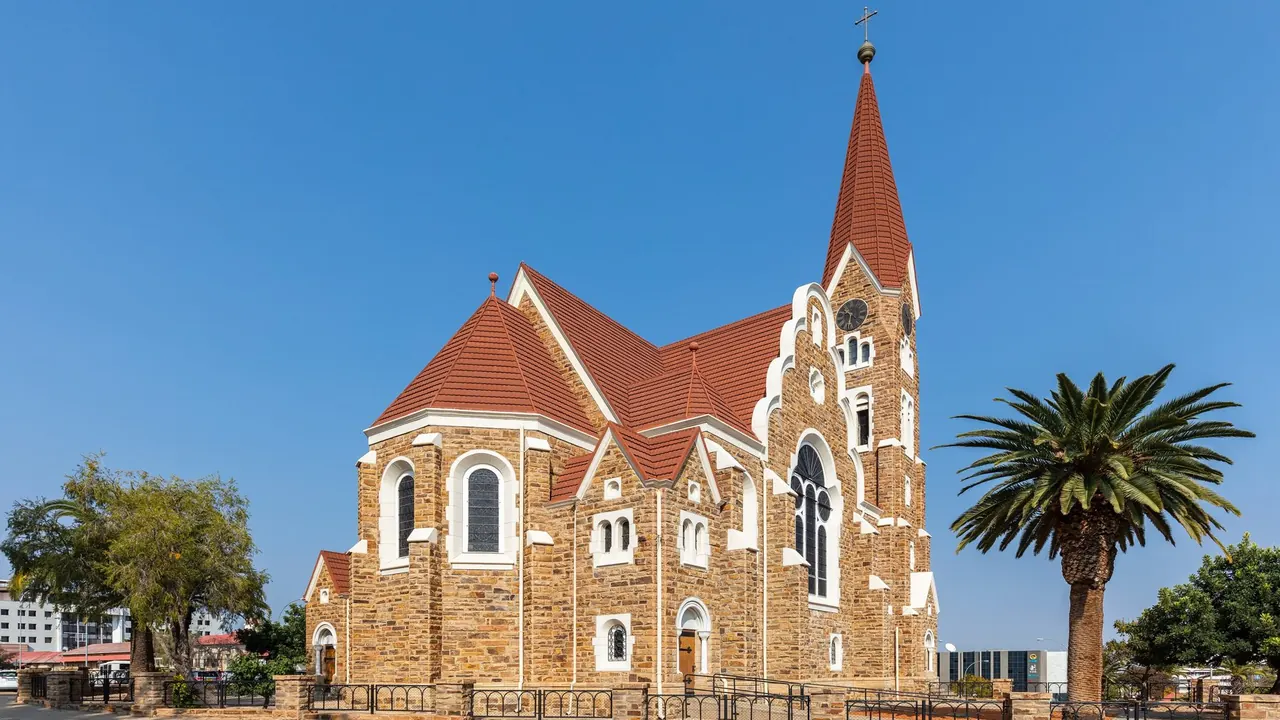
Photos: Marrakech by Jorge Franganillo, CC BY 2.0, cropped; Windhoek by Diego Delso, CC BY-SA 4.0, cropped.
Marrakech or Windhoek?
Our verdict in twelve categories, each scored against the same fixed benchmark cities, and the climate month by month, so you can choose for your trip.
Choose Marrakech for
- culture and sights
- wellness
- shopping
Marrakech suits travellers who want the city itself to be the trip. The walled medina, the souks organised by trade, the palaces and madrasas, and the daily ritual of the hammam fill several days without leaving town. The High Atlas and the Agafay desert are close enough for outings. Choose it for culture, shopping and rest in a riad courtyard, as long as you can take crowds and persistent sellers.
Choose Windhoek for
- families
Windhoek is the better pick if the city is the start of a longer Namibian journey. It is a quiet, low-rise capital where you can recover from a long flight, stock up and see giraffe or zebra on a game drive half an hour away. Then you set off by car for the dunes, Etosha or the coast. There is far less to see in the city itself, so it works best as a staging post.
Scoreboard
Twelve categories on one fixed scale from 0 to 100. The shaded stretch is the gap between the two.
Your match
Pick a travel style or drag the sliders, and both match scores follow your weighting.
Wins on culture and sights and wellness with your weighting.
Wins on families with your weighting.
What matters to you?
Category by category
What the scores mean for a trip.
Beaches & swimming
Neither city is a place for the sea, and both are equally weak here. The difference is how far away the coast is and what you find there. From Marrakech, windy Essaouira is two and a half to three hours away, which is just about possible as a long day out. Windhoek's coast at Swakopmund is four hours across the desert, and the Atlantic there is too cold for comfortable swimming. In both cities swimming means a pool, although Marrakech adds riad plunge pools and a lakeside afternoon at the Lalla Takerkoust reservoir.
Food & drink
Marrakech has much more to eat. There are tagines, pastilla and harira, tanjia slow-cooked in the embers of a hammam furnace, lamb from the mechoui ovens, and the evening grill stalls on Jemaa el-Fna. After a few days the riad menus start to repeat, and alcohol is limited to licensed places, but the best home-style cooking is very good.
Windhoek's food is simpler and centres on meat. Oryx and kudu appear on most menus, and kapana beef is grilled over open fires in Katutura. German bakeries and beer halls brewing to the old purity law add a colonial flavour, and beer is easy to find here in a way it is not in Marrakech.
Culture & sights
The two cities are far apart for sightseeing. The whole medina in Marrakech is a sight, with its medieval street plan, carved cedar doorways and mosques. Within walking distance are the Saadian Tombs, El Badi and Bahia palaces and the Ben Youssef Madrasa, and the Jardin Majorelle and Yves Saint Laurent museum lie outside the walls. Even so, most visitors see the main sights in two or three days.
Windhoek's sights fit into a single day on one short ridge: the Christuskirche, the Tintenpalast and the Alte Feste. The Independence Memorial Museum is the one essential visit. It deals with the colonial period and the Herero and Nama genocide very frankly, and it gives a view of Namibia's history that Marrakech cannot offer.
Nightlife
Neither city is for a big night out, but Marrakech has a bit more going on. Evenings there begin with the crowds and food stalls of Jemaa el-Fna or a sunset drink on a rooftop terrace. Later, the lounge bars and a few large clubs in Hivernage and Gueliz stay open late, at high prices.
Windhoek is quieter and mostly about beer gardens. There are a few weekend clubs playing amapiano and kwaito, and the shebeens of Katutura are best visited with someone local. Because walking at night in the centre is not advised, most evenings end early in a taxi.
Nature & outdoors
Marrakech has more spectacular scenery close by. The snow-capped High Atlas is under two hours away, with the waterfalls of the Ourika valley, walks between Berber villages from Imlil and the climb of Jebel Toubkal. Closer still, the Agafay desert has camel rides and dawn balloon flights.
Windhoek's surroundings are quieter: thornbush highland, granite koppies and the Auas Mountains. Its strength is animals rather than scenery. At Daan Viljoen you walk among zebra and wildebeest, which is something you cannot do near Marrakech, while the famous dunes and Etosha need an overnight trip.
Day trips
Neither city is a good base for day trips, but Marrakech has a few more options. You can reach the weekly Berber souks at Asni and Amizmiz or the Almohad mosque at Tinmel in the Nfis valley, and Essaouira is a long but possible day. Ait Benhaddou needs a night away.
From Windhoek, the woodcarvers' market at Okahandja and the Gross Barmen hot springs beyond it are about all you can reach in a day. Everything else in Namibia is part of a road trip with overnight stops.
Good for families
Both are hard places to bring children, but in different ways. Marrakech can be intense, with crowded lanes shared with motorbikes, pushy sellers and the snake charmers on the square. It suits older children who like an adventure, and a riad pool gives everyone somewhere to recover.
Windhoek is calmer but has almost nothing aimed at children. Its highlight is a game drive where children can see giraffe and antelope up close. With a hire car and a guest house with a garden in the suburbs, it is easy to manage on the way to Etosha.
Getting around
Marrakech is easier to get around, even though the medina is a maze of unnamed alleys where you share the lanes with carts. Most of what you want to see is within walking distance, and petit taxis link the medina with Gueliz and the Majorelle garden, though you will usually need to agree the fare first.
Windhoek is spread across hilly suburbs, and its buses are of little practical use to visitors. The shared sedan taxis that locals use run informal routes and can be used, but they take some confidence. You can walk the centre by day, but most visitors book a taxi through their lodging or hire a car, which they need anyway for the rest of Namibia.
Shopping & style
Many people come to Marrakech partly to shop. The souks are laid out by trade, with leatherworkers, dyers, metalworkers and carpet sellers. The classic buys are carpets, lanterns, argan oil and baskets, bargaining over tea is expected, and Gueliz and Sidi Ghanem have quieter design shops.
In Windhoek, the Namibia Craft Centre in the old brewery is the place to go, with Herero dolls, ostrich-shell jewellery and baskets. Karakul wool and semi-precious stones are other local buys. Its malls are useful for stocking up before a road trip but not worth a visit for their own sake.
Affordability
Marrakech is the cheaper trip overall. Stall food, mint tea, palace entry fees and petit taxis cost little, and simple medina riads are characterful and affordable. The two things that add up are alcohol and bargaining with too little patience.
A stay in Windhoek itself is reasonable, with cheap kapana and good-value guest houses. The cost rises with the way Namibia is travelled: a hire car, plus lodges and safaris priced for an international market.
Live music & performing arts
Neither city has a real stage season, but Marrakech has more live performance. Every evening, gnawa musicians with guembri and iron castanets, Atlas drummers and storytellers play on Jemaa el-Fna for free. The Marrakech Popular Arts Festival brings folk troupes from across Morocco.
Windhoek's performing life centres on the National Theatre of Namibia and student concerts at the College of the Arts. Shambo and Namibian kwaito turn up in bars from time to time, so check what is on during your stay.
Wellness & relaxation
Marrakech is the clear choice for relaxing. You can scrub with black soap in a neighbourhood hammam or book a marble spa with rhassoul clay and argan oil. Back at the riad, a courtyard with orange trees shuts out the noise of the medina.
Windhoek's calm comes from the city itself rather than any bathing culture: low-rise suburbs, garden guest houses and cool, clear winter nights. Spa treatments are limited to hotels and lodges, and the thermal pools at Gross Barmen are an hour away.
When should you go?
Pick your month. The climate figures are measured averages, not a forecast.
Marrakech in July
Windhoek in July
Daytime high, °C
Rainfall in the month, mm
Temperature and rainfall are climate normals, averaged over the years shown. Marrakech: 1991-2020 normals, Marrakech (5.1 km from centre). Windhoek: 1991-2020 normals, Windhoek (1.7 km from centre).
Marrakech is at its best in March and April, and again in October and November, when the days are warm enough to spend from morning to evening in the medina without wilting. April reaches about 26°C. Winter is mild and sunny with only light rain, and it is still a good time for sightseeing, although the evenings turn cool. From June to September the heat is fierce, peaking at around 38°C in July. Walking is then limited to the early morning and evening, and you spend the middle of the day by the riad pool. May and September are on the edge, already hot or still hot by the afternoon.
Windhoek's seasons run the other way. The dry winter, from May to September, brings almost no rain, and June and July reach about 22°C, which is ideal for walking and game drives. From October the heat climbs into the low thirties, and the summer rains follow, heaviest in February at around 96mm. The one stretch that suits both cities is April and the first part of May, before the heat builds in Marrakech. Marrakech is then in its warm spring, while in Windhoek the rains are easing and the days are cooling from the high twenties to the mid-twenties. In autumn the two pull apart, because Marrakech cools just as Windhoek heats up.
Which traveller are you?
For a culture and arts trip, Marrakech is the clear choice. Its UNESCO-listed medina, the Koutoubia, the Bahia Palace, the Ben Youssef Madrasa and the musicians on Jemaa el-Fna take days to explore. Windhoek's few sights on the ridge, the Christuskirche and the Independence Memorial Museum, fit into one morning.
On a relaxing and wellness trip, Marrakech is the better choice. Every quarter has a public hammam, the spas offer argan oil massages and riad courtyards shut out the noise of the lanes. Windhoek has a calm pace but no bathing tradition, and its spas are mostly in hotels and lodges.
For a wildlife and safari road trip, Windhoek is the natural base. Game drives at Daan Viljoen and the private farms nearby show you giraffe, zebra and oryx, and the city is where most people pick up a car for Etosha and Sossusvlei. Marrakech has nothing comparable.
Before you go
| Measure | Marrakech | Windhoek |
|---|---|---|
| Official language | Arabic, Standard Moroccan Tamazight | English |
| Currency | Moroccan Dirham (MAD) | Namibia Dollar (NAD) |
| Sockets | CE50 Hz | M220 V, 50 Hz |
| Driving side | Right | Left |
| Time zone | UTC+1 | UTC+2 |
| Emergency number | Police 19/112, ambulance 15, fire 15 | 112 |
| Elevation | 465 m | 1,650 m |
| Main airport | Marrakesh Menara Airport (RAK)6 km from centre113 non-stop destinations | Hosea Kutako International Airport (WDH)41 km from centre16 non-stop destinations |
| Public holidays this year | 11 days | 13 days |
By the numbers
| Measure | Marrakech | Windhoek |
|---|---|---|
| City population | 1,002,697 | 486,169 |
| People per km² | 4,360 | 95 |
| Museums within 10 km | 14 | 5 |
| UNESCO World Heritage sites within 50 km | 1 | 0 |
Where else could you go?
Every comparison below shares a destination with this one, so you can follow Marrakech or Windhoek somewhere new.