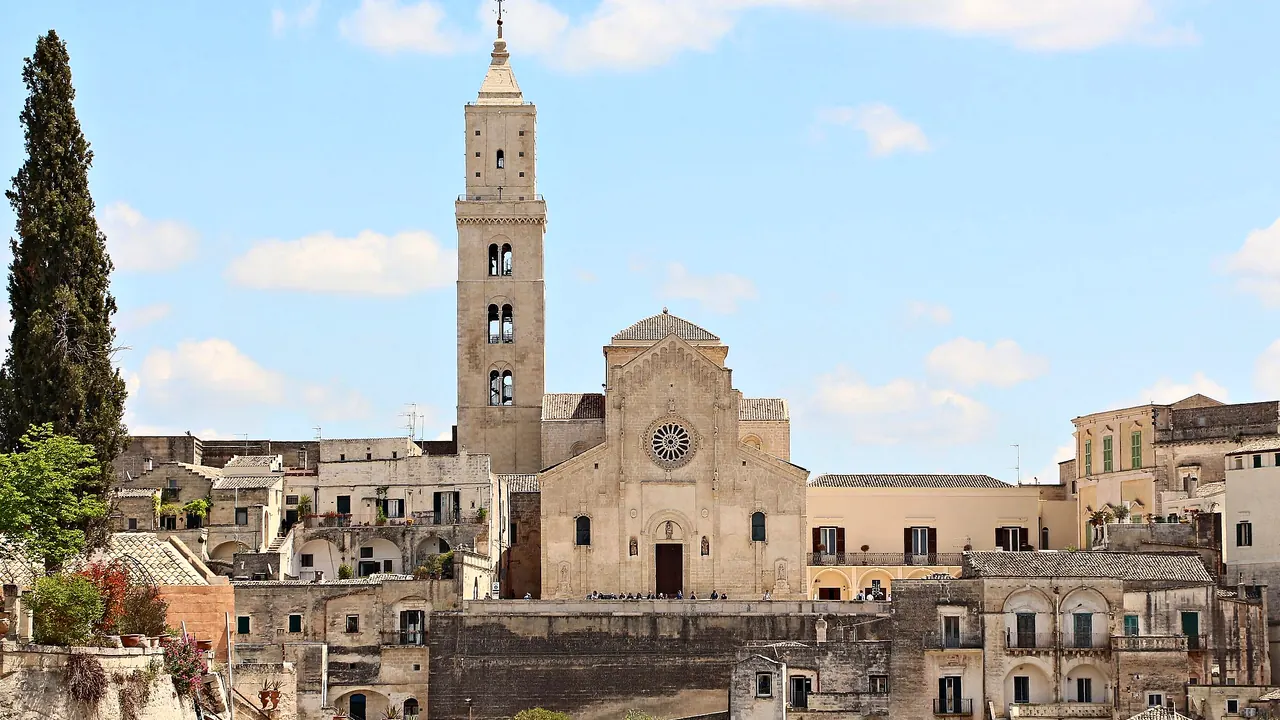
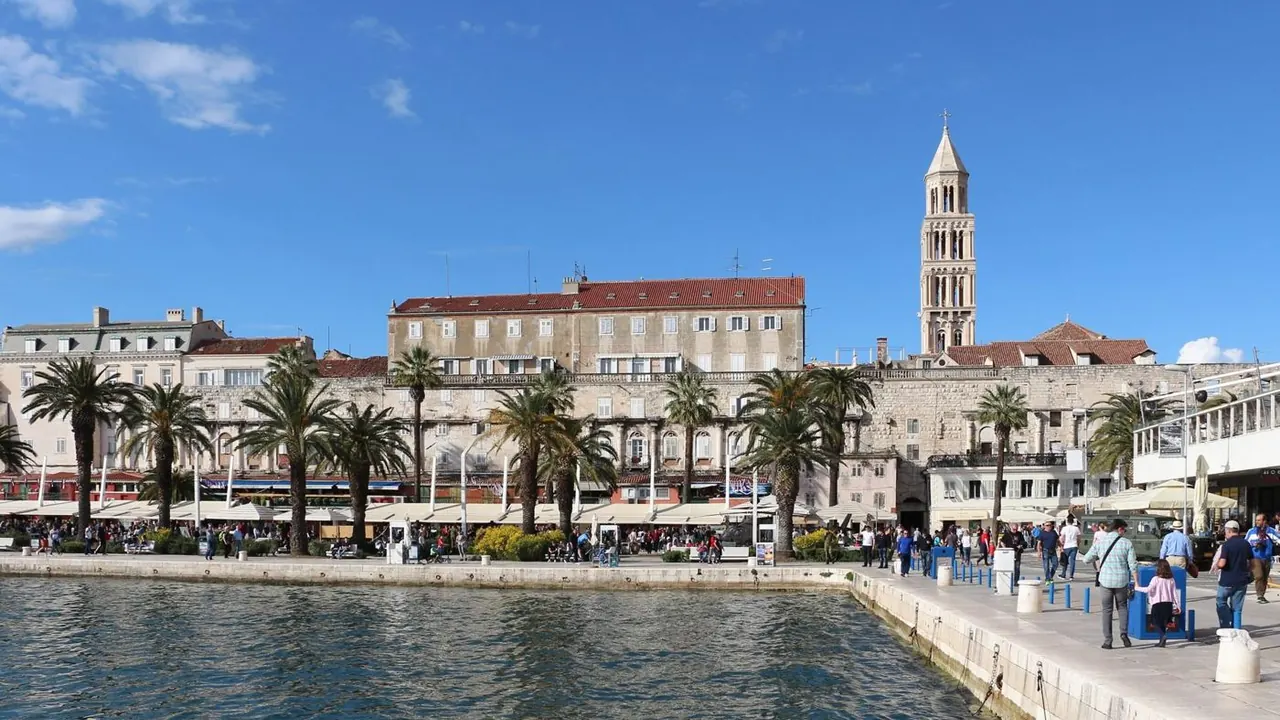
Photos: Matera by Bernard Gagnon, CC BY 4.0, cropped; Split by Bernard Gagnon, CC BY-SA 4.0, cropped.
Matera or Split?
Our verdict in twelve categories, each scored against the same fixed benchmark cities, and the climate month by month, so you can choose for your trip.
Choose Matera for
- prices
- culture and sights
Matera suits travellers who want one extraordinary place and the countryside around it: the cave districts of the Sassi, frescoed rock churches and the Murgia across the gorge, with a hire car for the trulli and white towns of Puglia. It makes for a slower, cheaper trip built around long dinners and the view, rather than the sea or a night out.
Choose Split for
- beaches
- nightlife
- families
Choose Split for a seaside trip where the city doubles as a base. You can swim within walking distance of a Roman palace, ferries to Hvar and Brač leave from the harbour, and the mountains and the Cetina canyon are close by. Families, walkers and anyone who wants a bar after dinner will find more to do. Buses and ferries cover the city, the coast and the islands, so a car only helps for inland trips and mountain trailheads.
Scoreboard
Twelve categories on one fixed scale from 0 to 100. The shaded stretch is the gap between the two.
Your match
Pick a travel style or drag the sliders, and both match scores follow your weighting.
Wins on prices and culture and sights with your weighting.
Wins on beaches and nightlife with your weighting.
What matters to you?
Category by category
What the scores mean for a trip.
Beaches & swimming
Split has the sea at its door. Bačvice's shallow sandy bay, where locals play picigin in knee-deep water, is a short walk from the palace, and quieter pebble coves lie under the pines of Marjan. Most of the shore is pebble or concrete, though, and the ferries to Brač and Hvar are how you find longer beaches.
Matera has no sea of its own. The Ionian beaches near Metaponto and Policoro are wide, sandy and gentle for children, but they are a drive of about 45 minutes, so swimming is an occasional outing rather than part of the day.
Food & drink
Both cook close to the land, but Split has more variety and better places to shop for food. Its Dalmatian table runs from grilled fish and black risotto to peka, and the fish market and Pazar show what is in season. The best meals are in the konobas of Varoš rather than inside the palace walls.
Matera's cooking is the plainer peasant food of Basilicata. Think crusty pane di Matera, crapiata, fave e cicoria and crackling peperoni cruschi, with Aglianico to drink. It is satisfying, but there is no market or street-food culture, and the choice rarely goes beyond regional dishes.
Culture & sights
The two are well matched, and each is built around one remarkable sight. In Matera that sight is a whole landscape: cave houses and carved churches stacked up the Gravina gorge, Byzantine frescoes in Santa Maria de Idris and the Palombaro Lungo cistern under the piazza. The Sassi are at their best at dusk.
Split's great sight is Diocletian's Palace, a Roman building that is still a neighbourhood people live in, with the cathedral in the emperor's mausoleum and the vaulted halls below. The Meštrović Gallery adds a strong art museum. In either city you can see the essentials in about two days.
Nightlife
In summer, Split has a real night out. Bars fill the stone stairways of the palace, the crowd moves on to the beach bars and clubs around Bačvice, and the evening runs late. Out of season it shrinks to a few bars.
Matera's evenings are a passeggiata along Via del Corso, a long dinner and a drink on a terrace above the lit-up Sassi. It is lovely for couples, but there are no clubs and the town is quiet soon after dinner.
Nature & outdoors
Split has more outdoors on its doorstep, and more variety. You can walk to Marjan's pine woods and cliffs from the old town, and the ridges of Mosor and Kozjak rise behind the city. Rafting and canyoning on the Cetina at Omiš, the waterfalls of Krka and sea kayaking are all within easy reach.
Matera's version is stonier and quieter. A path drops into the Gravina gorge and climbs to the Murgia plateau, past abandoned rock churches and Neolithic sites. The Lucanian Dolomites and the Pollino forests are longer drives.
Day trips
Both make excellent bases. The difference is how you travel. From Matera you need a car to reach Puglia: Alberobello's trulli, Ostuni and the Valle d'Itria, Castel del Monte and Polignano a Mare, with ghostly Craco and the hill villages of Castelmezzano and Pietrapertosa on the Basilicata side.
From Split, buses and ferries do most of the work. UNESCO-listed Trogir and Šibenik, Roman Salona and Klis Fortress lie along the coast, and Hvar and Brač are a boat ride away, although winter timetables need more planning.
Good for families
Split is the easier city with children. The centre is compact, Bačvice is shallow enough for paddling, Marjan gives shade and room to run, and the ferry ride to an island is often the highlight of the trip.
Matera works better for older children, who enjoy the caves, the underground cistern and scrambling into the gorge. Small children find it harder going: the Sassi's steep stone steps defeat a pushchair, shade is scarce, and the gentle Ionian beaches need a car.
Getting around
Split is much simpler for travellers without a car. The palace, the Riva, Varoš and Bačvice are all within a short walk of each other, and the ferry port and the bus and train stations stand together at the harbour.
Matera is easy to walk once you are there, from the flat upper town down the steep stairways into the Sassi. Getting anywhere else is harder. The town is off the national rail network, the narrow-gauge line to Bari is slow and buses are sparse, so a hire car is close to essential.
Shopping & style
Neither city is a shopping destination, though Split offers a little more. It has the fashion chains on Marmontova, malls on the outskirts and the Pazar market, where dried figs, honey and local brandies make good gifts.
Matera's shopping is mostly craft workshops in the Sassi selling cuccù whistles, tufa-stone carvings and papier-mâché. Its best souvenirs are edible: peperoni cruschi, local pasta and Aglianico.
Affordability
Matera is the cheaper of the two. Simple trattorias in the upper town cost well below big-city Italy, and guesthouses in the newer streets are a short walk from the Sassi. Only the cave hotels are expensive.
Split is pricier, especially in July and August, when rooms near the old town, fish sold by weight on the waterfront and island ferries all add up. Come in May, June or late September and the bills fall a good deal.
Live music & performing arts
Split has the fuller calendar. The Croatian National Theatre stages opera and ballet just outside the palace, and the Split Summer Festival performs in the Peristyle courtyard. Klapa singers often perform in the palace's domed vestibule.
Matera has much less. There are conservatory concerts and a summer jazz festival, some staged against the Sassi, and the year's big night is the Festa della Bruna, when a papier-mâché float is ritually torn apart.
Wellness & relaxation
Neither has a bathing tradition, and in both a spa means a hotel spa, though Matera's are more unusual, with candlelit cave rooms and pools cut into the rock. Its calm comes from quiet mornings in the Sassi and evenings watching the light fade over the gorge, especially from autumn to spring.
Split's rest takes the form of fjaka, long coffees on the Riva and the pine woods of Marjan. In midsummer the old town is loud late into the night, so people looking for real peace head out to the islands.
When should you go?
Pick your month. The climate figures are measured averages, not a forecast.
Matera in July
Split in July
Daytime high, °C
Rainfall in the month, mm
Where the figures come from
Matera has no rain gauge within 25 km of the centre, so its rainfall comes from a gridded climate dataset read at the city rather than from a gauge further away.
Temperature and rainfall are climate normals, averaged over the years shown. Matera: 2005-2025, 10 years observed (rainfall 1991-2020) normals, Matera / Martella (4.8 km from centre). Split: 1991-2020 (sunshine 1971-2000, rainfall 1981-2010) normals, Split / Marjan (0.9 km from centre).
Matera is at its best in May and June, and again in September and early October. Late spring is warm and fairly dry, which is good for walking the Sassi and the Murgia. From June the Ionian coast is warm enough to swim and reaches about 26°C in August, although it is a drive away. July and August are hot on the bare plateau, with highs around 32°C, so keep the gorge for early mornings and evenings. Rain builds through the autumn and peaks in November, and winters are cool and grey.
Split follows a similar curve, but the sea is on the doorstep and you can swim from June into early October. Summers are long and very sunny, with about 344 hours of sun in July. Its dry season is shorter, though. September already brings about 91mm of rain, more than October, and November is the wettest month at 100mm. That makes late May and June Split's most reliable weeks, while Matera's drier autumn gives it the edge from September onwards.
Which traveller are you?
For a beach and sun trip, Split is the clear choice. You can walk from the old town to Bačvice or the coves around Marjan, and island ferries take you to longer beaches. From Matera, the sea means a drive to the Ionian coast.
On a food and nightlife trip, Split comes out ahead. The fish market, konobas in Varoš and summer bars spilling through the palace alleys make for full evenings. Matera offers fine regional cooking and a terrace glass of Aglianico, but no clubs.
On a trip on a tight budget, Matera stretches the money further. Upper-town trattorias and guesthouses a short walk from the Sassi are inexpensive, and the gorge walks are free. Split in July and August costs about as much as a large Western European city.
Before you go
| Measure | Matera | Split |
|---|---|---|
| Official language | Italian | Croatian |
| Currency | Euro (EUR) | Euro (EUR) |
| Sockets | CFL230 V, 50 Hz | CF230 V, 50 Hz |
| Driving side | Right | Right |
| Time zone | UTC+1, UTC+2 in summer | UTC+1, UTC+2 in summer |
| Emergency number | 112 | 112 |
| Elevation | 401 m | 0 m |
| Main airport | Bari Karol Wojtyła International Airport (BRI)54 km from centre104 non-stop destinations | Split Saint Jerome Airport (SPU)12 km from centre69 non-stop destinations |
| Public holidays this year | 13 days | 14 days |
By the numbers
| Measure | Matera | Split |
|---|---|---|
| City population | 59,685 | 160,577 |
| People per km² | 152 | - |
| Museums within 10 km | 8 | 11 |
| UNESCO World Heritage sites within 50 km | 1 | 4 |
| Swim season, months above 21 °C | 5 months | 4 months |
Where else could you go?
Every comparison below shares a destination with this one, so you can follow Matera or Split somewhere new.