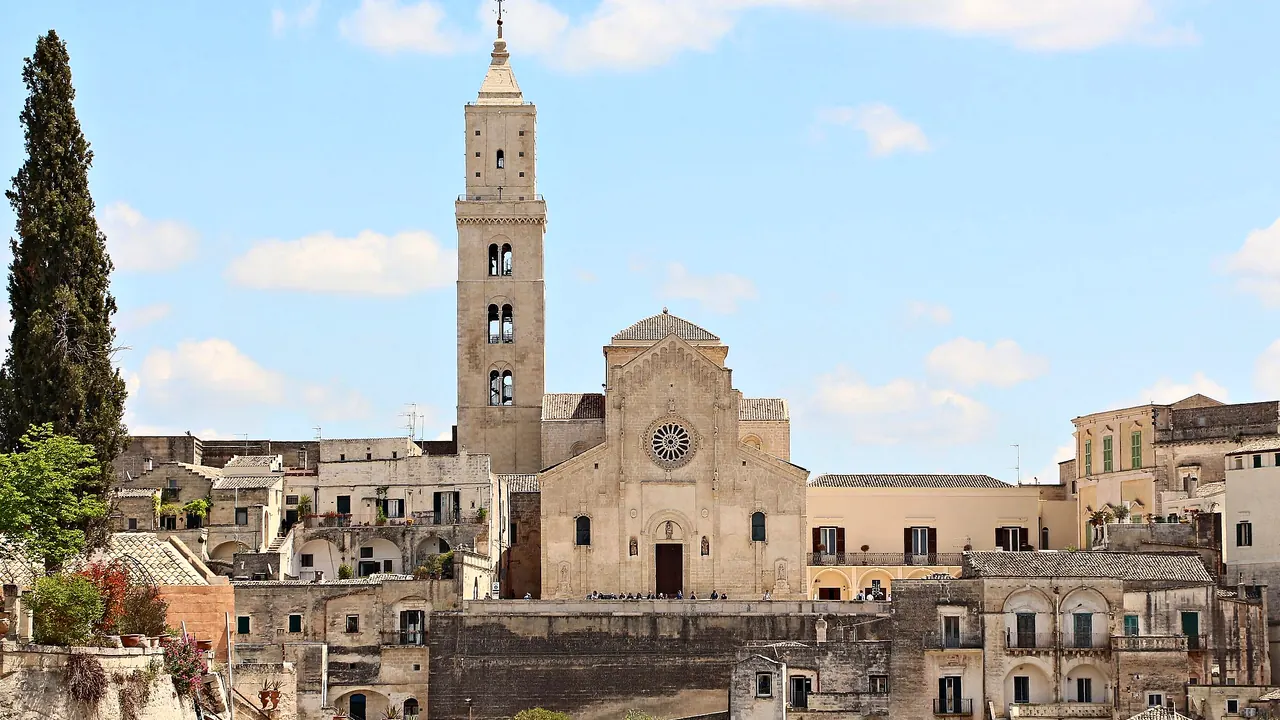
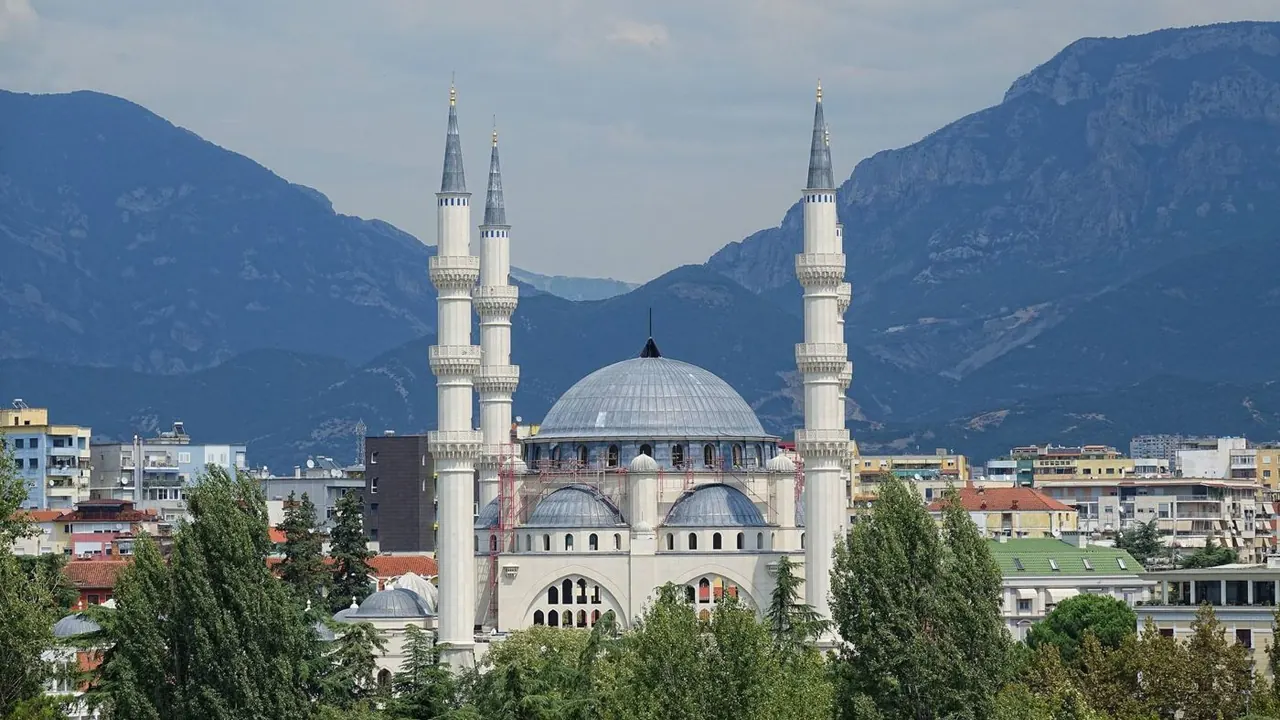
Photos: Matera by Bernard Gagnon, CC BY 4.0, cropped; Tirana by Bjørn Christian Tørrissen, CC BY-SA 4.0, cropped.
Matera or Tirana?
Our verdict in twelve categories, each scored against the same fixed benchmark cities, and the climate month by month, so you can choose for your trip.
Choose Matera for
- culture and sights
- day trips
- wellness
Matera is for travellers who want a place unlike anywhere else. The cave districts of the Sassi, the frescoed rock churches and the gorge below them are reason enough to go, and with a hire car you can also reach Alberobello, the Valle d'Itria and Castel del Monte across the Puglia border. It suits couples and slow travellers who are happy with quiet evenings, a long dinner and a glass of wine over the lit-up ravine.
Choose Tirana for
- nightlife
- prices
- live music and the arts
For a livelier and cheaper trip, Tirana makes more sense. Its sights tell the story of the communist century rather than deep history, but Blloku stays up late and meals and taxis cost little. The Dajti cable car and a day out to Berat add variety. If you want evenings out and money that goes further, you will be happier here than in Matera's quiet lanes.
Scoreboard
Twelve categories on one fixed scale from 0 to 100. The shaded stretch is the gap between the two.
Your match
Pick a travel style or drag the sliders, and both match scores follow your weighting.
Wins on culture and sights and day trips with your weighting.
Wins on nightlife and prices with your weighting.
What matters to you?
Category by category
What the scores mean for a trip.
Beaches & swimming
Neither city is a beach base, but Tirana's sea is the easier day out. Durrës is under an hour away by bus or car, with a long sandy strip lined with beach clubs, though it gets crowded at weekends and the water is cloudy near the port. From Matera, the pine-backed sands of Metaponto and Policoro are quieter and gentle for children, but without a car they are hard to reach.
Food & drink
Both kitchens are rural and plain, built on lamb, cheese, vegetables and good bread. Tirana gives you more to work through: morning byrek from corner bakeries, tavë kosi and fërgesë, farm restaurants on the hills outside town, and a slow coffee culture with raki to end the meal.
Matera's food is narrower. It is the peasant cooking of Basilicata, with crapiata, hand-made cavatelli and crackling peperoni cruschi alongside Aglianico, and little beyond it, with no street food or market life. The upper town tends to cook better than the cave restaurants of the Sassi.
Culture & sights
Matera's lead here is wide. The Sassi have been lived in since prehistoric times, and a day among them takes you through rock churches such as Santa Maria de Idris with their faded Byzantine frescoes, furnished cave houses that families shared with their animals until the 1950s, and the Palombaro Lungo cistern beneath the main piazza. No other townscape looks like it, and it is at its finest at dusk, when the lights come on across the gorge.
Tirana's main theme is the 20th century. The Cold War story told in the Bunk'Art bunkers and the House of Leaves is what stays with you. Skanderbeg Square, the concrete Pyramid and the finely painted Et'hem Bey Mosque, a survivor of the older Ottoman town, fill out the centre. Beyond these the historic fabric is thin, and two days covers it.
Nightlife
Tirana wins easily. Blloku was once the closed quarter of the communist leadership. Its streets now fill with cocktail bars and small clubs after a late dinner and stay busy past midnight on summer weekends, and larger clubs near the Grand Park lake run into the early hours.
Matera has no clubs. A night out there means the passeggiata on Via del Corso, a long dinner and a drink in a cave wine bar above the Sassi, and outside summer the town is quiet soon after dinner.
Nature & outdoors
The outdoors are equally good in both, but different in kind. Matera's landscape is stony and sun-baked. The Gravina gorge lies right below the Sassi, the Murgia upland holds abandoned rock churches and Neolithic sites, and the Lucanian Dolomites and Pollino are further out.
Tirana's is greener and higher. A cable car lifts you onto forested Mount Dajti in a quarter of an hour, and the turquoise Bovilla reservoir and the rafting rivers are within reach. In Matera you can set off walking from your door, while Tirana's best walking starts with a cable car or a taxi.
Day trips
Matera is the better base because it sits on the Puglia border. Altamura and Gravina are minutes away. Within about an hour you reach the trulli of Alberobello, the white towns of the Valle d'Itria, Castel del Monte and Polignano a Mare, and in Basilicata there are Craco and Castelmezzano.
Tirana has fewer outings, but strong ones: Kruja's castle and bazaar under an hour away, and UNESCO-listed Berat about two hours south. Slow roads make most of them full days. In both places a car makes the most difference.
Good for families
Neither city is made for children, but Tirana is easier with them. The Grand Park has playgrounds and a lake, the Dajti cable car makes a ready-made outing, and children are welcome in cafés late into the evening. Heavy traffic and broken pavements make a buggy hard work, though.
In Matera, the steep stone steps of the Sassi rule out pushchairs entirely, and summer afternoons have little shade. Older children enjoy the caves and the cistern, but families usually keep the stay short.
Getting around
Both are cities to explore on foot. Tirana's centre is flat and compact, with Skanderbeg Square, Blloku and the market within twenty minutes of each other, and cheap taxis cover the outskirts and the Dajti cable car.
Matera's upper town is flat too, but you reach the Sassi by steep stairways that tire the legs. The real problem is leaving town. There is no national rail line, only a slow narrow-gauge train to Bari, and buses are sparse, so a hire car is close to essential.
Shopping & style
Matera's shops are mostly workshops in the Sassi selling the painted cuccù whistle, tufa carvings and papier-mâché, with ordinary Italian chains along Via del Corso. The best things to take home are edible: dried peppers, local pasta and a bottle of Aglianico.
Tirana gives a shopper a little more to do. The Pazari i Ri market has stalls of cheese, honey, olives and raki beside carpets, copperware and filigree silver, and there are malls and boutiques around Blloku, though no luxury street and little independent design.
Affordability
Tirana is clearly the cheaper stay, among the least expensive capitals in Europe. Meals, wine, raki, taxis and museum entry barely dent a budget, and only the smarter Blloku bars cost noticeably more.
Matera costs less than Italy's big cities, but the cave hotels of the Sassi charge for their setting and rates climb in summer. A guesthouse in the newer town and meals in upper-town trattorias keep the cost reasonable.
Live music & performing arts
Tirana has a real stage in the National Theatre of Opera and Ballet on Skanderbeg Square, where tickets are easy to get, and a few bars host jazz. Matera has nothing equivalent. It offers conservatory concerts, summer open-air events against the Sassi, and the Festa della Bruna, when the papier-mâché float is torn apart, as the big night of the year. Neither city has a deep scene.
Wellness & relaxation
Matera is the more restful of the two. Some hotel spas are set in candlelit cave rooms with pools cut into the rock, and the town's slow pace takes care of the rest: quiet early mornings in the Sassi and evenings watching the light fade over the gorge.
In Tirana, calm comes in pockets: long coffees on shaded terraces, the evening xhiro, and the Grand Park and Dajti. Traffic noise fills much of the centre. The nearest thermal water is the old-fashioned spa at Llixha, about an hour away.
When should you go?
Pick your month. The climate figures are measured averages, not a forecast.
Matera in July
Tirana in July
Daytime high, °C
Rainfall in the month, mm
Where the figures come from
Matera has no rain gauge within 25 km of the centre, so its rainfall comes from a gridded climate dataset read at the city rather than from a gauge further away.
Temperature and rainfall are climate normals, averaged over the years shown. Matera: 2005-2025, 10 years observed (rainfall 1991-2020) normals, Matera / Martella (4.8 km from centre). Tirana: 1961-1990 normals, Tirana (3 km from centre).
Both cities are at their best in May and from late September into October. Matera, up on its plateau, is drier all year, but July reaches 32°C, which is too hot for climbing the Sassi stairways in the afternoon. Rain builds from October and peaks in late autumn. The Ionian sea within reach of Matera is warm enough to swim in from June to September, reaching 26°C in August.
Tirana is a little milder in winter but much wetter. November brings about 172mm of rain, around double Matera's, and the wet season runs from October through April. Its summers are just as hot, but very sunny, with July the brightest month, and the Adriatic at Durrës is pleasant from June to September. In the winter months Tirana is the weaker choice of the two.
Which traveller are you?
For a culture and arts trip, Matera is the clear choice. The cave districts of the Sassi, frescoed rock churches, the walk-through Palombaro Lungo cistern and the Puglia towns within an hour fill several days. Tirana's own sights take two days at most.
On a food and nightlife trip, Tirana suits you far better. Blloku's bars stay busy past midnight, and morning byrek, tavë kosi and farm restaurants in the hills give you more variety. In Matera the evening usually ends with dinner and a glass on a terrace.
On a tight budget, your money goes further in Tirana. Meals, raki, taxis and museum tickets cost little, and central mid-range hotels are good value. Much of Matera's appeal lies in cave hotels that charge for it, and you will almost certainly need a hire car.
Before you go
| Measure | Matera | Tirana |
|---|---|---|
| Official language | Italian | Albanian |
| Currency | Euro (EUR) | Lek (ALL) |
| Sockets | CFL230 V, 50 Hz | CF220 V, 50 Hz |
| Driving side | Right | Right |
| Time zone | UTC+1, UTC+2 in summer | UTC+1, UTC+2 in summer |
| Emergency number | 112 | 112 |
| Elevation | 401 m | 110 m |
| Main airport | Bari Karol Wojtyła International Airport (BRI)54 km from centre104 non-stop destinations | Tirana International Airport Mother Teresa (TIA)13 km from centre121 non-stop destinations |
| Public holidays this year | 13 days | 14 days |
By the numbers
| Measure | Matera | Tirana |
|---|---|---|
| City population | 59,685 | 389,323 |
| People per km² | 152 | 9,314 |
| Museums within 10 km | 8 | 11 |
| UNESCO World Heritage sites within 50 km | 1 | 0 |
| Swim season, months above 21 °C | 5 months | 5 months |
Where else could you go?
Every comparison below shares a destination with this one, so you can follow Matera or Tirana somewhere new.