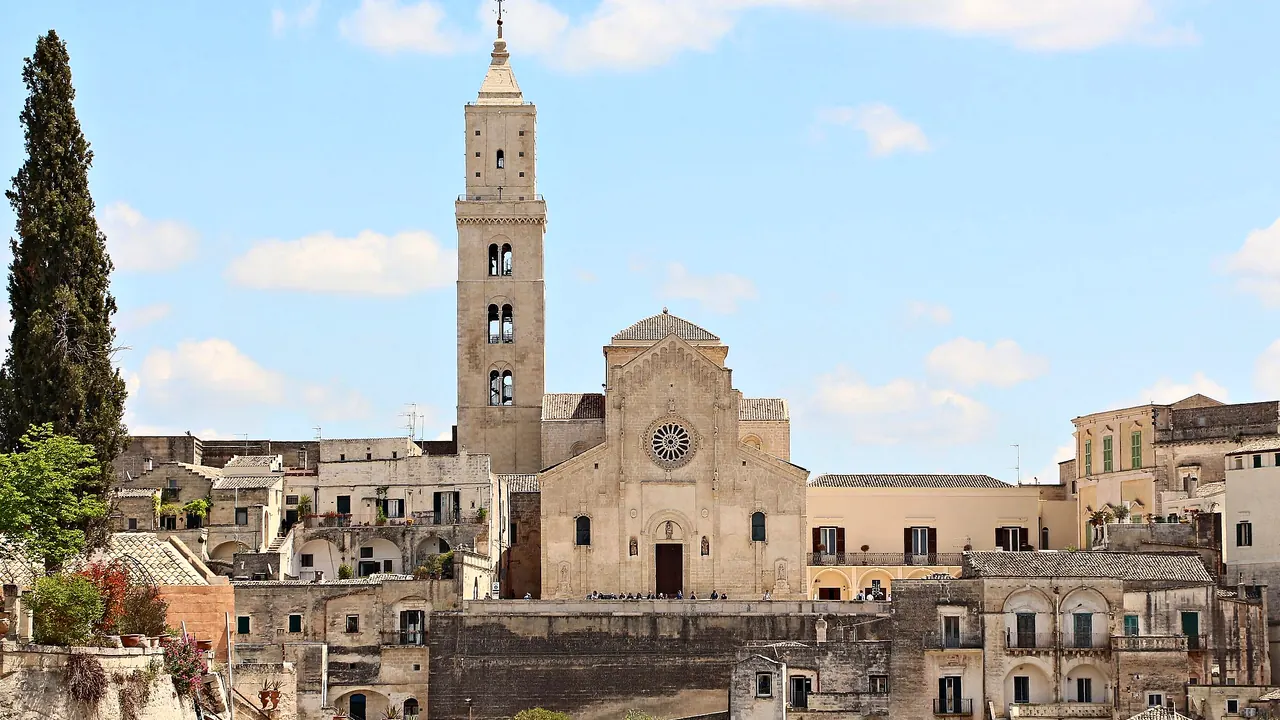
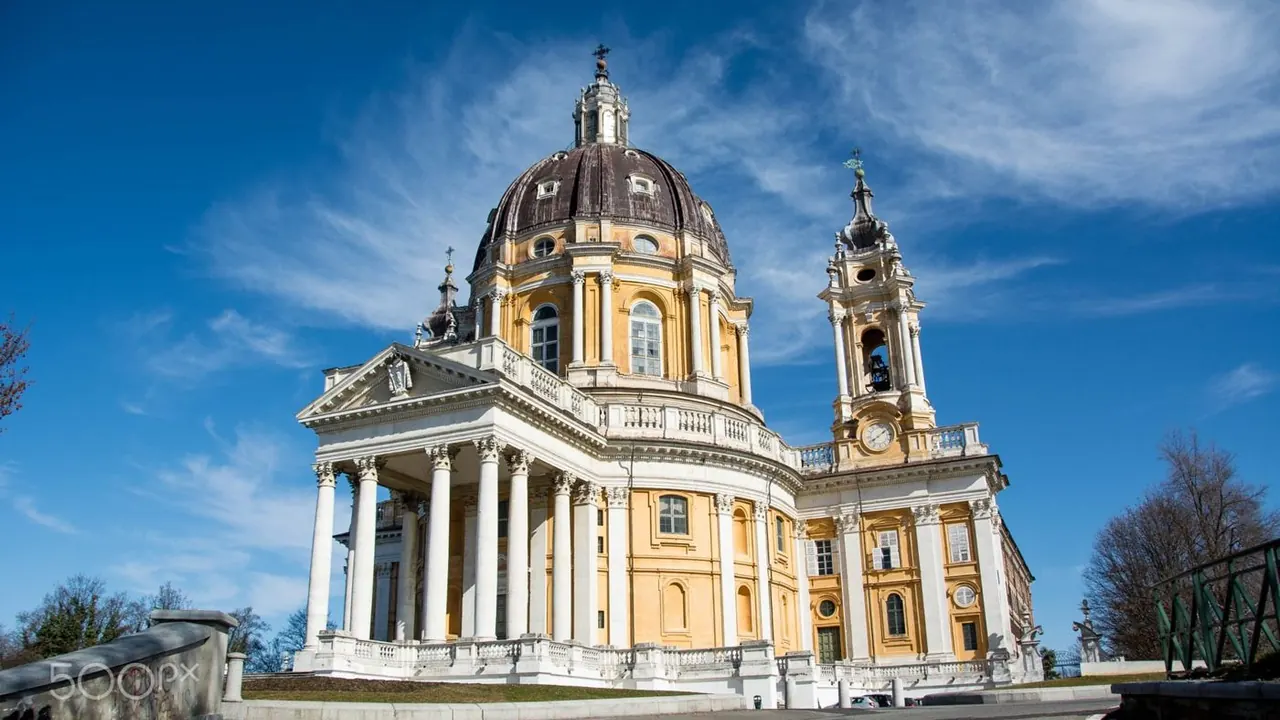
Photos: Matera by Bernard Gagnon, CC BY 4.0, cropped; Turin by Konstantin Dacosta, CC BY 3.0, cropped.
Matera or Turin?
Our verdict in twelve categories, each scored against the same fixed benchmark cities, and the climate month by month, so you can choose for your trip.
Choose Matera for
- beaches
Matera is for travellers who want one extraordinary place, taken slowly. The cave districts of the Sassi, the walk across the Gravina gorge to the Murgia and the lights coming on at dusk are the whole point, and with a car you can add the trulli, the white towns of Puglia and the sandy Ionian shore. It suits couples and photographers far better than anyone looking for evenings out, and it is the only one of the two with the sea within easy driving distance.
Choose Turin for
- live music and the arts
- shopping
- food and drink
Turin is the broader and easier city vacation. It eats much better, from agnolotti and Barolo to the aperitivo it invented, its museums run from Egyptian antiquities to cinema and cars, and opera, concerts and bar streets fill the evenings. Families, food lovers and anyone who wants the Alps or the Langhe wine hills close at hand will find it the more comfortable base.
Scoreboard
Twelve categories on one fixed scale from 0 to 100. The shaded stretch is the gap between the two.
Your match
Pick a travel style or drag the sliders, and both match scores follow your weighting.
Wins on beaches with your weighting.
Wins on live music and the arts and shopping with your weighting.
What matters to you?
Category by category
What the scores mean for a trip.
Beaches & swimming
Neither city is a beach destination, but Matera is much closer to one. The Ionian coast at Metaponto and Policoro is under an hour by car, with long sandy beaches, pine woods behind and calm, shallow water that suits children. The rocky coves of Puglia's Adriatic shore are a longer drive.
From Turin the nearest sea is the Ligurian Riviera, close to two hours away and better as a separate stay than a day trip. Summer swimming from the city means lakes such as Avigliana or Viverone instead.
Food & drink
Turin is one of Italy's great eating cities, and Matera cannot match its range. Piedmont brings vitello tonnato, agnolotti del plin, bagna cauda and Langhe truffles, the wine list runs to Barolo and Barbaresco, and the city adds vermouth, gianduja, bicerin in the arcade cafés and the huge Porta Palazzo market.
Matera's cooking is honest Basilicata peasant food: its horn-shaped bread, crapiata, cavatelli and crackling peperoni cruschi with a glass of Aglianico. It is good and distinctive, but beyond regional dishes there is little choice and no market life, so a few days covers it.
Culture & sights
Turin offers more to see, and over more days. The Museo Egizio alone justifies a visit, and around it stand the Royal Palace, Palazzo Madama, the Shroud cathedral, the ring of Savoy residences, the Mole with its cinema museum and a strong contemporary art scene at Rivoli and the GAM.
Matera's offer is smaller but unlike anywhere else in Europe. The Sassi themselves are the sight: cave houses, frescoed rock churches such as Santa Maria de Idris, and the walk-through cistern of the Palombaro Lungo. It is a single, powerful place seen in a couple of days, where Turin is a capital's worth of museums.
Nightlife
Turin has a proper night out and Matera does not. After the aperitivo, Turin's crowd spreads into the wine bars of the Quadrilatero Romano, the student pavements of San Salvario, alternative Vanchiglia and, in summer, the Murazzi on the Po, with clubs in old industrial buildings for later.
Matera's evening is the passeggiata, a long dinner and a drink on a terrace above the lit Sassi. A few cave bars stay open late in summer, but there are no clubs, and out of season the town is asleep soon after dinner.
Nature & outdoors
Turin has the Alps on its horizon and within reach: Gran Paradiso with its ibex, hut-to-hut hiking in the Susa valley and skiing at Sestriere, plus the Superga hills and the Mandria forest closer in. Getting into the wilder country needs a car or a train, as the city sits on a flat plain.
Matera's landscape starts at the edge of town. The Gravina gorge drops below the Sassi, and a path climbs to the Murgia plateau with its abandoned rock churches, while the Lucanian Dolomites and Pollino are a drive further. It is fine walking country in spring and autumn, but there are no mountains or ski slopes on Turin's scale.
Day trips
Both are excellent bases, with Turin just ahead because many of its outings are on the train line. The Langhe wine villages, Alba and Bra are about an hour south, Milan is a fast train away, and the Sacra di San Michele, Aosta and Genoa widen the choice.
Matera's trips are of a different kind: small towns and southern landscapes rather than cities. Altamura and Gravina are close, Alberobello, Ostuni and Polignano a Mare are around an hour, and Craco and the mountain villages of Castelmezzano and Pietrapertosa lie inland. Almost all of them need a car.
Good for families
Turin is much the better choice with children. Its flat grid and long arcades keep pushchairs moving and out of the sun, the glass lift up the Mole and the car and Egyptian museums please older children, and Valentino park gives space to run, with the Zoom Torino animal park within a short drive.
Matera welcomes children but offers them little of their own. Older ones enjoy the caves, the cistern and the gorge, yet the Sassi's uneven steps defeat a pushchair, and summer afternoons are hot and shadeless.
Getting around
Turin is simpler to get around and much better connected. Its centre is flat, compact and arcaded, a driverless metro line and trams cover longer hops, and the main stations reach the rest of Italy quickly.
Matera is all on foot, with an easy upper town and steep stairways down into the Sassi. Leaving it is the hard part: the city is off the national rail network, the narrow-gauge line to Bari is slow and buses are few, so a hire car makes a real difference.
Shopping & style
Turin offers far more. Via Roma's arcades hold the big labels, Via Garibaldi the mainstream shops, the Quadrilatero smaller boutiques, and the Balon flea market and the antique dealers of Via Maria Vittoria add character. Its chocolate makers and delicatessens are the real draw.
Matera's shopping is mostly souvenirs: painted cuccù whistles, tufa carvings and ceramics in the Sassi, with ordinary shops along Via del Corso. Dried peppers and a bottle of Aglianico are the best things to carry home.
Affordability
The two cost about the same overall, but the money goes in different places. In Matera meals in the upper-town trattorias are cheap and the Sassi and the Murgia are free to walk, while the cave hotels it is known for are the expensive part. Guesthouses up the hill save a lot.
In Turin a generous aperitivo can stand in for dinner and public transport is inexpensive, but museum entry, fine dining and truffle season add up, and hotel rates rise during the big trade fairs.
Live music & performing arts
Turin has a full season and Matera has little beyond summer. The Teatro Regio stages opera and ballet, the RAI National Symphony Orchestra and the Lingotto auditorium host concerts, and jazz clubs and festivals fill the rest of the year, though theatre is almost all in Italian.
Matera offers conservatory concerts, a summer jazz festival and open-air events against the Sassi. Its one great night is the Festa della Bruna, when the papier-mâché float is torn apart after the procession.
Wellness & relaxation
Neither city has thermal baths or a bathing tradition, so rest comes mostly from the pace. Matera's distinctive touch is its cave spas, with pools cut into the rock, and its calm early mornings in the Sassi before the visitors arrive.
Turin's version is long coffee breaks in historic cafés, evening walks under the arcades and afternoons in Valentino park. For real thermal water it sends you about two hours away to Acqui Terme or the Aosta valley.
When should you go?
Pick your month. The climate figures are measured averages, not a forecast.
Matera in July
Turin in July
Daytime high, °C
Rainfall in the month, mm
Where the figures come from
Matera has no rain gauge within 25 km of the centre, so its rainfall comes from a gridded climate dataset read at the city rather than from a gauge further away.
Turin has no rain gauge within 25 km of the centre, so its rainfall comes from a gridded climate dataset read at the city rather than from a gauge further away.
Temperature and rainfall are climate normals, averaged over the years shown. Matera: 2005-2025, 10 years observed (rainfall 1991-2020) normals, Matera / Martella (4.8 km from centre). Turin: 1991-2020 normals, Torino / Caselle (15.4 km from centre).
Matera is at its best in spring and early autumn, when the stairways of the Sassi and the trails across the gorge are pleasant to walk. Summer is dry but hot on the bare limestone, with July highs around 32°C, so sightseeing moves to early morning and evening. That same heat makes it beach season: the Ionian coast is warm enough to swim from June to September, with the sea near 26°C in August. Rain arrives with the autumn, and November is the wettest month at about 89mm, followed by cool, damp winters.
Turin's rainy season comes at a different time. Its winters are colder than Matera's, around 7°C in January, but they are its driest months, which suits museum days and trips to the Alpine slopes. Spring is the wet season, peaking in May at about 115mm, and summer is warm but less fierce than in the south, with July fairly dry. For walking the arcades and visiting the wine hills, September and early October are the most comfortable: mild, neither hot nor cold, though showers are fairly frequent.
Which traveller are you?
On a beach and sun trip, Matera is the only real option of the two. The wide, shallow sandy beaches of the Ionian coast are a short drive away, while from Turin the Ligurian sea is a long day out and the summer swimming is in lakes.
For a food and nightlife trip, Turin wins easily. Piedmontese cooking, Barolo, the aperitivo ritual and white truffles in autumn lead into wine bars in the Quadrilatero, pavement crowds in San Salvario and riverside evenings on the Murazzi, where Matera goes quiet after dinner.
On a family trip with children, Turin is far easier. Its flat, arcaded grid takes a pushchair anywhere, and the cinema museum, the car museum and the mummies hold attention, whereas Matera's steep stone steps, scarce shade and lack of anything made for children wear families down.
Before you go
| Measure | Matera | Turin |
|---|---|---|
| Official language | Italian | Italian |
| Currency | Euro (EUR) | Euro (EUR) |
| Sockets | CFL230 V, 50 Hz | CFL230 V, 50 Hz |
| Driving side | Right | Right |
| Time zone | UTC+1, UTC+2 in summer | UTC+1, UTC+2 in summer |
| Emergency number | 112 | 112 |
| Elevation | 401 m | 239 m |
| Main airport | Bari Karol Wojtyła International Airport (BRI)54 km from centre104 non-stop destinations | Turin Airport (TRN)14 km from centre65 non-stop destinations |
| Public holidays this year | 13 days | 13 days |
By the numbers
| Measure | Matera | Turin |
|---|---|---|
| City population | 59,685 | 841,600 |
| People per km² | 152 | 6,474 |
| Museums within 10 km | 8 | 72 |
| UNESCO World Heritage sites within 50 km | 1 | 4 |
| Swim season, months above 21 °C | 5 months | - |
Where else could you go?
Every comparison below shares a destination with this one, so you can follow Matera or Turin somewhere new.